
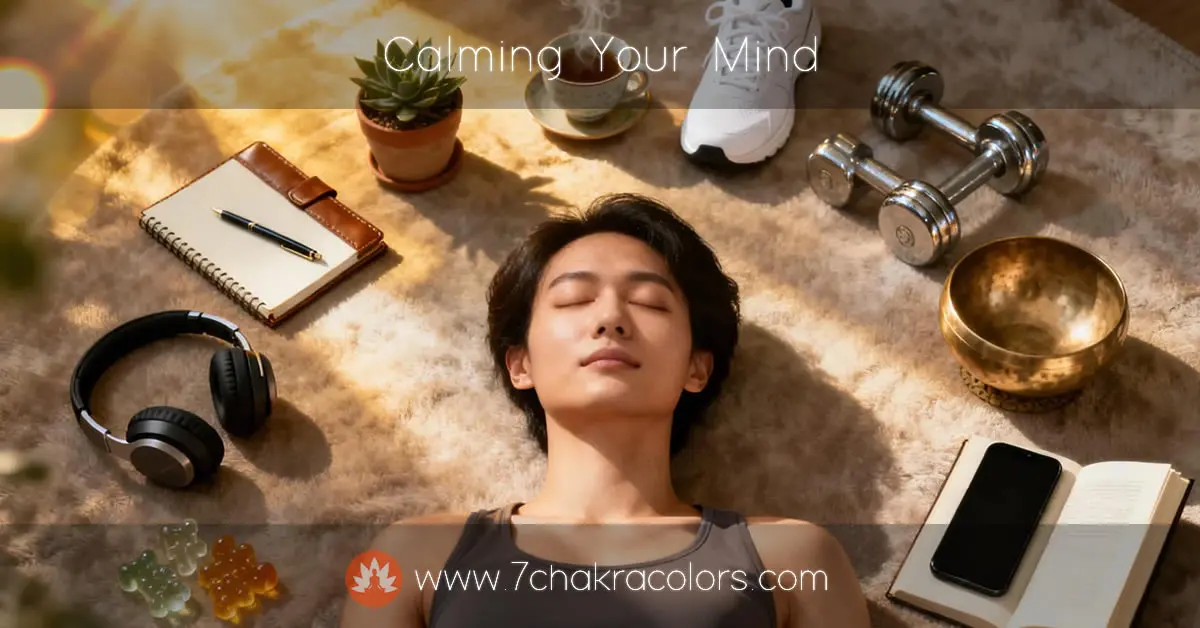
Discover 10 proven techniques to calm your racing mind naturally. Learn breathing, meditation, movement, and more to reduce stress and find mental peace today.
Your mind moves fast. Too fast sometimes. One thought piles on top of another until there’s just noise bouncing around in there.
Most people think calming your mind means stopping thoughts altogether. Doesn’t work that way. What actually shifts things is changing how your nervous system responds – pulling it out of that always-on state and letting your brain find a slower pace.
Simple things do this surprisingly well. Breathing. Moving your body. Listening to sound. Being outside for a while.
Here’s what works – ten different approaches that fit actual life. None of these demand hours or some elaborate process. Just real tactics that actually stick.
Need something fast to quiet your racing mind? These hit for most people:
Each one works a little differently. Some calm the body first. Others help organize your thoughts.
Let’s go through them.
Your breath does way more than fill your lungs. It’s basically the remote control for your nervous system.
When stress hits, everything shifts into shallow mode. Quick, tight chest breathing. Nothing deep.
Slow breathing tells your body something different.
That things are safe.

Try this simple pattern:
You’ll notice something subtle. Your shoulders drop. Your heartbeat steadies. Thoughts begin to spread out instead of piling up.
Breathing works because it changes physiology first. The mind follows.
Simple. Powerful.
Most people picture sitting there for an hour with a blank mind. Like you’re supposed to make all the noise stop.
That’s not it at all.
What meditation actually does – it teaches you to pay attention differently.
You sit. You notice your breath. Thoughts appear – because they always do – and you let them pass without chasing them.
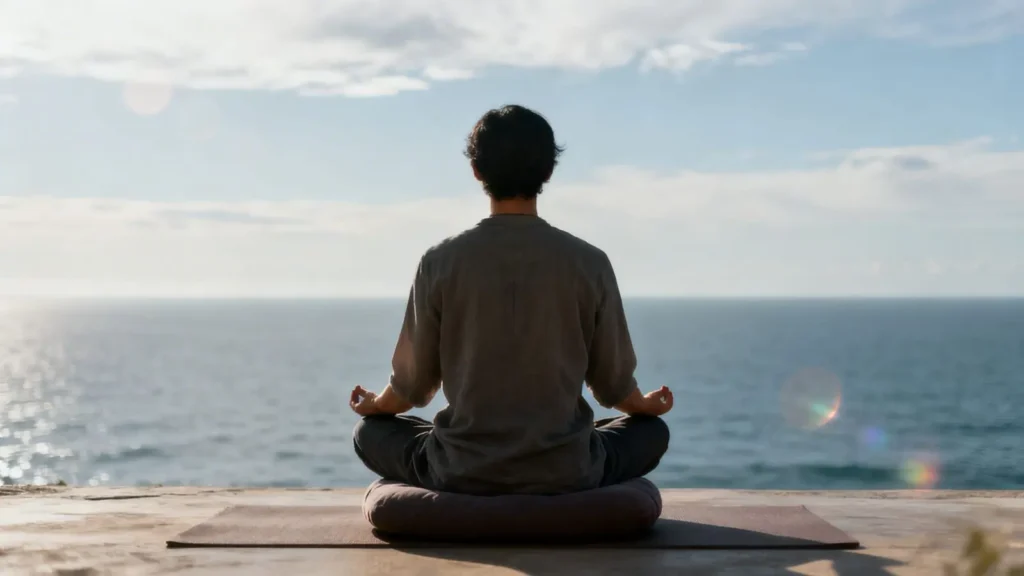
Ten minutes is enough.
Over time something shifts. You start recognizing thoughts as temporary events instead of urgent commands. That mental space changes everything.
And honestly, the best sessions aren’t always peaceful. Some feel messy. Thoughts bouncing everywhere.
Still counts. Your brain is learning a new habit.
Sometimes your nervous system just needs help. Especially when stress is piling up, sleep’s tanked, or work’s been relentless.
People use different things. Magnesium works for a lot of people. L-theanine too. There are herbal blends floating around.
And CBD – that’s become pretty common for evening routines now.
You see it everywhere. Someone finishes work, they’re still wound up, so they use it to downshift. It’s basically a signal to your body that okay, we’re done now. Modern companies figured this out and started making versions that are actually convenient – like CBD gummies from Medterra. Drop one, move on with your evening.

Not some miracle cure.
Just backup support while you’re getting sleep right, handling stress better, and actually recovering.
Grab something from a brand that actually cares about quality and know what you’re putting in your system.
Sound actually rewires how your brain operates. Faster than you’d think.
Notice how different you feel around traffic noise versus some slow instrumental thing playing. Your brain picks it up instantly.
Some sounds just work better:
Rhythm does something to your brain. Slows the audio down and your own pace follows along without you even trying.

Throw in some headphones for five or ten minutes. Your mood shifts.
Lots of people use specific sound apps now – ones that generate meditation frequencies or ambient stuff. Small thing. But when your mind won’t stop, it works.
Nature does something screens never will.
It slows your sensory system.
Outdoors, your brain processes wider spaces, natural light, subtle movement in trees, wind patterns, distant sounds. Nothing demands your full attention.

So your nervous system relaxes.
You don’t need a mountain hike either. A park works. A quiet trail. Sitting near water. Twenty minutes outside can reset your mental state on a random Tuesday afternoon.
No techniques required. Just being there.
Stress lives in your body. You feel it clenched in your jaw, tight shoulders, that knot in your lower back.
Moving releases all that stuck energy.
Walking does something special because it’s got rhythm. Your thoughts actually start matching the pace of your body.

Fifteen minutes of it changes things. And you don’t have to go crush a workout. Slow walking is fine.
Just move around. Your head clears while tension works itself out.
Real exercise hits different than walking. It rewires your stress chemistry.
When you work out, your body burns through those stress hormones – adrenaline, cortisol, all that stuff. After, it floods you with endorphins that stabilize everything.
Strength training. Running. Swimming. Cycling.

Whatever actually appeals to you.
The consistency matters way more than how hard you go. Hitting it three or four times a week changes how clear your mind feels and how stable your moods are.
Plus you actually sleep. Everything else improves when you sleep.
Constant information fragments your attention.
Messages. Notifications. News updates. Social media feeds. Your brain stays in reactive mode all day.
Try small boundaries.
Turn off nonessential notifications. Schedule periods where the phone stays in another room. Avoid scrolling right before bed.

Even short breaks from screens create quiet space in the mind.
And you’ll notice something interesting.
Thoughts become slower. Less chaotic.
When your brain’s stuck in a loop, getting the thoughts out breaks the cycle.
Get a notebook. Or just use your phone notes. Dump everything that’s bouncing around. Worries. Plans. Random half-thoughts. Whatever.

No organization needed.
Once it’s outside your head, your brain stops trying to hold onto it. It relaxes because it knows the information’s stored somewhere safe.
Mental clutter evaporates fast once it hits paper.
Rituals anchor your day.
Morning tea. Evening walks. A few minutes of stretching before bed. Listening to calming music while the lights dim.

Tiny actions repeated daily become signals for the brain. Morning ritual means start. Evening ritual means slow down. Over time these habits train your nervous system to shift states automatically.
No effort required. Just repetition.
A calm mind doesn’t come from forcing thoughts away. That approach usually backfires. Instead, you change the environment your mind operates in.
Breathing patterns. Movement. Sound. Nature. Rest. Small adjustments like these gradually shift your nervous system toward balance.
And here’s the interesting part.
You don’t need all ten techniques. Two or three done consistently often make the biggest difference.
Start simple.
Take a slow breath. Go walk somewhere. Throw on some music that slows you down for a few minutes. Your mind already knows how to calm down. It just needs the right setup to do it.
Some things shift fast – breathing can calm you down in minutes. Others take weeks of consistency. Meditation works best when you stick with it for at least two to four weeks before you expect results. Your nervous system learns new patterns gradually. The key is not giving up after three days. Pick one technique and actually do it for a while before deciding it doesn’t work.
Yeah, and sometimes mixing them is more powerful than doing just one. You could walk while listening to calming audio, or breathe slowly before meditation. Just don’t try everything simultaneously. That’s overwhelming and you won’t know what’s actually working. Start with one or two that appeal to you, then layer in others once those feel solid.
Different brains respond to different things. Someone might find meditation useless but walk for an hour and feel transformed. You might be a person who needs intense exercise instead of gentle breathing. Try at least two or three different approaches before deciding they don’t work. Also consider that your nervous system might need professional support – a therapist, counselor, or doctor can help figure out what’s actually going on underneath the noise.
Totally normal. When you sit still and pay attention to your breath, you might feel restless or your mind might feel busier than usual. That’s actually a sign it’s working – you’re noticing how much mental activity is always happening. Stick with it for a few sessions. The discomfort usually settles as your brain gets used to the practice.
These tactics can help, but they’re not a replacement for professional support. If you’re dealing with serious anxiety or depression, talk to a therapist or doctor. Some techniques might actually make anxiety worse at first – especially if you’re sitting alone with your thoughts. The combination of professional help plus personal practices usually works best.
No. Breathing works with just your breath. Walking works outside or in your house. Apps and equipment can be helpful but aren’t necessary. If apps support your practice, use them. If you prefer sitting quietly without tech, that works too. Don’t let “not having the right setup” stop you from starting. You already have everything you need.