Heart Chakra Opening Symptoms: Physical, Emotional and Spiritual Signs
Heart chakra opening symptoms: the physical, emotional and spiritual signs of Anahata activation, opening pain, how long they last and when to see a doctor.
Table Of Contents
Heart chakra opening symptoms are the changes people describe as the fourth chakra becomes more active: warmth or a soft expanding feeling in the center of the chest, deeper breaths, tears that come easily, more compassion and patience, and old hurt finally being felt and let go. They come from chakra teaching, not medicine, and any chest pain, pressure or a racing heart should be checked by a doctor first.
Heart Chakra Opening · Key Facts
- Physical signs:Warmth or expansion in the center of the chest, deeper breaths, looser shoulders
- Emotional signs:More compassion, easy tears, old grief coming up and passing
- Spiritual signs:Feeling connected to people and to life, a sense of unconditional love
- Relationship signs:Forgiveness, more openness, clearer boundaries in love
- Duration:Varies from person to person; there is no research on it
- Get checked if:You have any chest pain, pressure, palpitations or shortness of breath
In yoga, the heart chakra sits in the center of the chest and links the three lower chakras with the three upper ones. It is associated with love, compassion, grief and forgiveness. When people say their heart chakra is opening, they usually mean they feel more, both the warm and the painful parts. This page covers the signs as chakra teachers describe them, what else could cause them, and when to see a doctor.
Heart Chakra Opening and Activation Symptoms
The fourth chakra is called Anahata in Sanskrit, which means "unstruck" or "unhurt". The most common opening symptom people describe is a gentle warmth or a feeling of space in the middle of the chest, as if something that was clenched has relaxed. It often comes during a heart-focused meditation, a backbend in yoga, a long hug or a moment of real kindness from someone.
People also search for heart chakra activation symptoms and awakening symptoms. In most chakra books these words describe the same thing: the chakra moving from a closed or guarded state to a more open one. Physically it tends to be subtle, softer than many physical symptoms of chakra opening in the lower centers. Emotionally it is often the opposite. Tears, tenderness and sudden waves of love or sadness are some of the most reported signs.
Some people feel nothing in the chest at all. If you notice that you forgive more easily, judge less and can receive help or kindness without pushing it away, chakra teachers would still call that a heart opening. Give yourself time with the feelings, and keep your days simple while they move.
Physical Symptoms and Signs of Heart Chakra Opening
Physical symptoms of heart chakra opening are felt in the chest, the upper back between the shoulder blades, the shoulders and the arms. The ones people describe most often are:
- Warmth or a soft, expanding feeling in the center of the chest.
- Deeper, fuller breaths, sometimes a long sigh without trying.
- Tingling or warmth in the hands and arms.
- Shoulders that drop and feel less hunched.
- A brief ache or tightness between the shoulder blades as tension lets go.
- A lump in the throat or tears that come quickly.
- Feeling the heartbeat more clearly when you are still.

None of these signs means anything medically on its own, and the chest is the one area where you should never guess. Chakra teachers read them as more feeling returning to a part of the body that people often protect. The table below pairs each sensation with what teachers say it means, other common causes, and when to get it checked.
| Sensation | What chakra teachers say it means | Other common causes | When to get it checked |
|---|---|---|---|
| Warmth or expansion in the chest | The heart chakra becoming more active | Emotion, a warm drink, exercise, a hug | Any chest pain, pressure or tightness - get it checked; sudden pain needs emergency services |
| Deeper breaths, long sighs | The chest and breath opening up | Relaxation, tiredness, after crying | Breathlessness that is new or comes with chest pain |
| Tingling or warmth in the hands and arms | Energy moving from the heart into the arms | Posture, cold, sitting still, anxiety | Pain or numbness in the left arm, or tingling with weakness |
| Ache between the shoulder blades | Old tension behind the heart letting go | Desk work, posture, a hard workout | Strong back pain, or back pain with chest pain or breathlessness |
| Feeling the heartbeat more clearly | More awareness of the heart area | Caffeine, stress, exercise, lying on your left side | Palpitations that last, keep coming back or come with dizziness or fainting |
| Lump in the throat, easy tears | Held-back feelings being released | Grief, stress, tiredness, hormones | A lump that does not go away, or trouble swallowing |
| Waves of grief or sadness | Old hurt being felt and let go | Loss, life changes, stress | Low mood that lasts for weeks or feels overwhelming - talk to a doctor or therapist |
Note: the second column comes from chakra teaching, not from medicine. These are symbolic interpretations, not diagnostic criteria, so the last column always comes first.
Heart chakra pain during opening
Many people search for heart chakra opening symptoms with pain. What chakra teachers describe is mild: a dull ache between the shoulder blades, a tender feeling in the chest muscles after backbends, or the heavy feeling that comes with grief. They explain it as old tension and old feelings being released.
Real chest pain is different, and it is never an opening symptom you should wait out. Pain, pressure, tightness or heaviness in the chest, pain that spreads to the arm, jaw, neck or back, shortness of breath, sweating, dizziness or a racing or irregular heartbeat need a doctor, and sudden chest pain needs emergency services straight away. Come back to chakra practice only after you have been checked.
Emotional and Spiritual Symptoms of Heart Chakra Opening
For most people the emotional changes are the strongest signs, because this chakra is linked with love and grief at the same time.
Emotional symptoms
- More compassion: you feel other people's pain and joy more, and judge less.
- Easy tears: crying at films, music or small kindnesses, sometimes for no clear reason.
- Grief coming up: old losses or heartbreak felt again, then easing.
- Forgiveness: resentment toward yourself or others loosens.
- Receiving: accepting help, compliments and love without brushing them off.
- Clearer boundaries: loving people without giving yourself away to them.
Spiritual signs
On the spiritual side, people describe feeling connected to everyone and everything, a love that does not depend on how others behave, and gratitude for ordinary things. In the Tantric text Sat-Chakra-Nirupana, translated by Arthur Avalon, Anahata is the region of air and the place where the "unstruck sound" is heard, a sound that is not made by two things hitting each other. Many people describe a heart opening in a similar way: a quiet, steady feeling that does not need a reason.
Heart Chakra Opening Experiences: What People Describe
Everyone's experience is different. The examples below are typical of what people share in yoga classes and chakra forums, put together from several accounts rather than one person's story. One person feels a warm, spreading sensation in the chest during a loving-kindness meditation and cries for the first time in years. Another notices that a long resentment toward a parent has simply gone quiet. A third feels a strong pull to call an old friend, and the conversation turns out to matter to both of them.

Some people describe the opening through animals, children or nature, a sudden tenderness they did not expect. Others notice it mostly in how they talk to themselves, with less criticism and more patience. Teachers see both as part of the same change.
Love, Grief, Twin Flames and the Heart Chakra
Because the heart chakra is linked with love, people often connect its opening with a relationship. Some call an intense connection a twin flame experience. In chakra terms, a strong new attachment can certainly be felt in the chest. There is no evidence, though, that it proves a spiritual bond, and a healthy heart opening includes boundaries as well as closeness.
Opening the heart also tends to bring grief to the surface. Teachers say this is normal: a heart that feels more love also feels its losses. Slow breathing into the chest, as in our heart chakra breathing guide, can help the feelings move without flooding you. If grief or sadness stays heavy for weeks, talking to a grief counselor or therapist is a good step, not a failure.
You may also read about a "higher heart chakra" between the heart and the throat, often linked with the thymus. It comes from modern energy healing books, not from the traditional texts. Its opening signs are described in much the same way: compassion, forgiveness and a sense of connection.
Can Heart Chakra Opening Feel Uncomfortable?
Yes. Feeling more is not always pleasant. Some people feel raw or exposed, cry more often, or find that old heartbreak comes back for a while. Others feel overwhelmed by other people's emotions or by news they used to scroll past.
Chakra teachers describe this as coming in waves. Rest, time in nature and talking to someone you trust usually help. Discomfort is not a sign of spiritual progress, and there is no need to push through it. And any physical chest symptom always goes to a doctor first, as explained below.
How to Know If Your Heart Chakra Is Open
An open heart chakra shows in how you treat yourself and others over time. Anodea Judith describes a balanced fourth chakra as compassionate, loving, empathetic, self-loving, altruistic and peaceful. Look at these signs over a few weeks, not on one emotional day.
Quick check:
- Can you give and receive love without keeping score?
- Do you forgive, even if it takes time?
- Can you feel sadness and let it pass?
- Do you care for others without losing yourself?
- Are you kind to yourself when you make mistakes?
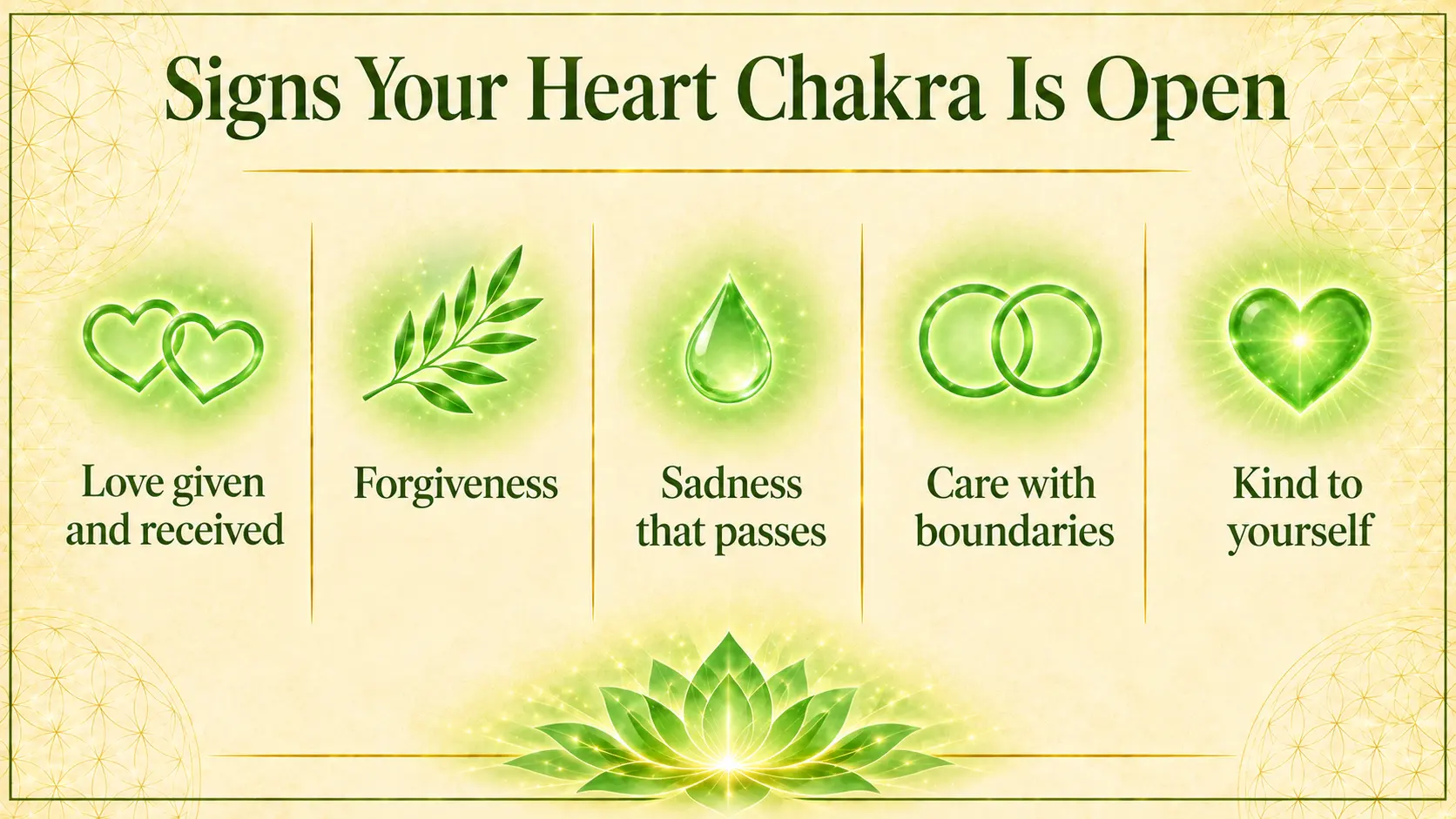
If you can say yes to most of these, chakra teachers would see your heart chakra as open and balanced. If most answers are no, compare your signs with the heart chakra blocked symptoms, or take the free heart chakra test.
Heart Chakra Healing Symptoms: Is It Getting Better?
When the heart chakra is healing, the signs are usually small and ordinary. You reply to a message you had been avoiding, you can think about an old relationship without the same sting, you accept a compliment, or a sad day passes without turning into a sad month.

Healing is rarely a straight line. A soft, open week can be followed by one where you feel guarded again. Writing one line each evening, one thing you felt and one thing you are grateful for, makes the slow change easier to see.
How Long Do Heart Chakra Opening Symptoms Last?
There is no fixed timeline. From what teachers and practitioners describe, physical sensations such as warmth in the chest tend to come and go over days or weeks, often stronger after meditation or yoga. Emotional releases, especially grief, can take longer and come back in waves. None of this comes from research, only from people's experience.
Symptoms often feel stronger during big life events, such as a new relationship, a breakup or a loss. Physical chest symptoms are never something to wait on: if you have chest pain, pressure, palpitations or shortness of breath, get checked rather than waiting for it to pass.
Opening, Healing or Blocked? How to Tell the Difference
Opening, healing and blockage can all be felt in the chest, so they are easy to confuse. The difference is the direction of change. In an opening, feeling starts to come back, often with tears. In healing, the hurt slowly gets lighter over weeks. With a blocked chakra, people describe feeling closed, numb or guarded, with little change over time. If that sounds more like you, read about the blocked heart chakra.
These are spiritual interpretations used in chakra work, not diagnoses. The table puts the five states side by side.
| State | Traditional interpretation | Emotions | Body and daily life |
|---|---|---|---|
| Opening | Feeling returning to the heart after a time of being closed | Tenderness, easy tears, more compassion | Warmth in the chest, deeper breaths, reaching out to people |
| Healing | A blocked chakra slowly returning to balance | Old hurt getting lighter over weeks | Forgiving, accepting help, sad days passing sooner |
| Balanced | Open and steady, neither too little nor too much | Love and compassion with healthy boundaries | Relaxed chest and shoulders, warm relationships |
| Blocked (underactive) | Too little energy | Guarded, numb, holding grudges | Withdrawing from people, hunched shoulders, trouble trusting |
| Overactive | Too much energy | Overgiving, jealousy, losing yourself in others | People-pleasing, weak boundaries, caring for everyone but yourself |
When to See a Doctor
Chakra work can help you relax and feel more, but it should never hide a medical problem, and chest symptoms are the most important ones not to explain away. Call emergency services straight away for sudden chest pain, pressure or tightness, pain that spreads to the arm, jaw, neck or back, or chest pain with shortness of breath, sweating, nausea or dizziness.
See a doctor for heart palpitations that last a long time, keep coming back or come with chest pain or fainting, for breathlessness that is new, and for upper back pain that is strong or does not ease. If grief, low mood or anxiety feels overwhelming for weeks, talk to a doctor or a therapist.
What to Do Next
To support an opening heart chakra, spend time with people who are kind to you, get outside, practice slow breathing into the chest and let yourself feel what comes up. If you want a fuller plan, our guide on how to open the heart chakra goes through each practice. Our yoga poses for the heart chakra gently open the chest and upper back, and a short heart chakra meditation is a calm way to notice what is changing.
Sources
- Arthur Avalon (Sir John Woodroffe), The Serpent Power, 1919 - translation of the Sat-Chakra-Nirupana: Anahata as the region of air and of the unstruck sound.
- Anodea Judith, Eastern Body, Western Mind, 1996 - balanced, deficient and excessive patterns of the fourth chakra.
- NHS - Chest pain, Heart palpitations.
Frequently Asked Questions About Heart Chakra Opening
What does heart chakra opening feel like?
Most people describe warmth or a soft, expanding feeling in the center of the chest, deeper breaths and tears that come easily. Emotionally it often feels like more compassion and less judgment. These descriptions come from chakra practice, not medical research.
What happens when your heart chakra opens?
In chakra teaching, feeling returns to the heart after a time of being guarded. People report more compassion, forgiveness, old grief coming up and passing, and a wish to reconnect with people. The changes usually come and go in waves rather than all at once.
Can heart chakra opening cause chest pain?
Chakra teachers describe only mild sensations, such as warmth, tenderness or an ache between the shoulder blades. Real chest pain, pressure or tightness is never an opening symptom to wait out. Get it checked, and call emergency services for sudden chest pain or pain that spreads to the arm or jaw.
Can opening the heart chakra make you cry?
Yes, crying is one of the most common signs people describe, often about things from long ago or about small kindnesses. Teachers see it as held-back feelings being released. If sadness or crying keeps overwhelming you for weeks, talk to a doctor or a therapist.
Is a heart chakra opening the same as a twin flame connection?
No. An intense relationship can be felt strongly in the chest, and some people call it a twin flame. There is no evidence that it proves a spiritual bond. A healthy heart opening also includes boundaries, so notice how the relationship treats you, not only how strong it feels.
Can the heart chakra open by itself?
Teachers say it can, for example when you fall in love, become a parent, care for someone, grieve a loss or forgive someone. Meditation, gentle backbends and breathing are used to support it. There is no research on chakras, so this comes from experience, not science.
Opening symptoms of the other chakras:
-
Symptoms of an opening root chakra
- grounding, safety and the body
-
Symptoms of an opening sacral chakra
- creativity, pleasure and emotional flow
-
Solar plexus chakra activation symptoms
- confidence and personal power
-
Physical symptoms of throat chakra opening
- clearer speech and self-expression
-
Third eye chakra activation symptoms
- intuition and inner clarity
-
Symptoms of an opening crown chakra
- spiritual connection and awareness