

What Types Of Therapy Are Common After Personal Injury
Explore holistic recovery after personal injury combining physical therapy, emotional healing, and energy restoration. A complete mind-body-spirit approach to healing.
Table Of Contents
An accident doesn’t just break bones. It breaks your sense of safety in the world. You’re standing in a parking lot, or it happens on the way home, or you slip and suddenly everything changes. Your body’s injured, sure – but that’s only part of what gets damaged.
People talk about feeling “checked out” after they get hurt. Like they’re watching themselves from somewhere else. Not really in their body anymore. That’s not just psychological stuff either – there’s actual energetic disruption happening. Your whole system gets thrown off balance.
Recovery from injury, real recovery, isn’t just about physical therapy and getting stronger. You’re dealing with emotional aftermath too – the fear, the anxiety. You’re managing your nervous system trying to figure out if it’s safe to move again. And on deeper levels? Your chakras – those energy centers running through your spine – they need attention just as much as your injured knee or shoulder.
When Everything Feels Unsafe – Grounding Your Root Chakra
Right after an accident, even small things feel impossible. Not because you can’t physically do them. It’s more like your foundational sense of safety got shattered.
This is root chakra territory – that’s your base, your sense of “I’m safe in my own body and in the world.” When that gets damaged in trauma, rebuilding it takes intentional work.

Occupational therapy ends up being crucial here because it’s not about fancy exercises. While physical therapy focuses on movement, occupational therapy helps you get back to your daily chores – the mundane stuff like making breakfast without wincing, showering without feeling terrified you’ll slip again, getting dressed without everything hurting. It sounds simple but it’s everything.
Your therapist walks you through each task. Breaks it down into pieces. Lets you prove to yourself – over and over – that you can do it. That you’re safe. That your body isn’t going to betray you again. Your nervous system starts to believe it. Slowly.
There’s something almost spiritual about this. You’re not just regaining strength. You’re rebuilding trust. Trust in yourself. Trust in your ability to inhabit your own body safely. That foundation matters for everything else that comes after.
Your Body Learning to Move Again
Injury rewires how your body moves. Maybe you had to use crutches. Maybe a brace. Maybe certain motions just became impossible and now you have to relearn them completely.
Your nervous system learned: that movement = pain. Now you’re teaching it something else. This takes time. Honestly, more time than most people think.
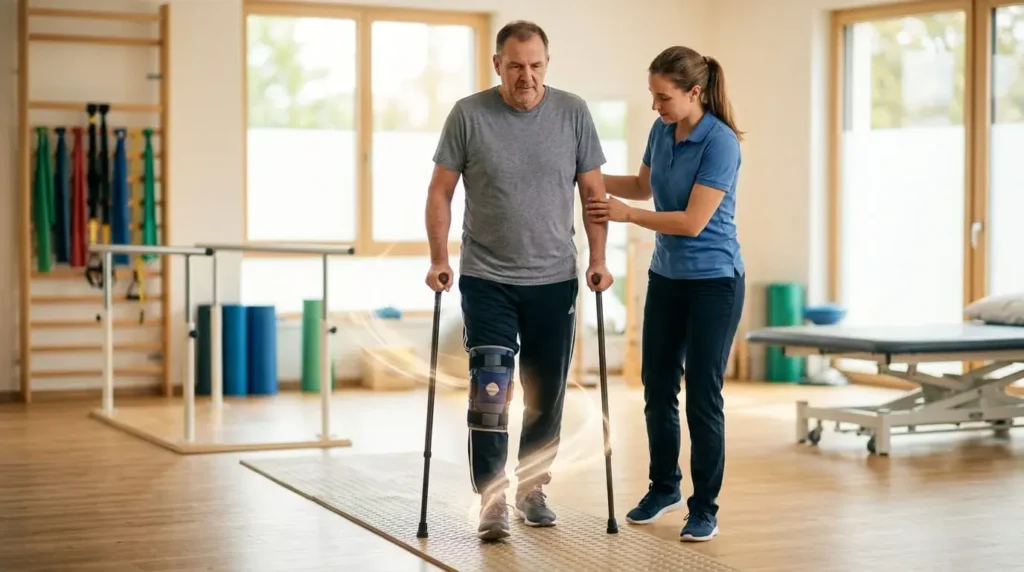
Adaptive tools – a cane, a brace, a modified movement pattern – they’re not forever. They’re scaffolding. They let you keep moving while everything heals underneath. And gradually, something shifts. Your body realizes movement is actually still possible. The pain starts easing. The terror around moving starts loosening up.
From an energy perspective? As your physical patterns normalize, so does your energetic flow. You move. Energy follows the movement. Makes sense if you think about it – we’re not some weird divided thing where our body is separate from our energy. They’re the same system.
Making Your Space Safe Again
Small changes in your home matter more than you’d think. A grab bar by the shower. Moving furniture so it’s not a tripping hazard. Things in your reach instead of making you stretch or strain.
These aren’t just practical modifications. Your nervous system reads safety from the environment. When your space is set up to support you? Your whole system downshifts. Can actually relax a little. That’s grounding work happening right there.
Getting Back to Work, Getting Back to Yourself
Work isn’t just paychecks. It’s your identity. Your purpose. Whether you’re three months into recovery or six months, getting back to that part of yourself – that solar plexus stuff, your personal power – it changes everything psychologically. Emotionally too.

Maybe you start part-time. Maybe you ease back in. Doesn’t matter. You’re reclaiming yourself. Not “the person who got injured.” The person who works. Who contributes. Who has a life beyond recovery.
Physical Therapy – It’s More Than Exercises
Everyone knows about physical therapy. You go, you do exercises, it sucks but then you get stronger. Okay. But here’s what actually matters: a therapist who explains what’s happening. Why this movement matters. How your body is healing week by week.
That understanding transforms everything. You’re not just grinding through painful exercises you hate. You’re actively rebuilding yourself. You’re watching your body become capable again. It’s different.
The documentation though – that’s important for another reason. When reviewing your case, a Duluth personal injury lawyer from a public trusted law firm like Slam Dunk Attorney at https://slamdunkattorney.com/, a firm with years of experience in the field of law, can look at these medical notes to understand how they fit into a legal claim. Medical documentation from physical therapy also plays a role in creating a structured timeline of recovery, which is important for both clinical and legal clarity.
And from a nervous system perspective? Consistent physical therapy actually helps regulate your stress response. You know how after trauma people get stuck in high alert or complete numbness? Gentle movement pulls you out of that. Your body learns it’s safe to relax. To move. To exist without terror.
When Your Brain Got Hurt – Speech and Cognitive Recovery
Head injuries are different. You can’t see them. That’s the problem. Memory problems, speech difficulties, trouble focusing – these are real but invisible, which makes them somehow harder to deal with.
Speech therapy handles both the communication piece and the cognitive stuff. It’s not just about talking clearly. It’s about reclaiming your ability to think. To trust your own mind again. That’s throat chakra and third eye work – expression and clarity.
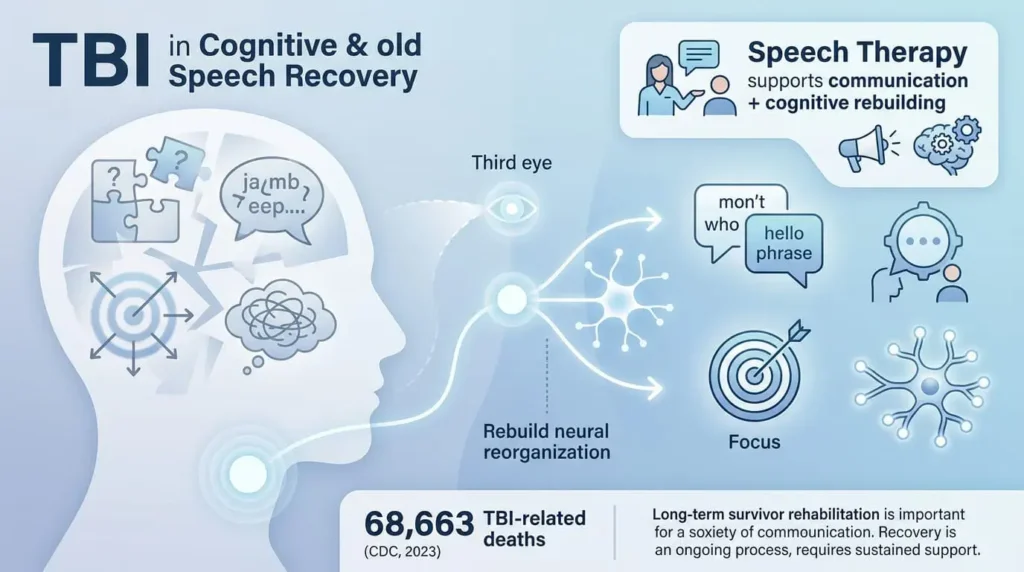
The numbers are sobering too. The CDC reports that there were 68,663 traumatic brain injury-related deaths in 2023, with many more survivors needing long-term cognitive care. People don’t realize how many TBI survivors are out there trying to rebuild their lives when everyone expects them to just “be fine” because the injury wasn’t visible.
Documentation of cognitive recovery matters because it’s hard to measure. But tracking memory changes, focus improvements, communication gains – that gives you actual proof of progress. Proof that you’re getting better even when it feels slow.
Massage – Your Tissues Remember Trauma
Stress gets stored in muscle. Trauma especially. After an accident, your body doesn’t just hurt – it holds onto the fear. Everything stays tight. Guarded. Protective.
Massage releases that. Not just physically. Your nervous system feels it too. As the tension releases physically, the emotional charge around it often releases with it.
What happens in massage:
- Tight muscles actually loosen instead of staying locked
- Those tension headaches finally back off
- Scar tissue softens as it heals
- Circulation improves – your body gets the oxygen and nutrients it needs
- You actually sleep instead of lying awake at 3 AM
- You feel present in your body again instead of disconnected
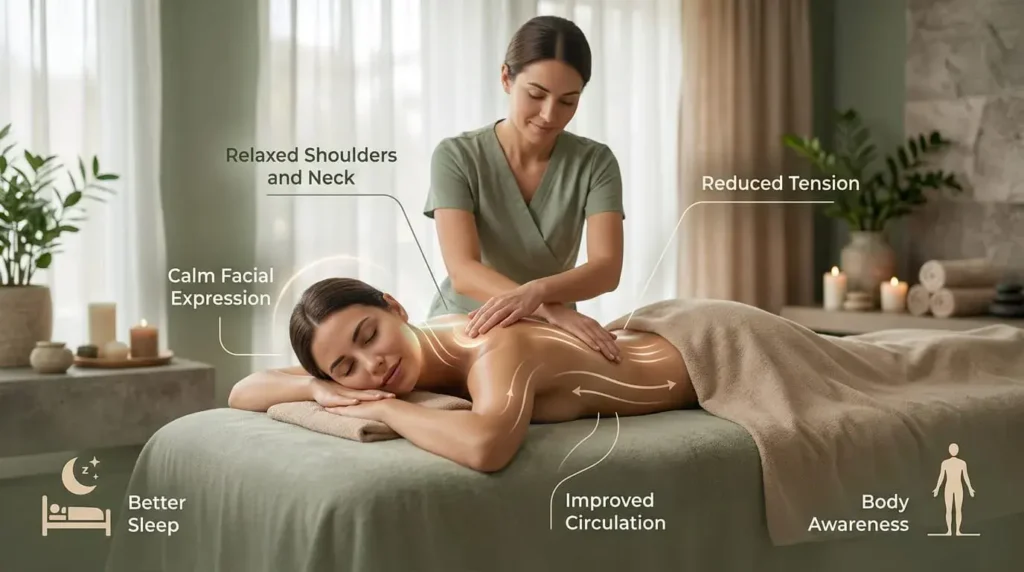
Whiplash, soft tissue injuries – massage is huge for those because you’re dealing with both physical strain and emotional shock at the same time. Your tissues literally hold the memory of what happened. Good massage helps them release it.
The Emotional Stuff – Nobody Talks About This Enough
After an accident you’re anxious. You’re scared. Maybe you’re angry. Maybe you’re depressed. This isn’t weakness. Your nervous system got shocked. Your sense of safety got taken away. Of course you’re struggling.
Mental health work matters as much as physical therapy. Maybe more. A therapist helps you process the fear – especially if you got hurt in a car and now driving terrifies you. Or you’re panicking about medical stuff. Or bills are piling up and you’re freaking about money.
Georgia law actually gets this. Georgia law, O.C.G.A. § 51-12-6, allows for the consideration of mental suffering in many personal injury cases where the entire injury is to the peace and feelings of the plaintiff. A lawyer I know put it this way: “In the eyes of the law, a person’s ability to find peace of mind is just as valuable as their ability to walk or work. Consistent therapy records act as the bridge between an invisible injury and the justice a victim deserves,” says Brian Wright, a Duluth personal injury attorney.
That’s the heart chakra stuff – safety, connection, resilience. When you heal emotionally, you’re not just “getting over” what happened. You’re integrating it. Moving forward stronger. That takes time but it’s real healing, not just pretending everything’s fine.
Your Spine and Everything That Flows Through It
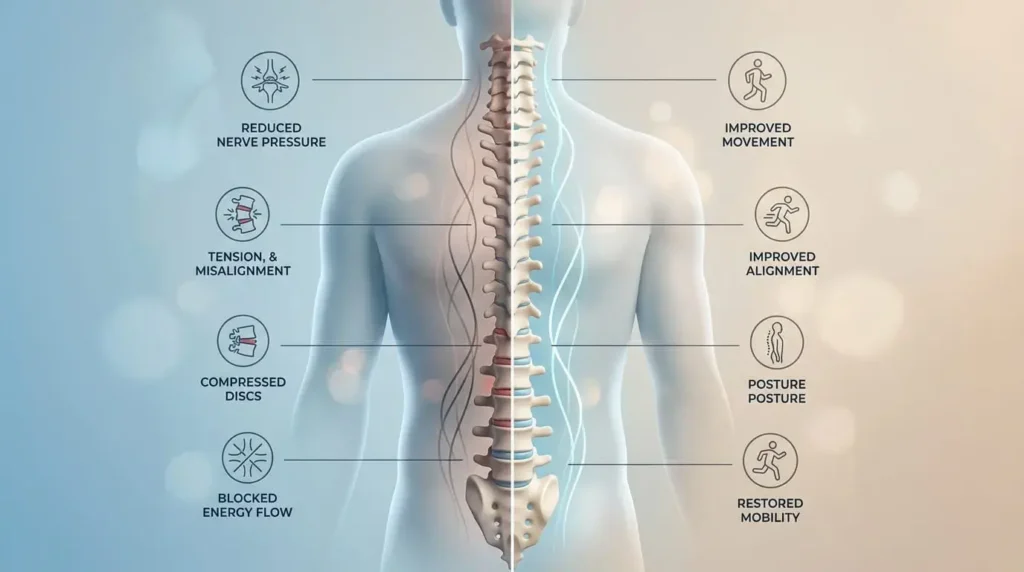
Spinal injuries after sudden impact – car crashes, falls, whatever – they’re common and they’re serious. Misalignment throws everything off. Pain, tension, reduced movement. Your whole system can’t flow right.
Chiropractic work focuses on restoring alignment. Reducing pressure on nerves. Getting movement back. From an energy perspective? Your spine is your central channel. It’s the highway for your major energy pathways. When it’s misaligned, everything gets stuck. When it’s aligned? Energy flows. You feel alive again instead of shut down.
Recovery Isn’t One Thing – It’s Everything At Once
Nobody heals from injury doing just one type of therapy. You usually need multiple approaches. Physical work. Emotional work. Cognitive stuff if your brain got affected. Daily life rebuilding. Nervous system regulation.
Different therapies hit different dimensions:
- Physical therapy – your body getting strong again
- Your nervous system slowly learning it’s safe
- Emotional processing – you actually moving through the trauma instead of staying stuck in it
- Cognitive work – reclaiming your mind
- Daily life – proving to yourself you’re still you, still capable
This is holistic healing. Body and mind and energy all working together. Not separate pieces. One integrated system healing itself.
You Need Help – Here’s Where to Start
Accidents are disorienting. You’re dealing with medical stuff, insurance stuff, probably legal stuff if someone else caused it. That’s a lot.
If you need immediate assistance after an accident in Gwinnett County, call Slam Dunk Attorney Lawyers at (678) 329-9750 or stop by their Duluth, GA office located at 2250 Satellite Blvd NW STE 120, 30097, located just 11 minutes from Northside Hospital Duluth, 3620 Howell Ferry Rd NW.
Get medical help. Get a lawyer who knows what they’re doing. Start therapy soon as you can.
Questions People Actually Ask About Recovery
How long until you’re actually healed?
Honestly depends on what happened to you. Minor sprains or strains? You’re looking at 4-6 weeks probably. More serious stuff – fractures, head injuries, major soft tissue damage – that’s more like 3-6 months. Sometimes longer. Don’t expect your timeline to make sense with anyone else’s recovery. Your body does what it does on its own clock. Just because someone you know bounced back in 8 weeks doesn’t mean you will too.
Will insurance actually cover all the different therapies?
Most policies cover it if the doctor says it’s medically necessary. Physical therapy, occupational stuff, counseling – usually that’s in there. But here’s the thing: coverage varies all over the place. Your policy might be different from someone else’s. You gotta call your insurance company yourself. Don’t assume anything. Get pre-authorization before you start if you can. It’s annoying but worth it to avoid surprises later.
Can you actually pick which therapist you see?
Usually yes, you’ve got that choice. What helps though is finding someone who’s done this before – someone who knows how to document everything properly for legal stuff. Insurance companies and lawyers need specific things in those records. A therapist who’s worked with personal injury cases knows what that looks like. Saves you headaches down the road.
What if you’re not ready to start therapy yet?
Look, sometimes you’re just too overwhelmed right after an accident. That’s real. But here’s what happens if you wait too long: your joints start getting stiff. Pain patterns set in and become harder to break. Psychological stuff – the anxiety, the fear – it gets stronger the longer you sit with it. Talk to your doctor about what makes sense timing-wise. Usually there’s a sweet spot where starting is actually a good idea.
Does doing meditation or energy work replace actual medical care?
No. Physical therapy matters. Your doctor matters. Your therapist matters. That stuff addresses real problems that need professional attention. Holistic practices support all of it – they help your system heal – but they don’t replace the medical work. Best recovery uses both. You’re not choosing one or the other.
How do you know which therapies you actually need?
Your doctor tells you based on your injury. Knee injury needs different treatment than head injury. But honestly, the more honest you are about all your symptoms – physical pain, emotional stuff, memory issues, whatever’s going on – the better your treatment plan is gonna be. Don’t hold stuff back. Doctors can’t help what they don’t know about.
Is it normal to feel anxious when you’re supposed to go back to activities?
Completely normal. Your nervous system learned that activity = injury. It’s being protective. You’re not being weak or irrational. This is how trauma works. Good news is a therapist can help you ease back into things gradually. You rebuild confidence as you go. Some anxiety during recovery actually shows you’re taking it seriously instead of pushing through and hurting yourself again.
What can you actually do between therapy sessions to help yourself heal?
Do your home exercises. Don’t skip them. Do them exactly how your therapist showed you, not the way that seems easier. Pay attention to what your body’s telling you. Sleep. Eat decent food. Drink water. These aren’t fancy tips – they’re basic stuff but it’s what actually helps tissue heal. And mentally? Stop obsessing over whether you’re healing fast enough. Progress is progress even when it’s slow.
When’s the right time to get a lawyer involved?
Sooner rather than later is usually the move. As soon as you’ve had your initial medical checkup or once you start figuring out what treatment you need. A good personal injury attorney knows how the whole system works – how to work with insurance, what documentation matters, how to protect your rights while you’re focused on just recovering. Early consultation doesn’t mean you’re committed to a case. But it means you know what your options actually are.
Is it ever too late to start therapy?
Recovery’s not like a quick decision you make and then you’re done. People start therapy months after accidents all the time. Chronic pain that never went away. Emotional stuff that lingered. Cognitive problems that came out slowly. Starting late isn’t ideal, but it beats never addressing it. Your body and mind still heal when you give them the support they need.
There’s No Timeline for “Normal”
Real recovery isn’t just about getting your body back together. It’s about rebuilding your connection to yourself. Your sense of safety. Your ability to trust your body again.
Healing is messy. Nonlinear. Some days you’ll feel great and think you’re done. Then you’ll have a setback and wonder if you’ll ever actually be okay again. You will though.
Each therapy session builds on the last. Each small win counts. Each moment you feel a little safer in your own body – that’s real. That’s progress. It all adds up toward actual healing, not just pretending the injury didn’t happen.
Blog Categories:
About the Author: