


How Water Supports Mental Performance and Energy
Discover how drinking enough water boosts your mental performance, supports energy levels, and keeps you feeling alert. Find practical tips you can use every day.
Table Of Contents
By the time you actually feel thirsty, you’re already behind. Not metaphorically – literally. Thirst is a late signal. Your brain has already started slowing down, your mood has already taken a small hit, and your focus is already somewhere between scattered and gone by the time your mouth feels dry.
Most people never make that connection. The rough afternoon gets blamed on a bad night’s sleep, or a stressful week, or just being one of those people who hits a wall around 3pm. But a lot of the time? You just didn’t drink enough water. That’s it.
Many people also start paying closer attention to how much water you should drink daily once they realize how strongly hydration affects energy and focus. This isn’t about wellness trends or optimizing your productivity. It’s about something much more basic – giving your body what it actually needs to function. And most of us aren’t doing that. Not consistently, anyway.
What’s Happening in Your Brain When You’re Low on Fluids
Your brain is roughly 75% water. Let that sit for a second. So when fluid levels dip – even a little – it doesn’t just get thirsty. It starts working harder to do the exact same things it was doing fine an hour ago. Processing slows. Concentration gets wobbly. You read the same paragraph twice and it still doesn’t stick.
That’s dehydration. Not the dramatic kind – not passing out in the heat. Just the quiet kind that chips away at everything without announcing itself.
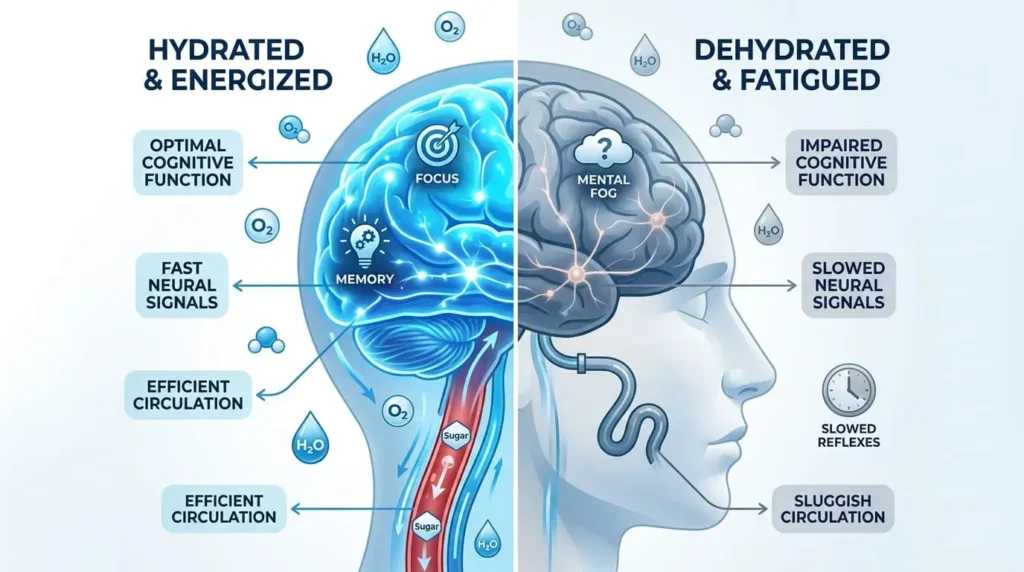
Here’s what matters – when you’re properly hydrated, your blood moves efficiently. Your brain gets a steady delivery of oxygen and glucose – its two main fuels. When you’re short on fluids, that delivery gets sluggish, like trying to pump water through a kinked hose. The result feels like mental fatigue, but it’s really just a supply problem. Fix the supply and things start sharpening back up, often faster than you’d expect.
Memory, Mood, and the Irritability You Didn’t See Coming
Low fluid intake messes with your short-term memory and emotional regulation. Not in a dramatic way – more like everything gets slightly harder than it should be. Decisions take longer. Patience runs thinner. You snap at something minor and later wonder why you reacted like that.
Dehydration nudges your cortisol up – that’s your stress hormone. And when cortisol’s elevated, everything feels a bit more loaded than it actually is. The annoying email feels infuriating. The minor delay feels personal. Keeping your emotions level becomes work when it shouldn’t have to be.
Next time something frustrating lands in your inbox, drink a full glass of water before you respond. Sounds almost insultingly simple. Try it anyway.
Why Another Coffee Isn’t the Answer
Low energy hits around 2pm and most people reach for caffeine. Fair enough – it does something. But if the actual problem is dehydration rather than tiredness, coffee isn’t fixing anything. It’s papering over the gap for an hour or two, and – because caffeine is a mild diuretic – quietly pulling a little more fluid out of a system that was already running low.

When your body’s short on water, everything drags. Cellular waste builds up. Muscles tire faster. Your heart works a little harder pushing blood around than it should have to. None of this is dramatic – it won’t land you in a doctor’s office. It just shows up as that low-level, can’t-quite-start-anything feeling that gets chalked up to needing more sleep.
According to scientific studies, proper hydration helps remove waste from the body, supports healthy cell function, and keeps your energy levels steady so you can stay active without feeling exhausted or worn out throughout the day.
Sometimes the fix really is just water. Earlier. More of it.
How Much Do You Actually Need
The “eight glasses a day” thing gets repeated so often it feels like law. It isn’t. Your needs shift depending on your size, how much you move, the climate you’re in, what you eat, whether you’re sick. Eight glasses works for some people on some days. On others, it’s not enough.
- Women: about 2.7 liters of total fluids per day
- Men: about 3.7 liters of total fluids per day
And that figure includes fluids from food – not just what goes into a glass. Fruits, vegetables, soups all count toward the total. If you eat well, you’re already partway there and probably don’t realize it.
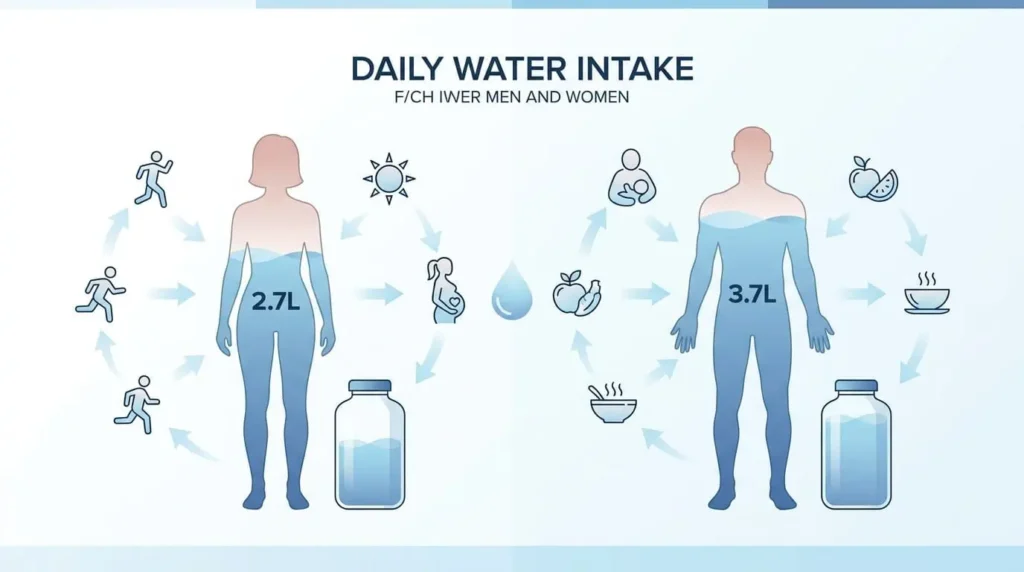
Needs go up when you exercise, spend time outside in the heat, or are pregnant or breastfeeding. The fastest real-time check isn’t counting glasses – it’s looking at your urine color. Pale yellow, you’re fine. Dark yellow, drink something now. Simple as that.
Signs You’re Not Drinking Enough
Your body signals dehydration – but the signals are easy to misread. Headaches get blamed on screen time. Fatigue gets blamed on a bad night. Brain fog gets blamed on a boring task. Before you reach for ibuprofen or a third coffee, run through this list:
- Dry mouth or chapped lips
- Thirst that keeps coming back
- Headaches, especially in the afternoon
- Low energy or that heavy, dragging tiredness
- Dizziness when you stand up too fast
- Trouble focusing or staying on task
- Muscle cramps, particularly in the legs
- Dry or dull-looking skin
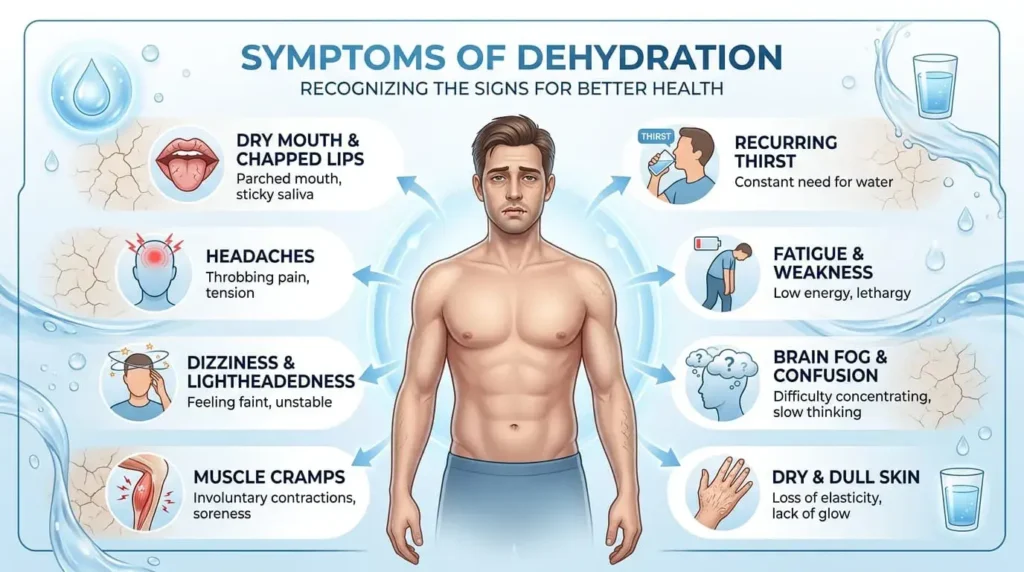
Catch these early. One glass won’t fix a full day of under-drinking – but consistent small sips throughout the day stop the problem from building in the first place.
How to Actually Drink More Without Overthinking It
The hard part isn’t knowing water is good for you. It’s remembering to drink it when your day fills up and you’re three hours deep into something.
Start Before Anything Else
You lose fluids overnight just from breathing. Eight hours of that adds up. So you wake up already in a deficit – before your alarm’s even finished going off, before you’ve touched your phone. A glass of water right then, before the coffee, before anything else, stops that deficit from quietly snowballing into a foggy morning.
Put a glass on your nightstand tonight. Make it the first thing your hand reaches for. Fifteen seconds. Done.
Carry a Bottle You Actually Like
This sounds trivial. It isn’t. People sip more when they have a bottle they don’t find annoying – one that fits in your bag, doesn’t leak, opens without a production. If your current bottle is sitting forgotten on your desk instead of traveling with you, that’s the problem. Get a different one.
Eat Foods That Hydrate You Too
Watermelon, cucumbers, strawberries, oranges, celery, lettuce – all mostly water by weight, and all count toward your daily intake. Throwing a handful of cucumber slices into your lunch or eating an orange as an afternoon snack isn’t just good for you in the abstract – it’s actually adding hydration without you having to think about it. Not a replacement for drinking. Just an easy top-up that happens on its own.
Don’t Wait Until You’re Thirsty
Thirst is a late signal. By the time your mouth feels dry, you’ve already been behind for a while. The goal is to never let it get there – which means sipping throughout the day rather than catching up in one go after lunch. Tie it to things you’re already doing. A few sips when you sit down to work. A few when you finish a call. When you get up to stretch. When you switch tasks. You’re not adding a new habit so much as attaching water to habits you already have.
Swap One Daily Drink for Water
Sugary drinks – sodas, sweetened juices, those flavored things from the corner shop – can actually make thirst worse, not better. Swapping even one of them a day for plain water adds up over weeks. Not a dramatic change. Adds up anyway.
The Bigger Picture
The easy way to pitch this would be as a performance thing – drink more water, think sharper, get more done. And sure, that’s part of it. But it’s not really the point.
When you’re consistently hydrated, you just feel more like yourself. More even. More patient with things that would otherwise grind on you. Your body moves better. Small irritations stay small. That’s not some kind of upgrade – it’s just what normal actually feels like when your body’s getting what it needs.

Hydration also quietly handles things you’d never think to credit it for – kidney function, body temperature, joint cushioning, moving nutrients through your system. None of it registers when it’s working right. You only notice when something’s off.
You don’t need a plan. Start with one glass of water right now. Put a bottle in your bag tonight. Swap one drink next week. That’s the whole thing, really.
Small, repeated, consistent. That’s what actually moves the needle – not perfectly, not dramatically, but reliably. Give it a few weeks and you’ll feel the difference before you can explain it.
Frequently Asked Questions About Hydration and Mental Performance
Can dehydration really affect my mood and focus?
Yes – and it doesn’t take much. Even mild dehydration, around 1 to 2% loss of body water, has been shown to impair concentration, short-term memory, and emotional regulation. You might feel more irritable than usual, struggle to stay on task, or find that simple decisions take longer than they should. It can happen on an ordinary busy day when you’ve simply forgotten to drink enough. Not extreme thirst. Just not enough.
How much water should I drink each day for better mental performance?
General guidelines suggest around 2.7 liters of total fluids daily for women and 3.7 liters for men – but that includes fluids from food, not just what you drink. Your personal needs vary depending on size, activity level, climate, and health. Rather than fixating on a number, check your urine color. Pale yellow means you’re doing fine. Dark yellow means drink something now. If you exercise or spend time in heat, your needs go up accordingly.
Is coffee or tea a substitute for water?
Partially. Coffee and tea do contribute to your daily fluid intake – moderate consumption isn’t the dehydrating villain it’s sometimes made out to be. But caffeine is a mild diuretic, and leaning heavily on caffeinated drinks while skipping plain water isn’t a great trade-off. Water is still the most straightforward way to hydrate. Think of coffee as a bonus on top of your water intake, not a replacement for it.
What are the earliest signs of dehydration I should watch for?
The early signals are easy to miss because they look like other things – stress, poor sleep, boredom. Watch for dry mouth, a faint headache (especially mid-afternoon), low energy that feels bigger than what you’ve actually done, and mild difficulty concentrating. Thirst itself is a late signal. By the time you feel it, you’re already somewhat behind. The goal is to sip consistently throughout the day so you never get there in the first place.
Does drinking more water improve energy levels?
It can – particularly when low energy is actually coming from dehydration rather than real fatigue or sleep debt. When your body’s short on fluids, cellular processes slow, waste removal gets sluggish, and your cardiovascular system works harder than it should. All of that adds up to a dragging, heavy feeling that’s easy to mistake for tiredness. Rehydrating won’t replace sleep. But if your slump hits mid-morning or mid-afternoon and you haven’t been drinking much, water is worth trying before reaching for more caffeine.
Do foods count toward my daily water intake?
Yes. Foods with high water content – watermelon, cucumbers, strawberries, oranges, celery, leafy greens – contribute meaningfully to your total fluid intake. If you eat a varied diet with plenty of fruits and vegetables, you’re already getting a portion of your hydration from food without tracking it. It’s not a reason to drink less water, but it does make the daily target more achievable than it might seem.
What’s the easiest habit to start if I’m bad at drinking water?
One glass of water first thing in the morning, before coffee, before your phone, before anything else. It takes about twenty seconds and fixes the overnight fluid deficit your body wakes up with every day. From there, carry a water bottle you actually like – when it’s within reach, you sip without thinking about it. Tying sips to things you already do (finishing a call, sitting down at your desk, taking a break) works better than trying to drink on a schedule.
Blog Categories:
About the Author: