Blocked Sacral Chakra: Symptoms, Causes, Overactive vs Underactive
Sacral chakra blocked symptoms: physical, emotional and everyday signs, what blocks it, underactive vs overactive, and when to see a doctor.
Table Of Contents
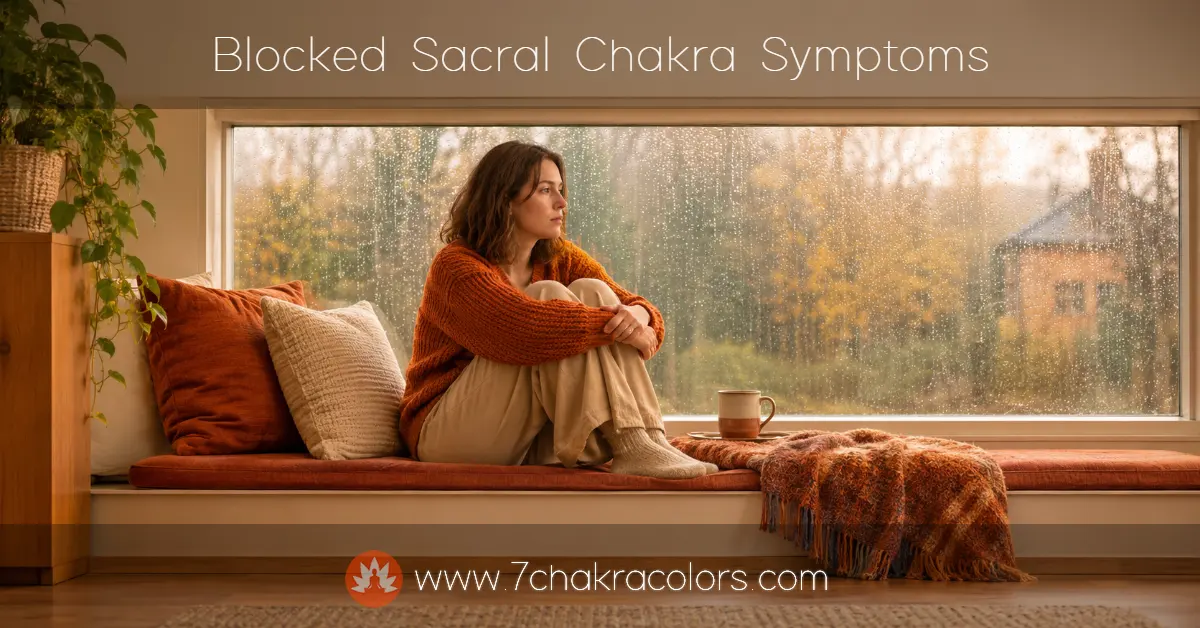
The sacral chakra blocked symptoms most often described in modern chakra books are feeling emotionally flat or numb, guilt about pleasure, low desire, a creative block, keeping people at a distance, and stiffness in the hips and lower back. They are signs to reflect on, not a diagnosis, and body symptoms should always be checked by a doctor first.
Sacral Chakra · Key Facts
- Sanskrit name:Svadhisthana ("one's own base")
- Location:Lower belly below the navel, sacrum at the back
- Color and element:Orange, water
- Mantra and frequency:VAM, 417 Hz (modern Solfeggio association)
- Main themes:
- Take the test →Quick check:The free 14-question sacral chakra test
The sacral chakra is the second of the seven main chakras, and in modern chakra teaching it holds your feelings, your sense of pleasure and your creativity. If blocked, this area of our lives will seem 'frozen', one of the clearest chakra blockage symptoms in the whole system. The symptoms you may experience associated with a blocked sacral chakra, reasons for this, and differences in overactive and underactive chakras are given below. You can also take a short sacral chakra quiz to check your own sacral chakra.
Sacral Chakra Blocked Symptoms at a Glance
If you wish to read just one section of this page this summary is ideal. These are the symptoms most commonly given by chakra teachers in relation to a blocked sacral chakra:
- Emotional numbness
- Feeling guilty/ashamed around pleasurable activities (eating, relaxing, touching, sex)
- Lack of desire/sex as a chore
- Lack of creativity (no ideas, or ideas but not taking action)
- Withdrawing from people/dry relationships
- Tense hips and/or tight lower back/pelvis
- Dislike of change (even positive change)
Whilst many people may experience one or two of these symptoms, teachers only speak of a blocked sacral chakra if multiple symptoms are regularly experienced. Each group is explained below, and the sacral chakra test (5-10 minutes) helps you look at your own pattern.
Blocked Sacral Chakra Meaning: What the Signs Point To
Blocked meaning in chakra teachings relates to stagnation of energy in the second chakra. Because the sacral chakra relates to the element of water, many teachers liken a blocked sacral chakra to 'stagnant' water. It is as though there is a pond and no water is moving in or out.
This is a metaphorical representation, and there is currently no scientific way to determine that a chakra is blocked. However, many people find this idea useful. It can help put into words how life seems 'stuck', even if it is working fine on the surface.
Physical Symptoms of a Blocked Sacral Chakra
Because the sacral chakra corresponds to areas in the body including the pelvis, hips, lower back, bladder, kidneys and reproductive organs, physical symptoms related to it will affect these areas. The physical symptoms associated with a blocked sacral chakra include:
- Tense/stiff hips, and tight pelvis
- Tension or dull pain in lower back
- Hard, cold or constricted lower abdominal region
- Little desire for sex, or uncomfortable in intimate situations
- Period discomfort that worsens with stress
- Frequent issues with bladder function (depending on the teacher)
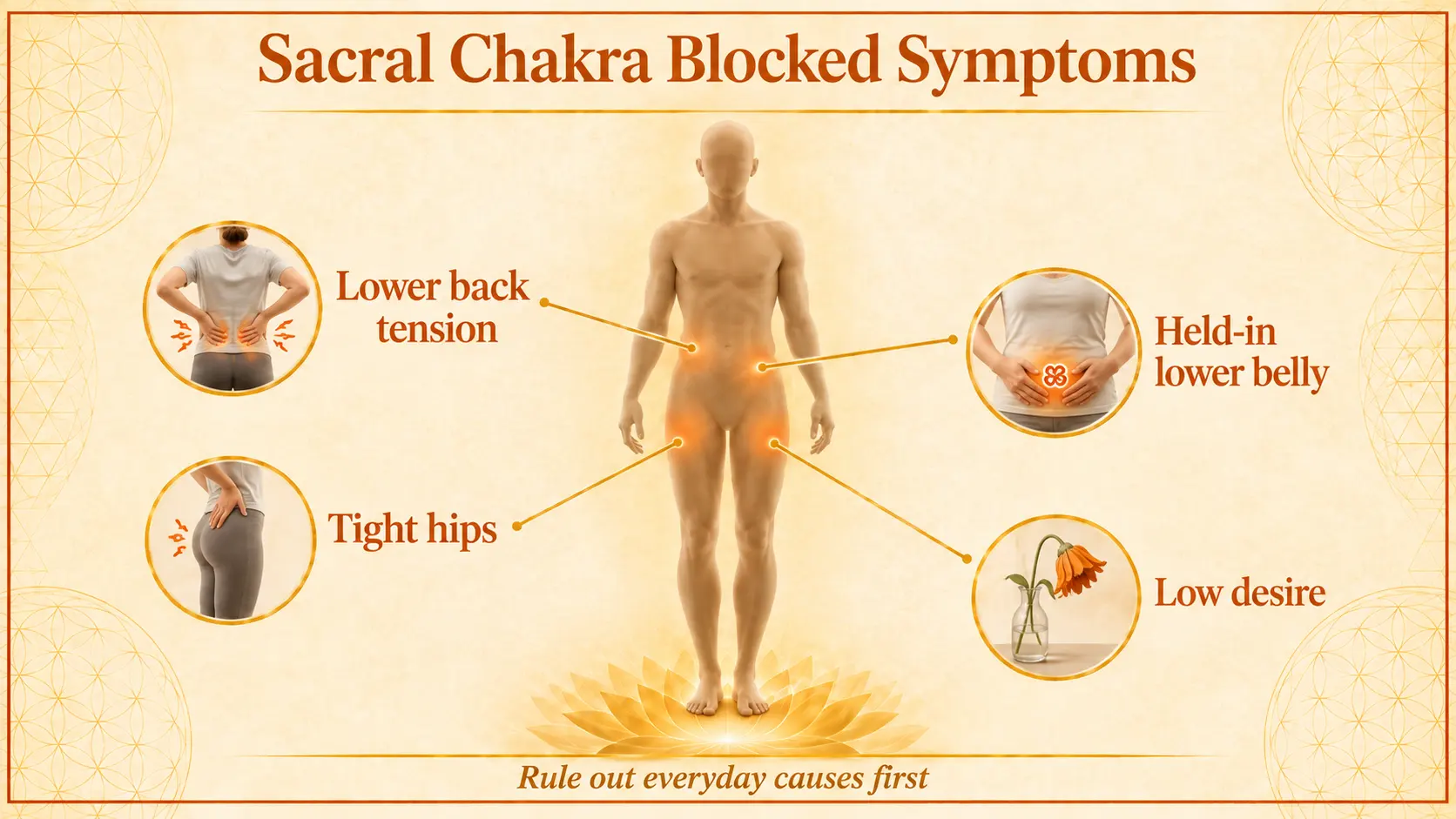
All of these symptoms can be caused by non-chakra related factors. For example, sitting for long periods, poor posture, hormones, infections, stress, medication or a medical issue. However, in chakra teaching, we look at physical symptoms alongside emotional symptoms. If you simply have tense hips, it is usually a physical issue. The table below shows physical symptoms and common causes to consider ruling out:
| Physical symptom | Traditional chakra association | Other possible causes |
|---|---|---|
| Tight or stiff hips | Held-back movement and flow | Long hours of sitting, muscle tightness, joint problems |
| Lower back tension or dull pain | Stuck energy in the pelvis | Posture, muscle strain, period pain, kidney problems |
| Low sexual desire | Blocked pleasure and sexuality | Stress, hormones, medicines, relationship problems, low mood |
| Hard or held-in lower belly | Held-back emotions | Bloating, constipation, period pain, muscle tension |
| Period discomfort that worsens with stress | Disturbed water element | Hormonal changes, endometriosis, fibroids, other gynecological causes |
| Frequent bladder trouble | Water element out of balance | Urinary tract infection, other urinary conditions |
Note: the middle column comes from chakra teaching, not from medicine. Check the everyday causes first, and see a doctor if a symptom is strong, new or getting worse.
Emotional and Mental Signs
The emotional symptoms are key in this chakra. As this chakra allows us to feel emotions, blocked chakra symptoms will be felt emotionally.
- Emotional numbness: unable to feel the emotions that you should.
- Restriction of emotions: feel unable to express crying, anger or excitement.
- Guilt in enjoyable activity: feeling guilty after eating well, having a free afternoon, or receiving praise.
- Low motivation and positivity: feeling like everything is gray and enjoying things is difficult.
- Avoiding change: preferring to do the same things, even if it is no longer pleasant for you.
- Shame in body: discomfort with how your body looks, moves or is touched.
Some of these symptoms can be seen in low moods, burnout and depression. If these symptoms last longer than 2 weeks, or are causing difficulties in work, sleeping or relationships, please seek support from a doctor or therapist. Chakra work can support this, but should not replace professional advice.
Behavioral Signs of Sacral Chakra Imbalance: Pleasure, Relationships and Creativity
Changes in behavior can also indicate a problem with your sacral chakra. These symptoms can be easier to identify than emotional symptoms as they can be identified based on your schedule and habits:
- Avoiding social events and play (unless useful)
- Working through hunger, tiredness and weekends
- Creating practical relationships without true connection
- Starting creative projects but not completing them, or not starting
- Strict routines in eating, spending or time, with no space for fun

Overall, it seems that enjoying and feeling is seen as risky or wasteful. In chakra terms, making small decisions to allow yourself to enjoy (such as going for a walk for no reason, or listening to music for an hour) can begin to unblock this chakra.
Overactive vs Underactive Sacral Chakra
There are two imbalances that can occur in a sacral chakra. An underactive sacral chakra means that there is too little energy flowing (this is generally what people mean by blocked). If it is overactive, there is excessive energy in this chakra. Emotions and desires are overwhelming. Anodea Judith describes these two imbalances as 'deficient' and 'excessive' (Eastern Body, Western Mind, 1996).
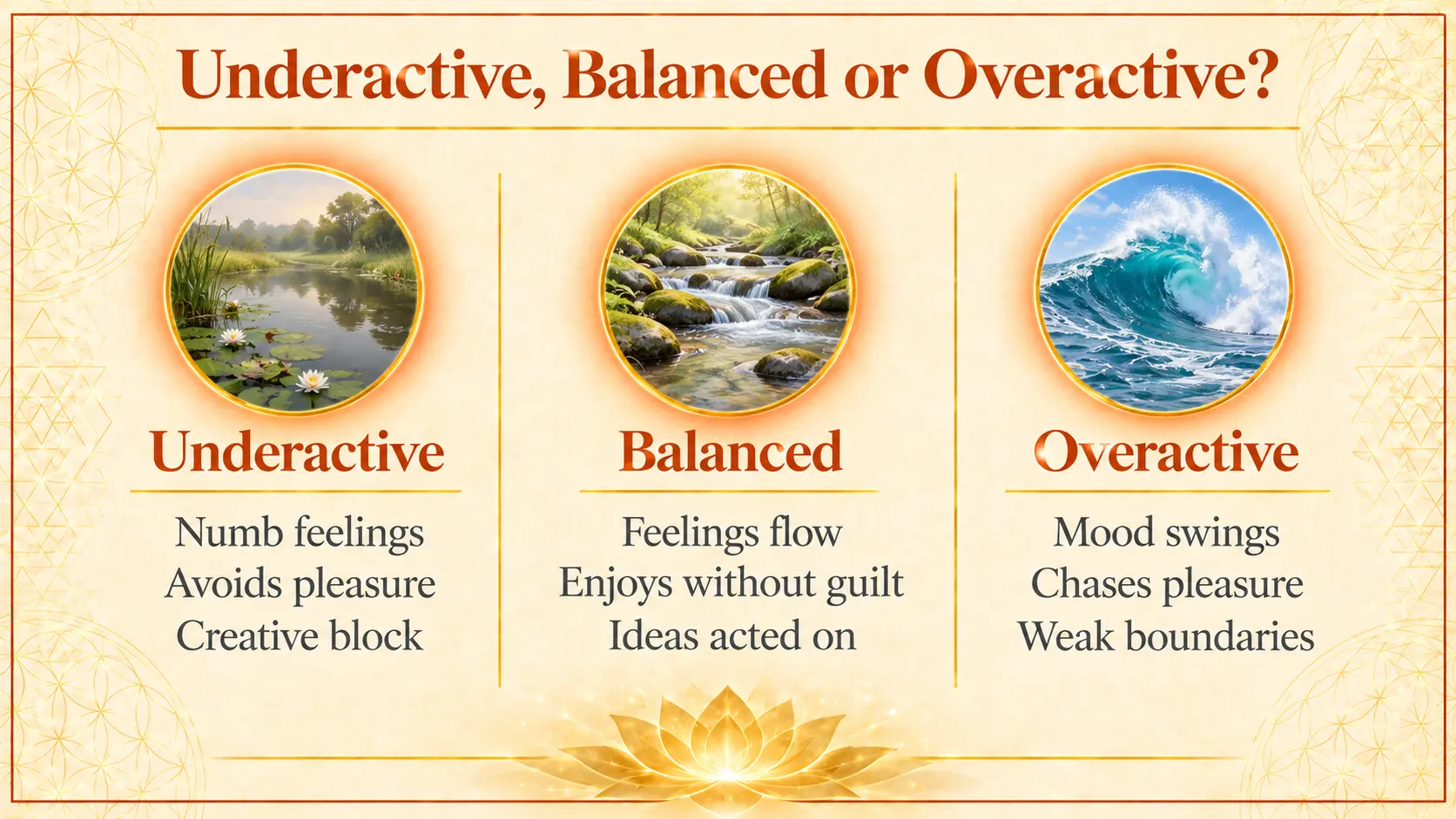
Underactive sacral chakra signs
Feeling emotionally numb, little desire, fear of enjoyment, rigid behaviors, lack of creativity, stiff body and withdrawn from people. Life is safe but lacking. (These are the symptoms described throughout most of this page.)
Overactive sacral chakra signs
Mood swings, extreme reactions to small things, chasing pleasure, over-eating or over-spending, jealousy, very dependent in relationships. It is difficult to set boundaries in this chakra, so you may struggle to maintain your own feelings in a relationship. Despite being called overactive, in this model it is still imbalanced.
These are illustrative patterns from modern chakra teaching, not psychological categories. The table compares the three states side by side.
| Characteristic | Underactive | Balanced | Overactive |
|---|---|---|---|
| Emotions | Numb, held back | Felt and let go | Overwhelming, mood swings |
| Pleasure | Avoided, comes with guilt | Enjoyed without guilt | Chased, overdone |
| Relationships | Distant, practical | Close while staying yourself | Dependent, jealous |
| Creativity | Blocked, no ideas | Ideas acted on | Scattered, many unfinished starts |
| Boundaries | Withdrawn | Healthy | Weak, other people's feelings take over |
| Change | Rigid, feared | Adaptable | Restless, always looking for new excitement |
Signs of a balanced sacral chakra
You can feel and process your emotions. You enjoy eating, touch and relaxation without guilt. You can get ideas and put some of them into practice. You can form close connections with people and remain true to yourself. Although change is difficult, it does not scare you. Most people will move between these different states. Having a balanced sacral chakra is a direction, and not a fixed state.
What Blocks the Sacral Chakra? Causes of a Sacral Chakra Blockage
Generally, a blocked sacral chakra is due to a long habit of restricting emotions or enjoyment. Common reasons for a blocked sacral chakra include:
- Repressing emotions: growing up in an environment where expressing emotions was discouraged or punished.
- Shame/guilt in body, sex or enjoyment.
- Restrictive attitudes towards enjoyment: believing that relaxing, enjoying yourself or desiring something is unacceptable, or should be earned.
- Hurt in relationships: betrayal, rejection or a painful breakup.
- Long periods of stress and busyness, with no time for fun or creativity.
- Lack of movement: prolonged sitting, leading to tense hips and a stuck pelvis.

Trauma is a more serious cause of a blocked sacral chakra. The sacral chakra can be affected by trauma including emotional neglect, body shame, or sexual abuse. If this is part of your story, our page on sacral chakra trauma explains gentle, safe steps and why support from a trauma-informed therapist comes first.
In Eastern Body, Western Mind, Anodea Judith associates this chakra with the period between 6 months and 2 years old, where children explore the world through their senses. How comfort, touch and emotions were provided during this time can influence this chakra.
Blocked vs Open Sacral Chakra
Opening up the sacral chakra from blocked does not usually happen in a straight line. Often people report feeling small improvements, followed by previously restricted emotions beginning to surface, and finally a warm and relaxed feeling in the lower abdominal area.
During this transition period you may be more likely to cry, experience mood swings, or have fluctuating desires. This may feel like things are getting worse. If you are not sure whether you are blocked or in the middle of opening, compare these signs with our page on sacral chakra opening symptoms.
Next Step: How to Unblock Your Sacral Chakra
Knowing the signs is the first step. Modern chakra teachers recommend gentle, flowing practices for the sacral chakra:
- Moving the hips: slow circles, dancing to one song, or yoga for the sacral chakra such as Bound Angle and Goddess
- Water (take a warm bath, swim or ensure you are drinking enough water today)
- A short sacral chakra meditation with the attention in the lower belly
- Slow belly breathing from our sacral chakra breathing guide
- Creative play with no aims (drawing, cooking, singing)
Every method, a 5-step quick start and a 7-day plan are in our guide to sacral chakra healing, so we don't repeat them here. Try one or two practices this week and see what changes.
When Symptoms Need a Doctor
Although chakra practice can be a good way to relax and become aware of your body, it cannot treat illness. Many of the symptoms listed in this article can be due to medical issues.
Please seek medical advice if you are experiencing pain or burning when passing urine, increased frequency of passing urine or blood in urine. If you are experiencing pain in your back or sides along with a high temperature this could be a sign of a serious urinary tract infection with kidney involvement, and should be dealt with urgently. If you have persistent pelvic pain, sudden changes in period symptoms, or persistent lower back pain (for weeks or worse at night) please also seek medical advice.
Loss of libido is common and can be caused by many factors including stress, relationship problems, hormonal changes, medication or a low mood. However, prolonged feelings of numbness, low mood and lack of interest may indicate depression. Depression is common and treatable. If you ever have thoughts of self-harm please get immediate help by contacting emergency services or a crisis line.
Sources
- Arthur Avalon (Sir John Woodroffe), The Serpent Power, 1919 - translation of the Sat-Chakra-Nirupana: Svadhisthana as a six-petaled lotus with the region of water and VAM.
- Anodea Judith, Eastern Body, Western Mind, 1996 - deficient and excessive patterns of each chakra and their stages of life.
- NHS - Urinary tract infections (UTIs), Pelvic pain, Loss of libido.
- National Institute of Mental Health - Depression.
Frequently Asked Questions About a Blocked Sacral Chakra
How do you know if your sacral chakra is blocked?
In chakra teaching, several signs together point to a blockage: feeling emotionally flat, guilt about pleasure, low desire, a creative block, distance in relationships and stiff hips or lower back. One sign on its own means little. Our 14-question sacral chakra test helps you look at your own pattern.
What does a blocked sacral chakra feel like?
People describe it as life going quiet: you function, but feelings are muted, enjoyment needs a reason and ideas don't come. Some also notice a tight, held-in lower belly or stiff hips. These are descriptions from chakra practice, and the same feelings can have medical or practical causes.
What emotions are associated with a blocked sacral chakra?
Teachers most often name numbness, guilt and shame around pleasure, low joy, fear of change and holding back tears or anger. An overactive sacral chakra is linked with the opposite: mood swings, jealousy and feelings that take over. Low mood that lasts should be checked by a doctor.
Can a sacral chakra be overactive and blocked?
In chakra teaching, yes. Many people swing between the two, for example holding feelings back for weeks and then being flooded by them, or avoiding pleasure and then overdoing it. Teachers see both as imbalance, and the aim is the steady middle, not more or less energy.
How long does it take to unblock the sacral chakra?
There is no fixed time. Chakra teachers usually suggest a few weeks of regular, gentle practice before you judge any change, and deeper patterns, especially ones linked with trauma, take longer. Our sacral chakra healing guide has a 7-day plan to start with.
Why does my sacral chakra hurt?
Pain in the lower belly, pelvis or lower back has many physical causes, such as muscle strain, period pain, bladder infections or digestive problems, so see a doctor if it is strong, new or keeps coming back. In chakra teaching a tight or aching lower belly can also be read as held-back feelings, but only after medical causes are ruled out.
Can stress block the sacral chakra?
Chakra teachers often name long stress and overwork as a cause, because they leave little time for rest, play and creativity. Stress also affects the body directly, from tense hips to low libido. Lowering stress and making small room for enjoyment are seen as the first steps.
Blockage symptoms of the other chakras:
-
Blocked root chakra symptoms
- safety, the body and money
-
Solar plexus chakra blocked symptoms
- confidence and digestion
-
Heart chakra blocked symptoms
- love, grief and trust
-
Throat chakra blocked symptoms
- speaking up and self-expression
-
Third eye chakra blocked symptoms
- intuition and mental clarity
-
Crown chakra blocked symptoms
- spiritual connection and meaning