Chakra Opening Symptoms: Physical and Emotional Signs Your Chakras Are Activating
Chakra opening symptoms include tingling, warmth, emotional release and vivid dreams. See the signs per chakra, how long they last and when to see a doctor.
Table Of Contents
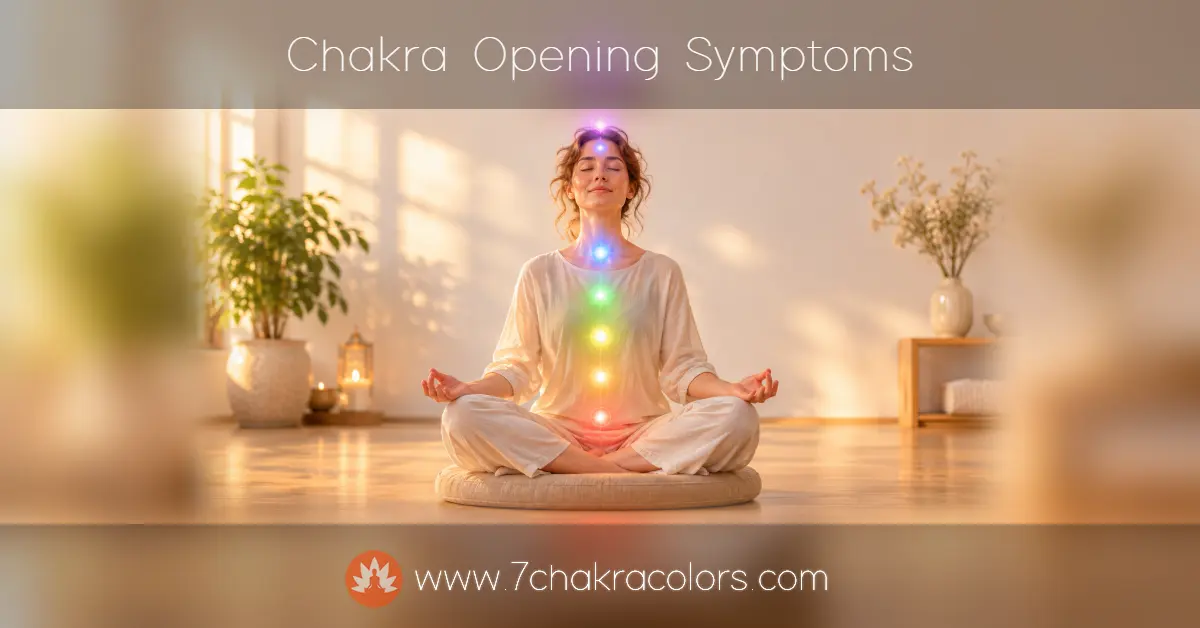
Chakra opening symptoms are the sensations and mood changes people report as energy starts to move more freely through one or more of the seven chakras. The most common are tingling or warmth at a chakra point, waves of emotion, vivid dreams, shifts in sleep and appetite, and more energy and clarity. They're usually mild and come and go over a few days or weeks.
Chakra Opening · Key Facts
- What it is:Energy moving more freely through one or more of the 7 chakras, as described in yogic and tantric tradition
- Most common signs:Tingling, warmth, emotional release, vivid dreams, more energy
- Where you feel it:Along the spine, from the tailbone to the crown of the head
- How long:A few days to a few weeks per phase, based on teacher reports, not measurements
- Science:No scientific evidence that chakras exist as physical structures
- Get checked if:Chest pain, numbness, fainting, severe headaches, or symptoms that keep getting worse
Chakra Opening Symptoms at a Glance
When working with chakra opening techniques, most people notice pretty much the same signs, no matter which chakra is involved. These are the eight that come up most often:
- Tingling or buzzing in the hands, the spine or one spot on the body, often during or right after meditation.
- Warmth or heat at a chakra point, like a small sun sitting in the belly or chest.
- Pressure in the forehead or at the top of the head, usually dull and not painful.
- Sudden emotional release - crying, laughing or feeling moved for no clear reason.
- Vivid dreams or broken sleep, especially in the first week or two.
- Energy swings, with bursts of drive one day and heavy tiredness the next.
- Sharper intuition and clearer thinking, as if background noise has been turned down.
- Feeling more connected to other people, to animals or to nature.
You rarely get all eight at once. Symptoms are most prominent around one area first, which is a useful hint about which chakra is most active right now - then tend to appear on different places or all across the body.
What Happens When a Chakra Opens?
In yoga and tantric tradition, the 7 chakras are energy centers following the central channel of the body (spine) from root (tailbone) to crown (top of the head). The main energetic channel is called sushumna, and two additional channels are ida and pingala. Prana, the life force these traditions describe, is said to flow through them. When teachers talk about a chakra "opening", by that they mean that energy which was blocked or stale at specific chakra points begins to move again.

Unlike kundalini awakening, the chakra opening is rarely a single dramatic moment. For most people the change builds slowly, often after weeks of meditation, breathwork or yoga, or after a big life event such as a move, a breakup or grief, which can also trigger stronger changes at the energetic level. A lot of teachers also point out that a chakra is almost never fully closed: the energy always flows through, but far weaker than at full potential. In this sense, the "opening" process is really a matter of increasing the flow strength.
There's no scientific evidence that chakras exist at the physical level, and nobody has measured chakra opening or prana energy in a lab. The sensations people feel are real, though, and many of them have ordinary explanations too, from deeper breathing to a relaxed nervous system. It is a qualitative value that a person feels, not something you can measure with scientific instruments. Both views - scientific and metaphysical - can sit side by side and complement each other, and this page takes both into account.
How Do You Know If Your Chakras Are Open?
Having open and balanced chakras shows in a way that you feel stable and strong: emotionally, physically, mentally. You have the energy that lasts you through the day, emotions that pass instead of sticking, and a feeling of being grounded and open at the same time. You feel in control of yourself and your life. You are positive. Symptoms like strong tingling or heat usually belong to the transition and are not the result, or an ever-present feeling. If you'd like to test your chakras to see which ones are in balance and which need work, the chakra test gives a quick picture.
Physical Symptoms of Chakra Opening
The physical symptoms of chakra opening that practitioners mention the most are: tingling, heat, pressure, and changes in sleep, appetite, and energy. They usually show up during chakra or energy-work practice or after the session, and they fade on their own.

1. Tingling, Buzzing and Heat Along the Spine
A light buzz in the palms, a warm line moving up the back or heat pooling in one spot is the classic sign. Teachers read it as prana moving through a center. A simpler reason can sit underneath as well: slow breathing and stillness widen blood vessels and make you far more aware of your own skin.
2. Pressure in the Head, Forehead or Chest
A dull pressure between the eyebrows or across the top of the skull is often linked to the third eye and crown, and a full or tender chest to the heart. It should feel mild. Sharp pain, pressure that spreads to the arm or jaw, or a squeezing chest is a medical matter, not an energy one.
3. Changes in Sleep, Appetite and Energy
Some people sleep ten hours for a week, others wake at 3 a.m. wide awake. Appetite can drop, or swing toward simpler, lighter food. Energy often comes in bursts. These shifts are common whenever the body processes stress, so they're worth noting without reading too much into each one.
4. Twitches, Yawning and Sudden Shivers
Small muscle twitches, long yawns and a shiver that runs through the body show up a lot in meditation. In kundalini and qigong traditions they're called kriyas or spontaneous movements. Physically, they're also how a tense body lets go once it finally relaxes.
5. Feeling Light-Headed or Extra Sensitive
For a while, bright light, loud rooms or busy shops may wear you out faster than usual. A brief light-headed feeling after breathwork is common too, mostly from breathing faster or deeper than usual. Sit down, slow your breath and it passes within a minute or two.
Emotional and Spiritual Signs Your Chakras Are Opening
Emotional signs are often the first ones people notice, and they can catch you off guard. Feelings that were pushed aside for years tend to surface once a center becomes more active, which is why chakra awakening symptoms so often include tears.

- Old emotions coming up and passing. A memory, a song or a smell brings up grief or anger that fades again within minutes or hours.
- Mood swings that settle. The first days can feel bumpy, then calmer than before.
- More compassion and patience. Other people's moods bother you less, and forgiving gets easier.
- Stronger intuition. You trust gut feelings more, and some people notice more meaningful coincidences.
- Creativity returning. Ideas, music or the urge to make things comes back after a dry spell.
- A need for quiet. Less interest in noise, alcohol, gossip or a packed calendar.
Spiritual signs are harder to pin down. A sense of meaning, of belonging to something larger, or of finally feeling at home in your own life all get mentioned. Teachers often say emotional release comes first because stored feelings are what kept the energy stuck in the first place. Whatever the cause, letting the feelings move, through crying, writing or talking to a friend, usually works better than trying to stop them.
Chakra Activation Symptoms, Chakra by Chakra
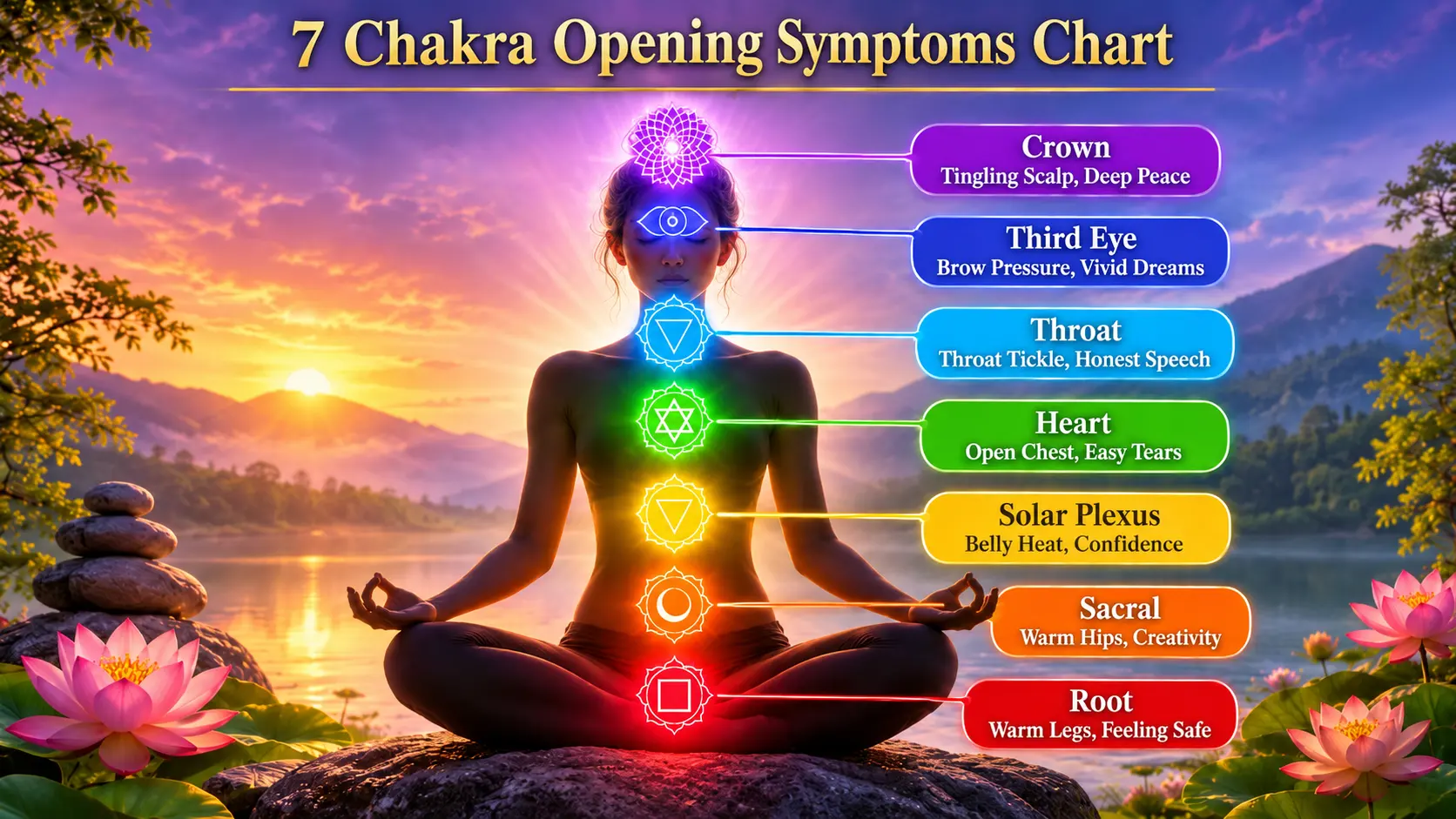
Each chakra has its own typical activation symptoms, tied to the part of the body it sits in and the themes it's linked with in tradition. The table gives the short version, and each chakra below has a summary with a link to its full guide.
| Chakra (location) | Common physical signs | Common emotional signs |
|---|---|---|
| Root (base of the spine) | Warmth or heaviness in the legs and feet, a calmer stomach | Feeling safer, less worry about money and home |
| Sacral (below the navel) | Warmth in the lower belly and hips, a stronger libido | Easy tears and laughter, creativity returning |
| Solar plexus (above the navel) | Heat or butterflies in the upper belly, appetite changes | More confidence, anger rising and then settling |
| Heart (center of the chest) | A spacious feeling in the chest, deeper breaths | Tenderness, old grief, forgiving more easily |
| Throat (throat and neck) | A tickle or lump in the throat, a looser jaw | Speaking more honestly, an urge to sing or write |
| Third eye (between the eyebrows) | Pressure between the eyebrows, vivid dreams | Sharper intuition, noticing patterns |
| Crown (top of the head) | Tingling on the scalp, sensitivity to light | Deep peace, feeling connected, sometimes spacey |
Root Chakra (Muladhara)
The root sits at the base of the spine, and its opening is mostly felt in the legs, feet and lower back. Warmth or heaviness in the legs, a strong wish to be outdoors and a calmer stomach are common. Emotionally, people describe feeling safer in their body and less anxious about money, home or the future. Old fears can flare up briefly before they settle. Because the root is the foundation in most systems, its opening is often the first thing that happens before the upper chakras become active. Read the full list of root chakra opening symptoms.
Sacral Chakra (Svadhisthana)
Just below the navel, the sacral chakra governs pleasure, creativity and emotional flow. When it wakes up, the lower belly and hips can feel warm or loose, and some people notice a stronger libido or a new interest in dance and movement. Tears and laughter come more easily. Creative projects that stalled may suddenly move again. Old shame around the body or sexuality sometimes surfaces, so gentleness matters here. See all sacral chakra opening symptoms.
Solar Plexus Chakra (Manipura)
Opening in the solar plexus, above the navel, tends to feel like heat or butterflies in the upper belly and changes in digestion or appetite. Willpower and confidence usually rise, and you may find it easier to say no. Anger can come up first, especially if you've swallowed it for years, before turning into calmer self-respect. Some people also go through a short burst of restlessness and drive. Here are the full solar plexus chakra opening symptoms.
Heart Chakra (Anahata)
Behind the breastbone, the heart chakra is the bridge between the three lower and the three upper centers. Its opening often brings a soft, spacious feeling behind the breastbone, deeper breaths and looser shoulders. Emotionally it's one of the most intense: easy tears, old grief and a rush of tenderness toward people, even strangers. Forgiveness tends to come more naturally. Any real chest pain needs a doctor, not a meditation. Find out more about heart chakra opening symptoms.
Throat Chakra (Vishuddha)
When the throat chakra opens, people often notice a tickle, a lump or a need to clear the throat, along with tension letting go in the jaw and neck. The bigger change is usually in speech. You say what you mean more often, may feel pulled toward singing or writing, and find small lies harder to tell. Some go quiet for a while before their voice returns stronger. Get the details on throat chakra opening symptoms.
Third Eye Chakra (Ajna)
Pressure or a gentle throb between the eyebrows is the best-known sign of the sixth chakra. Dreams can become vivid and easier to remember, and some people see colors or light with their eyes closed. Intuition often sharpens, along with a wish to understand patterns in your life. Headaches that are strong, new or don't pass need a medical check. The full guide covers all third eye opening symptoms.
Crown Chakra (Sahasrara)
The crown chakra at the top of the head is linked with spiritual connection. Tingling or a light pressure on the scalp, a floating feeling and strong sensitivity to light are common in its opening. People describe a deep sense of peace, of oneness, or of their old worries feeling small. It can also feel spacey, which is why grounding matters at this stage. Read more about crown chakra opening symptoms.
Side Effects and Dangers of Opening Chakras
Most side effects of opening chakras are mild and short: tiredness, headaches, restlessness and a few emotional ups and downs. The real dangers come from forcing very intense practice, or from putting a medical problem down to "energy" and leaving it unchecked.

Meditation isn't risk-free, and research backs this up. A 2020 review of 83 studies found that about 8% of people who meditated reported some adverse effect of meditation, most often anxiety or low mood. The rate was much higher in observational studies than in controlled trials. In a study of an eight-week mindfulness program, about 6% of participants had effects lasting more than a month. That isn't a reason to avoid practice. It's a reason to take strong reactions seriously.
Can Opening Chakras Make You Sick?
Opening chakras isn't known to cause illness. When people feel unwell during chakra work, it's usually tiredness, stress coming to the surface or simply overdoing it, such as hours of breathwork in one day. Fever, vomiting or pain that won't go away point to a medical cause, and that needs a doctor.
Go gently. Keep sessions short, rest when you're tired and stop intense breathing practices if they leave you shaky or panicky. If you've lived through trauma or have a history of psychosis, bipolar disorder or seizures, work with a qualified teacher or therapist. Methods for opening each center are on the chakra healing page.
Chakra Cleansing and Healing Symptoms: The Healing Crisis
After a cleansing, a Reiki session or a strong meditation, many people feel worse for a day or two before they feel better. In energy healing this is called a healing crisis, and it's one of the most common chakra cleansing symptoms.
Typical signs are tiredness, thirst, a mild headache, vivid dreams and crying that seems to come from nowhere. They usually last between one and three days. The idea of a healing crisis is a belief from natural and energy healing, not a proven effect, and a lot of what people feel matches what happens after any deep rest or emotional release.

Integration After Opening
Integration is the quieter phase that follows, when the new state becomes normal. Your mood steadies, the physical signs fade and insights slowly turn into everyday habits. Plenty of sleep, water, simple meals and time outdoors all help. So does doing less for a while. Integration can take longer than the opening itself, and that's fine.
Is It Opening, Healing or a Blockage?
The quickest way to tell them apart is direction: opening feels like movement and eases over the weeks, while a blockage feels like being stuck and keeps coming back.
| Sign | Points to opening or healing | Points to a blockage |
|---|---|---|
| How it feels | Movement: warmth, tingling, feelings that rise and pass | Stuck: heaviness, numbness, the same feeling on repeat |
| Direction over weeks | Eases, in waves that get smaller | Stays the same or slowly gets worse |
| Energy | Swings at first, then steadier | Low, flat or restless most of the time |
| Emotions | Old feelings surface, then you feel lighter | Feelings stay stuck or shut down |
| Body | Mild, short sensations during or after practice | Ongoing tension or discomfort in one area |
| What usually helps | Rest, water, grounding and patience | Steady practice aimed at that chakra |
If your signs sound more like the right column, the guide to blocked chakra symptoms goes through them center by center.
How Long Do Chakra Opening Symptoms Last?
Chakra opening symptoms usually last from a few days to a few weeks for each phase, and they tend to come in waves rather than all at once. Mild signs that fade within that time are normal. Strong symptoms that last longer are a reason to slow down and get a medical check.
The timing depends on how intensely you practice, what's going on in your life and which chakra is involved. Heart and throat openings often bring more emotion and can drag on longer. Root and sacral changes are often physical and settle sooner. There's no research on any of this, so these are patterns teachers describe, not rules.
Is Chakra Opening the Same as a Kundalini Awakening?
Chakra opening and kundalini awakening aren't the same. Chakra opening is usually gradual and affects one center at a time. A kundalini awakening, in yogic tradition, is the energy rising from the base of the spine through all the chakras at once, often with far stronger sensations, emotions and changes to everyday life.
A single chakra opening can feel like a pleasant warmth and a good cry. A full kundalini rising is described as much more intense, sometimes overwhelming, and some people call that kind of crisis a "spiritual emergency". If your experience feels like more than you can handle, the next section matters most.
When to See a Doctor
Energy work is a complement to medical care - never a substitute for it. Many so-called opening symptoms are also signs of conditions that need treatment. See a doctor straight away, or call 911 (112 in Europe) for anything sudden or severe, if you have:
- chest pain, pressure or tightness, especially if it spreads to the arm, neck or jaw
- a racing or irregular heartbeat, or fainting
- numbness or weakness on one side of the body, or trouble speaking
- a sudden, severe headache
- symptoms that get worse or last longer than a few weeks
- panic attacks, feeling detached from yourself, or losing touch with what's real
Thoughts of harming yourself always need urgent help. In the US you can call or text 988 at any hour.
Frequently Asked Questions About Chakra Opening
Which chakra opens first?
Most yoga traditions describe energy rising from the root chakra upward, so the root is often named as the first to open. In practice, many people first notice the heart or the third eye, because sensations in the chest and forehead are easy to feel. There is no fixed order, and two or three chakras often change around the same time.
Can all 7 chakras open at the same time?
It is rare. Teachers describe opening as gradual, one center or a few neighboring centers at a time. Strong sensations in all seven at once are closer to how yogic texts describe a kundalini rising, which can be intense. If everything seems to be happening at once, shorten your practice, rest, eat a proper meal and ground yourself, for example with a walk outside, before going any further.
Can chakras close again after opening?
Yes. Chakra teachers see the centers as always shifting with stress, illness, sleep and life events, so a chakra that felt open can become underactive again. That is not a failure. The habits that helped it open the first time, such as regular practice, movement and honest expression, usually help again. Most teachers describe this ebb and flow as normal, and expect a chakra to open more easily the second time.
Why do I feel tired after chakra work?
Deep relaxation lets the body catch up on rest it has been missing, and emotional release takes energy. Long sessions, intense breathwork and doing several practices in one day add to it. Tiredness after chakra work usually passes within a day or two with sleep, water and lighter sessions. Fatigue that lasts for weeks is worth a medical check, since low iron, thyroid problems and poor sleep are common causes.
Do you have to meditate for your chakras to open?
No. Teachers say chakras can open through life itself: falling in love, grief, a creative project, time in nature or a big change at work. Meditation, yoga and breathwork make it more likely and usually gentler, because you notice what is happening and can slow down. Many people first feel the signs outside any practice at all, often during an emotional time in their life.
Do chakra opening symptoms mean you are on the right path?
Not necessarily. The symptoms show that something is changing, not that you are doing better than someone who feels nothing. Stronger sensations are not a sign of more progress, and pushing for them is how people overdo it. Most teachers treat steadiness, kindness and a calmer daily life as the real signs that the work is going well, much more than tingling or visions.
How can you tell chakra opening symptoms from anxiety?
The two can feel alike: a racing heart, tingling and restlessness. Anxiety usually comes with worried thoughts, a sense of dread and tension that lasts or builds over time. Opening sensations tend to feel neutral or even pleasant and fade on their own. If you are not sure, treat it as anxiety and get support from a doctor or therapist, since that is never a wrong step.
What to Do Next
Notice where your signs gather, in the belly, the chest, the head or somewhere else. That points to the chakra to read about first. Then pick the next step that fits where you are:
-
chakra test
- find out which chakra needs attention
-
chakra healing
- gentle ways to open and balance each center
-
blocked chakra symptoms
- signs that a chakra is stuck
Sources
- Farias M, Maraldi E, Wallenkampf KC, Lucchetti G. Adverse events in meditation practices and meditation-based therapies: a systematic review. Acta Psychiatrica Scandinavica, 2020; 142(5): 374-393.
- Britton WB, Lindahl JR, Cooper DJ, Canby NK, Palitsky R. Defining and measuring meditation-related adverse effects in mindfulness-based programs. Clinical Psychological Science, 2021; 9(6): 1185-1204.