
Throat Chakra Frequency: 741 Hz, HAM Mantra and Healing Sounds
Throat chakra frequency: 741 Hz and 486 Hz, the HAM mantra, the note, chanting and how to use sound to open and balance Vishuddha.
Table Of Contents
The throat chakra frequency is usually given as 741 Hz, the fifth tone of the modern Solfeggio scale. Music-based systems give Vishuddha, the throat chakra, the note G instead, which is 384 Hz on many chakra tuning forks and about 384.87 Hz on singing bowls tuned to A = 432 Hz, and the Pythagorean chart on our site uses 486 Hz. Its seed mantra is HAM. If you are new to it, start with 10-15 minutes of listening, chanting or humming.
- Solfeggio frequency: 741 Hz
- Musical note: G (384 Hz)
- Pythagorean scale: 486 Hz
- Singing bowl: 384.87 Hz
- Seed mantra (bija): HAM
- Element: ether (space)
- Colour: blue
- Location: throat
- Session length: 10-15 minutes
As the throat chakra is associated with communication, listening and being clear in speech, using sound in this practice is a great fit. It pairs well with journaling, open conversation, and taking care of your voice, as given in the full guide to throat chakra healing.
THROAT CHAKRA · VISHUDDHA
741
Hz
Solfeggio frequency
Volume15%
Duration00:00
What Is the Throat Chakra Frequency?
In playlists and videos online, the frequency is almost universally 741 Hz. This is SOL from the Solfeggio scale. Therefore, 741 Hz is very commonly used when referring to this frequency.
Systems based on musical notes associate G with the throat chakra. Within many tuning forks for chakra work, G is 384 Hz. However, in equal temperament tuning (A = 432 Hz), G is approximately 384.87 Hz. Therefore, singing bowls in this tuning will aim to be at this note (although this can vary slightly between bowls). On a piano, G is 392 Hz. The Pythagorean scale found on our page showing chakra frequencies gives this chakra 486 Hz. This is from multiplying 432 Hz by 9/8, and so is a whole tone above 432 Hz (the frequency of the heart chakra). This scale uses simple ratios from 432 Hz rather than note names.
However, in planetary tuning forks, another frequency of 141.27 Hz (Mercury) by Hans Cousto is used for this chakra in chakra forks based on his Cosmic Octave calculations. Therefore, there are 4 very different frequencies given for this chakra. None of these are the same note. 741 Hz is very close to F# (approx. 740 Hz on a piano), 486 Hz is just below B (approx. 494 Hz), and 384 Hz is G.
None of these frequencies have been measured as vibrating the chakra, and they are from different systems. If you wish to listen to recordings of this frequency, go for 741 Hz as there are many available. However, if using a singing bowl or fork, G is commonly used.
The table shows the six throat chakra frequencies side by side, with the system each one comes from.
| Frequency | Tuning system or origin | Common association |
|---|---|---|
| 741 Hz | Modern Solfeggio scale ("SOL") | Expression and solutions; the usual throat chakra tone |
| 384 Hz | C = 256 Hz plus a 3:2 perfect fifth | Note G on chakra tuning forks |
| 384.87 Hz | Equal temperament, A = 432 Hz | Note G on singing bowls |
| 392 Hz | Equal temperament, A = 440 Hz | Note G on a modern piano |
| 486 Hz | Pythagorean ratios from 432 Hz (9:8 above 432 Hz) | Throat tone on our chakra frequencies chart |
| 141.27 Hz | The Cosmic Octave (Hans Cousto), Mercury | Throat fork in planetary tuning fork sets |
Note: 741 Hz is not a G. On a piano it is very close to F sharp (about 740 Hz), so a 741 Hz track and a G bowl play different notes. None of these numbers is a measured frequency of the chakra; they come from different tuning systems and modern sound healing traditions.
Can 741 Hz Detoxify the Body?
It is claimed that 741 Hz can clean, detoxify, remove illness from, or clear negative energies from the body. This comes from the modern Solfeggio scale, where 741 Hz corresponds with expression and solutions. However, it has been exaggerated by those selling healing tracks.
There is no reliable evidence to support that 741 Hz can remove toxins, clean cells, or treat illnesses. Waste is removed from the body via the liver, kidneys and gut, and sound has no impact on this. If you enjoy listening to 741 Hz, play it as background music during vocal or breathing exercises, but do not consider it as any kind of treatment.
Throat Chakra Mantra: How to Chant HAM
HAM is the mantra of the throat chakra. In the Sat-cakra-nirupana, translated by Arthur Avalon (The Serpent Power), the sixteen-petalled lotus of Vishuddha contains a white circle like a full moon. Within this is HAM. In Sanskrit, this is written as हं (haṃ), pronounced "hahm". Start with an open, breathy H, then produce a humming sound on the M so that you can feel it in your throat. It does not matter what pitch this is in relation to the Solfeggio scale, or any number, just use a comfortable pitch.
To do this as a vocal exercise, gently warm up.
- Sit with your head centred over your shoulders, with your chin slightly tucked.
- Shoulder rolls and yawns will help to relax your throat.
- Inhale, and on the exhale produce the sound "hahm". Use any comfortable pitch. Make sure to get a buzzing sound in your throat on the M.
- Inhale through your nose. Repeat. If you'd like to feel the vibration, place a fingertip gently on the front of your throat.
- Repeat for 5 minutes or 108 repetitions on your mala.
Do not strain your voice. If you get a sore throat, reduce the sound to a soft hum or try to chant silently. Have a drink of water.

Throat Chakra Sound: Your Voice, Bowls and Forks
While tracks for 741 Hz are easy to find, the best tool to make use of for this chakra may be your voice.
Your Voice
By humming, singing, reading aloud, or chanting, you are using your throat. If it feels uncomfortable to sing, try toning. This means holding one vowel, such as "ah" or "oo", for the full breath. You do not need to have a good voice, just a willing voice.

Singing Bowls
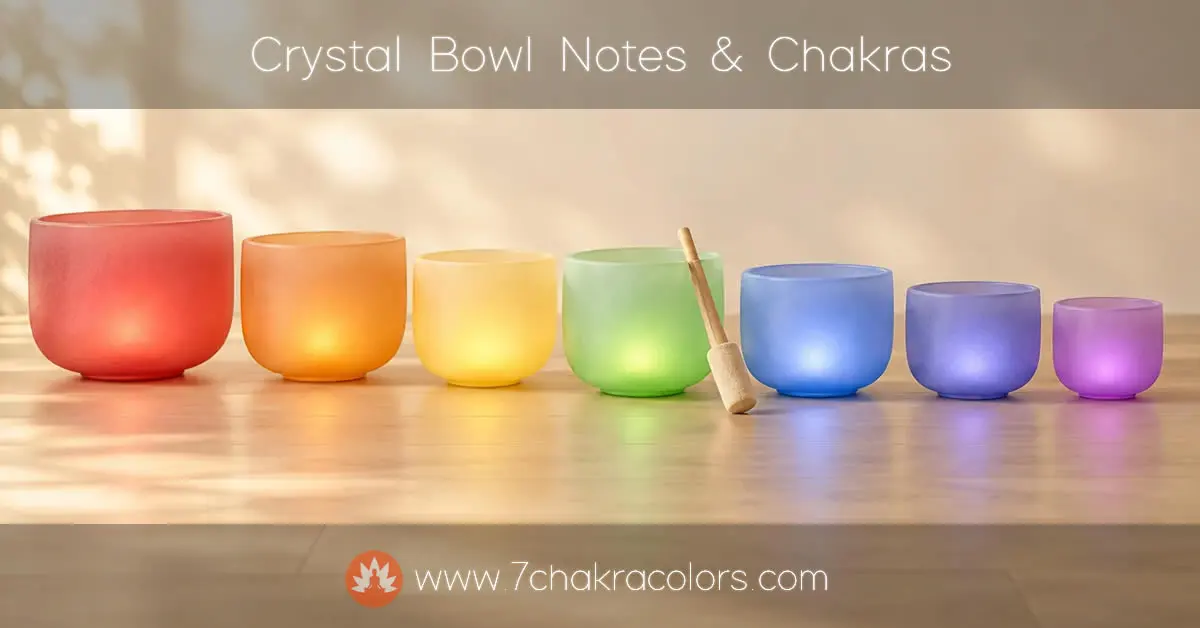
Within a set of bowls, G (for the throat chakra) will often be one of the smaller bowls. However, this can depend on the material and manufacturer. To play this sound, circle the mallet around the rim of the bowl. Try humming to match the pitch. Finding a pitch to match the bowl is a lovely way to work on listening, which is linked to this chakra in teaching.
Tuning Forks
Place a weighted 384 Hz tuning fork gently on the collarbones or the top of the sternum. Never place it on the front of the throat. Unweighted forks can be held comfortably a short distance away from each ear.
ADVERTISEMENT: CONSCIOUS CRYSTALS - 7 CHAKRA COLORS SPECIAL DEALS

Buy Real Chakra Stones and Crystal Jewelry
Explore Full Collection

Using 741 Hz for Communication and Self-Expression
Vishuddha is associated with honest communication, attentive listening and creative expression. However, these benefits are not proven effects of using 741 Hz. It will not make you a better communicator; what helps is using your voice, with 741 Hz played in the background if you like.
- Warm up. Relax your jaw, give your shoulders a roll. Hum for 1 minute.
- Read aloud. Read one page of a book aloud for 5 minutes. Try to speak slightly more slowly than feels natural.
- Prep for a difficult conversation. Practise saying the first two sentences of the conversation aloud. Say them until they sound natural.
- Be an active listener. When having a conversation, wait until the other person has finished speaking before forming a response.
- Be aware of your habits. Are you gritting your teeth, speaking too quickly, or trailing off? Simply be aware of this.
How to Use Throat Chakra Healing Frequency: A 15-Minute Session
This optional practice uses your voice, as this chakra relates to speaking and listening. Try this once a day if possible.
Begin with 2 minutes of easy breathing. Loosen your jaw, neck and shoulders. See throat chakra breathing for a few easy options. Then gently hum for 2 minutes. Then listen to 741 Hz or a G singing bowl for 4 minutes. This can be done using the player at the top of this page or from recordings. Chant HAM for 4 minutes. Then tone a comfortable vowel (such as "ah" or "oo") for 2 minutes. Finally, be silent for 1 minute. Ask yourself, "What would I like to communicate more clearly and honestly today?"
| Minutes | What you do | Sound |
|---|---|---|
| 0-2 min | Breathe easily and loosen the jaw, neck and shoulders | Silence |
| 2-4 min | Hum gently with closed lips | Your own hum |
| 4-8 min | Listen with a relaxed throat | 741 Hz in the player above, or a G bowl |
| 8-12 min | Chant HAM on each out-breath | Your own voice |
| 12-14 min | Tone a comfortable vowel, such as ah or oo | Your own voice |
| 14-15 min | Sit in silence: what would I like to say more clearly today? | Silence |
For a guided version, play the tone quietly under the throat chakra meditation.
This can be a very useful practice to do before a conversation you are nervous about, or before speaking in public.
Why Is 741 Hz Associated With the Throat Chakra?
There are two different things referred to here. The original solfège syllables (ut, re, mi, fa, sol, la) come from a hymn used by Guido of Arezzo (around 1025 AD) to help teach singers. As pitch was not measured in hertz until the 19th century, these syllables did not have frequencies. However, in modern times, the Solfeggio frequencies use these syllables.
Numbers were added by Joseph Puleo in the 1970s. The numbers became popular in the 1999 book Healing Codes for the Biological Apocalypse by Leonard Horowitz and Puleo. In this list, 741 Hz is known as SOL. It is said to relate to expression and solutions, which is why it was later associated with the throat chakra by sound healers. However, this book is not about chakras.
Therefore, this association is relatively new. 741 Hz is a high, bright note. Depending on the volume, length and your sensitivity, this can be uncomfortable. We recommend keeping volumes low and sessions short.
Throat Chakra Note: G and 384 Hz
In Western chakra music, G is used for the throat chakra. This is the 5th note in the C major scale (C to B).
Many tuning forks for chakras begin with C as 256 Hz (scientific pitch), and G is then tuned to be a perfect fifth (3:2 ratio) above C. This creates a very harmonious interval in music and gives G a frequency of 384 Hz. G in equal temperament tuning with A = 432 Hz is approx. 384.87 Hz. G on a modern piano is 392 Hz. All of these are G, although the piano G is noticeably higher.
As voices vary greatly, do not worry about matching any of these pitches! Simply hum or chant at any comfortable pitch and octave for you.
What Does Science Say About 741 Hz and Throat Chakra Sound?
There is reasonable evidence to suggest that sound meditations can be relaxing. However, there is no evidence that 741 Hz (or any pitch) affects the throat chakra, cleanses the body or removes illness.
In 2017, 62 adults felt less tense, angry, tired and in a bad mood after a singing bowl meditation (Goldsby et al., 2017). However, as no control group was used, some of this effect could be due to simply taking a break. Also, the bowls used in this study were not tuned to 741 Hz.
There is slightly more research into using your own voice. In a small study of 10 healthy individuals, humming increased nitric oxide levels in the nose approximately 15 times compared to passive exhalation. This is likely due to the vibration aiding air flow in and out of the sinuses (Weitzberg and Lundberg, 2002). Although this research does not relate to chakras, it is still a great reason to begin humming!
For practical reasons, practising speaking, singing and humming more regularly is a great idea regardless of what you think about chakras.
ADVERTISEMENT: CONSCIOUS CRYSTALS - 7 CHAKRA COLORS SPECIAL DEALS
Buy Real Chakra Stones and Crystal Jewelry
Explore Full Collection
Safety: Volume and Your Voice
Keep the volume low (especially in headphones). Take regular breaks to ensure you are listening safely, as recommended by the World Health Organization. Whether or not listening to this sound is comfortable will depend on the volume, length, pitch and your sensitivity.
- If you experience ringing in the ears, headaches or dizziness, stop.
- If your voice becomes raspy, give it a rest. Do not chant in pain. Keep vocal exercises gentle and short to begin with.
- Do not place tuning forks on the front of your throat.
- Do not play relaxing tracks while driving.
If you have a persistently raspy voice (more than 3 weeks), difficulty swallowing or a lump in your neck, see a doctor. Sound practices are to aid self-care, and not a treatment.
Sources
- Arthur Avalon (Sir John Woodroffe), The Serpent Power (1919), translation of the Sat-cakra-nirupana: Vishuddha, sixteen petals, the region of ether, the bija HAM.
- Hans Cousto, The Cosmic Octave: the Mercury tone, 141.27 Hz, used as the throat chakra fork in planetary tuning fork sets.
- Leonard G. Horowitz and Joseph S. Puleo, Healing Codes for the Biological Apocalypse (1999): the six Solfeggio frequencies.
- Goldsby TL, Goldsby ME, McWalters M, Mills PJ. Effects of Singing Bowl Sound Meditation on Mood, Tension, and Well-being: An Observational Study. J Evid Based Complementary Altern Med. 2017;22(3):401-406.
- Weitzberg E, Lundberg JON. Humming greatly increases nasal nitric oxide. Am J Respir Crit Care Med. 2002;166(2):144-145.
- World Health Organization, "Deafness and hearing loss: safe listening" (questions and answers).
Frequently Asked Questions About Throat Chakra Frequency
What frequency is the throat chakra?
The throat chakra frequency quoted most often is 741 Hz, the fifth tone of the modern Solfeggio set. Systems based on musical notes give the throat chakra G instead: 384 Hz on many chakra tuning forks, about 384.87 Hz on bowls tuned to A = 432 Hz and 392 Hz on a modern piano. Our Pythagorean chart uses 486 Hz, and planetary fork sets based on Hans Cousto's numbers use 141.27 Hz. None of these has been measured in the body.
What are the benefits of 741 Hz?
In Solfeggio teaching 741 Hz is the tone for expression and solutions, and people use it for clearer communication, self-expression and confidence before speaking. These are aims of the practice, not tested effects of the number. The parts that help most are the voice exercises themselves: humming, reading aloud and chanting, with the tone as a background.
Can 741 Hz unblock the throat chakra?
Some sound healers say so, but this has not been shown. Treat 741 Hz as one gentle part of a wider routine: using your voice, honest conversations, journaling and the other steps in the throat chakra healing guide. If you have ongoing voice or throat problems, see a doctor.
Is the throat chakra frequency 741 Hz or 384 Hz?
Both are used, by different systems. 741 Hz comes from the Solfeggio list, while 384 Hz is the note G that chakra tuning forks give the throat chakra. They are different pitches: 741 Hz is close to F sharp. For recordings, 741 Hz is the easiest to find; for a bowl or fork, G is the usual throat chakra choice.
How do you pronounce the HAM mantra?
Say it "hahm": an open, breathy H, an open "ah", and a long humming M that you can feel buzzing in the throat. In Sanskrit it is written हं (haṃ). Chant it at any comfortable pitch; it does not need to match 741 Hz or any other number.
Does humming help the throat chakra?
Humming is one of the simplest throat chakra practices, because it uses the voice gently and you can feel the vibration in your throat and face. There is no evidence that it acts on a chakra, but a small study found humming raises nitric oxide in the nose and sinuses, and many people find it calming. Keep it soft and stop if your throat feels sore.
How long should I listen to 741 Hz?
Five to 15 minutes once a day is plenty. Start with five minutes at a low volume, using the timer in the player on this page, and build up to the 15-minute session if you like it. If a tone gives you a headache, ringing in the ears or dizziness, stop and hum or chant HAM instead.
Try humming or chanting HAM for 5 minutes before you next have to speak. If you enjoy this, try adding 741 Hz. Next steps could include:
-
Throat chakra healing meditation
(guided)
-
Throat chakra affirmations
(short statements to say aloud)