
Solar Plexus Chakra Frequency: 528 Hz, RAM Mantra and Healing Sounds
Solar plexus chakra frequency: 528 Hz and 324 Hz, the RAM mantra, the note, healing music and how to use sound to balance Manipura.
Table Of Contents
The solar plexus chakra frequency is usually given as 528 Hz, the third tone of the modern Solfeggio scale. Systems based on musical notes give Manipura, the solar plexus chakra, the note E instead, which is 320 Hz on many chakra tuning forks and about 323.63 Hz on singing bowls tuned to A = 432 Hz, and the Pythagorean scale uses 324 Hz. Its seed mantra is RAM. If you are new to it, start with 10-15 minutes of listening or chanting.
- Solfeggio frequency: 528 Hz
- Musical note: E (320 Hz)
- Pythagorean scale: 324 Hz
- Singing bowl: 323.63 Hz
- Seed mantra (bija): RAM
- Element: fire
- Colour: yellow
- Location: upper belly, between the navel and the breastbone
- Session length: 10-15 minutes
The solar plexus chakra (located in the upper abdomen) is linked to confidence, determination and digestion. Whilst the name references the solar plexus in the body, the chakra does not correspond to the actual nerve network. In the body, the solar plexus forms a network of nerves behind the stomach. Using sound for healing this chakra can be very relaxing. It pairs well with the other techniques in this guide to solar plexus chakra healing, including core exercises, eating regularly, and making small personal commitments.
SOLAR PLEXUS CHAKRA · MANIPURA
528
Hz
Solfeggio frequency
Volume15%
Duration00:00
What Is the Solar Plexus Chakra Frequency?
Within the modern Solfeggio system, 528 Hz is associated with the Manipura chakra. It is known as MI in the Solfeggio list. It is likely the most well-known of all 6 Solfeggio tones.
In systems matching chakras with notes, the solar plexus chakra corresponds to E (third note in C major scale). In chakra tuning forks this can be 320 Hz, in A = 432 Hz singing bowls approximately 323.63 Hz, and in a standard piano this note is 329.63 Hz. In planetary tuning forks, Hans Cousto calculated the tone of the sun as 126.22 Hz. Chakra tuning fork sets based on his Cosmic Octave calculations assign this frequency to the navel/solar plexus chakra. However, within the Pythagorean system (see our chakra frequencies page), the solar plexus chakra is 324 Hz. This is a perfect fifth above the root chakra (216 Hz). It is created mathematically in this system, using simple ratios, starting from 432 Hz, so this frequency should not be associated with the note E.
Note that whilst 528 Hz is the frequency most commonly used for this chakra, it is very similar in pitch to the note C. On a standard piano, the note C is approximately 523 Hz. Therefore, 528 Hz and an E singing bowl are two different notes.
These frequencies have not been found as natural vibrations of this chakra. They have come from different systems. As there are many tracks available, using 528 Hz recordings is the easiest option. If using an instrument, you can look for bowls tuned to E.
The table shows the six solar plexus chakra frequencies side by side, with the system each one comes from.
| Frequency | Tuning system or origin | Common association |
|---|---|---|
| 528 Hz | Modern Solfeggio scale ("MI") | Transformation; the usual solar plexus chakra tone |
| 320 Hz | C = 256 Hz plus a 5:4 major third | Note E on chakra tuning forks |
| 323.63 Hz | Equal temperament, A = 432 Hz | Note E on singing bowls |
| 329.63 Hz | Equal temperament, A = 440 Hz | Note E on a modern piano |
| 324 Hz | Pythagorean ratios from 432 Hz (3:2 above 216 Hz) | Solar plexus tone on our chakra frequencies chart |
| 126.22 Hz | The Cosmic Octave (Hans Cousto), the Sun | Solar plexus fork in planetary tuning fork sets |
Note: 528 Hz is not an E. On a piano it sits close to C (523.25 Hz), so a 528 Hz track and an E bowl play different notes. None of these numbers is a measured frequency of the chakra; they come from different tuning systems and modern sound healing traditions.
Solar Plexus Mantra: How to Chant RAM
The solar plexus chakra mantra is RAM. Within the Sat-cakra-nirupana (translated by Arthur Avalon in The Serpent Power), the Manipura is described as having 10 petals with a red inverted triangle of fire at its centre. The mantra RAM sits within this triangle. Bija mantras are single syllable mantras for each chakra. In Sanskrit, this is written as रं (raṃ). Pronounced "rahm". It can be a little rolled at the R, and has a long humming M. Exactly how it sounds may vary depending on the tradition. You do not need to match the pitch of the Solfeggio, just choose a comfortable pitch.
To chant steadily, sit up straight.
- Sit either on a chair or cushion. Have your shoulders relaxed. Place your hands slightly above your navel.
- Breathe in deeply 3 times. Let your stomach gently press against your hands.
- Exhale, and chant "rahm", using a steady, comfortable tone. Use a medium pitch.
- Inhale through your nose. Repeat. If it helps, focus on any warmth in the area below your hands.
- Repeat for around 5 minutes (or 108 times on a mala).
Some people chant this loudly, and some very quietly. Both work. If you feel dizzy, chant more slowly. Take a few regular breaths between rounds.

Solar Plexus Chakra Sound: Bowls, Forks and Drumming
As there are many recordings of 528 Hz, this is the easiest option to begin with. Below are different methods of making a sound for this chakra.
Singing Bowls
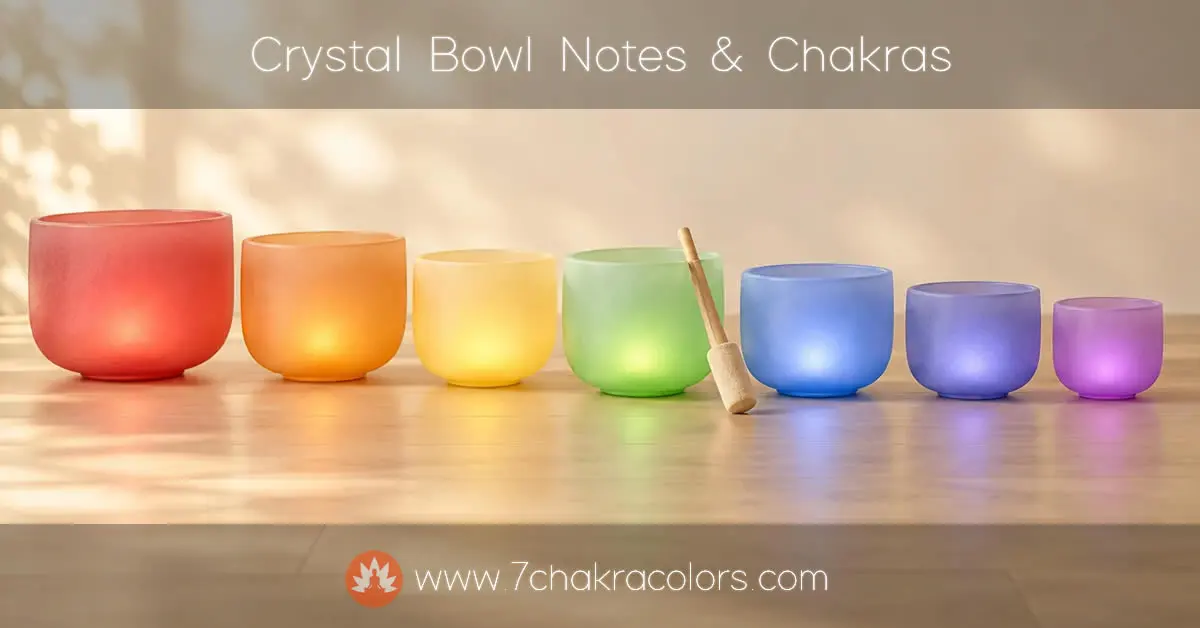
You will find that within a set of 7 singing bowls, the solar plexus chakra is in the 3rd largest bowl. The crystal versions will give a clear, pure sound. Metal ones will have a richer sound. To play it, gently hit the bowl or rub the mallet slowly around the edge. Place a cushion beneath it so it sits at around belly-height.

Tuning Forks
Gently strike the 320 Hz tuning fork. Hold it just a few cm in front of your upper stomach or in front of each ear alternately. Some practitioners place the weighted stem of the tuning fork very lightly on the sternum. Be gentle and stop if anything feels uncomfortable. Avoid painful areas, recently operated areas and during pregnancy avoid placing on the stomach.
Drumming
As this chakra relates to fire, steady drumming can be a good sound to use. Tap your thighs or use a hand drum for a steady beat, just faster than a resting heartbeat. Alternatively, playing upbeat music with a clear beat for a few minutes can have a similar effect. This is good to give energy.
ADVERTISEMENT: CONSCIOUS CRYSTALS - 7 CHAKRA COLORS SPECIAL DEALS

Buy Real Chakra Stones and Crystal Jewelry
Explore Full Collection

Using 528 Hz for Confidence and Personal Power
Within chakra teachings, the Manipura chakra is linked to confidence, determination and taking action. In the Solfeggio list, 528 Hz is considered to be a tone of transformation. However, there is no evidence to support that simply listening to 528 Hz will give you more confidence. Using this frequency can help you dedicate a short amount of time to one of these practices:
- Before a hard conversation or an exam, listen for three minutes, sitting tall, and decide on the first sentence you will say.
- Write down one decision you have been putting off, and the smallest step that would move it forward.
- Journal about a boundary that matters to you this week, where you want to say yes and where no.
- Say a fewsolar plexus chakra affirmationsout loud with the tone playing quietly.
How to Use Solar Plexus Chakra Healing Frequency: A 15-Minute Session
Sit up straight. Breathe into your upper tummy for 2 minutes. (See solar plexus chakra breathing for a few options.) Tap your thighs (or a hand drum) for 2 minutes. Play 528 Hz, or an E bowl (from the player above or a recording) for 5 minutes. Imagine warm sunlight in your upper tummy. Chant RAM for 4 minutes. Finally, in the last 2 minutes, ask yourself: What is one achievable thing I can do today which aligns with my values?
| Minutes | What you do | Sound |
|---|---|---|
| 0-2 min | Sit upright and breathe naturally into the upper belly | Silence |
| 2-4 min | Tap a steady rhythm on your thighs or a hand drum | Your own rhythm |
| 4-9 min | Listen and picture warm sunlight in the upper belly | 528 Hz in the player above, or an E bowl |
| 9-13 min | Chant RAM on each out-breath | Your own voice |
| 13-15 min | Ask yourself what one achievable thing you can do today | Silence |
If you would like guidance, try the solar plexus chakra meditation.
This practice could be a good one to try first thing in the morning to set an intention. Or any regular time. Ensure that you are comfortable physically. Do not practise directly after a heavy meal.
Why Is 528 Hz Associated With the Solar Plexus Chakra?
It is important to note that two different things share this name. The original solfège syllables come from a hymn that Guido of Arezzo used around 1025 to aid singing. However, pitches could not be measured in Hz at that time, only since the 19th century. The Solfeggio frequencies are a modern set of frequencies. The numbers were calculated by Joseph Puleo in the 1970s, and became popular in the book written by Leonard Horowitz in 1999 with Puleo called Healing Codes for the Biological Apocalypse.
Within this list, 528 Hz is MI. It is said to promote "transformation and miracles". However, this book makes no reference to chakras. Later sound healers matched the tones to chakras. 528 Hz was matched to the solar plexus chakra, associated with personal power and change. Some charts link it to the heart chakra, meaning that this linking is quite loosely done. Either way, this is a modern association.
Why Is 528 Hz Called the Love Frequency?
528 Hz is known as the love frequency due to Horowitz. He wrote a book on 528 Hz, and it was given this nickname in his writing.
Can 528 Hz Repair DNA?
Horowitz also claimed that 528 Hz can repair DNA. However, there is no clinical research to suggest that listening to 528 Hz can fix DNA. It would be better not to rely on any tracks or products claiming this.
Solar Plexus Chakra Note: E and 320 Hz
In Western chakra music, the solar plexus chakra is assigned the note E. This is the third note in the C major scale, beginning at C (root chakra) and ending at B (crown chakra).
Depending on tuning, the exact note may vary. Many chakra tuning forks are tuned beginning from C = 256 Hz (scientific pitch). E is tuned using a pure major third (ratio of 5:4) from C, giving this note a value of 320 Hz. In equal tempered tuning, using A = 432 Hz, this note will be approximately 323.63 Hz. In a modern piano it will be 329.63 Hz. All of these are E. However, you may notice a difference in pitch when played in quick succession. The Pythagorean tuning given on our hub page (324 Hz) is calculated differently as it is a perfect fifth (ratio of 3:2) from 216 Hz. However, by chance it is very close to the value of singing bowls. If you have an E singing bowl, you are very close to both frequencies.
What Does Science Say About 528 Hz?
There is some research regarding the relaxing effects of sound, however nothing to suggest that this tone can balance the solar plexus chakra.
There is limited research on 528 Hz specifically. In 2018, 9 healthy people in Japan listened to piano music at 528 Hz and 440 Hz on different days. After listening to 528 Hz, less of the stress hormone cortisol was present in their saliva. Participants also felt less tense and anxious (Akimoto et al, 2018). This was music, not a pure tone. This study only looked at short term stress, not chakras, confidence or digestion. Only 9 participants were used in this study, meaning that we cannot make strong conclusions. Another study in 2017 looked at singing bowl meditation in a larger sample (than 9 people). It concluded that less tension and tiredness was felt after the practice, although no control group was used (Goldsby et al, 2017).
Overall, consider 528 Hz to be a relaxing tone. If it helps you feel more grounded and confident, it is worth including in your practice.
ADVERTISEMENT: CONSCIOUS CRYSTALS - 7 CHAKRA COLORS SPECIAL DEALS
Buy Real Chakra Stones and Crystal Jewelry
Explore Full Collection
Safety: Volume, Hearing and When to Get Help
Keep the volume low, particularly if using headphones. Take regular breaks to keep listening safely, as advised by the World Health Organization.
- If you experience ringing in the ears, headaches, dizziness or a fast heartbeat, stop.
- If you have tinnitus or are sensitive to sounds, keep the volume extremely low or chant.
- Avoid placing weighted tuning forks over your stomach during pregnancy, over fresh scars and over painful areas.
- Do not listen to relaxing tracks whilst driving.
Sound therapies should not replace medical treatment, and 528 Hz is not a treatment for digestive issues, hormonal issues or anxiety. If you have ongoing stomach pain/heartburn/digestive problems, or anxiety affecting your daily life, please see a doctor.
Sources
- Arthur Avalon (Sir John Woodroffe), The Serpent Power (1919), translation of the Sat-cakra-nirupana: Manipura, ten petals, the triangle of fire, the bija RAM.
- Hans Cousto, The Cosmic Octave: the Sun tone, 126.22 Hz, used as the solar plexus fork in planetary tuning fork sets.
- Leonard G. Horowitz and Joseph S. Puleo, Healing Codes for the Biological Apocalypse (1999): the six Solfeggio frequencies.
- Akimoto K, Hu A, Yamaguchi T, Kobayashi H. Effect of 528 Hz Music on the Endocrine System and Autonomic Nervous System. Health. 2018;10(9):1159-1170. doi:10.4236/health.2018.109088.
- Goldsby TL, Goldsby ME, McWalters M, Mills PJ. Effects of Singing Bowl Sound Meditation on Mood, Tension, and Well-being: An Observational Study. J Evid Based Complementary Altern Med. 2017;22(3):401-406.
- World Health Organization, "Deafness and hearing loss: safe listening" (questions and answers).
Frequently Asked Questions About Solar Plexus Chakra Frequency
What frequency is the solar plexus chakra?
The solar plexus chakra frequency quoted most often is 528 Hz, the third tone of the modern Solfeggio set. Systems based on musical notes give the solar plexus chakra E instead: 320 Hz on many chakra tuning forks, about 323.63 Hz on bowls tuned to A = 432 Hz and 329.63 Hz on a modern piano. The Pythagorean chart on our chakra frequencies page uses 324 Hz, and planetary fork sets based on Hans Cousto's numbers use 126.22 Hz. None of these has been measured in the body.
Is the solar plexus chakra frequency 528 Hz or 320 Hz?
Both are used, by different systems. 528 Hz comes from the Solfeggio list, while 320 Hz is the note E that chakra tuning forks give the solar plexus chakra. They are different pitches: 528 Hz is close to C. For recordings, 528 Hz is the easiest to find; for a bowl or fork, E is what shops sell as a solar plexus chakra tool.
What are the benefits of 528 Hz?
In Solfeggio teaching 528 Hz is the tone of transformation, and people use it for confidence, motivation and a sense of personal power. These are spiritual ideas, not tested effects. One small 2018 study with nine people found less cortisol and less tension after music tuned to 528 Hz, but it looked only at short-term stress. The tone works best as a calm background for breathing, chanting or setting an intention.
Is 528 Hz the heart chakra or the solar plexus chakra frequency?
Most charts give 528 Hz to the solar plexus chakra, the third chakra, because it is the third Solfeggio tone. Some charts give it to the heart because of its 'love frequency' nickname. Neither pairing is old or measured; our chakra frequencies page follows the more common order, with 639 Hz for the heart.
Does RAM need to be chanted at 528 Hz?
No. The bija mantra RAM is a syllable, not a pitch. Chant it at any comfortable middle pitch in a steady voice; most voices could not hold 528 Hz comfortably anyway. You can chant over a 528 Hz track or an E bowl, and your voice does not need to match either one.
How long should I listen to 528 Hz?
Five to 15 minutes once a day is plenty. Start with five minutes at a low volume, using the timer in the player on this page, and build up to the 15-minute session if you like it. A pure tone can start to feel tiring after a while; if it gives you a headache, ringing in the ears or dizziness, stop and chant RAM instead.
Do I need headphones for solar plexus chakra frequencies?
No. Speakers work well, especially for singing bowls and drumming, and let you move or tap a rhythm freely. Small phone speakers can make the lower tones such as 126 Hz sound faint, so use a better speaker or headphones if needed. With headphones, keep the volume below about 60 percent of the maximum, as the World Health Organization advises, and take breaks.
Try chanting RAM for 5 minutes in a tall seated position before breakfast tomorrow. If it works well for you, combine with 528 Hz. Good to try next:
-
Solar plexus chakra healing meditation
(guided)
-
Solar plexus chakra healing affirmations
(short statements to try after chanting)