


Root Chakra Yoga Poses: 8 Grounding Asanas and a 15-Minute Sequence
Root chakra yoga poses for grounding: 8 asanas with steps, a 15-minute sequence and the best meditation pose, with beginner options and safety tips.
Table Of Contents
The best root chakra yoga poses are slow standing and low poses that press your feet and legs into the floor: Mountain, Warrior I, Warrior II, Tree, Chair, Garland, Bridge and Child's pose. Hold each one for 5-8 slow breaths, which is about 30-60 seconds, warm up your feet and legs for two minutes first, and link the poses into a 15-minute sequence once a day.
- Chakra: Muladhara (root), earth element
- Poses: 8, plus a 2-minute standing warm-up
- Hold: 5-8 breaths each
- Full sequence: 15 minutes
- Best time: morning, or early evening on an empty stomach
- Props: mat, block, wall, folded blanket
- Level: beginner
In yoga tradition these poses work on the root chakra because they keep you standing, slow and low to the ground. Yoga is only one part of it, and the guide on how to unblock root chakra energy covers the rest, from walking barefoot to food and sound.
The 8 Best Root Chakra Yoga Poses
These poses all place weight on the feet or shins, are held for longer, and have the hips relatively low. Teachers link these postures to the Muladhara chakra, representing the earth element. This chakra is located at the bottom of the spine.
Some postures that might appear in other lists are not included in this list. Postures such as Crow, being balanced on the hands, take you away from the ground and so are the opposite of what you want for the root chakra.
If you can only do 3 postures, try Mountain, Garland and Child's pose.
| Pose | What it does for grounding | Level |
|---|---|---|
| Mountain (Tadasana) | Spreads your weight evenly over both feet | Beginner |
| Warrior I (Virabhadrasana I) | Builds leg strength with the back heel pressed down | Beginner |
| Warrior II (Virabhadrasana II) | A wide stance where the legs carry the work | Beginner |
| Tree (Vrksasana) | Teaches you to press one foot firmly into the floor | Beginner (use a wall) |
| Chair (Utkatasana) | Heats the thighs with the heels kept down | Beginner |
| Garland (Malasana) | Brings the hips close to the floor, weight on the feet | Beginner with a block |
| Bridge (Setu Bandhasana) | The feet press down to lift the hips | Beginner |
| Child's pose (Balasana) | Rest, with the shins and forehead on the floor | Beginner |
Step-by-Step: Yoga Poses for the Root Chakra
Complete these postures in order. Do them barefoot and complete them slowly. The sequence below can be completed as a 15-minute sequence, so once you get used to the postures, just follow the table.
Warm-Up: 2-Minute Root Chakra Stretches for the Feet and Legs
Because we often wear shoes during the day, it can be a good idea to warm up the feet. Doing these simple postures for 2 minutes will help to warm up the feet, making you feel grounded in all of the postures below.
- Rock gently forwards and backwards on your heels and toes. 10 repetitions.
- Lift up all your toes. Splay them out, and gently place each toe back one by one.
- Bend your knees to make a half squat. Straighten again. Repeat 8 times. Make sure your heels are on the ground.
- Rotate your ankles 5 times in each direction. If you wobble, support yourself against a wall.
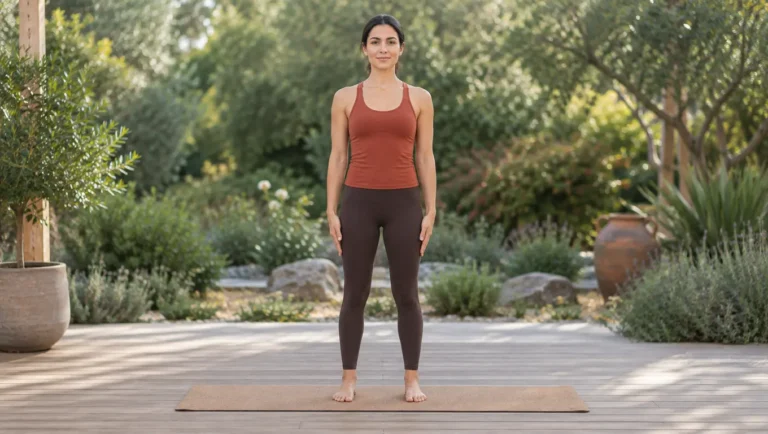
Mountain Pose (Tadasana)

Although this seems simple, you must be aware of your body in this posture. B.K.S. Iyengar, in Light on Yoga, also calls it Samasthiti, which roughly means standing still and upright. All of the standing postures on this page begin from Mountain.
- Stand with feet either touching at the big toes, or hip distance apart (whichever feels most stable).
- Spread your weight over four points of each foot: the big toe mound, the little toe mound and both sides of the heel.
- Let your knees be straight but not locked, and lengthen your tailbone down toward the floor.
- Place your arms by your sides with your palms facing in towards your thighs. Lift the crown of your head a little.
- Breathe slowly in through your nose. Hold for 8 breaths.
This is a good posture to do in public spaces. You could do it at bus stops or queues in shops and nobody would notice. If you suffer from low blood pressure and get light-headed, ease your knees into a bend and do not hold this posture for longer than 1 minute.
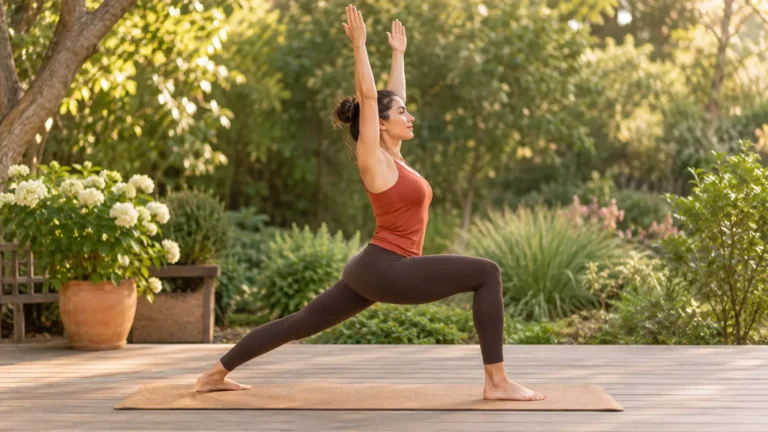
Warrior I (Virabhadrasana I)

This posture requires strong legs, and so is included in this list.
- From the mountain posture, take a large step back with your left foot. Ensure that your back foot is turned out approximately 45 degrees. Ensure that your entire heel is on the ground.
- Bend your front knee so that it is over the ankle. Ensure that your hips are facing forwards.
- Raise your arms above your head, and place them shoulder-width apart. Ensure that your shoulders are relaxed.
- Hold for 5 breaths. Return to Mountain pose. Repeat on the other side.
If you find that your back heel is lifting off the ground, shorten your stance. This posture will still work.
This posture is named after a warrior from Hindu mythology. According to Iyengar, it is said that Virabhadra came from a lock of hair which Shiva tore out in grief and anger after his wife Sati's death and threw to the ground.
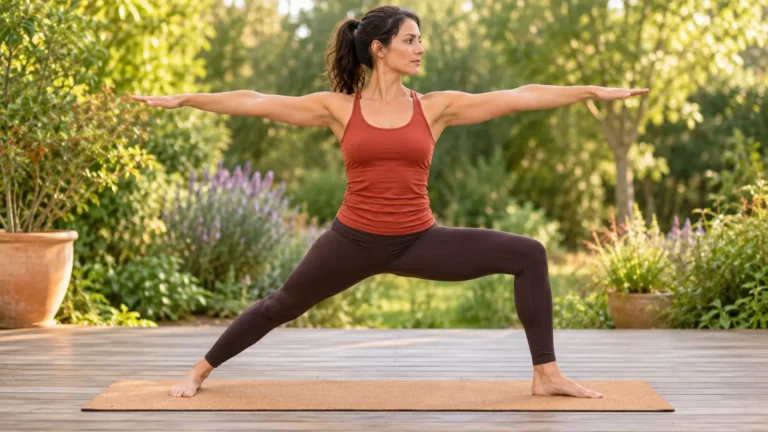
Warrior II (Virabhadrasana II)

Ensure that in this posture your front knee does not cave in. Ensure that your front knee is pointing over your second or third toe. It should be just above the ankle joint.
- Stand with your feet wide apart (about one leg's length).
- Turn your right foot out 90 degrees, and turn your left foot slightly in.
- Bend your right knee. Extend your arms to the side, level with your shoulders. Look over your right hand.
- Hold for 5-8 breaths. Repeat on the other side.
Although your arms may get tired, this posture is mainly working the legs. Let them work!
ADVERTISEMENT: CONSCIOUS CRYSTALS - 7 CHAKRA COLORS SPECIAL DEALS

Buy Real Chakra Stones and Crystal Jewelry
Explore Full Collection

Tree Pose (Vrksasana)

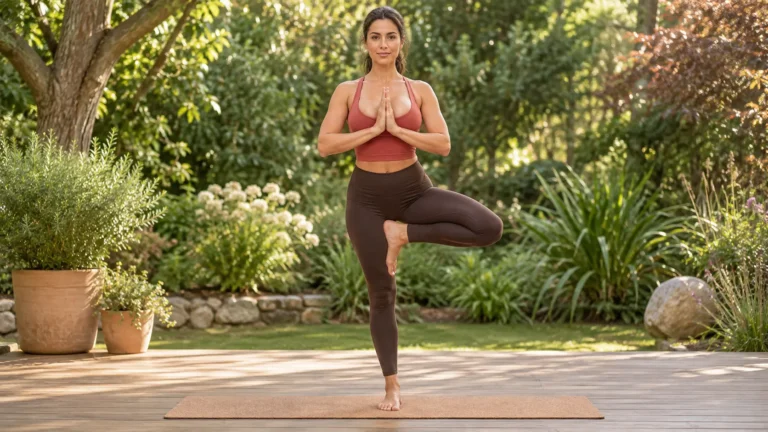
Although this is a balancing posture, it falls into the grounded category, as in order to balance on one leg, you must push firmly into the ground with your foot. This posture therefore works in a similar way to Mountain.
- Begin in Mountain. Shift your weight onto your left leg.
- Place the sole of your right foot onto the left ankle, calf or inner thigh (never on the side of the knee).
- Bring your hands together at your chest, or place your hands on your hips.
- Fix your gaze on a single point. Hold for 5-8 breaths. Repeat on the other side.
It is common to wobble in this posture. Some days it will be harder than others, especially if you are tired. Stand next to a wall and place a hand on it until you no longer need to.
Chair Pose (Utkatasana)
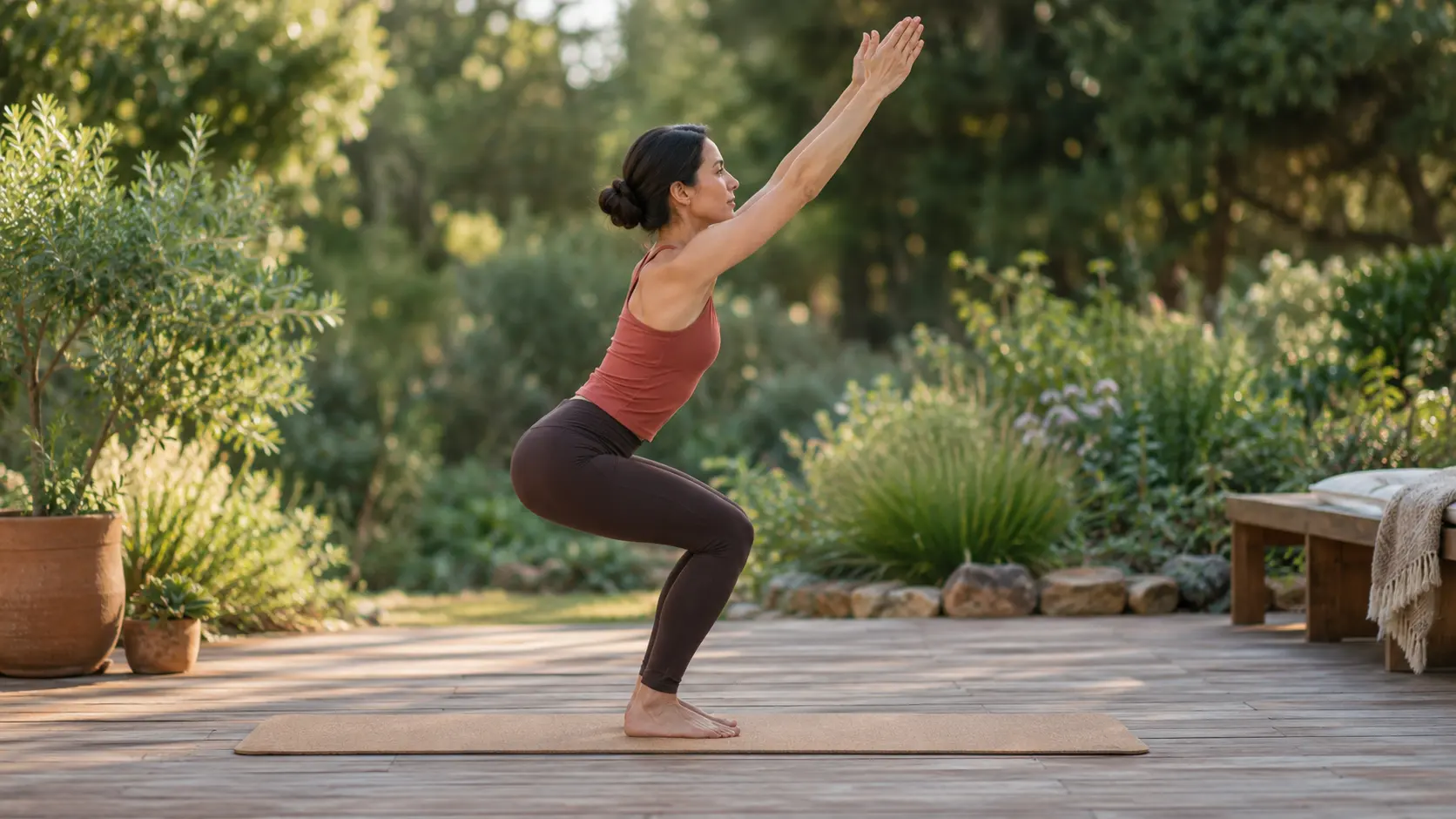
Utkatasana means fierce or strong in Sanskrit. After doing this posture for around 4 breaths, you will understand why! This posture quickly warms up the thighs.
- Stand with feet hip-width apart.
- Bend your knees and lower your body as if sitting in a chair. Ensure that your heels remain on the floor.
- Raise your arms level with your ears. Or if your shoulders are tight, leave your hands on your thighs.
- Hold for 5 breaths. Slowly return to standing.
Avoid bending your knees too far past your toes. If your knees ache, sit higher in the posture and reduce the amount of time spent in this posture.
Garland Pose (Malasana)
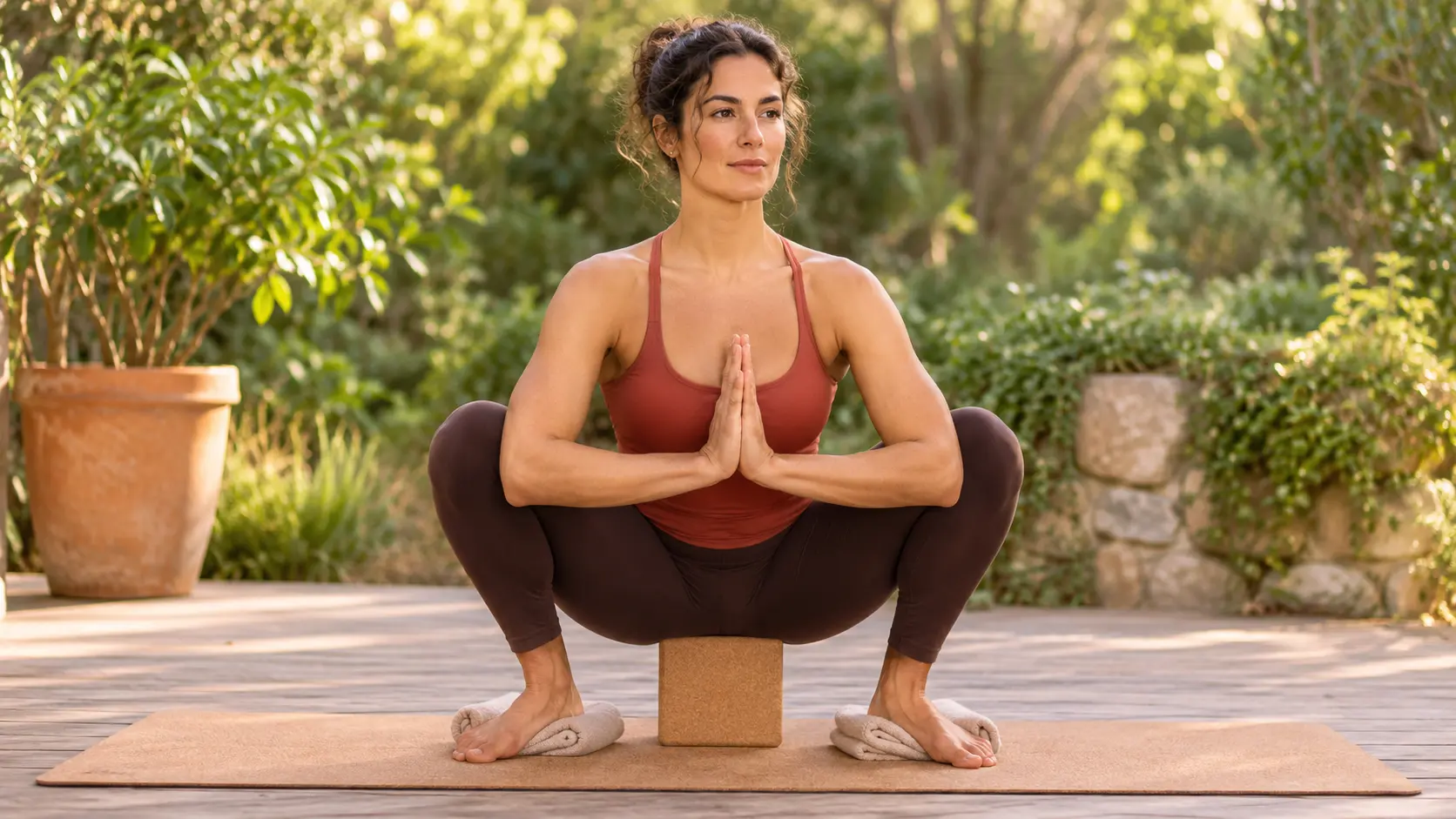
Malasana means "garland". In many parts of the world, people perform this squat every day, whether cooking, waiting or chatting to neighbours. However, if you grew up sitting on chairs, this posture may be difficult at first. It is grounding due to the hips being low to the ground, and weight being held on your feet.
- Stand with feet slightly wider than hips. Turn your toes slightly out.
- Bend your knees and lower your hips between your heels.
- Place your hands together at your chest. Gently press the elbows into the inside of the knees.
- Lengthen your back. Hold for 5-8 breaths.
If your heels lift off the ground, place a rolled-up blanket or folded mat under your heels. Alternatively, you can sit on a block to reduce pressure on your knees. Each week this posture may open a little further in your hips. It is one of the most felt postures to open the root chakra.
Bridge Pose (Setu Bandhasana)

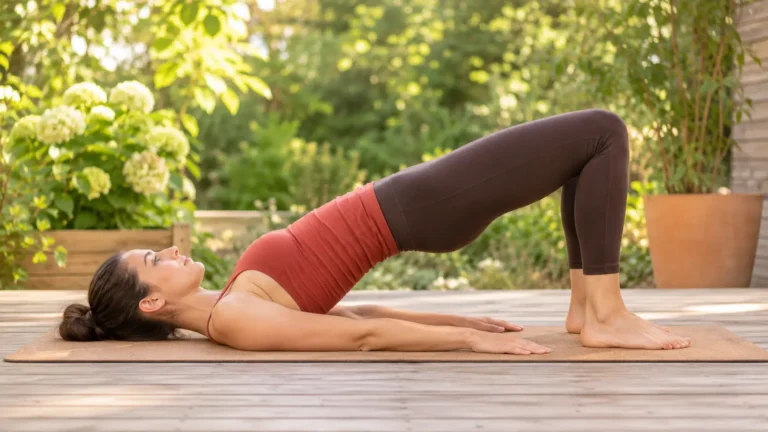
This is the only posture in the list that you complete lying on your back. However, you are still pushing into your feet. Push firmly into your feet to raise your hips. If you stop pushing into your feet, your hips will drop.
- Lie on your back with knees bent. Position your feet flat on the floor, hip-width apart, close to your hips.
- Place your arms by your sides with your palms down.
- Push into your feet, and slowly lift your hips off the ground.
- Hold for 5 breaths. Slowly lower down vertebra by vertebra.
For a softer version, place a block under your sacrum (the flat bone at the back of the pelvis). Simply rest on top of the block. Keep your head still and facing upwards. If you turn your head sideways with weight on your shoulders, it may cause neck pain.
Child's Pose (Balasana)

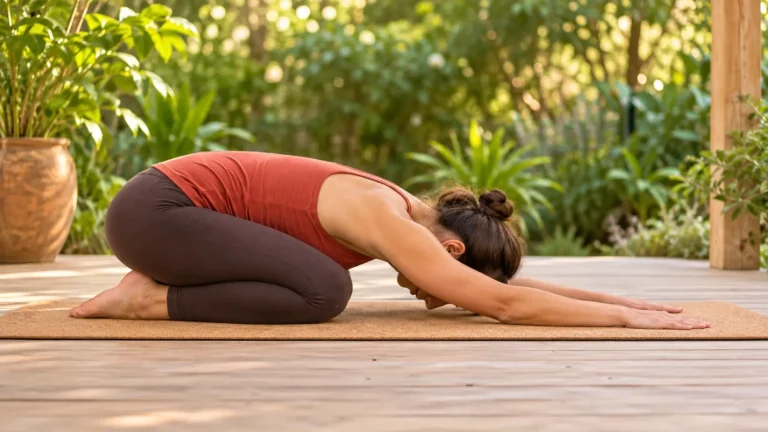
This is a resting posture, and a good one to finish on. Kneel and lower down onto your heels. Lower your upper body so that your forehead is on the mat. Place your arms either stretched out in front of you or on top of your feet. Hold for 1-2 minutes. Allow your breathing to slow down.
If you cannot get your forehead down onto the floor, place it on a block. If you have a large belly, or if you are pregnant, place your knees wide apart with your toes together (see the safety tips below).
ADVERTISEMENT: CONSCIOUS CRYSTALS - 7 CHAKRA COLORS SPECIAL DEALS
Buy Real Chakra Stones and Crystal Jewelry
Explore Full Collection
A 15-Minute Root Chakra Yoga Sequence
This sequence combines the warm-up with the 8 postures. It starts with postures for the feet, then standing postures, a squat, Bridge and finally a resting posture. This sequence should be done once per day, ideally at the same time, on a mat or a rug on a firm surface.
Ensure that you are breathing throughout. This sequence should be done slowly, and moving between postures should not be rushed either. This is an important part of the sequence. If you want to go deeper into breathing, the page on root chakra breathing has a few simple methods that fit in at the end.
It is best to do the same sequence each day for 1-2 weeks. If you are very busy, a 5-minute version of this sequence (Mountain, Garland and Child's pose) would be better than not doing it at all. Hold each posture for about 1.5 minutes. Then, if you have time, sit in a meditative posture for a few minutes.

The table times each part of the sequence, including both sides and the changes between poses.
| Minutes | Pose | Breath cue |
|---|---|---|
| 0-2 min | Warm-up: heel-toe rocks, toes, half squats, ankle circles | Breathe normally |
| 2-3 min | Mountain | 8 slow breaths through the nose |
| 3-5 min | Warrior I, both sides | 5 breaths on each side |
| 5-7 min | Warrior II, both sides | 5-8 breaths on each side |
| 7-10 min | Tree, both sides, then Chair | 5-8 breaths on each side, 5 in Chair, never hold the breath |
| 10-12 min | Garland | 5-8 breaths with a long back |
| 12-15 min | Bridge, then Child's pose | 5 breaths in Bridge, then 1-2 minutes of slow breathing in Child's pose |
Afterwards, if you have time: sit in the meditation pose below for 3-5 minutes.
How to Open the Root Chakra with Yoga: How Often and How Long
To help open your root chakra with yoga, do these standing postures daily (or 4-5 times per week) for between 10-15 minutes. Move slowly. Teachers say that people tend to start to feel more stable and calm after practising for 1-2 weeks. This will vary for everyone.
Doing this sequence in the morning will energise you, whereas doing it early evening will help you wind down from your day. Both are fine. However, choose the time that you can commit to. Leave 2-3 hours after eating a large meal. If you miss practising for a few days, simply pick up from where you left off. There is no need to start again from the beginning.
Root Chakra Meditation Pose: How to Sit
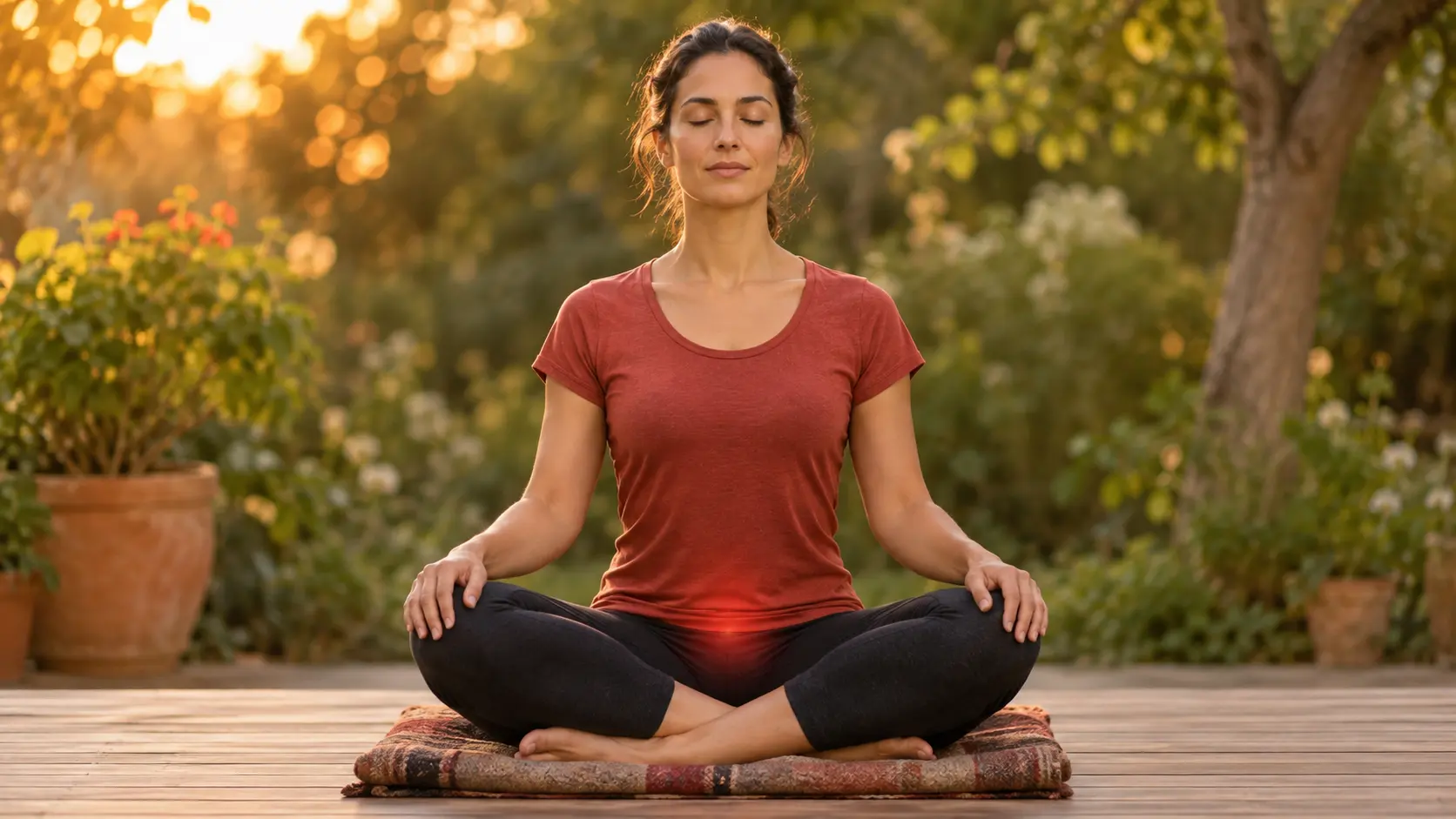
The best posture to meditate in for the root chakra is any posture in which you can stay still for 3-5 minutes, with an upright spine, and sitting with the base of your body on a floor or seat. It is more important that you are comfortable in this posture. If it is uncomfortable, it will distract your mind.
Options (easiest first):
- A chair: sit towards the front of the chair with both feet on the floor.
- Easy pose (Sukhasana): cross your legs and sit on a folded blanket to raise your hips slightly higher than your knees.
- Siddhasana: bring one heel close to your body, and one in front of you. This is suitable for people who have quite open hips.
Place your hands on your knees or thighs. Close your eyes. Focus on the bottom of your spine, where it meets the surface you are sitting on. Notice how your body weight is sinking down. If you'd like a full script to follow, use the root chakra meditation page. Hand positions are a separate practice, and you'll find them on chakra mudras.
How Yoga for Root Chakra Healing Works
In ancient Tantric texts, Muladhara is illustrated as a red lotus with 4 petals surrounding a yellow square, representing earth. In the same texts, earth is linked to the sense of smell. An elephant (Airavata) is also depicted within the square. Later teachers have added that this chakra relates to the lower body, including the legs and feet, the base of the spine and the pelvic floor.
Therefore, through practising slow postures, placing weight on these areas and holding still, you can help to heal your root chakra, as yoga tradition sees it. For this reason, most postures in this sequence are standing postures. There is also a squat and a resting posture.
There is no scientific proof that chakras exist, nor have they ever been measured in studies. However, yoga has been widely studied. The NCCIH says it can help relieve stress and may give a small benefit for low-back pain, which is useful whatever you think about chakras.
Many other root chakra exercises can help, such as walking barefoot on grass, slow squats while boiling a kettle, or wall sits. However, yoga offers structure to these activities.
Breathing During the Poses
Breathe in through your nose. Exhale slightly longer than you inhale. Do not hold your breath in Chair or the Warrior postures. This is easy to do as your legs may start to burn. For more, see these root chakra breathing exercises.
Safety and Modifications
Most of these postures are safe for beginners, as long as they are done slowly and with props. However, modifications may be required depending on your body.
- Knees: in both Warrior postures, ensure that your knee is above the ankle. In Garland and Chair, keep your knees pointing the same way as your toes. In Garland, place a rolled-up blanket under your heels or sit on a block. If your knees are sore, only do a half squat.
- Lower back: do a supported Bridge pose with a block, or alternatively skip this posture if you have recently injured your back.
- Balance: do Tree next to a wall.
- Pregnancy: avoid hot yoga and long periods lying on your back. Widen your knees in Child's pose. Consult your midwife or doctor before beginning.
- Period: gentle versions of these postures are fine. Rest if needed.
If you get a sharp pain, numbness or pins and needles in your legs, or dizziness, stop the posture. If you get ongoing pain in your back, hips or knees (lasting more than a few days or recurring), see a doctor. Although yoga can be a good way of taking care of your health, it is not a replacement for medical care.
Sources
- B.K.S. Iyengar, Light on Yoga (1966): Tadasana (Samasthiti), Virabhadrasana, Utkatasana.
- Arthur Avalon (Sir John Woodroffe), The Serpent Power (1919), translation of the Ṣaṭ-cakra-nirūpaṇa: Muladhara, the four petals, the yellow square of earth, Airavata.
- National Center for Complementary and Integrative Health (NCCIH), "Yoga: Effectiveness and Safety".
Frequently Asked Questions About Root Chakra Yoga
Can beginners do root chakra yoga poses?
Yes. All eight poses on this page are beginner poses, and each one has an easier version. Use a wall for Tree pose, a shorter stance in the Warriors, a block under the hips or a rolled blanket under the heels in Garland, and a block under the sacrum for a supported Bridge. Start with the 5-minute version (Mountain, Garland and Child's pose) for a week, then add the other poses one or two at a time until the full 15-minute sequence feels comfortable.
What are good root chakra exercises if you can't do yoga?
Simple, slow movements that put weight through the legs and feet work in a similar way. Walk barefoot on grass or sand, do a few slow squats or a wall sit while the kettle boils, stand on one leg while you brush your teeth, or climb the stairs slowly and feel each step. Even sitting with both feet flat on the floor and pressing your heels down for a minute counts. Choose one or two and do them every day at a regular time.
What is root lock (Mula Bandha) in yoga?
Mula Bandha, or root lock, is a gentle lift of the pelvic floor muscles used in Hatha yoga. Mula means root and bandha means lock, and teachers link it with the Muladhara chakra at the base of the spine. You draw the muscles between the sitting bones slightly up and in, keep breathing normally, and release after a few breaths. It is optional and not needed for the poses on this page. Skip it if you have pelvic pain or are pregnant, unless a qualified teacher or physiotherapist guides you.
Which root chakra stretches help tight hips?
Garland pose is the main hip stretch on this page: sit on a block and put a rolled blanket under your heels until the squat feels comfortable. Child's pose with the knees wide gives a gentle, passive stretch, and the half squats in the warm-up prepare the hips. Outside this sequence, a low lunge with the back knee on a folded blanket stretches the front of the hip. Hold each stretch for 5-8 slow breaths and never push into pain.
Do you need a yoga mat for root chakra yoga?
No, but a non-slip surface makes the standing poses safer. A yoga mat on a firm floor is easiest. A rug works for the warm-up, Bridge and Child's pose, but it can slide in the Warriors and Garland. In good weather you can do the standing poses barefoot on level grass, which many people find grounding in itself. Keep a block (or a thick book) and a folded blanket nearby, because several of the easier versions use them.
Do you need to chant LAM during the poses?
No. LAM is the seed sound linked with the root chakra, and some people chant it quietly while seated after the sequence, or repeat it silently while holding Mountain pose. It is an optional extra. Slow, steady breathing through the nose is enough for the poses, and chanting while you hold Chair or the Warriors can make you hold your breath. If you want to add sound, keep it for the seated part at the end.
Can root chakra yoga help with anxiety?
Gentle yoga may help you feel calmer. The NCCIH says yoga can help relieve stress, but it also notes there is little evidence of a benefit for people with anxiety disorders. So treat this sequence as a calming habit, not a treatment. Slow standing poses, a longer out-breath and a few minutes of sitting still are good ways to settle on a stressful day. If anxiety is frequent, intense or affects your daily life, talk to a doctor or a mental health professional.
Tomorrow morning, try doing the 5-minute version (Mountain, Garland and Child's pose). Once this becomes easy, try the full sequence. Next, try:
-
Root chakra healing meditation
- a guided script to use after the poses
-
Root chakra breathwork
- slow breathing to calm the body
-
Root chakra healing
- grounding beyond the mat