Root Chakra Opening Symptoms: Physical, Emotional and Spiritual Signs
Root chakra opening symptoms: the physical, emotional and spiritual signs of Muladhara activation, how long they last and when to see a doctor.
Table Of Contents
Root chakra opening symptoms are the changes people notice as the first chakra becomes more active: warmth, tingling or a pulsing feeling at the base of the spine, legs and feet that feel more alive, more energy, sometimes a stronger sex drive, and emotionally a calmer, safer feeling. Some people also have short bursts of tears, tiredness or aches while old tension lets go.
Root Chakra Opening · Key Facts
- Physical signs:Warmth, tingling or pulsing low in the body, more energy
- Emotional signs:Less worry, a steadier mood, short emotional releases
- Spiritual signs:Feeling present, connected to nature and to a place
- Sexual energy:Often stronger for a while
- Duration:Teachers describe days to weeks; there is no research on it
- Get checked if:Pain is strong, new or does not ease
Within yoga philosophy, the root chakra relates to feeling safe, physical health and connection with the Earth. When we talk about opening this chakra, we are referring to energy flowing more freely. These signs, like all chakra opening symptoms, have been taken from spiritual practices and not medical science. Consider them as indicators of awareness in your body.
Root Chakra Opening and Activation Symptoms
Many people feel warmth or pulsing within the lower pelvic region, base of the spine or lower abdomen. Sometimes this sensation will travel down the legs and into the feet, or up to the lower abdominal area.
The root chakra is known as Muladhara in Sanskrit. Therefore if people experience these sensations, they may search for signs of activating the Muladhara chakra. (Note: Most chakra sites refer to opening and activating as the same process. This page does also. Opening or activating the root chakra means the chakra is shifting from a closed and guarded state to a more active state.)
As this chakra sits just below the sacral chakra, increased energy can be felt in the sexual organs. Increased sex drive, or a tingling or buzz in the sexual organs, often indicates activation of this chakra. See below for more information.
Some people may not feel very much. However, if you don't feel any physical symptoms, but notice reduced worrying in your mind and improved sleeping, this can be a sign of a root chakra opening.
Physical Symptoms and Signs of Root Chakra Opening
As the root chakra is close to the base of the spine, physical signs of opening will commonly be felt in the lower half of the body. These symptoms are generally mild.
- Warmth or pulsing in the lower pelvic area, base of the spine or lower abdominal area.
- Tingling or light buzzing in the legs and the bottom of the feet.
- Increased awareness of your feet being connected with the ground, or "awakened" legs.
- More energy. You may feel like wanting to get up and move.
- Changes to appetite, digestion and how often you use the bathroom, for a short amount of time.
- Better quality of sleep (or on some nights, restless legs and vivid dreams).
- Occasional aching in the hips, lower back or pelvic area.
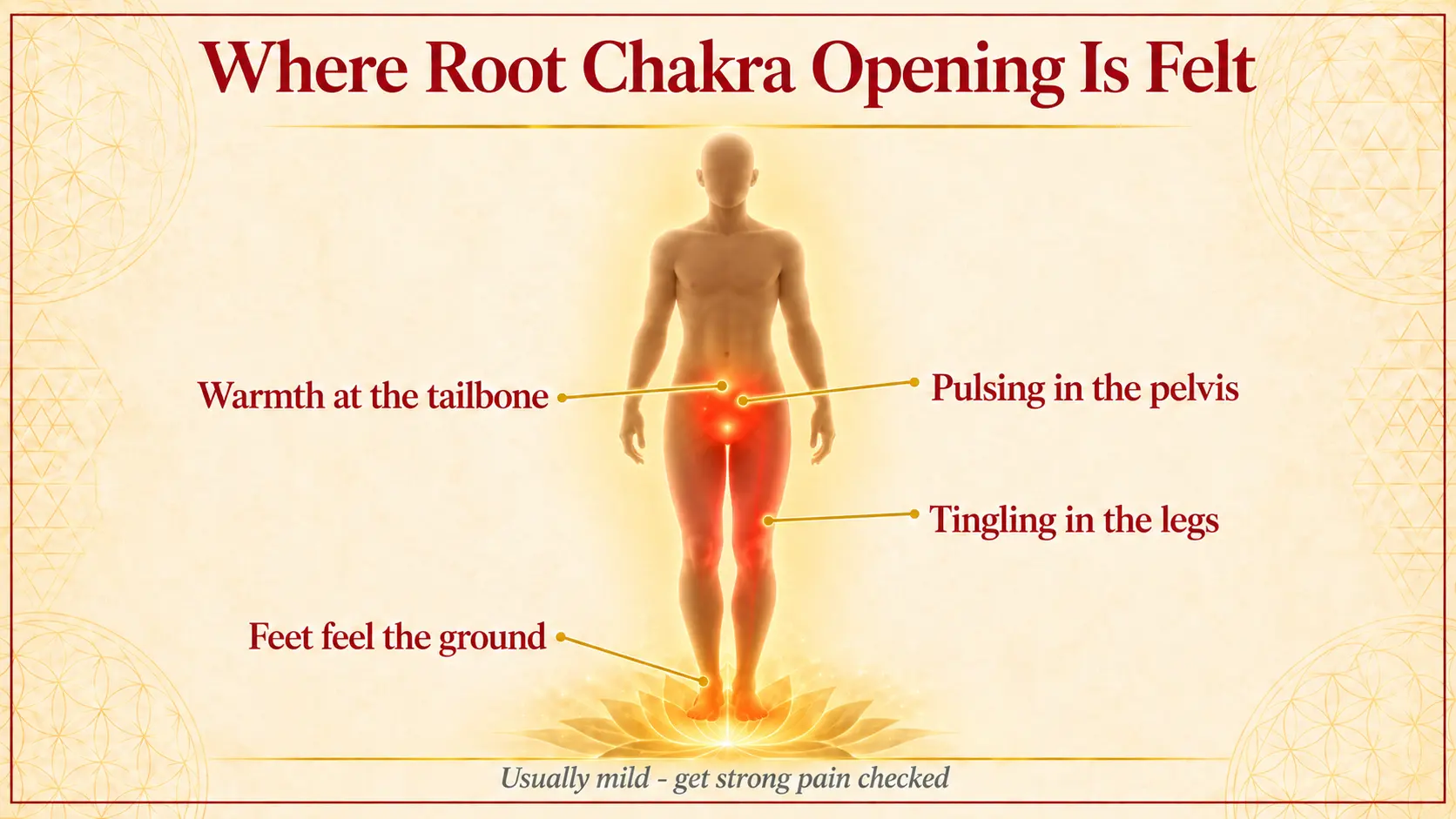
These symptoms do not definitely mean that you are opening a chakra. If pain, changes to digestion or numbness occur, they should never be accepted as part of chakra work. Below is a summary of the most common symptoms, what most teachers associate them with, and when it is best to seek help.
The table pairs each common sensation with the way chakra teachers usually read it, other common causes, and the point where a doctor should take a look.
| Sensation | What chakra teachers say it means | Other common causes | When to get it checked |
|---|---|---|---|
| Warmth or pulsing at the tailbone | Energy becoming active at the base of the spine | Long sitting, a warm room or bath, exercise | Burning that doesn't fade, or comes with fever or a rash |
| Tingling in the legs or feet | Grounding and more awareness of the body | Sitting cross-legged, pressure on a nerve, cold | Tingling or numbness that keeps coming back, spreads or comes with weakness |
| Dull ache in the lower back, hips or pelvis | Old tension being released | Posture, muscle strain, long sitting | Sharp, getting worse or keeps coming back; with numbness or bladder or bowel changes, get emergency help |
| Stronger sexual desire | Energy rising to the sacral chakra | Hormones, more rest, a new relationship | Desire or behavior that feels out of control or distressing |
| Changes in appetite, digestion or toilet habits | The body adjusting for a few days | Diet, stress, travel, a stomach bug | Changes that last, blood in the stool, or weight loss without trying |
| Tears, anger or old memories | Old fear coming up to be released | Stress, tiredness, life events | Waves that feel overwhelming or last for weeks - talk to a doctor or therapist |
| Feeling grounded and calm | An open, balanced root chakra | More rest, routine, time outdoors | Nothing to check |
Note: the second column comes from chakra teaching, not from medicine. A sensation never proves that a chakra is opening, so the last column always comes first.
Root chakra pain during opening
Sometimes people may feel dull aching or pressure in the hip or lower back when releasing a lot of tension in this chakra (perhaps following a long meditation, or a vigorous hip-opening yoga session). Teachers associate this with tension being released in the body, and say this pain generally subsides in a few days.
However, if you are experiencing sharp pain, increasing pain, numbness, or pain that keeps coming back, this should not be dismissed as energy. See the doctor section below for signs to be concerned by.
Emotional and Spiritual Symptoms of Root Chakra Opening
Emotional symptoms
Often, emotional signs of root chakra opening are the ones people value. As this chakra is associated with feeling safe, you may feel less background anxiety. While bills, planning and other people's moods may have an impact on you, they will no longer feel threatening.
Emotional signs include:
- Feeling grounded and stable.
- Less anxiety about money, work and the future.
- Increased patience and the ability to focus and complete tasks.
- Sudden emotional outbursts (tearing up, anger, or old memories coming up) which quickly pass.
- Increased practical motivation. You may feel motivated to organize your home or finances, for example.
Sometimes emotional releases can be confusing. Many teachers of the root chakra report seeing sudden emotional reactions from their students, such as crying or anger, even if the session was peaceful. This can be interpreted as old fears being brought to the surface to be released. If you are finding these waves of emotion difficult to manage, or if they cause you to remember difficult past experiences, take it slow and visit our root chakra trauma page to learn how to work with this chakra more gently.
Spiritual signs
It can be difficult to describe spiritual signs of a root chakra opening. Many people feel more present in their lives and "in their body". Others may feel drawn to nature, gardening, cooking and physical practical tasks. People will also often feel a greater sense of connection to somewhere, or to people in their family or group.
In Tantric texts, the root chakra is significant. In The Serpent Power, Kundalini energy, which is described as coiled energy, is said to be in a dormant state at the root chakra. Spiritual awakening is therefore described as Kundalini energy rising up through the chakras. Therefore, sometimes people refer to the initial stirrings of a spiritual journey as a root chakra awakening. However, most teachers in modern times do not recommend seeking intense Kundalini experiences. Instead, they encourage a steady, grounded root chakra to begin the spiritual journey.
Root Chakra Opening Experiences: What People Describe
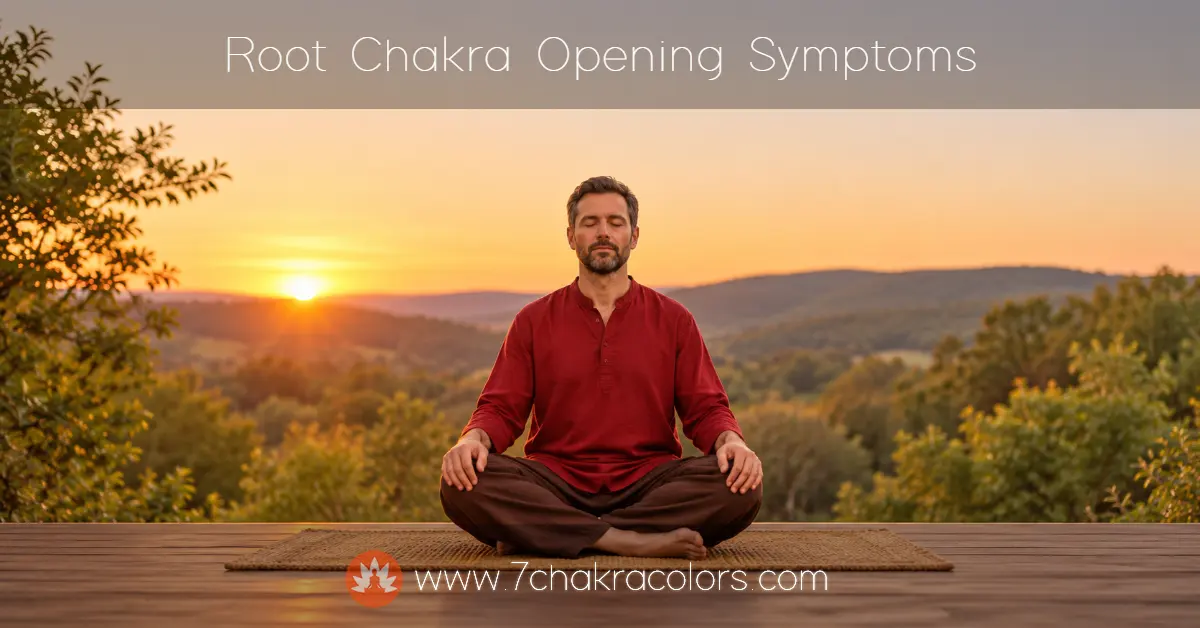
Root chakra opening experiences tend to happen during practices that bring attention down into the body. The most common settings are seated root chakra meditation on the base of the spine, chanting the mantra LAM, slow standing root chakra yoga poses such as Mountain or Warrior, and walking barefoot on grass or sand.
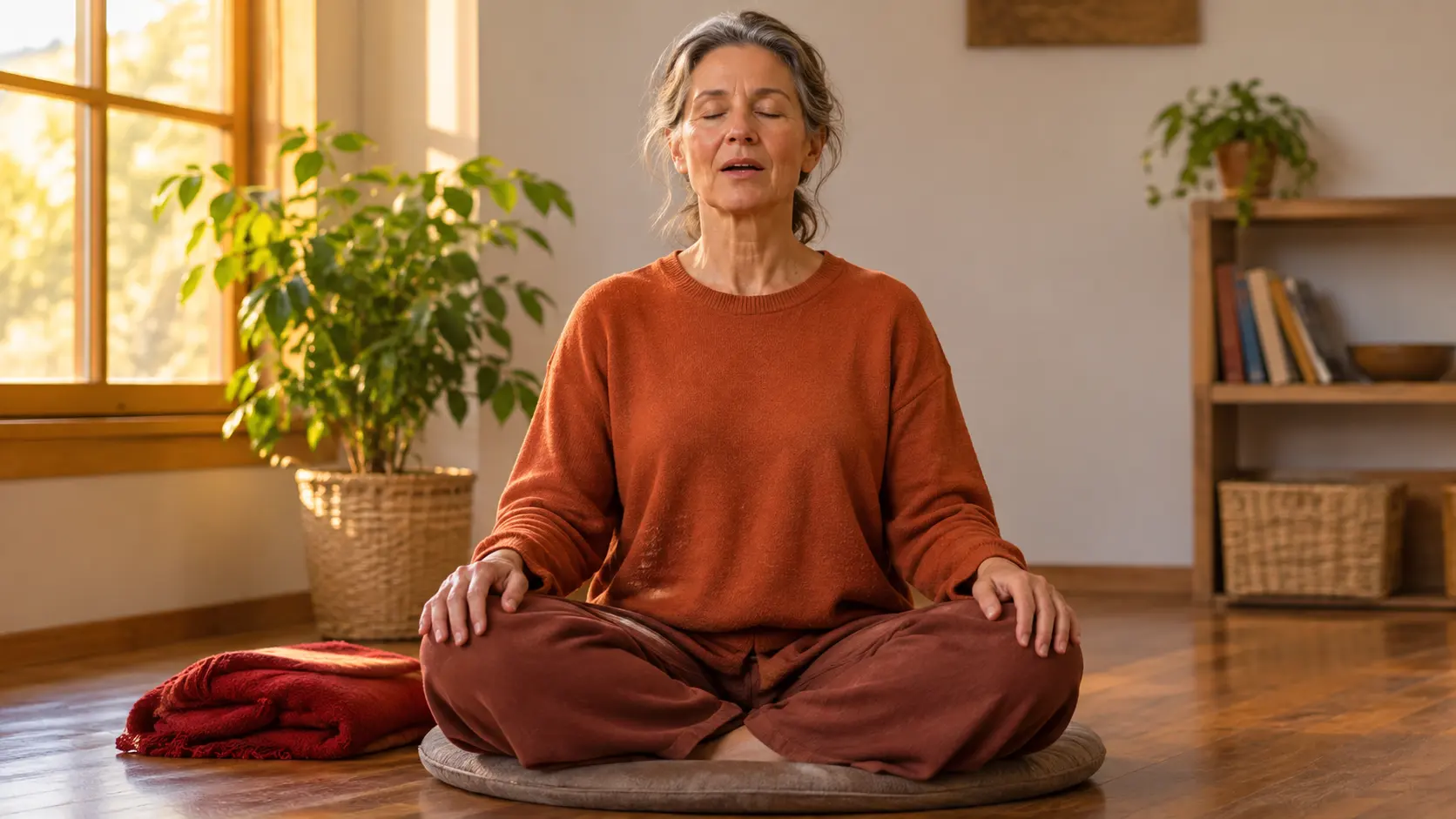
During meditations, people often feel gradually increasing warmth. Sometimes people also feel heavy in the body, as if sinking into the ground. People may also feel a slight pulsing in the base of the spine, in time with their breathing. In yoga, people may feel their legs shaking slightly in a static posture. This is usually interpreted as tension being released. However, strong shaking can also be due to simply tired muscles. If this is strong, take a break.
Outside of practice, people often feel small changes. For example, you may cook a full meal on a weekday, or suddenly tidy up a corner of a room that you haven't touched in months. Or you may simply feel strangely content sitting on a park bench. These subtle changes may be difficult to notice, but are often the best indicator that something has changed within the root chakra.
Occasionally people may feel more extreme changes, such as sudden surges of hot energy up the spine, or uncontrollable shaking. These are much less common. If this happens to you, open your eyes, put your feet firmly on the ground and take slow breaths until it stops. Keep practice sessions short for the next few sessions.
Sexual Energy and the Root Chakra
An increase in sexual energy is often described as a sign of the root chakra opening, although this is rarely openly discussed. As energy rises from the root chakra, it reaches the sacral chakra, which is associated with pleasure and sexual energy. For many, a large increase in desire is felt.
This is fine. In some forms of yoga, people are encouraged to direct this sexual energy upwards through the spine by taking slow breaths. In others, you may simply relax and allow it to settle. Both methods are fine. If you would like to try the breathing method, our root chakra breathing page has gentle techniques to try.
Can Root Chakra Opening Feel Uncomfortable?
Some people may experience discomfort during root chakra opening. These can include fatigue, general feelings of heaviness in the body, restlessness in the legs, vivid dreaming, crying or anger in short bursts, or old fears related to money, work or safety. After a long session some people may also feel wobbly or slightly ungrounded.
Teachers describe this kind of discomfort as old tension letting go, and it tends to come in waves. Try keeping sessions shorter, eating regularly, sleeping well and going outside. However, discomfort does not mean that you have made spiritual progress. If you are in strong pain, feel numb or persistently low, or have difficult memories to deal with, seek support from a professional (see below).
How to Know If Your Root Chakra Is Open
If your root chakra is open, you will probably be feeling stable and safe in general. You will be happy to be in your body. Everyday stresses no longer make you feel fearful. Although you may feel varying sensations (warmth for example), the main sign that teachers are confident with is feeling stable.
To easily check if your root chakra appears to be open, look back over the past few weeks and consider whether:
- You are eating, sleeping and moving more regularly
- You can sit still for 10 minutes without becoming fidgety
- Money worries seem smaller, even if no change has occurred
- You can feel your feet and legs whilst standing
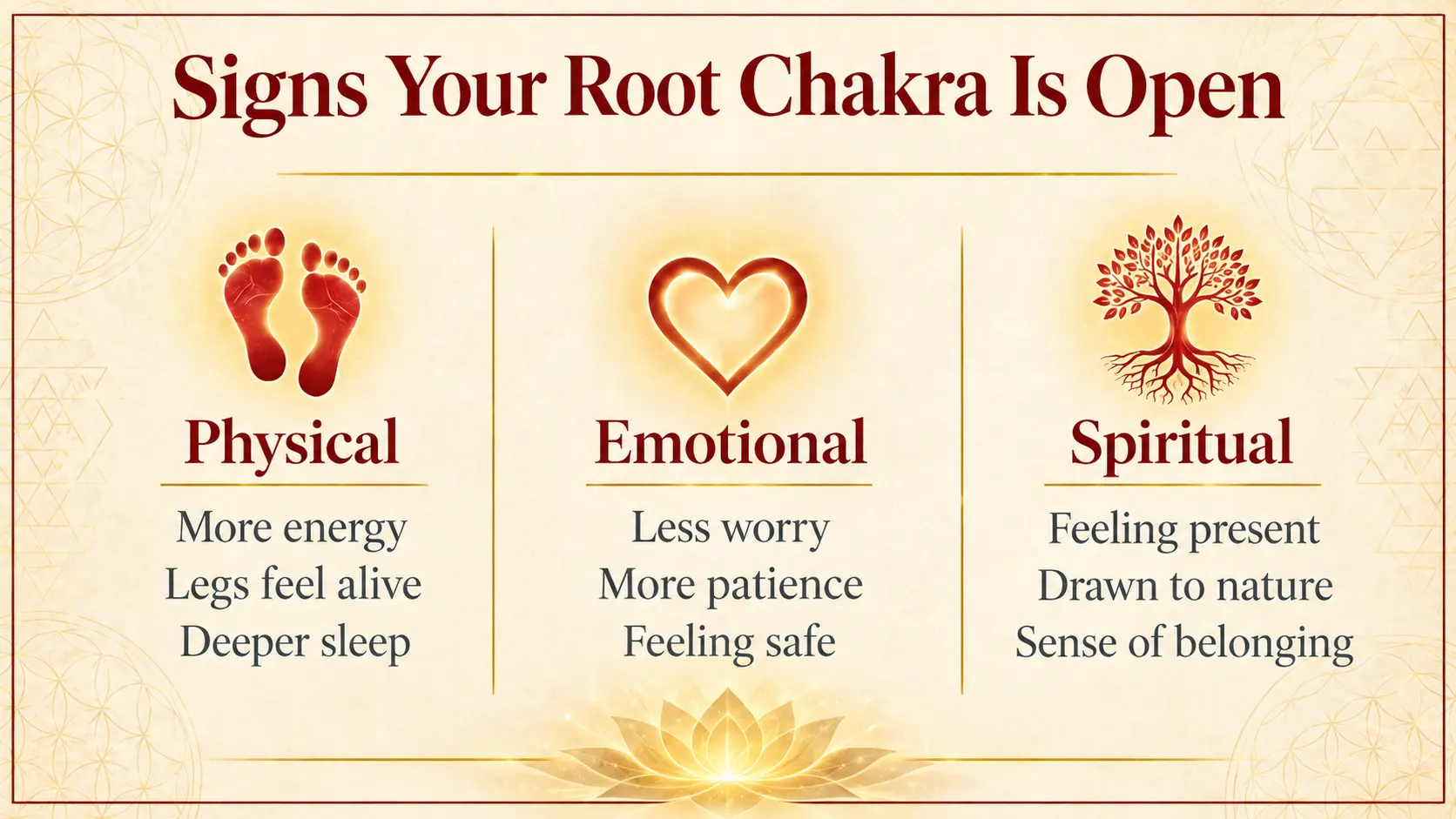
If most of these answers are "Yes", this is a good sign. If most are "No", this does not necessarily mean something is wrong. It may simply mean that the chakra is still in the early stages of opening.
Root Chakra Healing Symptoms: Is It Getting Better?
If a root chakra is healing, symptoms will be similar to those of opening, but will be more gradual and subtle. You may be experiencing fewer days of anxiety, less tension in your lower back, a more regular appetite, and more energy in the afternoons.

However, healing is rarely straightforward. You may feel good one week and tired or emotional the next. Many teachers consider this to be a normal part of the process. Keeping a brief daily reflection will help you see trends over the course of a month rather than focusing on one difficult day.
How Long Do Root Chakra Opening Symptoms Last?
According to most chakra teachers, symptoms of root chakra opening will last between a few days and a few weeks. However, there is no scientific evidence for this. Sudden sensations (hot feelings, pulsing) will generally subside quicker, often within a few days. However, the feeling of stability and safety will come gradually. If you continue to care for your body, this feeling may be long-lasting.
These symptoms are based on people's experiences. Yours may vary. If a physical symptom worries you, keeps coming back or gets worse, please get it checked; you don't need to wait.
Opening, Healing or Blocked? How to Tell the Difference
As both opening and blockage can cause fatigue and lower back pain, people can confuse the two. To identify which one is occurring, you must look at the direction of change. If you are opening, symptoms will come in waves, and after each wave you will feel slightly more stable. If the chakra is blocked, symptoms will remain, or get worse, and may cause feelings of fear and restlessness.
If the symptoms on this page do not match how you are feeling, and you are constantly worried, with cold feet, slow digestion and difficulty concentrating, compare them to the root chakra blocked symptoms. That page includes a quick root chakra test. It also explains the overactive pattern.
These are spiritual interpretations used in chakra work, not diagnoses. The table puts the five states side by side.
| State | Traditional interpretation | Emotions | Body and daily life |
|---|---|---|---|
| Opening | Energy starting to move after being low or tight | Waves of emotion, each leaving you a little steadier | Warmth, tingling or pulsing at the base of the spine, more energy |
| Healing | A blocked chakra slowly returning to balance | Fewer anxious days, ups and downs over weeks | Less tension, more regular appetite and sleep |
| Balanced | Open and steady, neither too little nor too much | Safe, calm and able to adapt | At home in your body, regular eating, sleeping and moving |
| Blocked (underactive) | Too little energy | Worry, restlessness, trouble focusing | Cold feet, a sluggish gut, tiredness |
| Overactive | Too much energy, held too tightly | Need for control, fear of change | Heaviness, holding on to things or money |
When to See a Doctor
Although energy work can be powerful, it should never be masking a medical issue. If you are suffering with severe pain in your back, hips or pelvis, or pain which is getting worse, or pain persisting for a few weeks, unexplained weight loss, blood in your stools, or consistent changes in toilet habits, please seek medical advice.
If back pain comes with numbness or weakness in both legs, loss of feeling around the genitals or anus, or new problems with bladder or bowel control, the NHS recommends that you contact emergency services immediately. Recurring or spreading tingling or numbness is not an emergency, but should be seen by a doctor. If you are feeling intense emotions for weeks, it may be a good idea to seek support from a doctor or therapist.
What to Do Next
If you believe you are opening your root chakra, it is best to support the process by having regular healthy habits. Eat regularly, get regular sleep and spend time outside walking. Try a few minutes of slow breathing every day. For a step-by-step guide, see our page on root chakra healing. If you would like more structure, it also has a 7 day plan.
Sources
- Arthur Avalon (Sir John Woodroffe), The Serpent Power, 1919 - Muladhara and the rising of Kundalini from the base of the spine.
- Anodea Judith, Eastern Body, Western Mind, 1996 - balanced, deficient and excessive patterns of the first chakra.
- NHS, Back pain - when to see a GP and when to get emergency help.
Frequently Asked Questions About Root Chakra Opening
What does it feel like when your root chakra opens?
Most people describe it as warmth or a gentle pulse low in the body, legs that feel heavier or more alive, and a quieter mind. Some feel it during meditation or yoga, others only notice later that they worry less and sleep better. These are reported experiences from chakra practice, not measured effects, and they differ a lot from person to person.
What happens after your root chakra opens?
Chakra teachers say the strong sensations fade and a steadier feeling stays: you feel safer in your body, handle money and daily tasks with less fear, and find it easier to stay with one thing. Many traditions see a steady root chakra as the base for working with the chakras above it, starting with the sacral chakra.
Can root chakra opening make you tired?
Yes, some people feel tired for a few days after a strong practice or an emotional release, and teachers describe this as the body settling. Ordinary tiredness has many other causes, such as poor sleep, low iron or stress, so if you are tired for more than a couple of weeks, see a doctor rather than putting it down to energy.
Can your root chakra open without any physical symptoms?
It can. Many people never feel heat or tingling and only notice quieter changes, such as more regular meals and sleep, less background worry and a stronger wish to be outdoors. Teachers treat these everyday changes as a more reliable sign than any sensation.
Why is my root chakra tingling?
In chakra teaching, tingling at the base of the spine or in the legs is read as energy becoming more active, often during or after grounding practice. Tingling can also come from sitting too long, pressure on a nerve or poor circulation, so stand up, move and see whether it passes. If it keeps coming back, spreads or comes with numbness or weakness, have it checked.
Why does my root chakra feel like it is vibrating?
A buzzing or vibrating feeling at the tailbone or pelvis is described by many practitioners as energy moving through a chakra that has been quiet, and it usually fades within minutes. If it is strong or uncomfortable, open your eyes, put your feet on the floor and breathe slowly. A vibration that is constant or comes with pain is a reason to see a doctor.
When is the root chakra balanced?
Chakra teachers call the root chakra balanced when you feel safe and steady most of the time, your basic needs feel taken care of, and you can adapt to change without panic or rigidity. A balanced root chakra sits between the underactive pattern (worry, restlessness) and the overactive one (control, heaviness).
Opening symptoms of the other chakras:
-
Signs of sacral chakra opening
- creativity, pleasure and emotional flow
-
Solar plexus chakra opening symptoms
- confidence and personal power
-
Heart chakra opening symptoms
- compassion and emotional healing
-
Signs of throat chakra opening
- clearer speech and self-expression
-
Third eye chakra opening symptoms
- intuition and inner clarity
-
Crown chakra opening symptoms
- spiritual connection and awareness