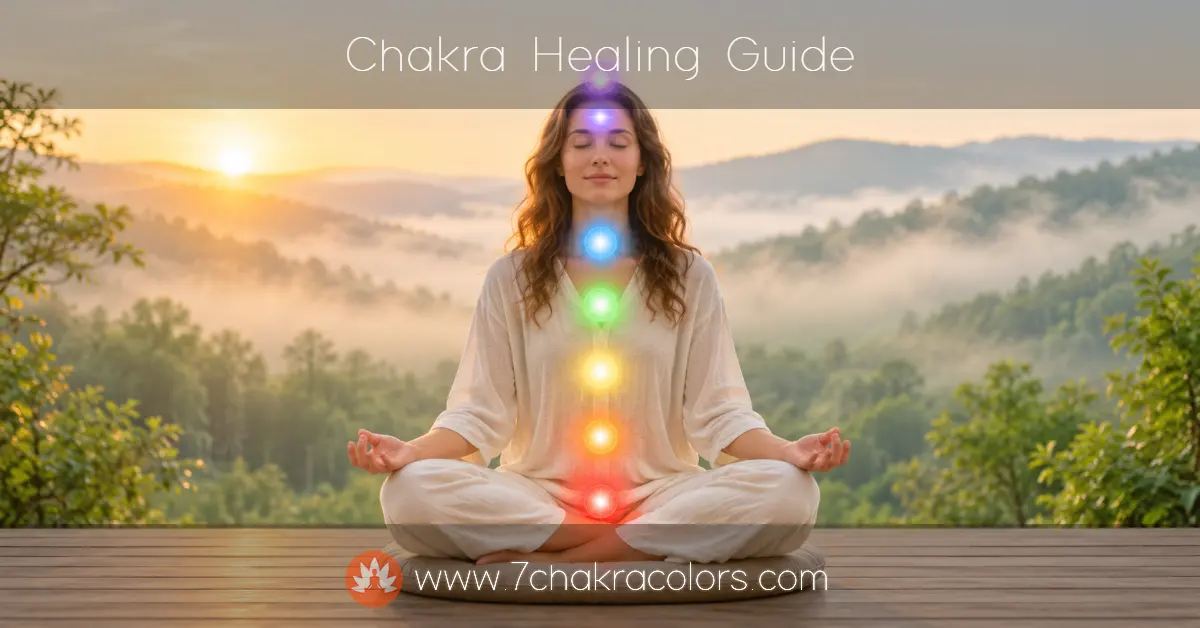
Chakra Healing: How to Unblock, Balance and Open Your Chakras
Chakra healing in 5 simple steps: find the chakra that needs it, then use breath, meditation, yoga and sound. Methods, a 7-day plan and each chakra.
Table Of Contents
Chakra healing is the practice of bringing the seven energy centers described in yoga tradition back into balance with simple daily methods. Start with the chakra that shows the clearest signs, then use two or three methods for it every day - breathwork, meditation, yoga poses or sound. Most people practice for 10 to 20 minutes a day and notice a change within one to two weeks.
Chakra Healing · Key Facts
- What it is:Restoring a balanced flow of energy through the 7 chakras, as yogic and tantric tradition describes them
- Main methods:Meditation, yoga, breathwork, affirmations, sound, crystals, mudras, foods
- Time needed:10-20 minutes a day, with first changes often noticed in 1-2 weeks
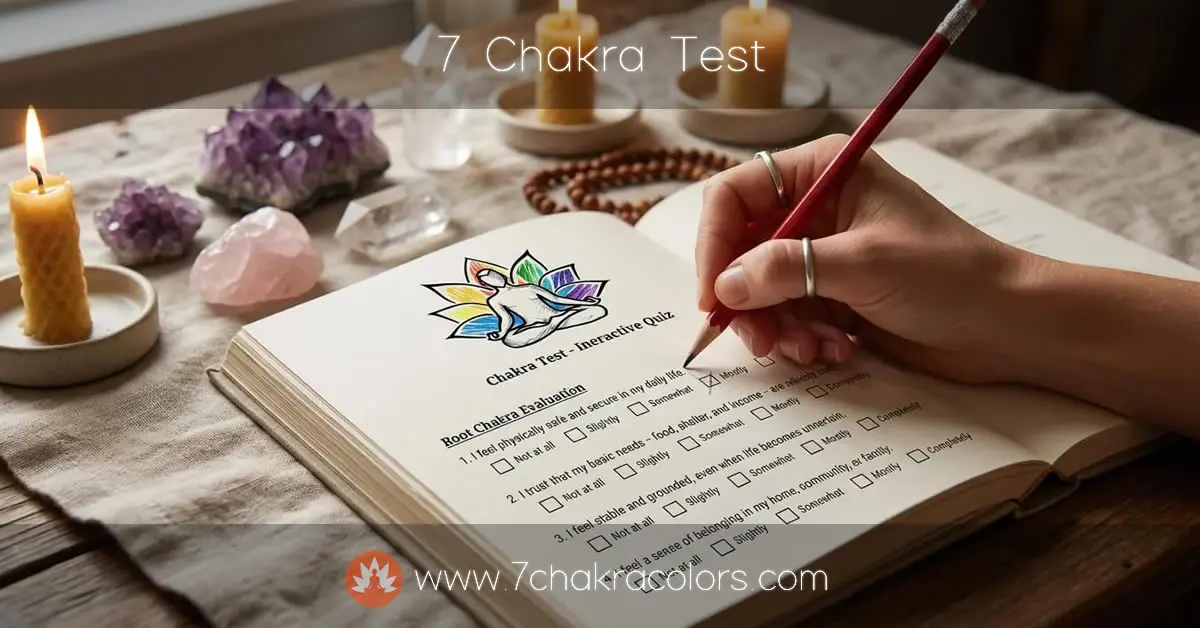
- Where to start:The chakra with the clearest signs (not sure? take the chakra test)
- Science:No evidence that chakras exist as physical structures, but meditation and yoga have studies behind them for stress
- Get checked if:Pain, low mood or anxiety that is strong, sudden or getting worse
How to Unblock Chakras: 5 Steps
You don't need special tools or a teacher to begin. These five steps work for any of the seven centers, and they're the order most teachers would suggest:
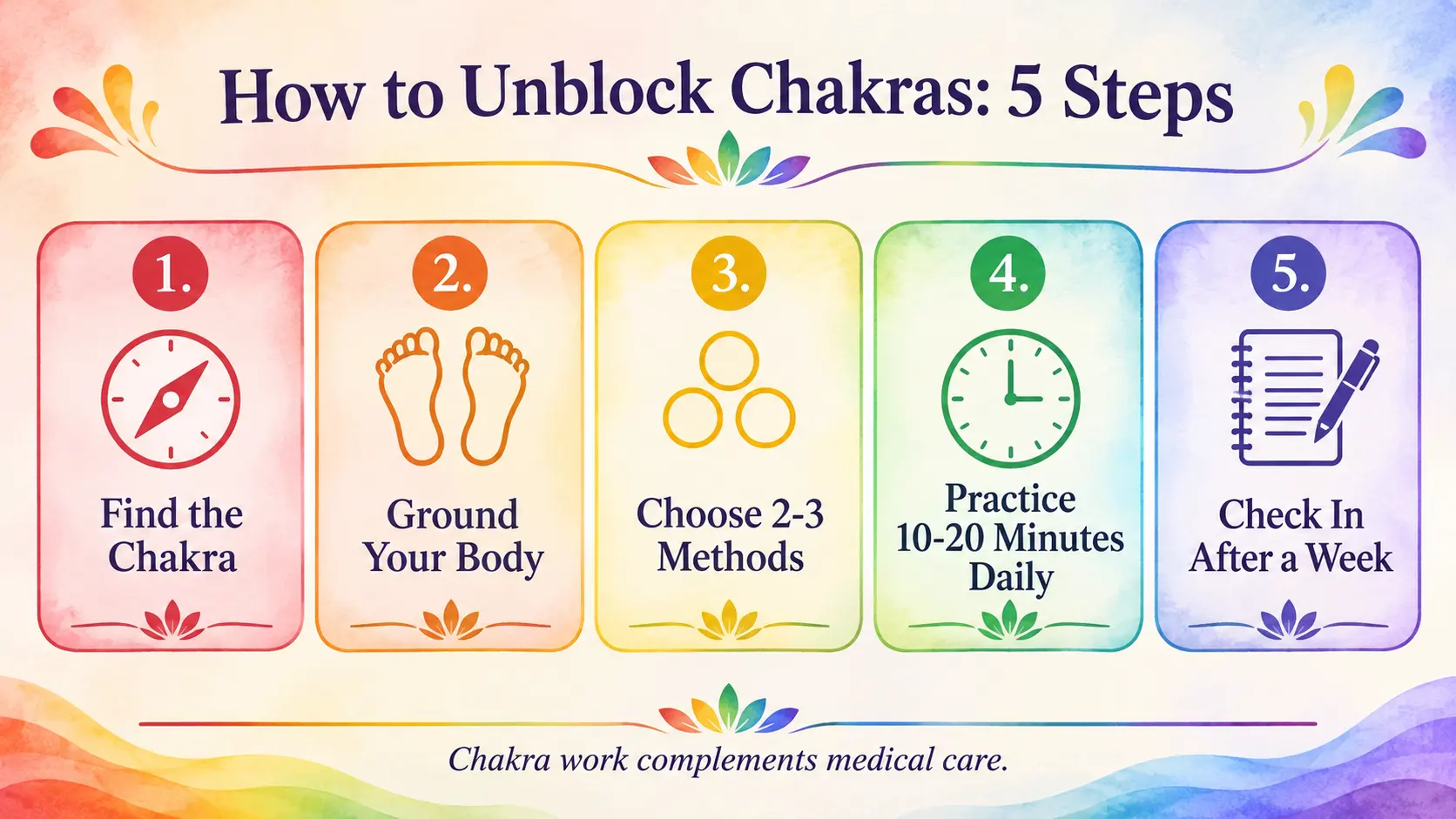
- Find the chakra that needs attention. Notice where tension sits in your body and which emotion keeps coming back. The guide to blocked chakra symptoms matches those clues to each center.
- Ground your body first. Spend a few minutes breathing slowly into the belly, ideally standing barefoot. Tradition starts healing at the root, because the upper centers rest on it.
- Choose two or three methods for that chakra. A body practice plus a breath or sound practice is a good mix. The table further down helps you pick.
- Practice every day for 10 to 20 minutes. Keep the same time of day if you can. A short daily session does more than one long one on the weekend.
- Check in after a week and adjust. Jot down how you slept, your mood and where you felt tight. If nothing has shifted, swap one method for another.
What Is Chakra Healing?
Chakra healing is a set of practices - breath, movement, sound, focus and intention - meant to help life energy (prana) move freely through the seven main chakras. In yoga and tantric tradition, these centers sit at chakra points along the spine, from its base up to the crown of the head, and each one is tied to a part of the body and a theme in life.
The aim is balance, not simply "more open". Teachers describe a center as either held back or pushed too hard, and both count as out of balance. People practice chakra healing on their own at home, in yoga classes and with energy healers, and Reiki is one hands-on form of it.
Does Chakra Healing Work?
Chakra healing has no scientific evidence behind it as a way of changing energy centers, because there's no proof chakras exist as physical structures. The practices it uses are another matter. NCCIH reviews of meditation and mindfulness research found effects on stress, anxiety and depression, though many studies were small or of poor quality. So a daily chakra routine can calm you down, whatever you believe about prana.
Chakra Balancing, Alignment and Cleansing: What's the Difference?
All four words describe one goal from different angles. Chakra healing is the umbrella term, chakra balancing evens out a center that is too weak or too strong, chakra alignment brings all seven into line along the spine, and chakra cleansing clears what has built up. Opening and activating sit at the far end: waking up a center that has been quiet.

| Term | What it means in tradition | Typical practice |
|---|---|---|
| Chakra healing | The overall practice of bringing the seven chakras back into balance | A daily mix of breath, movement, sound and meditation |
| Chakra balancing | Evening out a center that is too weak or too strong | Energizing practices for a sluggish chakra, calming ones for an overactive one |
| Chakra alignment | Bringing all seven centers into line along the spine | A root-to-crown meditation with one breath per chakra |
| Chakra cleansing | Clearing stale or heavy energy that has built up | Fresh air, a salt bath, sound or a light visualization |
| Opening and activating | Waking up a center that has been quiet | Steady, gentle practice that starts with the lower chakras |
How to Balance Your Chakras
To balance your chakras, match the practice to the state of the center. A sluggish chakra needs energizing work, such as faster breathing, strong standing poses and chanting out loud. An overactive one calms down with slow exhales, gentle stretches, quiet sitting and time in nature. Most people have a mix, so a routine often includes both kinds.
How to Align Your Chakras
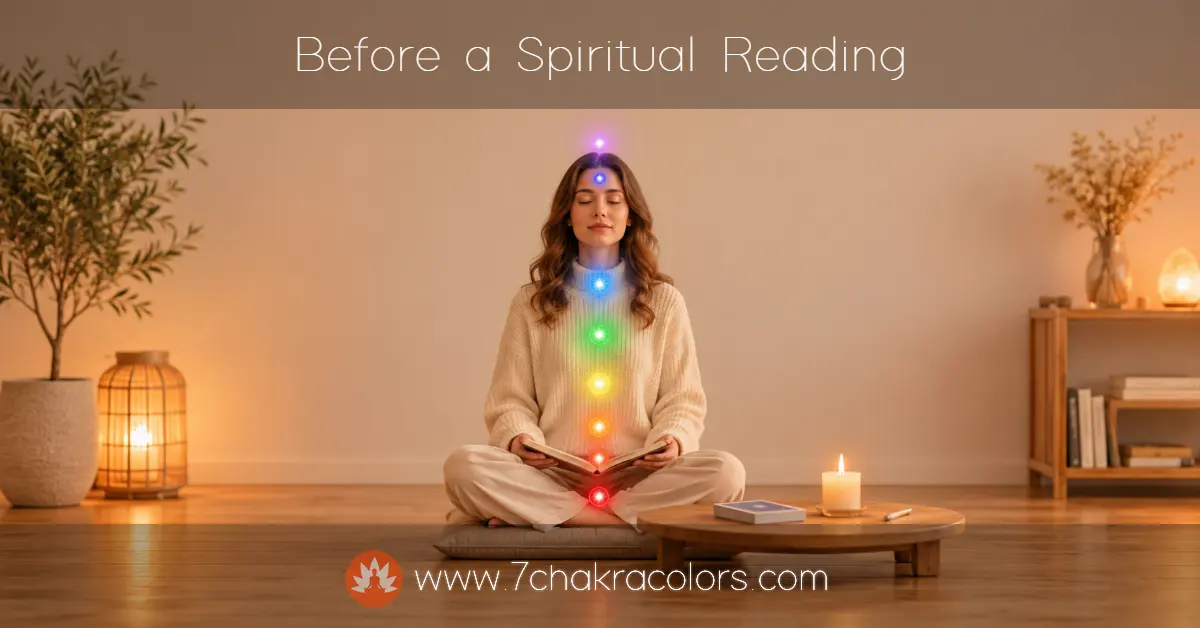
The simplest way to align your chakras is a seated meditation with a straight, relaxed spine. Bring your attention to the base of the spine, take one slow breath there, then move up one center at a time to the crown, picturing each chakra's color as you go. The whole round takes about five minutes.
How to Cleanse Your Chakras at Home
You can cleanse your chakras at home with what you already have. Open the windows for fresh air, take a warm bath with a cup of Epsom or sea salt, ring a bell or hum for a minute, or picture white light washing down through each center. If you work with crystals, clear them too - here's how to cleanse chakra stones with water, sound, smoke or moonlight.
How to Open and Activate Your Chakras
Opening and activating your chakras works best with steady practice rather than force. Begin with the lower centers, keep sessions short and build up over weeks. Intense breathwork or long holds can stir up more than you're ready for. If you want to know what the process can feel like, the guide to chakra opening symptoms covers the physical and emotional signs.
Chakra Healing Methods That Work Together
No single method suits every chakra or every person. Most routines mix one body practice with one practice for the mind or voice. Here are eight that tradition and modern teachers use most:
Meditation · Yoga · Breathwork · Affirmations · Sound and Mantra · Crystals · Mudras · Foods and Color
Meditation
Meditation is the core of most chakra work. Sit comfortably, rest your attention on one center and picture its color - red at the base of the spine, for example, or green at the chest. Five minutes is enough to start. Longer guided sessions with a voice that leads you through all seven are easier for beginners than sitting in silence.
Yoga
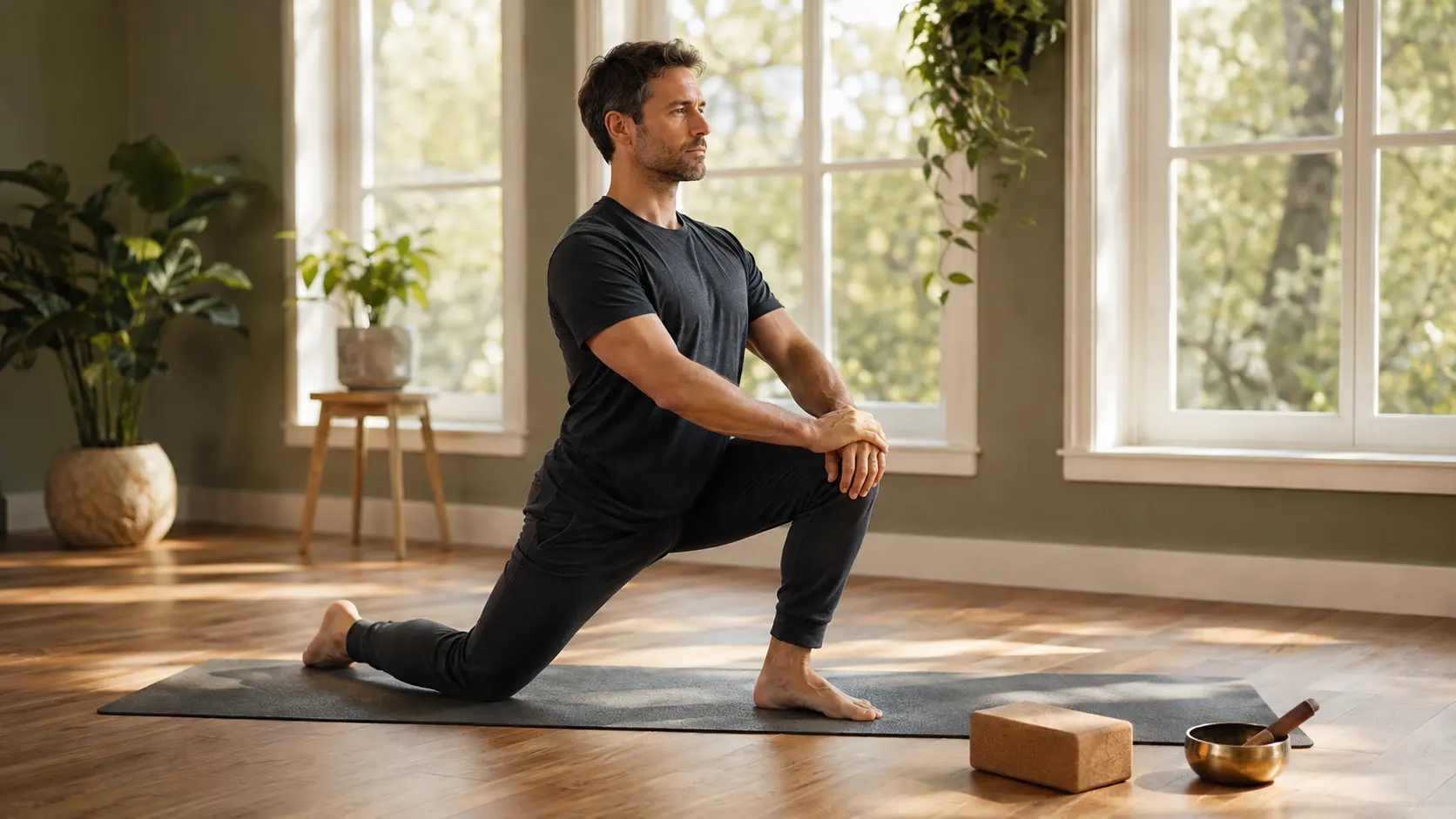
Yoga poses work on the area of the body around each chakra. Hip openers like Pigeon and Bound Angle go with the lower centers, twists and Boat pose with the stomach area, backbends with the chest, and gentle neck stretches with the throat. Two or three poses held for five slow breaths each make a full session.
Breathwork
Breath is the quickest way to change how you feel, which is why many teachers start here. Slow belly breathing settles the lower chakras. Alternate-nostril breathing (nadi shodhana) is used for the upper ones, especially the third eye. There are dozens of chakra breathing exercises you can match to a single center.
Affirmations
An affirmation is a short sentence you say out loud or write down, aimed at the theme of one chakra. "I am safe" fits the root, "I speak my truth" the throat. Keep it in the present tense and repeat it a few times, morning and evening. The full list of chakra affirmations has lines for every center.
Sound and Mantra
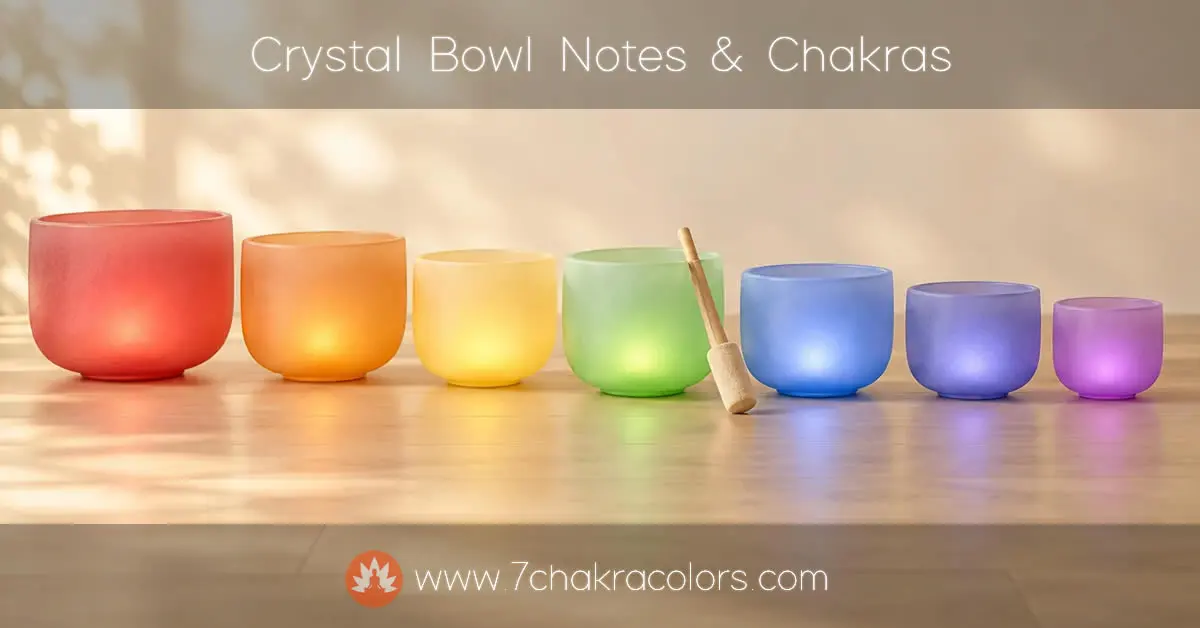
Each chakra has a seed sound, or bija mantra: LAM, VAM, RAM, YAM, HAM, OM and AUM from root to crown. Chanting it slowly, on one long breath, makes the body vibrate in the area of that center. Singing bowls and tuning forks are other options. Our chakra frequencies page has a free player with a tone for every chakra.
Crystals
Crystal healing pairs each chakra with stones of a similar color, such as red jasper for the root, rose quartz for the heart and amethyst for the crown. People hold a stone during meditation or place it on the body while lying down. Browse the guide to chakra stones to find the right one for each center.
Mudras
Mudras are hand positions held during meditation or breathing. Each one is linked in tradition with a chakra and its element - Prithvi mudra with earth and the root, for instance. Hold one for a few minutes while you breathe slowly. There's a picture and short how-to for each of the main chakra mudras.
Foods and Color
Tradition links each chakra with foods in its color: root vegetables and red fruit for the root, oranges for the sacral, yellow grains for the solar plexus, leafy greens for the heart, blueberries for the throat, purple foods for the third eye. For the crown, teachers suggest light meals and herbal tea rather than a specific food. Eating them is a simple way to keep a chakra in mind during the day.
Which Healing Method Fits Your Goal?
If you only have five minutes a day, start with breathwork, then add one method that matches what you want to change:
| Your goal | Methods to start with | Time per day |
|---|---|---|
| Feel grounded and safe | Belly breathing, standing yoga poses, a barefoot walk | 10 minutes |
| Release stress and tension | Slow exhales, gentle stretches, a singing bowl | 10-15 minutes |
| Build confidence | Core poses, strong belly breaths, a short affirmation | 10 minutes |
| Open up emotionally | Chest openers, loving-kindness meditation, journaling | 15 minutes |
| Speak up more easily | Humming, chanting HAM, neck stretches | 5-10 minutes |
| Clear the mind and focus | Alternate-nostril breathing, candle gazing | 10 minutes |
| Sleep and feel calm | Quiet meditation, slow breathing, herbal tea before bed | 15-20 minutes |
How to Heal Each of the 7 Chakras
Each chakra rules its own part of the body and its own theme in life, and the practices for healing it follow both. Find the one that fits you best, then open its page for a full routine.
Root Chakra (Muladhara)
The root is about safety and feeling at home in your body. Walking barefoot, slow standing poses like Mountain and Warrior II, and chanting LAM on a long exhale are the classic starting points. Read the full guide on how to unblock root chakra energy.
Sacral Chakra (Svadhisthana)
This center holds pleasure, creativity and the flow of emotions. Hip circles, dance and time near water help it move, and its mantra is VAM. For a week-long routine, see the guide to sacral chakra healing.
Solar Plexus Chakra (Manipura)
Confidence and willpower sit here, just above the navel. Core work like Boat pose, a few rounds of strong belly breathing and the sound RAM wake it up. The page on solar plexus chakra healing has a step-by-step plan.
Heart Chakra (Anahata)
Love, grief and forgiveness meet at the heart. Chest openers such as Camel pose, a loving-kindness meditation and chanting YAM are the main practices. Learn how to open heart chakra energy gently, one step at a time.
Throat Chakra (Vishuddha)
The throat governs your voice and saying what you mean. Humming, singing, neck stretches and the mantra HAM all help, and so does journaling before a hard conversation. There's more in the guide to throat chakra healing.
Third Eye Chakra (Ajna)
Intuition and clear thinking belong to the center between the eyebrows. Candle gazing (trataka), alternate-nostril breathing and chanting OM are the traditional tools. Here's how to open your third eye safely.
Crown Chakra (Sahasrara)
The crown links you to meaning and something larger than yourself. It is worked on mostly in silence: quiet meditation, prayer, time outdoors and the sound AUM. Start with the steps for crown chakra healing.
A 7-Day Chakra Healing Plan for Beginners
This plan gives one day to each chakra, from root to crown, with a single practice of 10 to 15 minutes. It's an easy way to meet all seven before you decide where to spend more time.
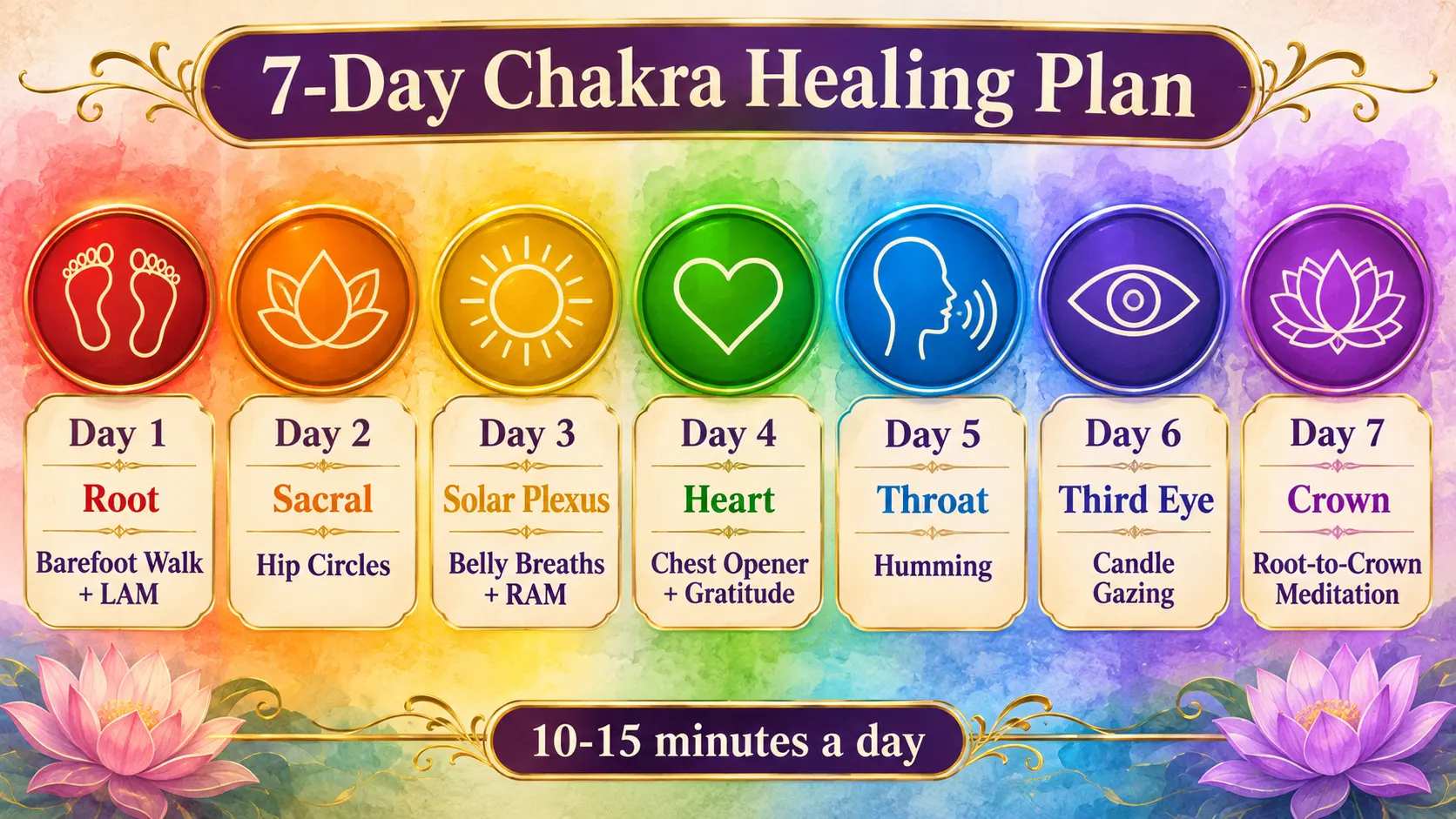
- Day 1, root: a 10-minute walk, barefoot if you can, then chant LAM five times.
- Day 2, sacral: slow hip circles on a mat, and drink water mindfully through the day.
- Day 3, solar plexus: three rounds of strong belly breaths and the sound RAM.
- Day 4, heart: a chest-opening stretch, then write down three things you're grateful for.
- Day 5, throat: hum for three minutes, then say one honest thing you've been holding back.
- Day 6, third eye: five minutes of candle gazing or eyes-closed focus between the brows.
- Day 7, crown and all seven: the root-to-crown alignment meditation described above.
After the week, repeat it, or stay longer with the day that felt hardest. That's usually the chakra asking for attention.
How to Keep Your Chakras Balanced
Once a chakra feels better, small habits keep it that way. You don't need a long routine forever, just a few things you do anyway:

- A daily check-in. Take two minutes in the morning to scan from the base of your spine up to the head and notice what feels tight.
- Sleep and regular meals. In chakra tradition the lower centers depend on a steady body, and tiredness throws them first.
- Time outside. A walk, a garden or a park grounds you without any technique at all.
- Saying what you feel. Unspoken words are what teachers most often blame for a tight throat and chest.
- A lighter practice on busy days. Three slow breaths count. Skipping it completely is what lets old patterns creep back.
How Long Does It Take to Unblock Chakras?
Unblocking a chakra usually takes one to two weeks of daily practice for small changes, like calmer breathing or better sleep, and several months for long-held patterns. These are teachers' estimates, not measured results. Some people feel a shift after one session, while others need longer before anything stands out.
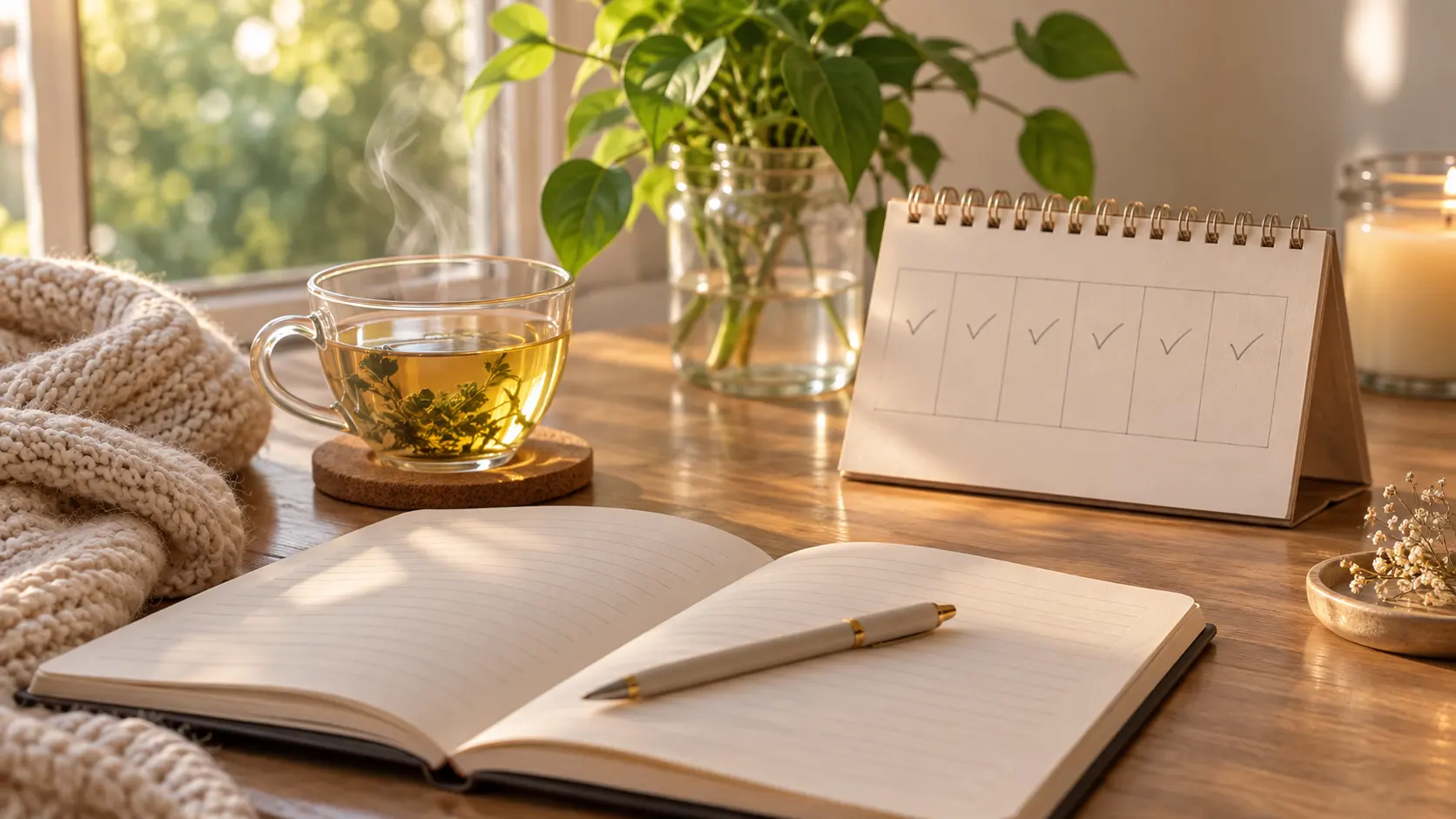
Three things speed it up: practicing every day, working on one chakra at a time and keeping stress in check. Pushing harder rarely helps. If you're wondering what to watch for along the way, these are the signs your chakras are opening.
Is Chakra Healing Safe?
Gentle chakra practices are safe for most people, but they complement medical care and never replace it. NCCIH notes that yoga is generally safe for healthy people with a qualified teacher, and that some poses need changes for certain conditions. Keep these points in mind:
- Don't stop any medication or treatment because of chakra work.
- Avoid forceful breathing and long breath holds as a beginner, and if you're pregnant or have high blood pressure, check with your doctor first.
- With an injury, choose gentle poses and tell your yoga teacher.
- If you have a history of trauma, panic attacks or psychosis, practice with a qualified teacher or therapist.
- See a doctor for pain, low mood or anxiety that is strong, sudden or keeps getting worse.
Some people feel tired or emotional for a day or two after a session, which energy healers call a "healing crisis". It's a belief, not a proven effect. Chest pain, sudden shortness of breath or thoughts of harming yourself need urgent help: call 911 in the US (112 in Europe).
Frequently Asked Questions About Chakra Healing
Is chakra healing the same as Reiki?
No. Chakra healing is the wider practice of balancing the seven chakras, and you can do most of it yourself with breath, movement, sound and meditation. Reiki is one specific Japanese hands-on method, where a trained practitioner places their hands on or near the body to direct energy. Many Reiki sessions work through the chakras, so the two often overlap. You can read more in does Reiki help cleanse the chakras.
Can you heal your chakras on your own?
Yes. Most chakra practices are made for daily use at home: slow breathing, a few yoga poses, chanting a seed sound, affirmations and short meditations. You don't need tools, a certificate or a healer to start. A teacher can still help with posture, intense breathwork or longer meditations, and a therapist is the better guide when old trauma or strong emotions come up during practice.
Which chakra should you heal first?
Start with the chakra whose signs are clearest for you, since that is where practice usually makes the most difference. If nothing stands out, most teachers begin with the root chakra, because a steady base makes work on the centers above it easier. The free chakra test on this site gives a score for each of the seven, which helps when two or three seem to fit.
How often should you do chakra balancing?
A short session every day works better than a long one once a week. Ten to twenty minutes, at the same time of day, is enough for most people. Once you feel more balanced, a few minutes a day keeps it that way, with a longer session after a stressful week. Some people also do a full root-to-crown alignment once a week as a check-in.
Can chakra healing help with anxiety?
Chakra healing can help you relax, mostly through the practices it uses. Slow breathing, meditation and yoga have studies behind them for stress and anxious feelings, even though chakras themselves have not been proven to exist. It is a complement, not a treatment. If anxiety affects your sleep, work or relationships, talk to a doctor or mental health professional, and keep chakra practice alongside their care.
Can chakra balancing help with weight loss?
Chakra balancing is not a weight loss method, and no study shows it changes body weight. Some people find that the calmer mood and better body awareness from daily practice help them notice stress eating or skipped meals. In chakra tradition, the solar plexus is linked with digestion and willpower. For a spiritual angle on the topic, see losing weight spiritually, and talk to a doctor for medical advice.
Can you balance all 7 chakras at once?
Yes, with a full-body routine such as a root-to-crown meditation, a yoga flow that moves from hips to chest to neck, or chanting the seven seed sounds in a row. These are good for a weekly check-in or a general reset. When one chakra clearly needs more attention, it usually helps to spend most of your time on that one and keep the full round short.
Your Next Step
Choose one chakra and one method tonight, and give it five minutes. When you're ready for more, come back to the 7-day plan and work through all seven.
-
take the chakra test
- find out which of your seven chakras needs attention
-
signs of a blocked chakra
- the body and emotion clues for each center
-
chakra frequencies
- a free sound player with a tone for every chakra
Sources
- National Center for Complementary and Integrative Health (NCCIH). Meditation and Mindfulness: Effectiveness and Safety. Last updated June 2022.
- National Center for Complementary and Integrative Health (NCCIH). Yoga: Effectiveness and Safety.