




8 Third Eye Chakra Yoga Poses to Open and Balance Ajna
Learn 8 calming third eye chakra yoga poses (Ajna) with step-by-step cues, beginner options and a 15-minute routine you can follow at home.
Table Of Contents
The best third eye chakra yoga poses calm the mind and rest the forehead: Standing Forward Fold, Wide-Legged Forward Fold, Downward Dog, Dolphin, Head-to-Knee, Seated Forward Bend, Easy Pose Forward Fold and Savasana with an eye pillow. Warm up the eyes for two minutes, then follow the 15-minute routine, which gives the time for every pose. Beginners can start with a 5-minute version and shorter holds.
- Chakra: Ajna (third eye), between the eyebrows
- Poses: 8, plus a 2-minute eye warm-up
- Hold: 5-8 breaths in the active poses, 8-10 in the folds, minutes in Savasana
- Full routine: 15 minutes · beginner routine: 5 minutes
- When: any time of day, at least two hours after a meal
- Props: mat, two blocks, a bolster or cushion, an eye pillow or folded cloth
- Level: beginner
In yoga tradition these poses quiet the mind and support the third eye chakra, which chakra teachings link with intuition and insight. They're one part of learning how to open your third eye, together with meditation, breath and good sleep.
The 8 Best Third Eye Chakra Yoga Poses
Yoga for the third eye is quieter than yoga for the lower chakras. The aim isn't strength or heat but a still, clear mind. Two things help with that. Forward folds and head-down poses turn the attention inwards and slow the breath, and resting the forehead on a block or a bolster gives gentle pressure at the brow point, where chakra teachings place the third eye.
These Ajna yoga poses are all beginner-friendly. Every pose has an easier option, and it's fine to hold a pose for fewer breaths while you build up.
The table gives all eight at a glance. Tap a pose name to jump to its instructions.
| Yoga pose | Difficulty* | Main focus | Hold |
|---|---|---|---|
| Standing Forward Fold | Beginner | Forehead resting on a block | 8-10 breaths |
| Wide-Legged Forward Fold | Beginner | Head below the heart | 5-8 breaths |
| Downward Dog | Beginner | Mild inversion | 5-8 breaths |
| Dolphin | Intermediate | Inversion on the forearms | 5 breaths |
| Head-to-Knee | Beginner | Calming seated fold | 8-10 breaths per side |
| Seated Forward Bend | Beginner | Supported seated fold | 1-2 minutes |
| Easy Pose Forward Fold | Beginner | Forehead resting on a block | 5 breaths per side |
| Savasana with an Eye Pillow | Beginner | Rest and stillness | 3 minutes |
*A rough guide only; how a pose feels depends on your own back and hamstrings.
Headstand often appears on third eye lists, but it puts weight on the head and neck and is best learned with a teacher, so Dolphin takes its place here. Child's pose and Eagle are other favorites; on this site they're on the root chakra yoga poses and heart chakra yoga poses pages, so the pages don't repeat each other.
If you only have time for three, do the 5-minute beginner routine: Standing Forward Fold with your head on a block, Head-to-Knee and Savasana.
Before You Start: Safety and Modifications
Third eye poses put the head below the heart and fold the body forward, so most of the cautions are about the eyes, blood pressure and the lower back. Read them before you begin.
- Glaucoma, eye pressure or detached retina: avoid head-down poses like Downward Dog, Dolphin and the standing folds, and ask your eye doctor.
- High blood pressure or dizziness: keep your head above your heart, use the seated poses with plenty of support, and come up slowly.
- Lower back: bend your knees in every forward fold and sit on a folded blanket in the seated poses.
- Pregnancy: widen your legs in forward folds to make room for the belly, avoid lying on your back for long later in pregnancy, and check with your midwife or doctor first, as you may need changes that suit you.
Stop if you get a headache, pressure in the eyes or dizziness, and see a doctor about headaches or vision changes that keep coming back.
How to Do Each Third Eye Chakra Yoga Pose
Do the poses in the order given. You start standing for the two forward folds, move to the floor for Downward Dog and Dolphin, sit for three seated folds, and finish lying down. It's the same order as the 15-minute routine below. Move slowly and keep your eyes soft throughout.
Warm-Up: 2 Minutes for the Eyes
These third eye chakra exercises relax the eyes and forehead before the poses. Sit comfortably.
- Rub your palms together until they feel warm.
- Cup them over your closed eyes without pressing, and rest in the darkness for five breaths.
- With your eyes open, look slowly up and down five times, then side to side, then in slow circles.
- Close your eyes and rest them for a few breaths.
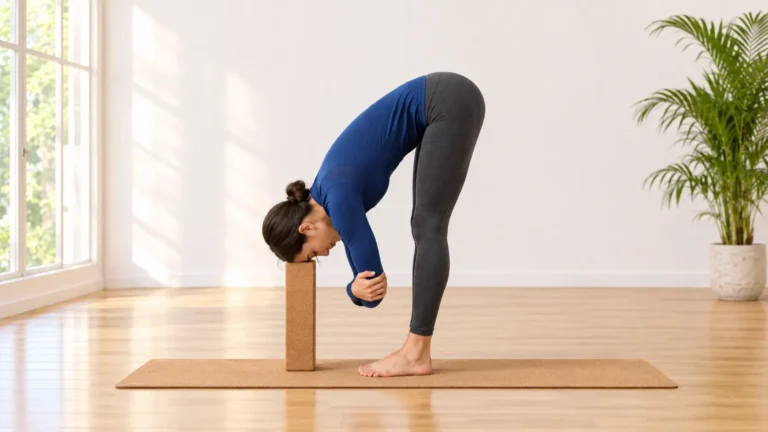
1. Standing Forward Fold (Uttanasana), Head Supported
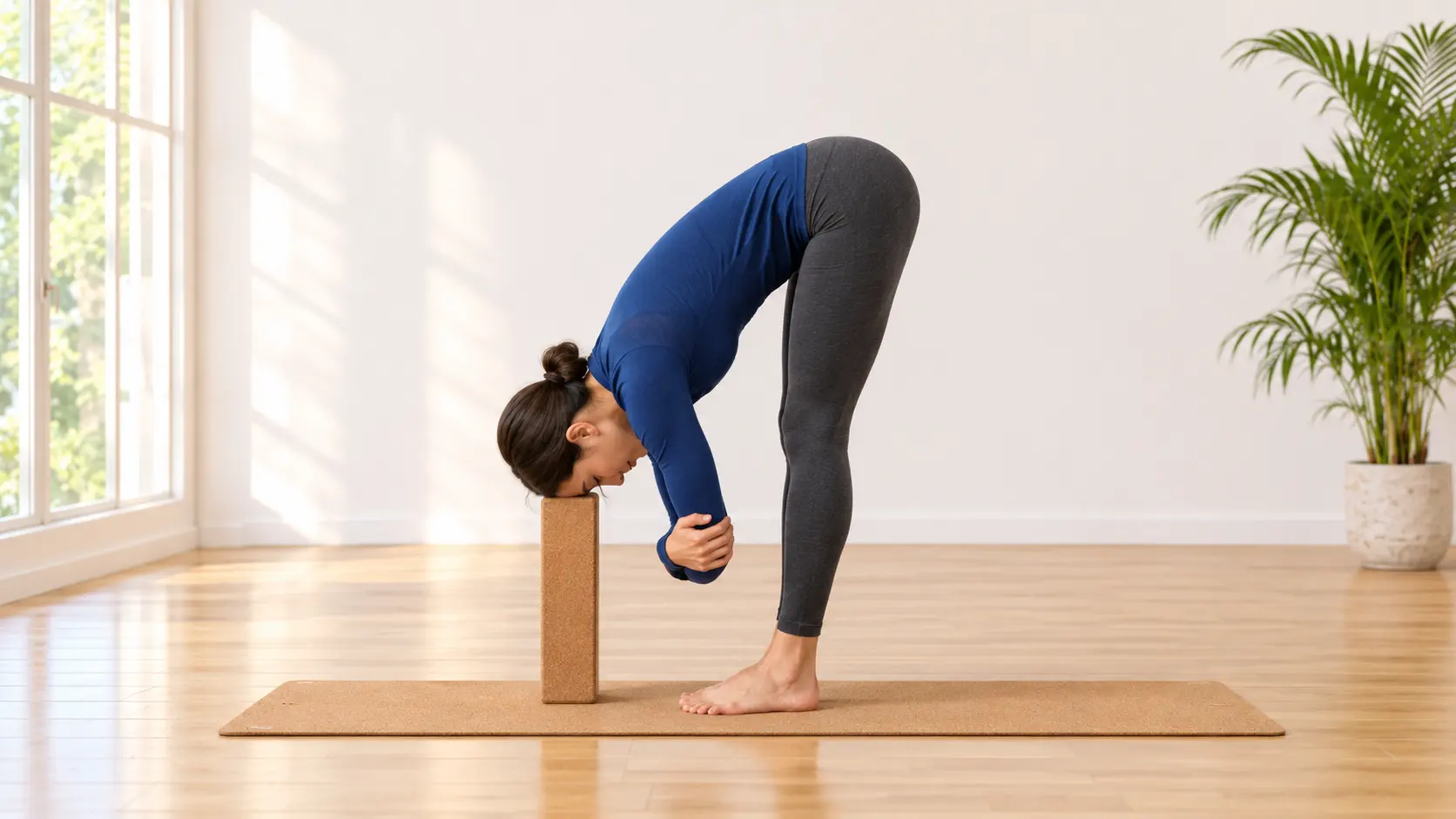
Benefits: calms the mind and stretches the backs of the legs. With the forehead on a block, the head is fully supported, which many people find very settling.
- Stand with your feet hip-width apart and a block on its highest setting in front of your feet.
- Bend your knees and fold forward from the hips.
- Rest your forehead on the block and let your arms hang, or hold your elbows.
- Bend your knees more and roll up slowly to come out.
- Hold: 8-10 breaths.
- Easier option: put the block on a chair seat, or rest your forearms on a chair.
- Safety: come up slowly to avoid dizziness, and skip it with glaucoma or high blood pressure.
2. Wide-Legged Forward Fold (Prasarita Padottanasana)
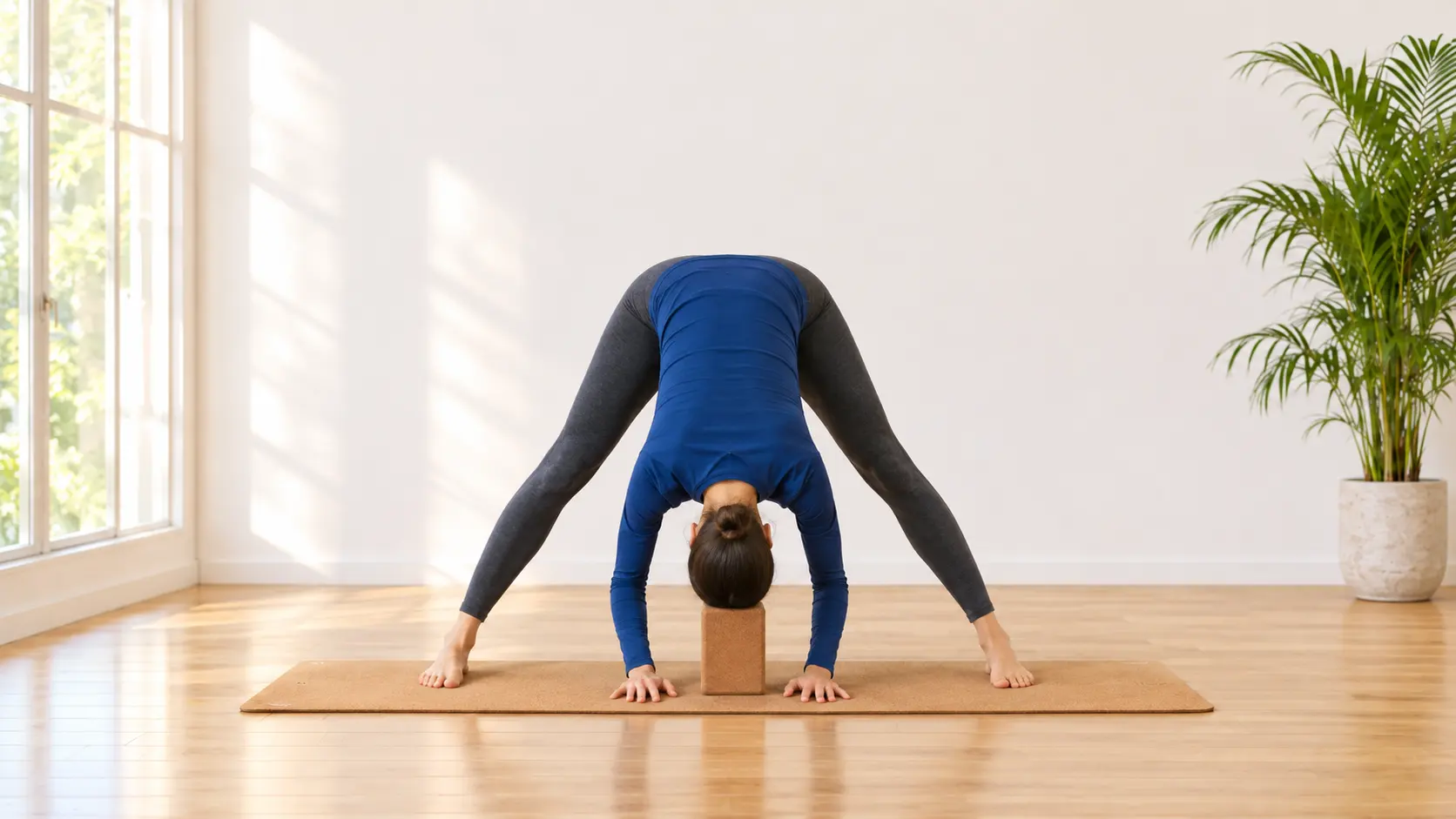
Benefits: brings the head below the heart while the wide stance keeps you steady. It also stretches the inner legs.
- Step your feet wide apart, toes pointing forward, hands on your hips.
- Breathe in and lengthen your spine, then breathe out and fold forward from the hips.
- Rest your hands on the floor or on blocks, and bring the top of your head towards the floor, or onto a block.
- Walk your hands back and come up with a flat back.
- Hold: 5-8 breaths.
- Easier option: keep your hands on blocks and your head higher.
- Safety: bend your knees if your lower back pulls, and come up slowly.
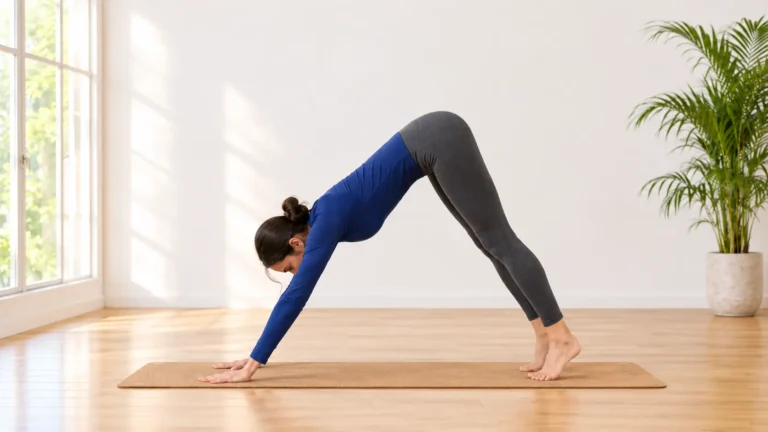
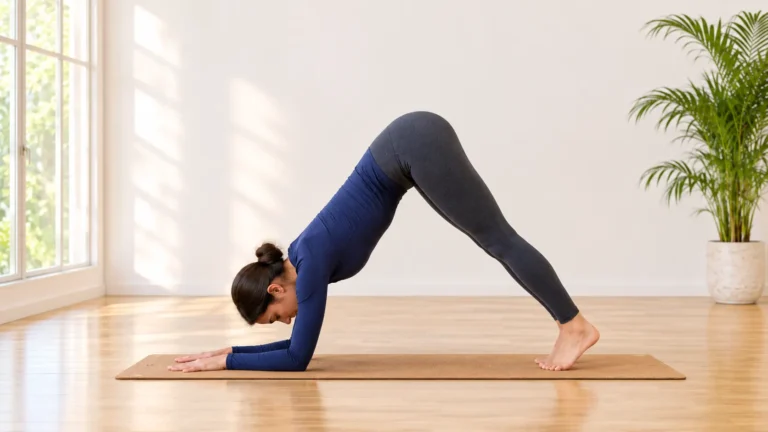
3. Downward-Facing Dog (Adho Mukha Svanasana)
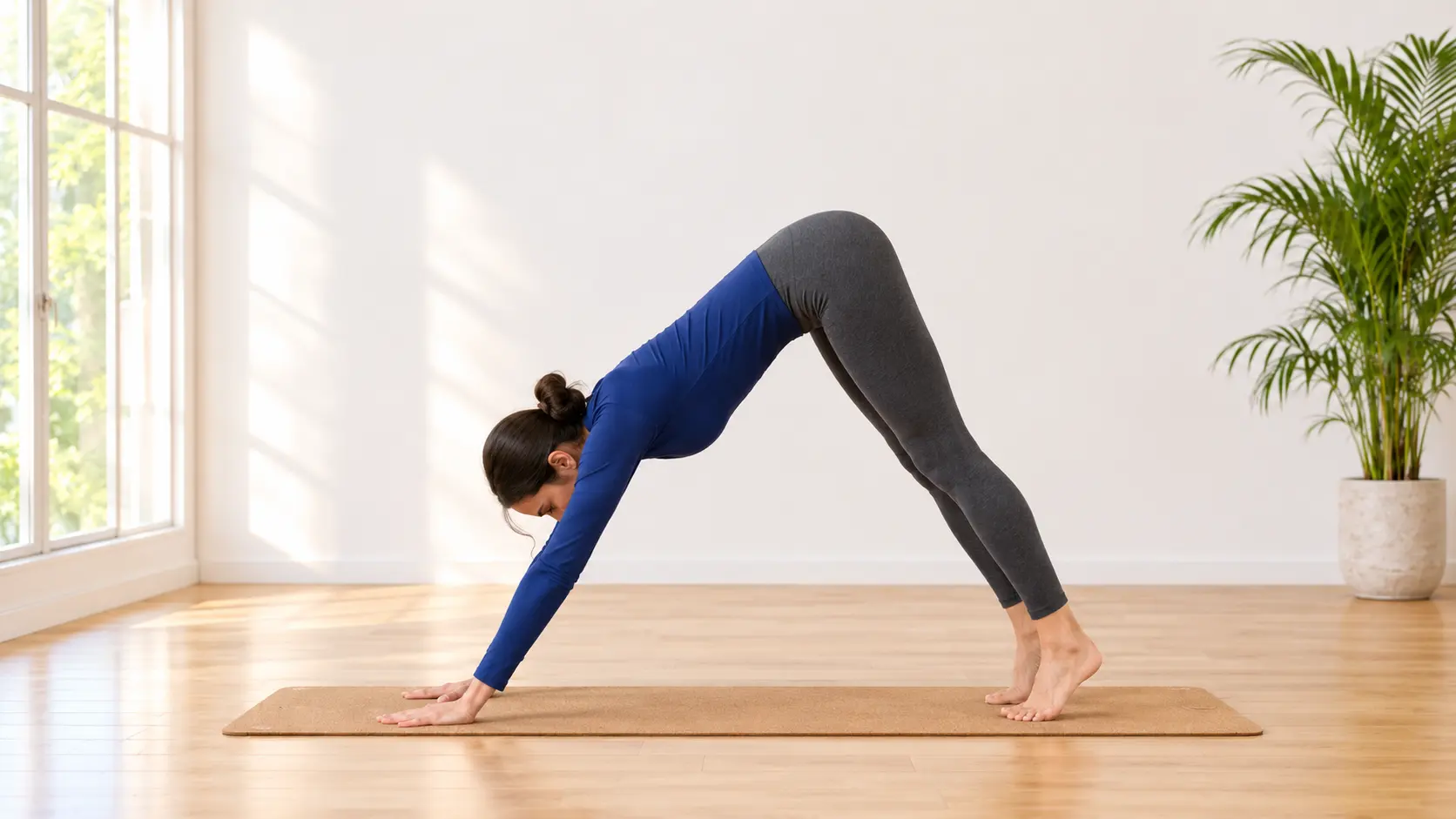
Benefits: a mild inversion that lengthens the whole back and lets the head hang freely.
- Come onto your hands and knees.
- Tuck your toes and lift your hips up and back, making an upside-down V.
- Bend your knees as much as you need to keep your back long, and let your head hang between your arms.
- Lower your knees to come out.
- Hold: 5-8 breaths.
- Easier option: keep your knees well bent, or put your hands on a chair seat.
- Safety: skip it with glaucoma or uncontrolled high blood pressure.
4. Dolphin Pose (Ardha Pincha Mayurasana)
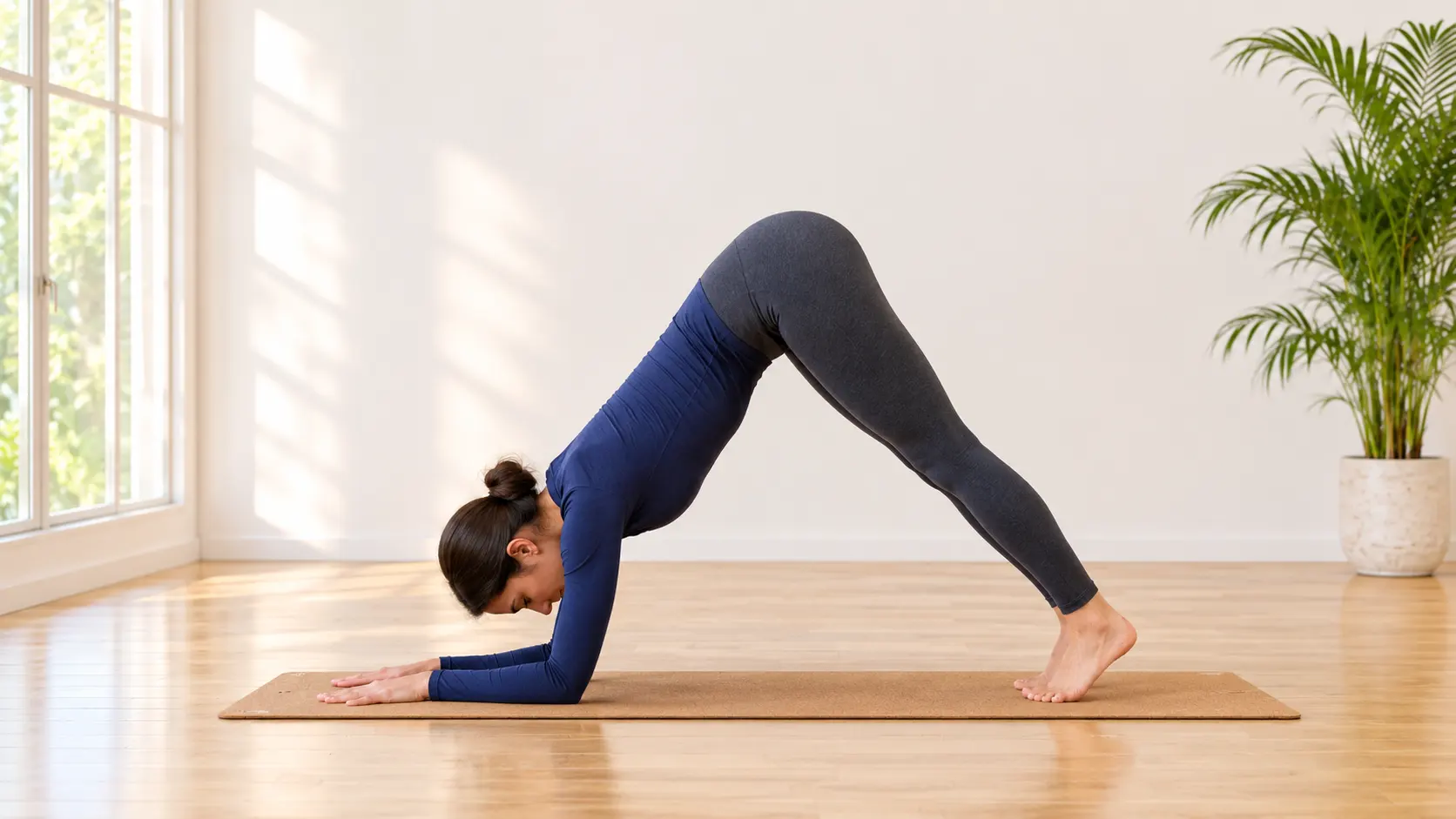
Benefits: gives a similar feeling of turning upside down as Headstand, without any weight on your head. It also strengthens the shoulders.
- Start on your forearms and knees, elbows under your shoulders and forearms parallel.
- Tuck your toes and lift your hips, as in Downward Dog but on your forearms.
- Let your head hang freely between your arms, not touching the floor.
- Lower your knees and rest.
- Hold: 5 breaths.
- Easier option: keep your knees on the floor and just lift the hips a little.
- Safety: don't rest your head on the floor, and skip it with shoulder pain or eye problems.
5. Head-to-Knee Pose (Janu Sirsasana)
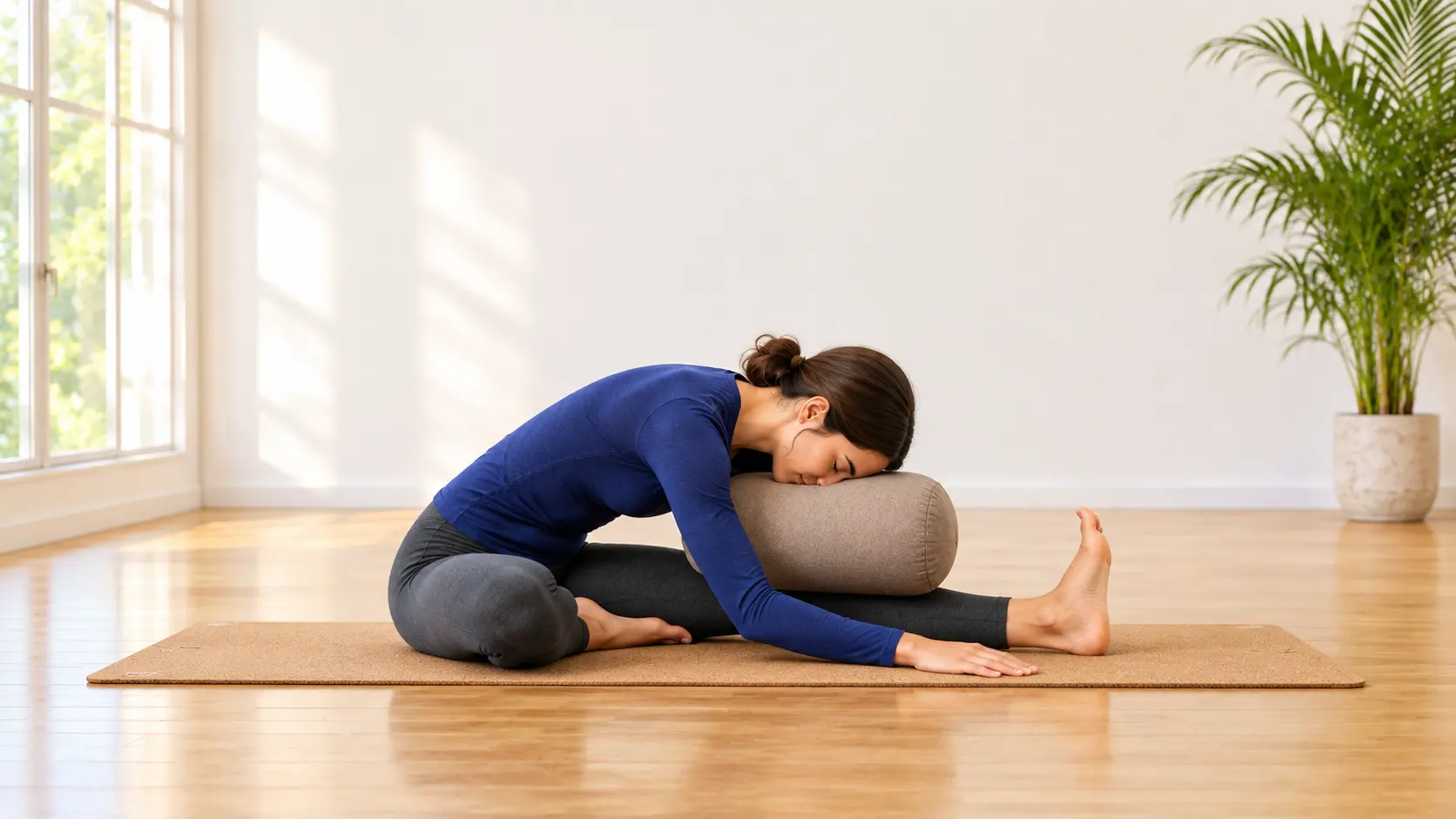
Benefits: a calming seated fold that stretches the back of one leg and lets the forehead rest.
- Sit with your right leg straight and your left foot against your inner right thigh.
- Turn slightly towards the straight leg and breathe in to sit tall.
- Breathe out and fold forward, resting your forehead on a bolster or cushion across your right shin.
- Come up slowly and change sides.
- Hold: 8-10 breaths on each side.
- Easier option: sit on a folded blanket and stack more cushions under your forehead.
- Safety: bend the straight knee slightly if the back of your leg or your lower back pulls.
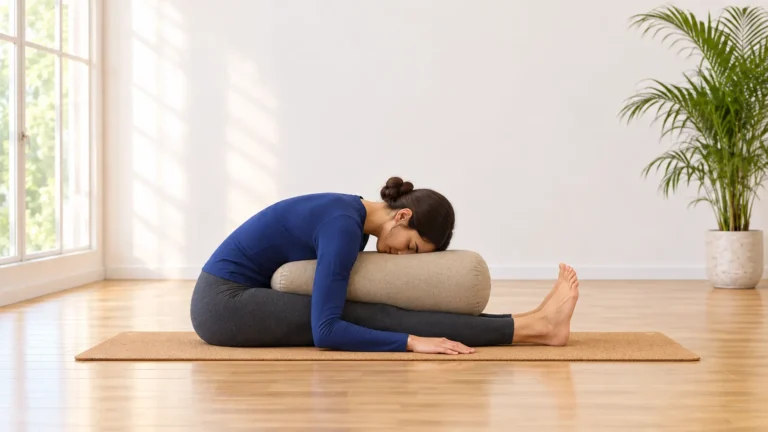
6. Seated Forward Bend (Paschimottanasana), Head Supported
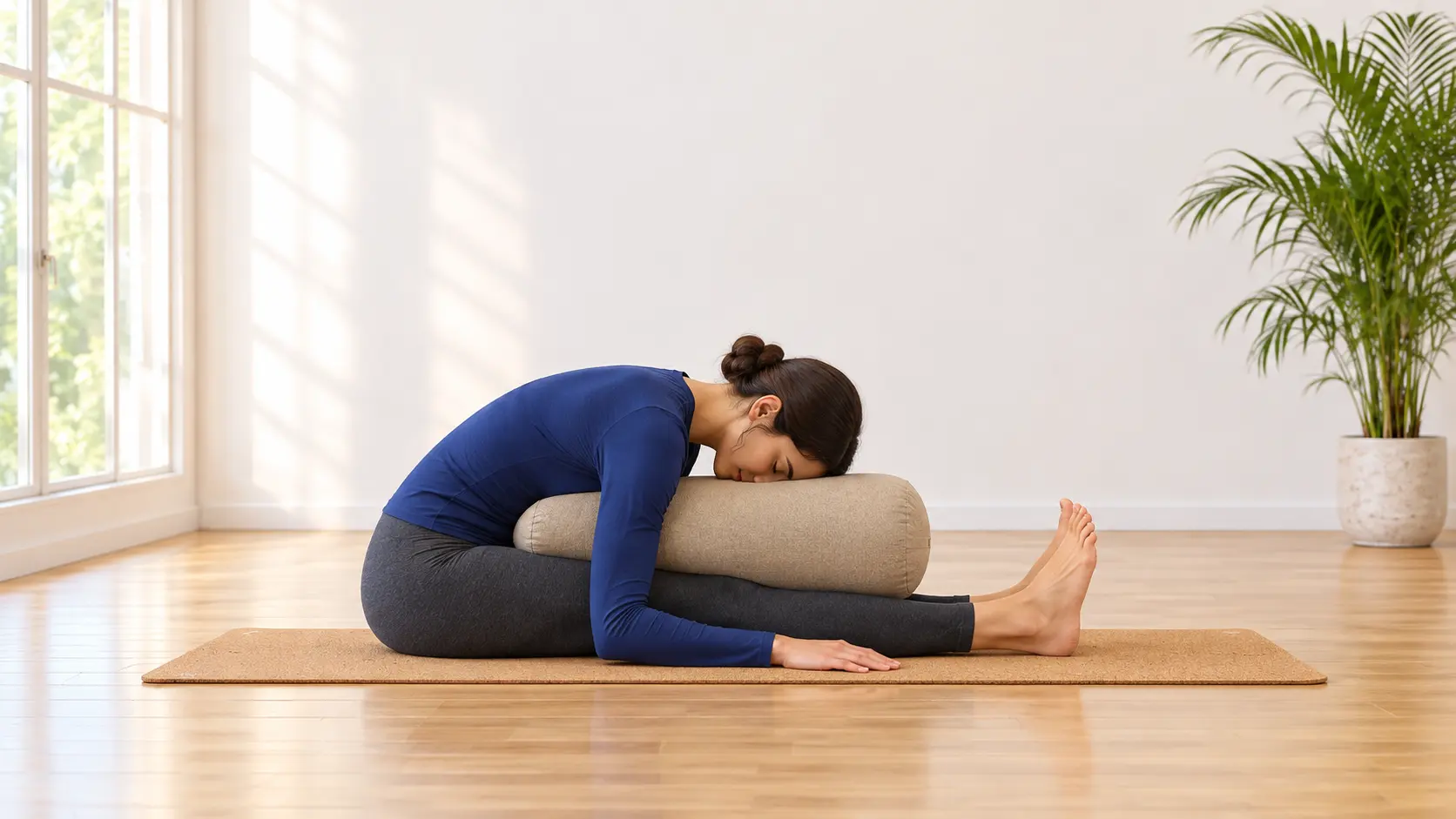
Benefits: stretches the whole back of the body and, with the head supported, invites a long, quiet hold. Many people find their thoughts slow down here.
- Sit with both legs straight in front of you, or with the knees slightly bent and a rolled blanket under them.
- Place a bolster or a pile of cushions on your legs.
- Fold forward from the hips and rest your forehead on the bolster, arms by your sides.
- Roll up slowly to come out.
- Hold: 1-2 minutes.
- Easier option: raise the support until your forehead rests without any strain.
- Safety: don't pull yourself forward with your arms, and keep the knees soft if your back is sensitive.
7. Easy Pose Forward Fold (Adho Mukha Sukhasana)
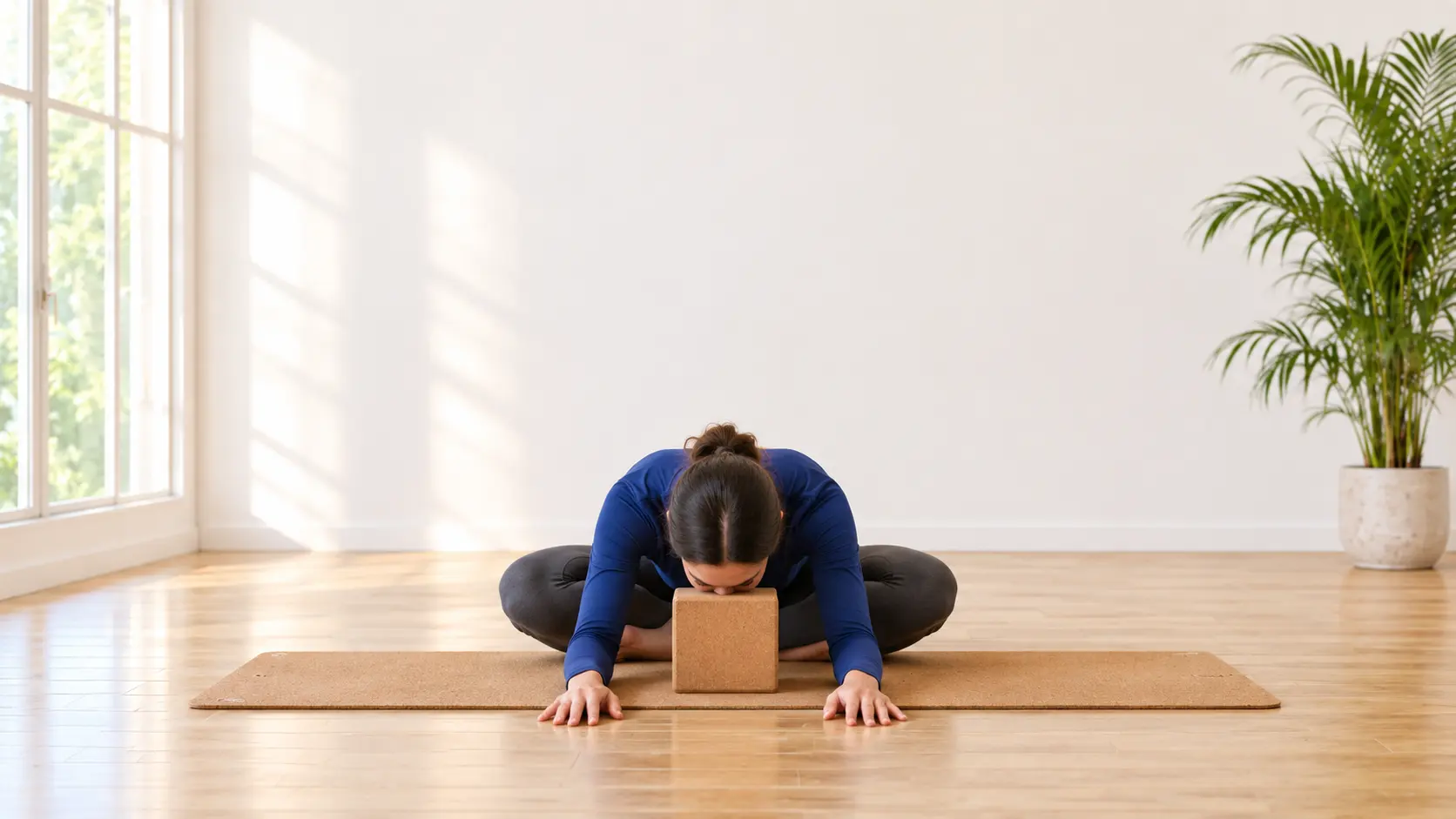
Benefits: a gentle fold that rests the forehead and opens the hips. It's a soft way to move from the forward bends into stillness.
- Sit cross-legged on a folded blanket with a block in front of you.
- Walk your hands forward and fold from the hips.
- Rest your forehead on the block and let your arms rest on the floor.
- Walk your hands back, change the cross of your legs and repeat.
- Hold: 5 breaths on each side.
- Easier option: rest your forehead on a higher stack of cushions or a chair seat.
- Safety: put cushions under your knees if they're high or your hips are tight.
8. Savasana with an Eye Pillow

Benefits: deep rest for the body, with a light weight over the eyes that helps the eyes and forehead relax.
- Lie on your back with your arms by your sides and your legs relaxed.
- Place an eye pillow or a folded cloth over your eyes.
- Let your attention rest softly at the point between your eyebrows.
- Take the pillow off, roll to your side and sit up slowly.
- Hold: 3 minutes, longer if you have time.
- Easier option: put a cushion under your knees to rest your lower back.
- Safety: later in pregnancy, lie on your side instead.
A 15-Minute Third Eye Chakra Yoga Routine
This third eye chakra yoga sequence takes 15 minutes, counting both sides and the transitions. It moves from standing folds to gentle inversions, then to seated folds, and ends lying down. One slow breath takes about 5-6 seconds, so 5 breaths is about half a minute. Breathe through your nose. You can keep the table open on your phone while you practice.
| Time | Pose | Hold | Beginner option |
|---|---|---|---|
| 0:00-2:00 | Warm-up: palming and eye movements | 2 min | Eyes closed only |
| 2:00-3:30 | Standing Forward Fold, forehead on a block | 8-10 breaths | Block on a chair seat |
| 3:30-4:30 | Wide-Legged Forward Fold | 5-8 breaths | Hands on blocks, head higher |
| 4:30-5:30 | Downward Dog | 5-8 breaths | Knees well bent |
| 5:30-6:30 | Dolphin, then rest on the knees | 5 breaths | Knees down, hips lifted a little |
| 6:30-8:30 | Head-to-Knee, right then left | 8-10 breaths per side | More cushions under the forehead |
| 8:30-10:00 | Seated Forward Bend, head supported | 1-2 minutes | Higher support |
| 10:00-11:00 | Easy Pose Forward Fold, both crosses | 5 breaths per side | Forehead on cushions |
| 11:00-14:00 | Savasana with an eye pillow | 3 minutes | Cushion under the knees |
| 14:00-15:00 | Seated, attention between the eyebrows | 1 minute | Sit on a chair |
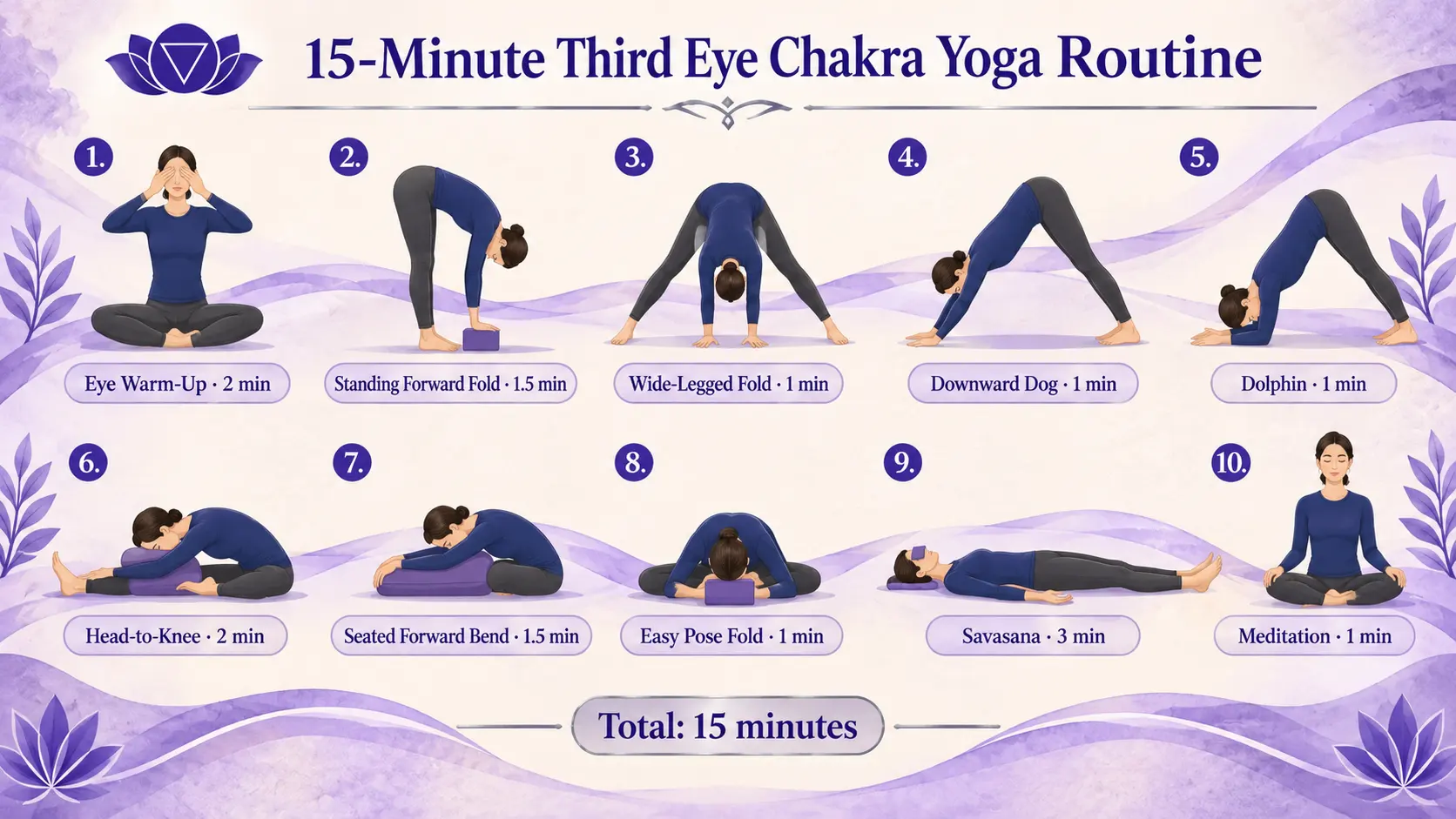
Three or four times a week is a good rhythm. Many people like this routine in the evening because it's calming and can help them wind down for sleep, but any time that suits you works, as long as you haven't just eaten. If 15 minutes is too long, shorten the holds or leave out Dolphin.
5-Minute Third Eye Chakra Yoga for Beginners
If you're new to yoga or short on time, try this easy third eye chakra yoga at home. You only need a mat, a block and a cushion.
- Standing Forward Fold, 1 minute: knees bent, forehead resting on a block.
- Head-to-Knee, 2 minutes: one minute on each side, forehead on a cushion.
- Savasana, 2 minutes: lie on your back with a folded cloth over your eyes.
Try this short routine for a week or two. When it feels easy, add Downward Dog and Seated Forward Bend, and then move on to the full 15-minute routine.
Third Eye Chakra Meditation Pose
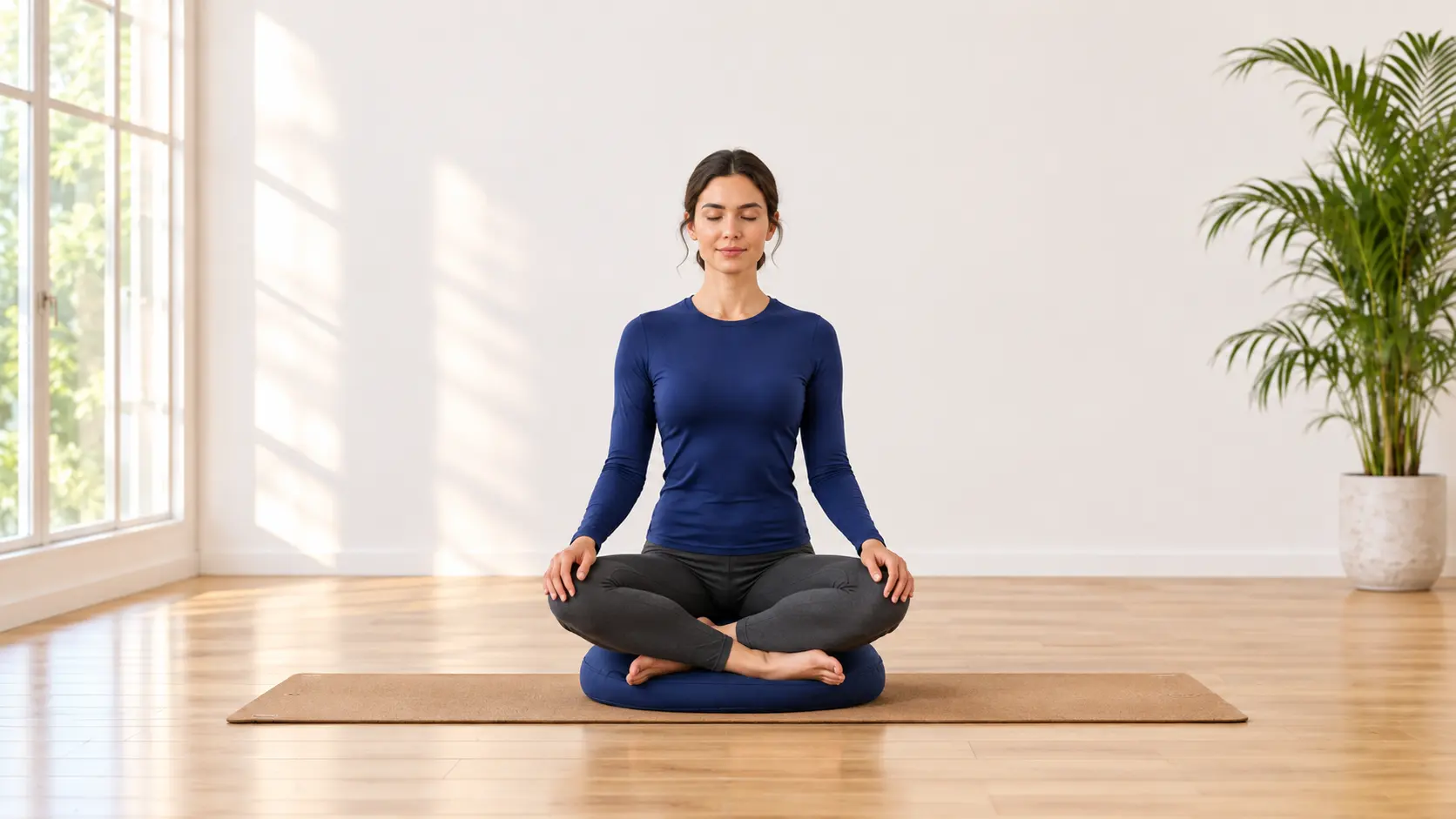
Sit cross-legged on a cushion or upright on a chair, with your spine long and your chin level. Rest your hands on your knees and let your attention settle at the point between your eyebrows for three to five minutes. Candle gazing, trataka, is a traditional practice many people add here: place a candle at eye level about an arm's length away, gaze softly at the flame for a minute without straining, then close your eyes and watch the after-image.
The third eye chakra meditation has a full guided script. Hand positions for meditation are covered on our page about chakra mudras.
How Yoga for Third Eye Chakra Healing Works
Chakra teachings call the third eye the seat of the mind, and say a restless mind clouds it. Calming poses, slow breathing and gentle pressure at the brow are meant to settle the thoughts so that intuition can be heard. Many people notice they feel clearer and more focused after a few minutes of supported forward folds.
Chakras can't be measured by science, so there are no studies on yoga for third eye chakra healing as such. Yoga in general can help with stress and sleep, according to the National Center for Complementary and Integrative Health. Better sleep and a calmer mind are a good base for any inner practice.
Breathing in the Poses
Breathe slowly through your nose, making the out-breath a little longer than the in-breath. Alternate nostril breathing is a good practice to add before the meditation. The page on third eye chakra breathing explains it step by step.
Try the 5-minute beginner routine this evening: Standing Forward Fold, Head-to-Knee and Savasana. When that's easy, move on to the full 15-minute routine. These pages are good next steps:
- Third eye chakra healing meditation - a guided script for after the poses
- Third eye chakra breathing exercises - alternate nostril breath
- How to open third eye - the step-by-step technique
Sources
- B.K.S. Iyengar, Light on Yoga (1966): Adho Mukha Svanasana, Uttanasana, Prasarita Padottanasana, Janu Sirsasana, Paschimottanasana, Savasana.
- National Center for Complementary and Integrative Health (NCCIH), "Yoga: Effectiveness and Safety".
Frequently Asked Questions About Third Eye Chakra Yoga
Which yoga pose is best for the third eye chakra?
Child's pose and supported forward folds are named most often, because they rest the forehead and calm the mind. On this page, Standing Forward Fold with the forehead on a block and Head-to-Knee are good places to start. A short, slow sequence usually works better than holding one pose for a long time.
How often should you practice third eye chakra yoga?
Three or four times a week is plenty for most people, and the 5-minute beginner routine can be done every day. Short, regular sessions tend to help more than an occasional long one. Many people like to use the routine as a way to wind down in the evening.
Can beginners do third eye chakra yoga?
Yes. All the poses on this page are beginner-friendly, and the 5-minute routine with Standing Forward Fold, Head-to-Knee and Savasana is a good place to start. Use blocks, cushions and a bolster freely so your forehead always rests without strain. If you have eye problems or high blood pressure, check with a doctor first.
Why are forward folds associated with the third eye chakra?
The third eye chakra is placed between the eyebrows, and forward folds let the forehead rest on a block, a bolster or the floor, which gives gentle pressure at that point. Chakra teachings link the third eye with a quiet, clear mind, and folding forward turns the attention inwards and slows the breath. Many people find supported folds calming for that reason.
Is Headstand good for the third eye chakra?
Headstand often appears on third eye lists, but it puts weight on the head and neck and is best learned with a teacher. Dolphin and Downward Dog give a similar upside-down feeling without the weight on the head, so they're used on this page instead. Skip all head-down poses if you have glaucoma or high blood pressure.
What is the best time of day for third eye chakra yoga?
Any time that suits you works. Many people like the evening, because these calming poses help them wind down for sleep; others like a short session in the morning to clear the mind. Practice at least two hours after a main meal, since forward folds aren't comfortable on a full stomach.
Can third eye chakra yoga help with headaches?
Some people find that slow, supported poses and relaxing the eyes and forehead help with tension. Yoga isn't a treatment for headaches, though, and head-down poses can make some headaches worse. Stop if a pose brings on a headache, and see a doctor about headaches that are severe, frequent or come with vision changes.