
8 Sacral Chakra Yoga Poses to Open and Balance Svadhisthana
Explore 8 sacral chakra yoga poses with step-by-step instructions, beginner modifications and a 15-minute yoga flow to open and balance Svadhisthana.
Table Of Contents
The best sacral chakra yoga poses are slow hip openers that move and soften the pelvis: Cat-Cow, Goddess, Low Lunge, Half Pigeon, Frog, Bound Angle, Happy Baby and Reclined Bound Angle. Warm up with two minutes of hip circles, hold each pose for 5-10 slow breaths, and link them into a 15-minute flow. Beginners can start with a 5-minute version of three poses.
- Chakra: Svadhisthana (sacral), water element
- Poses: 8, plus a 2-minute hip-circle warm-up
- Hold: 5-10 breaths each
- Full flow: 15 minutes · beginner flow: 5 minutes
- When: any time of day, at least two hours after a meal
- Props: mat, two blocks, a cushion or bolster, a blanket
- Level: beginner to intermediate
In yoga tradition these poses work on the sacral chakra because they open the hips and bring slow, fluid movement to the lower belly. They're one part of sacral chakra healing, which also covers water, creativity and food.
The 8 Best Sacral Chakra Yoga Poses
As the sacral chakra is located in your pelvis, and within the chakra system it is believed that your hips can store emotions and tension, postures that rotate, open and stretch your hip area are useful. As this chakra is associated with water, your postures should be slow and flowing.
The list below shows the 8 postures. Click the name of a posture to see instructions.
| Yoga pose | Difficulty* | Main focus | Hold |
|---|---|---|---|
| Cat-Cow | Beginner | Pelvic and spine mobility | 8-10 breaths |
| Goddess | Beginner | Hips and leg strength | 5-8 breaths |
| Low Lunge | Beginner | Hip flexors | 5-8 breaths per side |
| Half Pigeon | Intermediate | Outer hips | 8-10 breaths per side |
| Frog | Intermediate | Inner thighs | 5-8 breaths |
| Bound Angle | Beginner | Inner thighs and groin | 8-10 breaths |
| Happy Baby | Beginner | Hips and lower back | 8-10 breaths |
| Reclined Bound Angle | Beginner | Rest and relaxation | 2-3 minutes |
*A rough guide only; how a pose feels depends on your own hips and knees.
Some lists also include Bridge or Child's pose. Chakra associations vary between yoga systems, and on this site those two are on the root chakra yoga poses page, so the two pages don't repeat each other. Crow and other strengthening postures have not been included in this list, as we want to encourage gentle postures in this chakra.
If you only have time for three, do the 5-minute beginner flow: Cat-Cow, Bound Angle and Happy Baby.
Before You Start: Safety and Modifications
Although gentle, these postures place quite a demand on the knees. Consider the following tips.
- Knees: in Pigeon, Frog and Hero, stop if you experience pain in your knees. For a gentler Pigeon, try Figure Four. For a gentler Frog, try a wide-kneed Child’s pose.
- Hip replacement or hip pain: consult your surgeon or physiotherapist to find out which ranges of movement are safe to do.
- Low back: keep your back on the ground in Happy Baby. Add height under your knees in Reclined Bound Angle.
- Pregnancy: if experiencing pelvic pain, try a narrower stance. Avoid deep bends in the abdomen. Later in pregnancy avoid lying flat on your back for too long. Check with your midwife or doctor first.
- During your period: usually these gentle postures are fine. If you are feeling tired, take a rest.
Some people may feel emotional during these postures. If so, it is fine to come out of the postures and lie on your back to take some deep breaths. If you are experiencing pain in your hips, pelvis or back for longer than a few days, see a doctor.
How to Do Each Sacral Chakra Yoga Pose
Do the postures in the order given. You begin in a quadruped position, then stand and kneel, then move to the floor and therefore finish resting on the floor. This sequence can be completed in 15 minutes (see below).
Warm-Up: 2-Minute Hip Circles and Sacral Chakra Exercises
It is important to give your hips (which may be stiff from sitting at a desk) a gentle warm-up before deep postures.
- Stand with your legs slightly wider than your hips. Place your hands on your hips.
- Circle your pelvis in a large circle, 10 times in each direction.
- Rock your pelvis forwards and backwards 10 times, tucking your tailbone under and then extending it.
- Gently sway from side to side with bent knees. Do a few reps.
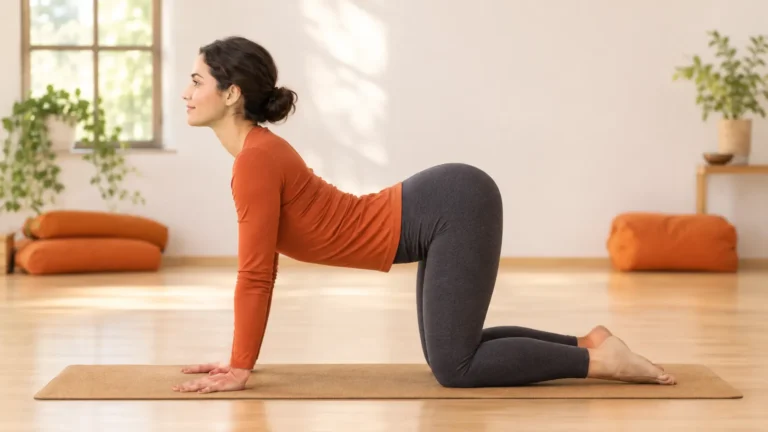
1. Cat-Cow Pose (Marjaryasana-Bitilasana)
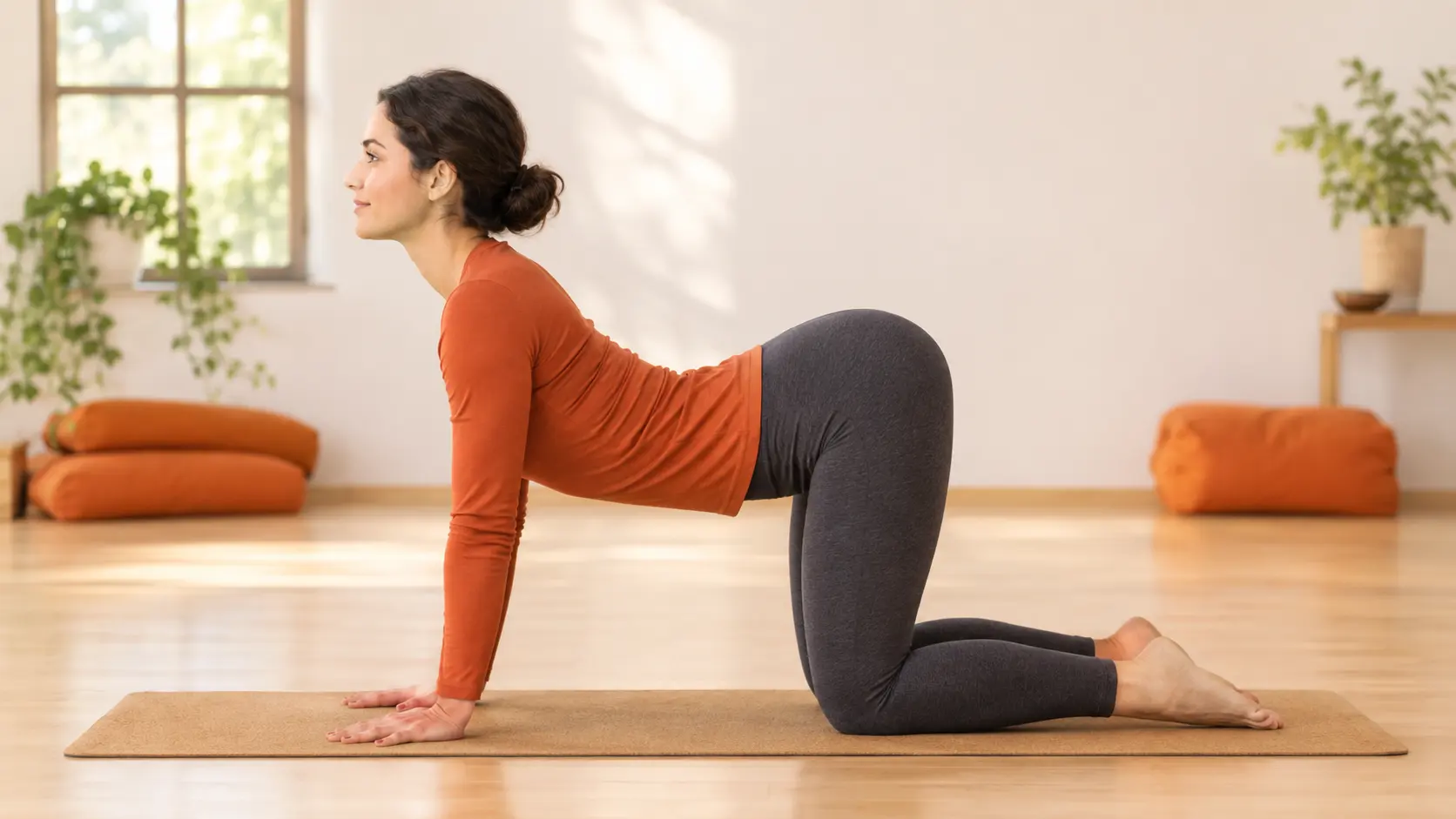
Benefits: pelvic and lower back mobility. Often used as a starting posture in sacral chakra practices.
- Begin in quadruped position, with wrists under shoulders and knees under hips.
- Breathe in, let the belly drop and tip your tailbone up, looking slightly forward (Cow).
- Breathe out, round your back, tuck your tailbone and let your head hang (Cat).
- Continue to move with the breath, using your pelvis as the movement point.
- Hold: 8-10 breaths.
- Easier option: place your forearms on the floor if your wrists are straining.
- Safety: keep the neck soft and don't throw the head back in Cow.
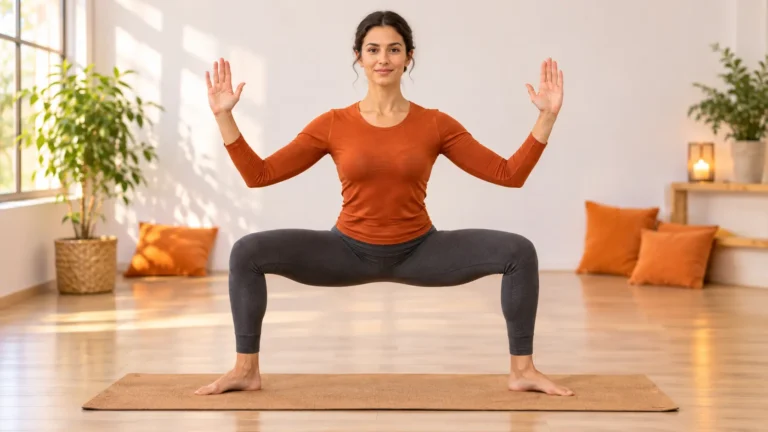
2. Goddess Pose (Utkata Konasana)
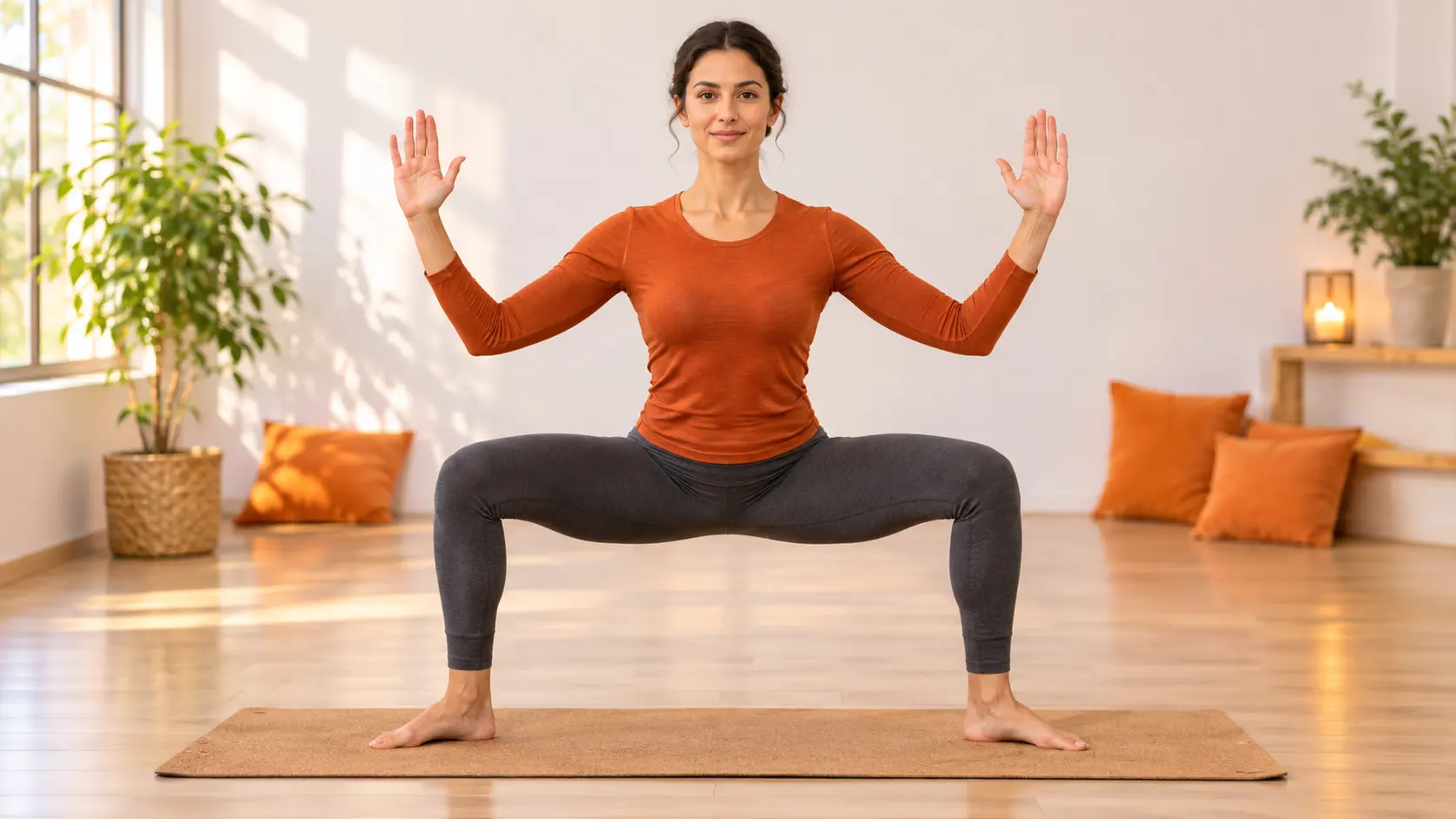
Benefits: opens the hips and strengthens the legs. This pose is called ‘Fierce Angle’ in Sanskrit, and provides a bit of intensity and confidence in this sequence.
- Step your feet wide apart, with toes pointing out.
- Bend your knees so that they face the same direction as your toes.
- Lower your hips so that your thighs are as horizontal as comfortably possible.
- Bring your hands together in front of your chest, or raise your arms with bent elbows.
- Extend your legs to return to standing.
- Hold: 5-8 breaths.
- Easier option: do not bend as low. Place your hands on your thighs.
- Safety: make sure that your knees do not cave inwards, as this can cause strain.
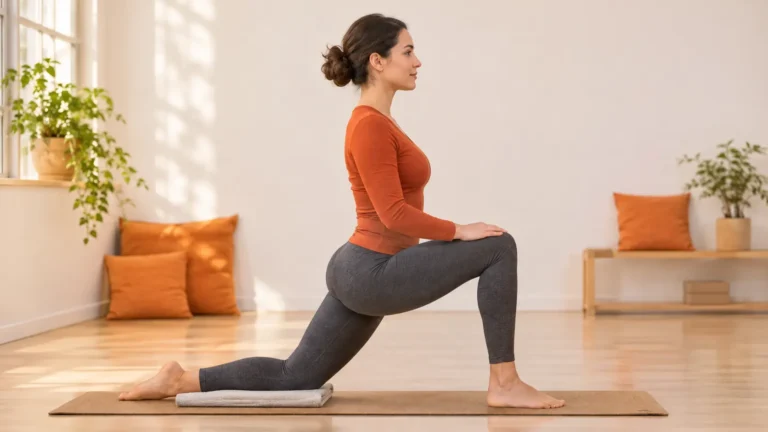
3. Low Lunge (Anjaneyasana)
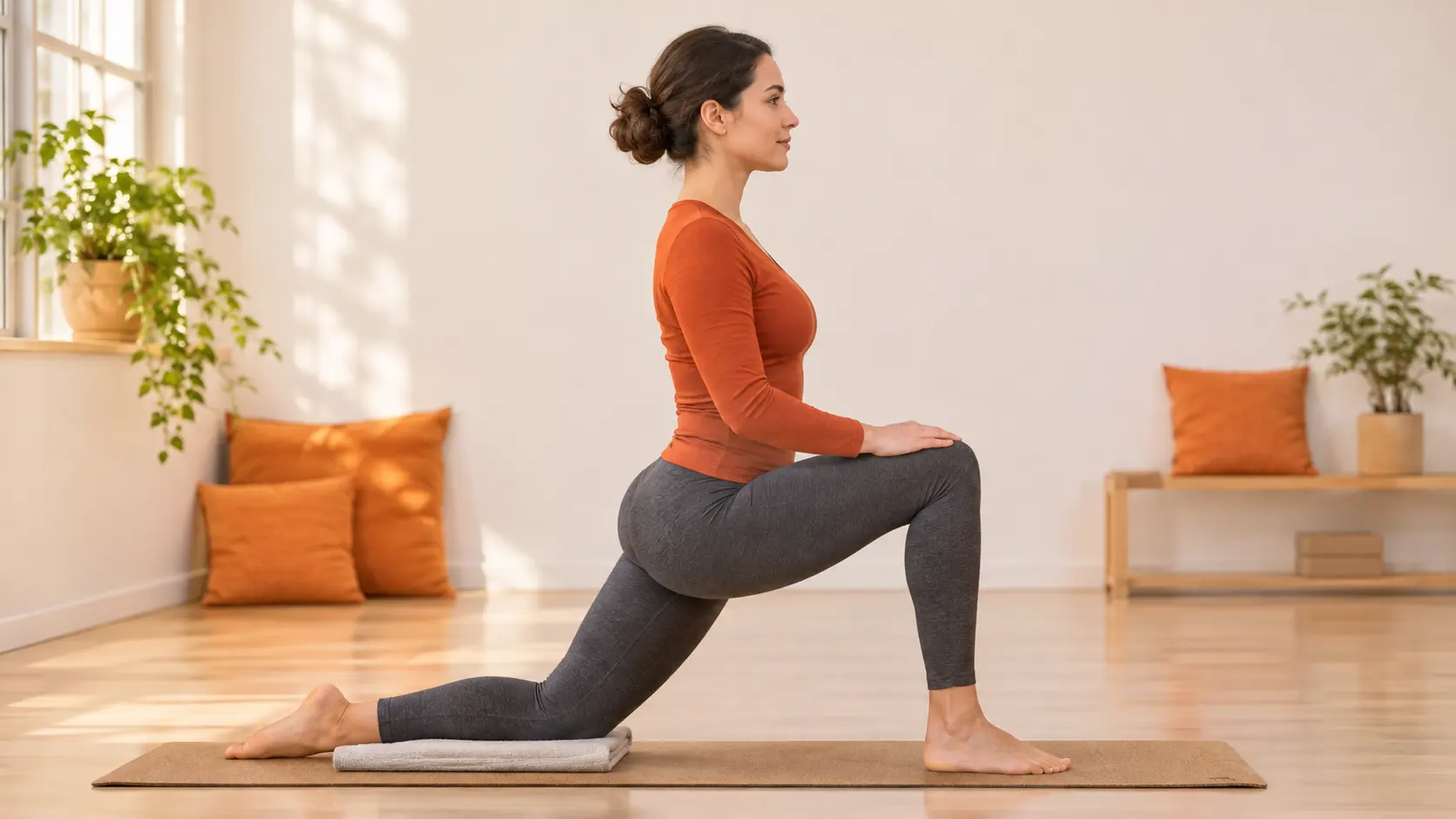
Benefits: stretches the front of the hip and hip flexors (often tight due to sitting). This posture is named after Anjaneya, one of the names for Hanuman (monkey god).
- From quadruped position, bring your right foot forwards between your hands. Lower your left knee onto a folded blanket.
- Bring your torso upright and rest your hands on your front thigh or lift your arms.
- Allow your hips to sink slowly forwards to feel a stretch in the front of the left hip.
- Repeat on the other side.
- Hold: 5-8 breaths on each side.
- Easier option: if you struggle to come upright, place blocks under your hands.
- Safety: make sure that the knee of the front leg is above the ankle, not over the toes.
ADVERTISEMENT: CONSCIOUS CRYSTALS - 7 CHAKRA COLORS SPECIAL DEALS

Buy Real Chakra Stones and Crystal Jewelry
Explore Full Collection

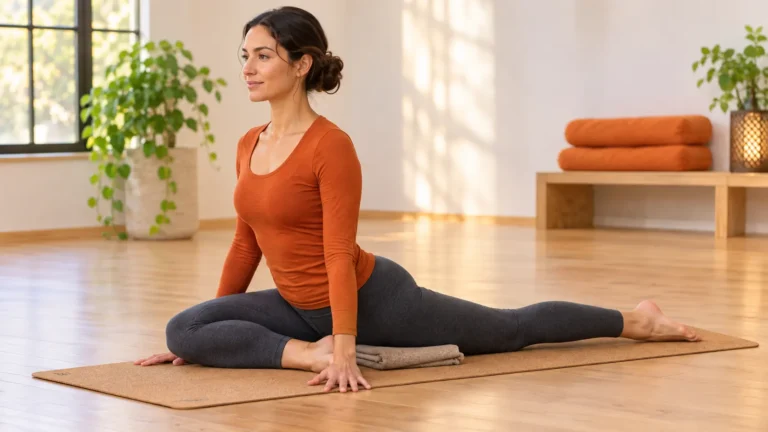
4. Half Pigeon (Eka Pada Rajakapotasana, preparation)
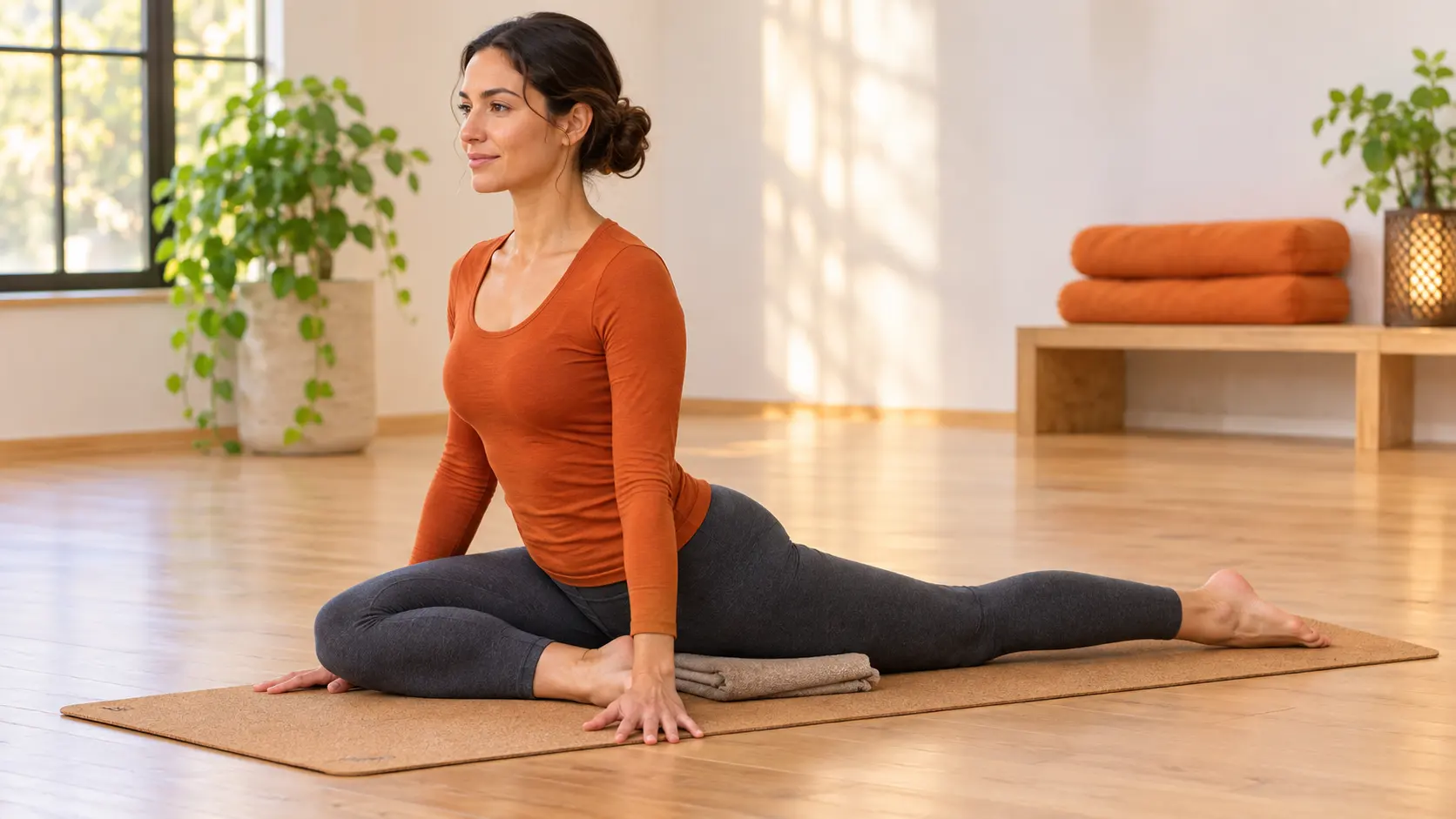
Benefits: deep stretch for the muscles on the outside of the hip and the glutes.
- From quadruped position, bring your right knee forwards so that it is behind your right wrist. Angle your right shin so that it is diagonal across the mat, placing your foot close to your left hip.
- Move your left leg back in a straight line.
- If your right hip does not reach the floor, place a folded blanket under your hip so that you do not lean to one side.
- Stay upright on your hands, or fold forward onto your forearms or a cushion. Repeat on the other side.
- Hold: 8-10 breaths on each side.
- Easier option: Figure Four (on your back, cross one ankle over the opposite knee) can provide a similar stretch, and may be easier on the knee.
- Safety: if you feel twisting in the front knee, back off.
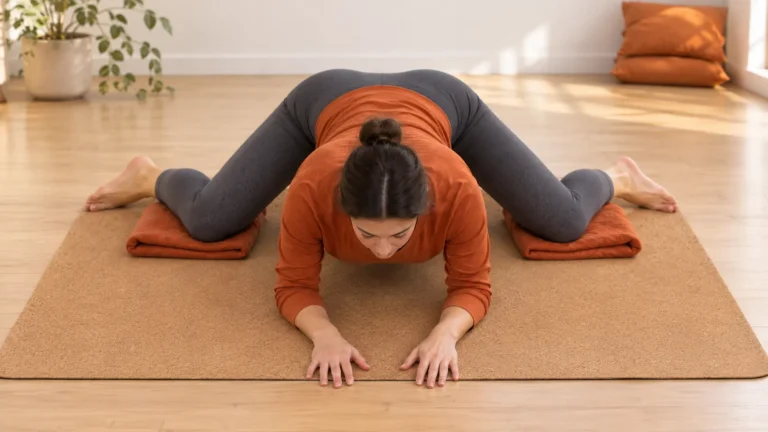
5. Frog Pose (Mandukasana)
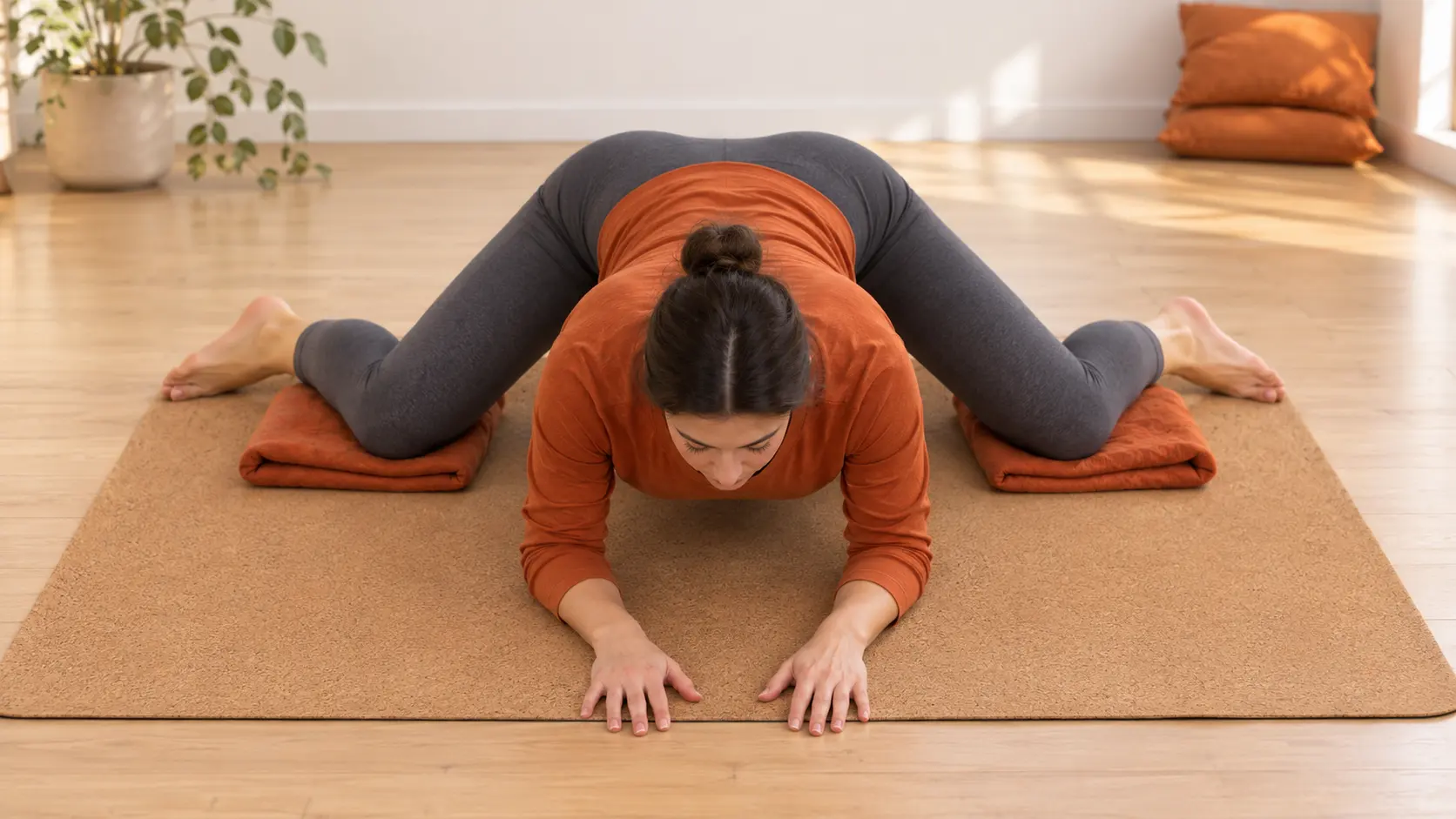
Benefits: deep inner thigh and groin stretch. Be careful with this posture.
- Begin in quadruped position with a folded blanket under your knees.
- Slowly move your knees apart. Keep your ankles lined up with your knees, and turn your feet outwards.
- Place your forearms on the floor and allow your hips to gently move back.
- Walk your knees back in before you come up.
- Hold: 5-8 breaths.
- Easier option: wide-knee Child’s pose.
- Safety: stop well before straining the groin.
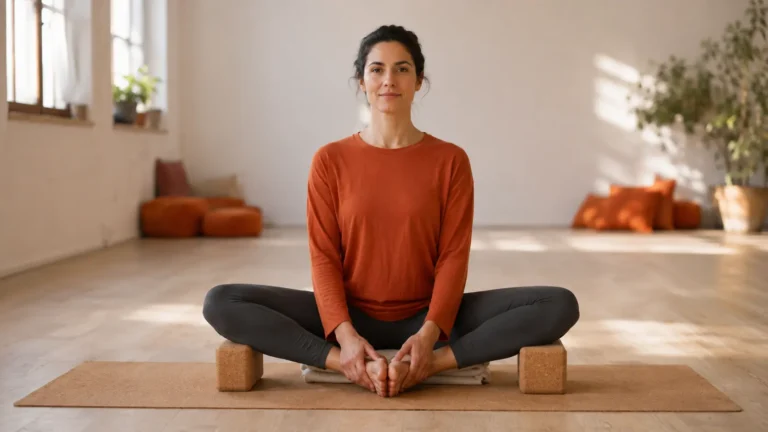
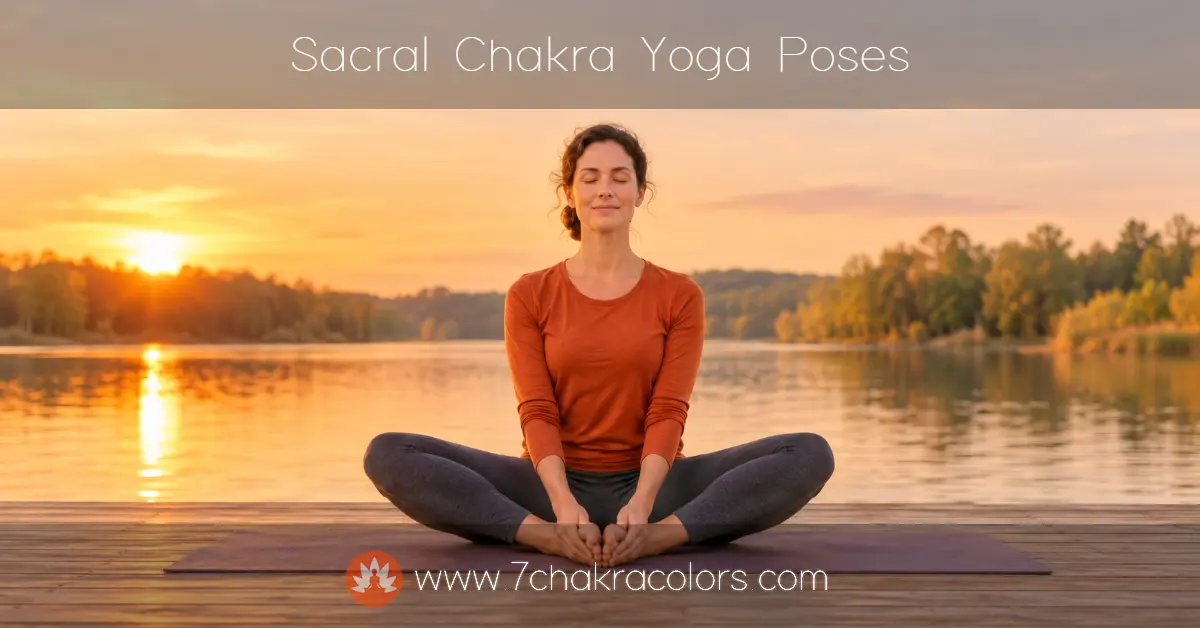
6. Bound Angle Pose (Baddha Konasana)
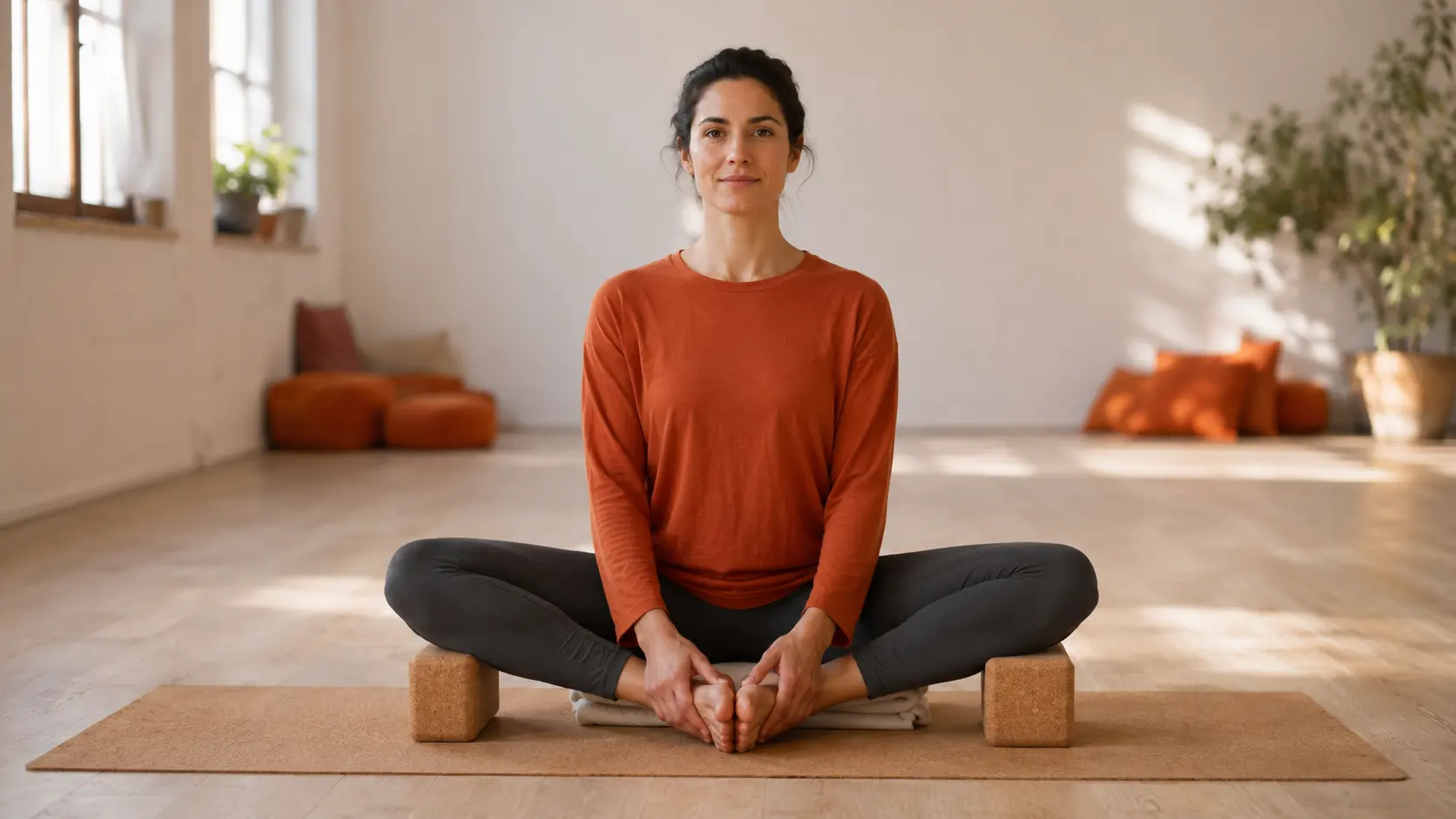
Benefits: opens the inner thighs and brings awareness to the pelvis. Also known as Butterfly or Cobbler’s pose, this is the pose most commonly named for this chakra.
- Sit on a folded blanket. Bring the soles of your feet together, and allow your knees to open outwards.
- Hold the feet (or ankles) and sit tall.
- Sit tall for a few breaths. If comfortable, gently fold forwards from the hips.
- Hold: 8-10 breaths.
- Easier option: if your knees are high off the floor, place a block or cushion under each knee.
- Safety: never push your knees down with your hands.
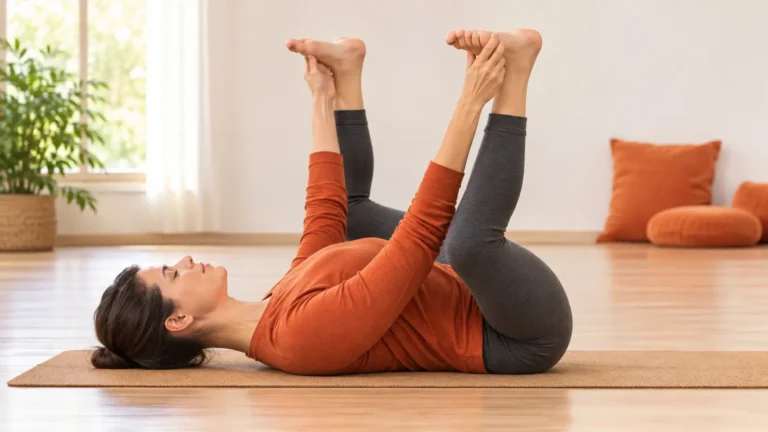
7. Happy Baby (Ananda Balasana)
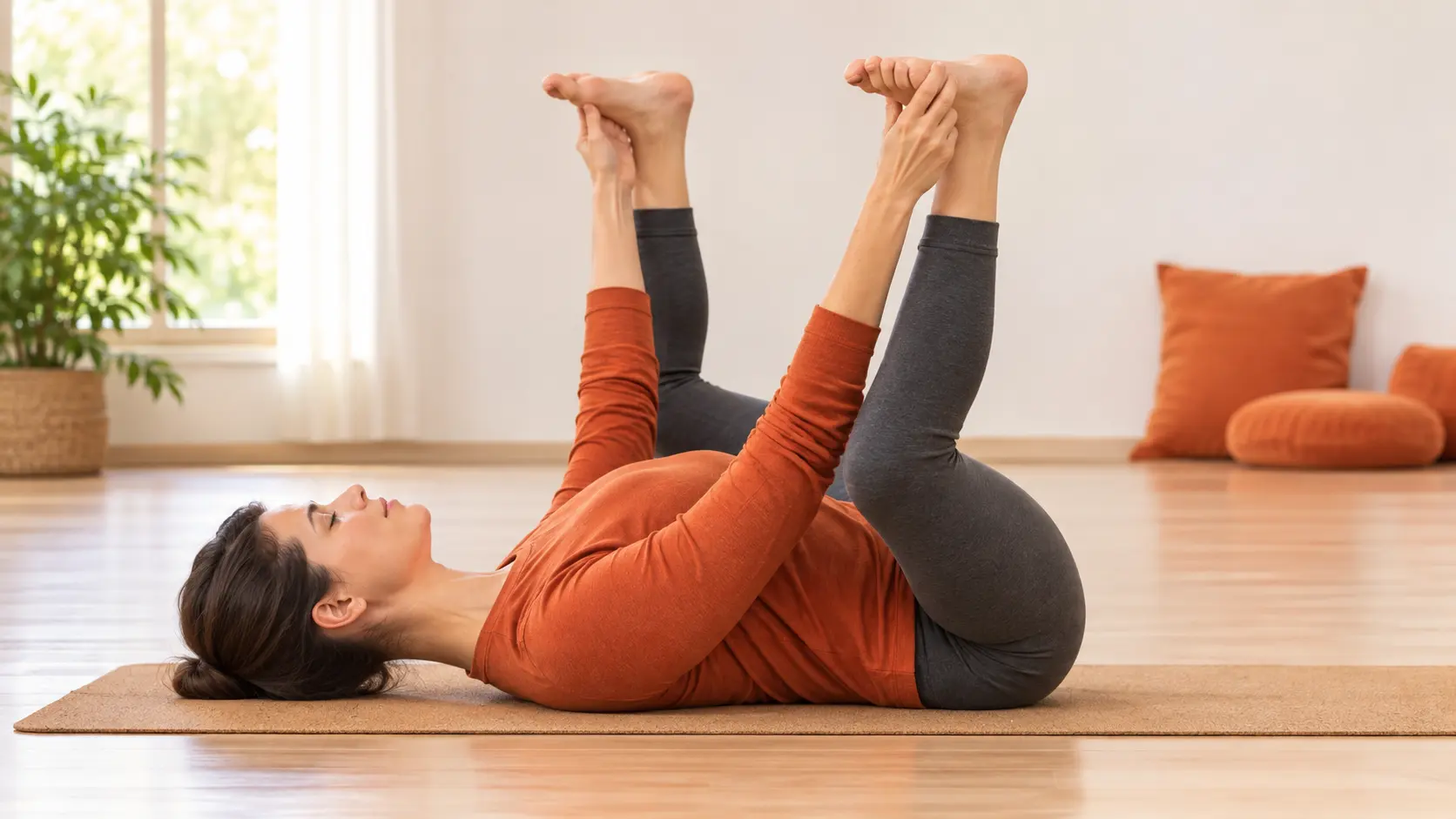
Benefits: releases the hips and lower back. This playful posture matches well with a chakra relating to pleasure.
- Lie on your back and bend your knees so that they are pointing towards your armpits.
- Hold the outer edges of your feet, your ankles or the backs of your thighs.
- Make sure that your knees are wider than your body. Allow your lower back to rest on the floor.
- Rock gently from side to side if you like.
- Hold: 8-10 breaths.
- Easier option: if you cannot reach your feet, try holding a strap or your shins.
- Safety: make sure your head and lower back are on the floor.
ADVERTISEMENT: CONSCIOUS CRYSTALS - 7 CHAKRA COLORS SPECIAL DEALS
Buy Real Chakra Stones and Crystal Jewelry
Explore Full Collection
8. Reclined Bound Angle (Supta Baddha Konasana)
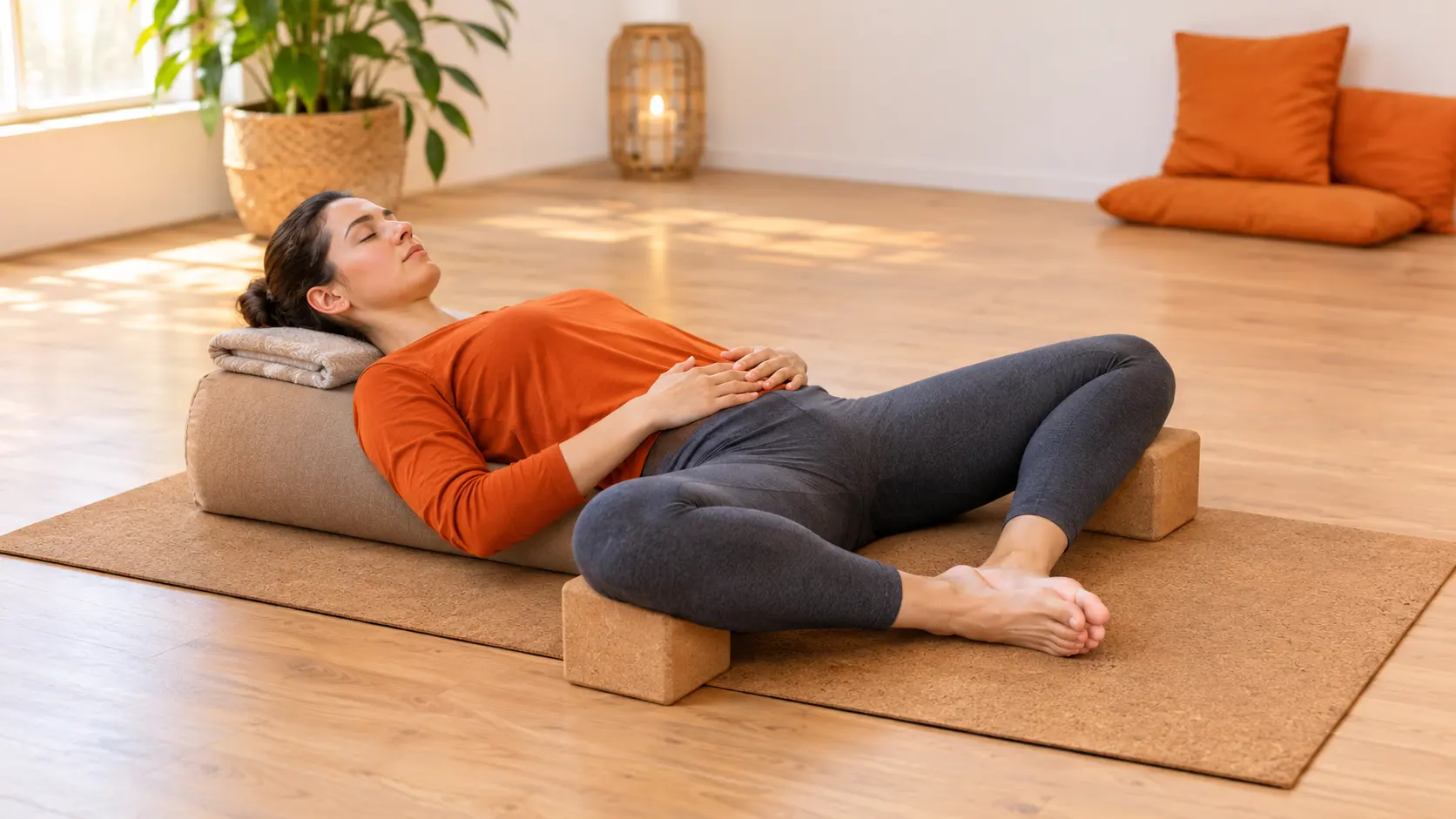
Benefits: a gentle, passive posture that allows your hips to open. A good posture to finish this practice.
- Place a bolster or stack of cushions along your spine, and lie on top.
- Bring the soles of your feet together. Allow your knees to open out onto blocks or cushions.
- Place your hands on your lower abdomen and gently breathe.
- Hold: 2-3 minutes.
- Easier option: if your hips are tight, lie flat with your legs extended.
- Safety: if you feel a pull in your lower back, add more height under your knees.
A 15-Minute Sacral Chakra Yoga Flow
Complete this entire sacral chakra yoga sequence on your mat in 15 minutes. This includes both sides and transitions. One slow breath is approx. 5-6 seconds, so 8-10 breaths is approximately 1 minute. Inhale and exhale through your nose. Move gently with your breath. You can view this table as a standalone guide on your phone.
| Time | Pose | Hold | Beginner option |
|---|---|---|---|
| 0:00-2:00 | Warm-up: hip circles and pelvic rocks | 2 min | Smaller circles |
| 2:00-3:00 | Cat-Cow | 8-10 breaths | On the forearms |
| 3:00-4:00 | Goddess | 5-8 breaths, twice | Stay higher |
| 4:00-5:30 | Low Lunge, right then left | 5-8 breaths per side | Blocks under the hands |
| 5:30-7:30 | Half Pigeon, right then left | 8-10 breaths per side | Figure Four on your back |
| 7:30-8:30 | Frog | 5-8 breaths | Wide-kneed Child's pose |
| 8:30-10:00 | Bound Angle | 8-10 breaths | Blocks under the knees |
| 10:00-11:00 | Happy Baby | 8-10 breaths | Hold the shins or a strap |
| 11:00-14:00 | Reclined Bound Angle | 2-3 minutes | Legs straight |
| 14:00-15:00 | Easy pose, hands on the lower belly | 1 minute | Sit on a higher cushion |
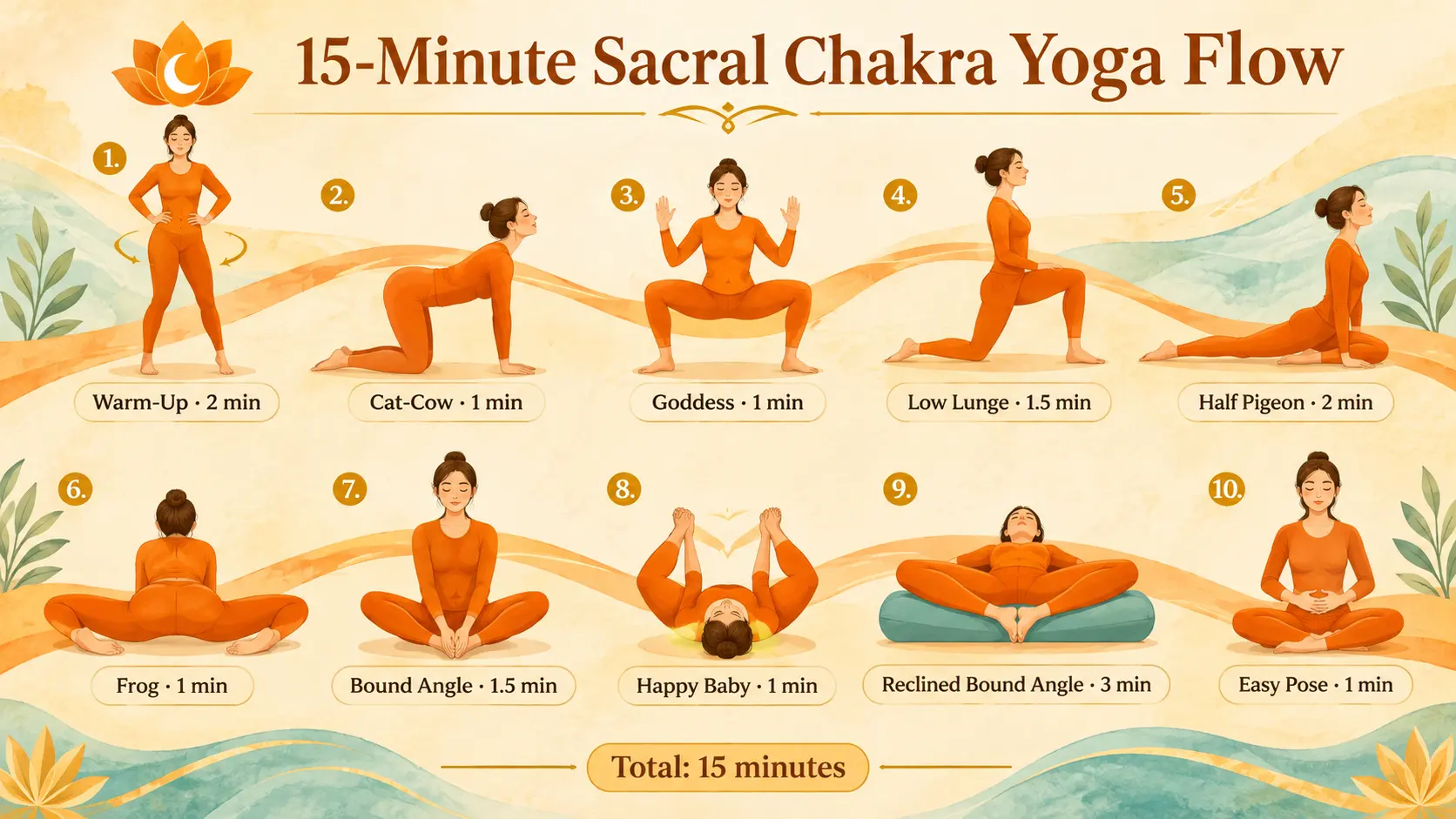
3-4 times a week would be enough. Some people enjoy doing this in the evenings to relax; however, do it at a time that suits you.
5-Minute Sacral Chakra Yoga for Beginners
If you are new to yoga or short on time, try this simple sacral chakra yoga at home. Only a mat and a cushion are required.
- Cat-Cow, 1 minute: do 8-10 slow repetitions (or on your forearms).
- Bound Angle, 1.5 minutes: sit on a cushion. If your knees are high, place a cushion under each knee.
- Happy Baby, 1 minute: if you cannot reach your feet, hold your shins. Gently sway from side to side.
- Rest, 1.5 minutes: lie on your back with knees bent. Place your hands on your lower abdomen and gently breathe.
Try this short practice for a week or two. Once you find it easy to do, add Low Lunge and Goddess, and progress to the full 15-minute practice.
Sacral Chakra Meditation Pose
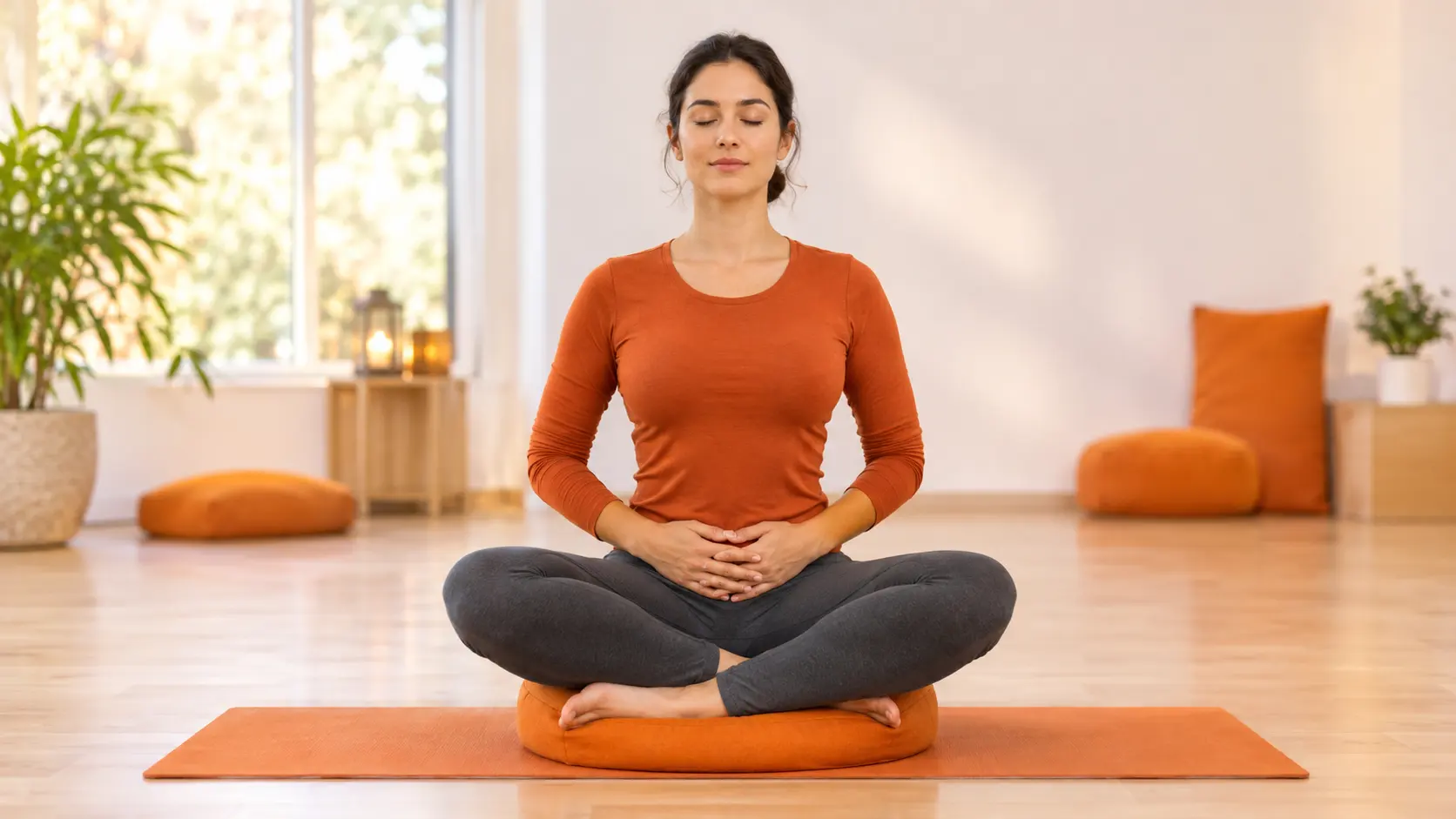
To meditate, sit in an easy seated position (Sukhasana) on a raised cushion. Raising your hips slightly above your knees ensures that your pelvis is in a forwards tilt and your lower back is not rounding. If sitting on your knees is more comfortable, sit in Hero’s pose (Virasana), on a block between your heels.
Place your hands on your lower abdomen (below the belly button). Breathe gently into your hands. Many people visualise an orange glowing light or gentle water in this area. For a full guided meditation, try this sacral chakra meditation. If you wish to add hand positions, view our chakra mudras page.
How Yoga for Sacral Chakra Healing Works
Within the chakra system, the sacral chakra is associated with water, emotion and pleasure. It is thought that if the hips become stiff, emotions may become repressed. By allowing gentle free movement of the pelvis, both the hips and emotions can be eased. In line with this, apart from Goddess, these postures for Svadhisthana chakra are gentle and flowing. Goddess adds a little fire.
As chakras cannot be scientifically measured, we cannot find research supporting sacral chakra healing via yoga specifically. However, there is evidence to suggest that yoga can help relieve stress, improve sleep and reduce low back pain a little (National Center for Complementary and Integrative Health). Feeling more relaxed and more at home in your body is a reasonable thing to hope for from a regular practice.
Breathing in the Poses
Take slow, deep breaths into your lower abdomen. Exhale slightly longer than you inhale. If you are holding your breath in a deep posture, ease out of it. For extra breathing exercises to do before or after this flow, view our sacral chakra breathing page.
Try the 5-minute beginner sequence tonight. Once this is easy to do, try the 15-minute sequence. Try the following next:
-
Sacral chakra healing meditation
- a guided script for after the poses
-
Sacral chakra breathwork
- slow belly breathing
Sources
- B.K.S. Iyengar, Light on Yoga (1966): Baddha Konasana, Supta Baddha Konasana, Virasana.
- National Center for Complementary and Integrative Health (NCCIH), "Yoga: Effectiveness and Safety".
Frequently Asked Questions About Sacral Chakra Yoga
Which yoga pose is best for the sacral chakra?
Bound Angle (Baddha Konasana) is the pose named most often, because it opens the inner thighs and brings attention straight into the pelvis. There's no single best pose, though. A short sequence of gentle hip openers, such as Cat-Cow, Bound Angle and Happy Baby, usually feels better than holding one pose for a long time. Choose the poses that feel comfortable for your hips and knees.
How often should you practise sacral chakra yoga?
Three or four times a week is plenty for most people, and the 5-minute beginner flow can be done every day. Regular short sessions tend to help more than an occasional long one, because the hips loosen gradually. Rest on days when your hips, knees or lower back feel sore, and never push a stretch to the point of pain.
Can beginners practise sacral chakra yoga?
Yes. Most of the poses on this page are beginner-friendly, and the 5-minute flow with Cat-Cow, Bound Angle and Happy Baby is a good place to start. Use blankets, cushions and blocks freely, stay higher in Goddess, and leave the deeper poses, Half Pigeon and Frog, until the gentler ones feel easy. If you have a knee or hip problem, check with a doctor or physiotherapist first.
Why are hip-opening poses associated with the sacral chakra?
The sacral chakra is placed in the pelvis, so poses that move and widen the hips work on that area directly. In chakra teaching the hips are also believed to hold emotion and old tension, and the chakra's water element suits slow, fluid movement. Physically, the hips and hip flexors often get tight from long hours of sitting, which is another reason these poses feel useful.
Is it normal to feel emotional during hip-opening yoga?
Some people feel emotional in deep hip openers, and others feel nothing of the kind; both are fine. There's no scientific evidence that the hips store emotions, but slow breathing and long holds can help the body relax, and feelings sometimes come up when that happens. If it does, come out of the pose and breathe. If strong feelings keep coming back, talking to a therapist can help.
What is the best time of day for sacral chakra yoga?
Any time that suits you works. Some people like the evening, when the slow poses help them wind down; others prefer the morning to loosen stiff hips before sitting all day. Practise at least two hours after a main meal so that the poses on the belly and the forward folds feel comfortable. In the morning, keep the holds a little shorter until your body has warmed up.
Can sacral chakra yoga help with lower back pain?
Gentle yoga may help. The NCCIH reports that yoga can reduce low back pain a little and improve function for some people. Poses such as Cat-Cow, Happy Baby and a supported Reclined Bound Angle are usually gentle on the back. Avoid anything that makes the pain worse, and see a doctor if back pain is severe, lasts more than a few weeks, or comes with numbness or weakness.