
Heart Chakra Frequency: 639 Hz, YAM Mantra and Healing Sounds
Heart chakra frequency: 639 Hz and 432 Hz, the YAM mantra, the note, singing bowls and how to use sound to open and balance Anahata.
Table Of Contents
The heart chakra frequency is usually given as 639 Hz, the fourth tone of the modern Solfeggio scale. Other systems use different numbers for Anahata, the heart chakra: 432 Hz, the tuning reference our chakra frequency chart starts from, and the note F, whose exact frequency depends on the tuning (341.3 Hz on many chakra tuning forks). Its seed mantra is YAM. If you are new to it, start with 10-15 minutes of listening or chanting.
- Solfeggio frequency: 639 Hz
- Musical note: F (341.3 Hz)
- Pythagorean scale: 432 Hz
- Singing bowl: 342.88 Hz
- Seed mantra (bija): YAM
- Element: air
- Colour: green
- Location: centre of the chest
- Session length: 10-15 minutes
The heart chakra is the middle chakra. It is linked with love, sadness, forgiveness and connection with others. Chanting or listening to this frequency can be a gentle way to engage with these emotions. To get the most out of it, combine it with the points listed in our guide on how to open heart chakra, such as deep breathing and connecting with someone.
HEART CHAKRA · ANAHATA
639
Hz
Solfeggio frequency
Volume15%
Duration00:00
What Is the Heart Chakra Frequency?
There are several different values for this chakra. Most commonly, it will be 639 Hz.
However, 432 Hz is also used. The Pythagorean scale used within our chakra frequencies page begins at the heart chakra. Therefore, 432 Hz is used as the base for calculating the other chakra frequencies in simple ratios. This means music in 432 Hz is often referred to as music for the heart chakra. However, 432 Hz is actually a tuning reference (an alternative to the usual 440 Hz tuning), not a frequency of the chakra itself.
In musical notation, this chakra is linked with the note F. In the key of C major, F is the fourth note. Depending on tuning system and octaves, different values are obtained. Different types of instruments produce slightly different values and are shown in the table below. Lastly, Hans Cousto calculated a frequency of 136.10 Hz, known as the Earth Year frequency. Often sold as the "OM" tuning fork, the chakra tuning forks based on the numbers in Cousto's Cosmic Octave system use 136.10 Hz for the heart chakra.
None of these frequencies have been measured from the vibrations of the chakra. They are derived from different systems. If listening to music, it is easy to find 639 Hz or 432 Hz. If using bowls or forks, it is typical to choose F.
The table shows the six heart chakra frequencies side by side, with the system each one comes from.
| Frequency | Tuning system or origin | Common association |
|---|---|---|
| 639 Hz | Modern Solfeggio scale ("FA") | Connection and relationships; the usual heart chakra tone |
| 432 Hz | Tuning reference (A = 432 Hz) | Base tone of the Pythagorean chart on our chakra frequencies page |
| 341.3 Hz | C = 256 Hz plus a 4:3 perfect fourth | Note F on chakra tuning forks |
| 342.88 Hz | Equal temperament, A = 432 Hz | Note F on singing bowls |
| 349.23 Hz | Equal temperament, A = 440 Hz | Note F on a modern piano |
| 136.10 Hz | The Cosmic Octave (Hans Cousto), the Earth year | Heart chakra fork in planetary sets, often sold as the OM fork |
Note: 639 Hz is not an F. On a piano it falls between D sharp and E, so a 639 Hz track and an F bowl play different notes. The Solfeggio numbers are also modern: they date from the 1970s and 1999, while the old solfège syllables had no frequencies. None of these numbers is a measured frequency of the chakra.
Heart Chakra Mantra: How to Chant YAM
YAM is the seed mantra of the heart chakra. In the Sanskrit text Sat-cakra-nirupana, translated by Arthur Avalon in The Serpent Power, the heart chakra (Anahata) is described as a twelve-petalled lotus around a smoky, six-pointed star. YAM is located here. Chant "yahm" in a soft tone, prolonging the M sound as far as is comfortable. The pitch of your voice does not need to match any of the above frequencies. Any comfortable pitch is fine.
As this is a gentle mantra, many people find it easiest to place their hands on their chest.
- Sitting comfortably with an upright back and relaxed shoulders, place one or both hands on the centre of the chest.
- Inhale slowly so that your rib cage expands.
- Exhale and chant "yahm" in a soft, gentle tone. Prolong the M sound while you are exhaling.
- Repeat. Let the humming resonate in your chest. Some people imagine a green light within their chests.
- Continue for 5 minutes, or 108 repetitions if using a mala.
As this chakra is strongly linked to emotion, you may feel tears or strong feelings. Take a break and return to normal breathing. Continue only if desired.

Heart Chakra Singing Bowl and Other Sounds
Heart chakra music in the tuning of 639 Hz or 432 Hz is the easiest place to start. These tools will allow you to experience the heart chakra frequency.
Singing Bowls
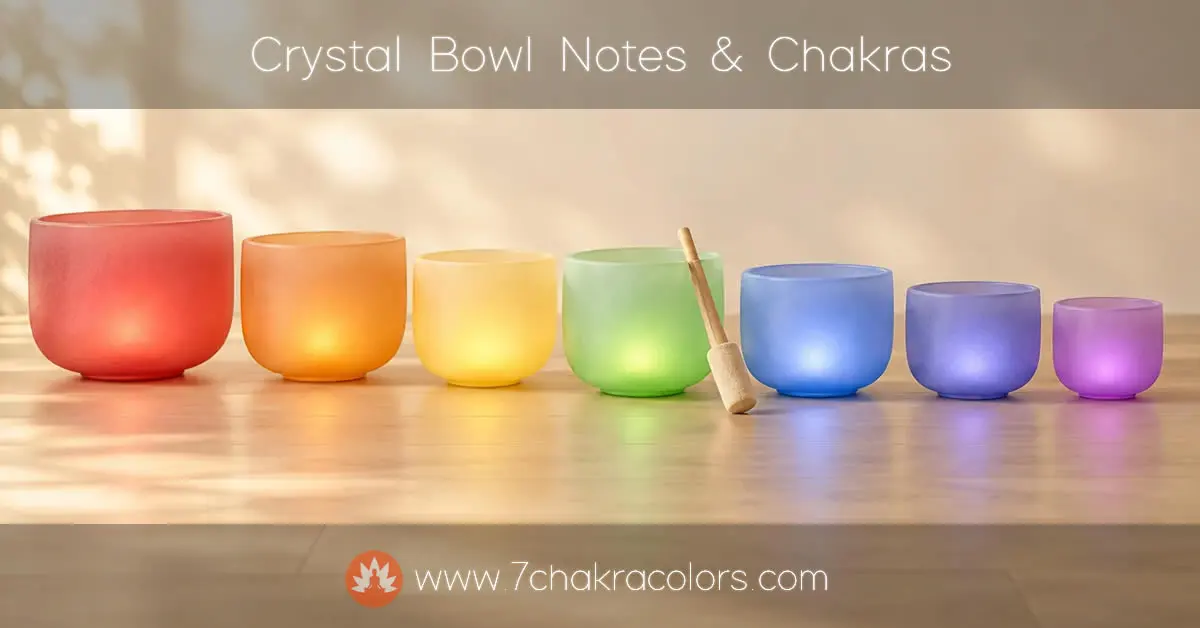
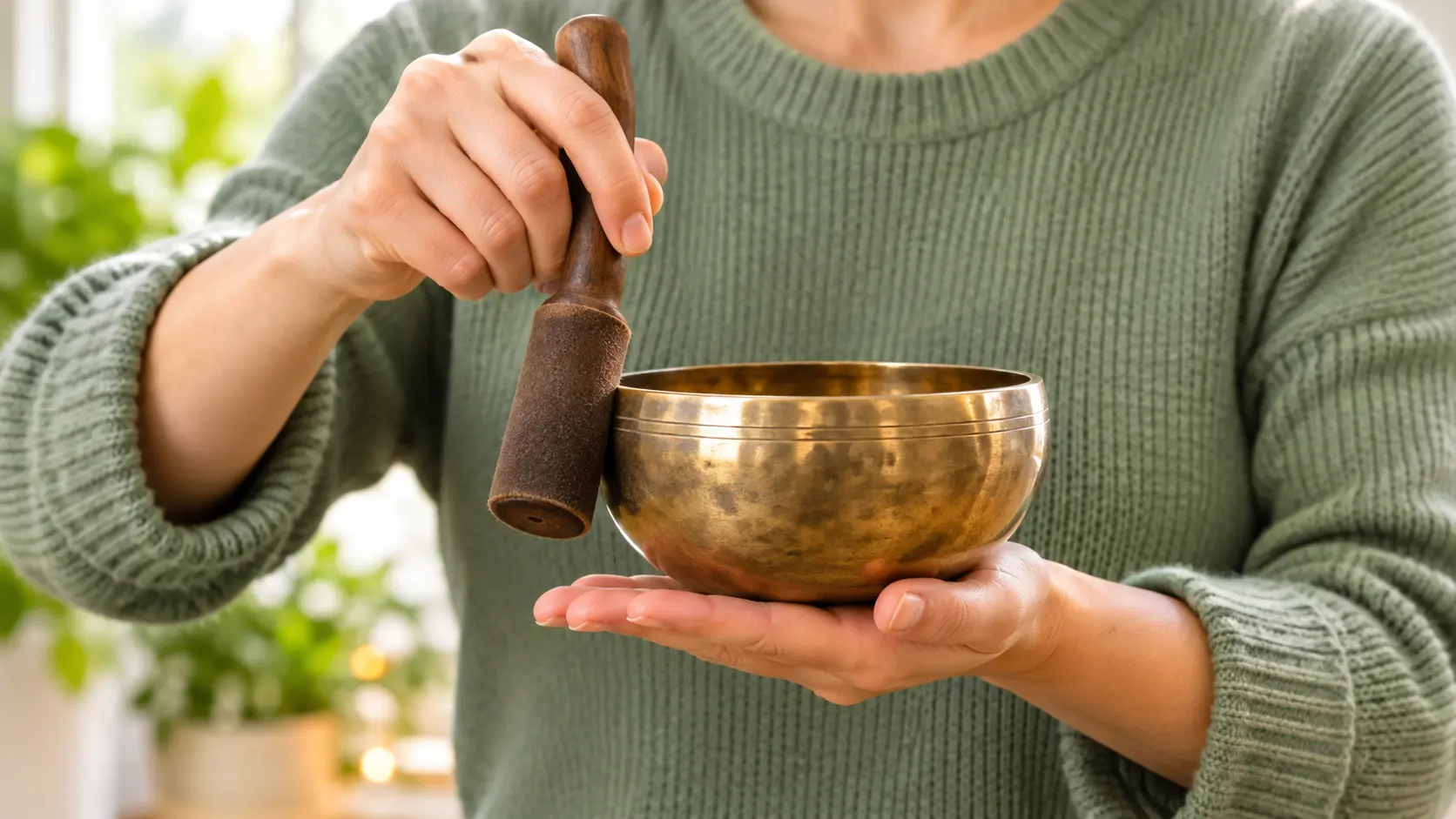
For the heart chakra, look for a singing bowl tuned to F. Within a set of 7 singing bowls, it is typically the middle one. People often report slower breathing, calmer thoughts and a warmer feeling in the chest. In a small observational study, mood improved after singing bowl meditation, however this was not specific to any frequency. Place a small bowl on the flat of your palm in front of your chest, or a large bowl on a cushion. Gently rub the edge of the bowl with the mallet.
Tuning Forks
Gently strike the fork and bring it close to each ear, or move it slowly in front of your chest a few centimetres away. To use a weighted fork, gently place the stem on the sternum. Be careful not to apply too much pressure.
Humming and Soft Music
Simply humming with your mouth closed will cause vibration in your chest. Alternatively, playing or singing gentle music that you love for someone you care about is an old way of opening up, long before anyone counted hertz.
ADVERTISEMENT: CONSCIOUS CRYSTALS - 7 CHAKRA COLORS SPECIAL DEALS

Buy Real Chakra Stones and Crystal Jewelry
Explore Full Collection

How to Use Heart Chakra Healing Frequency: A 15-Minute Session
This optional practice combines heart chakra healing frequencies with the mantra YAM. It can be done once per day (or less). If you wish, reduce the time.
Breathe deeply into your chest for 2 minutes (see heart chakra breathing). Play 639 Hz, 432 Hz or an F singing bowl for around 6 minutes, using the player at the top of this page if you like. Next, chant YAM for 5 minutes. Finish by placing your hands on your chest and sitting in silence for 2 minutes, noticing the rise and fall of your chest.
| Minutes | What you do | Sound |
|---|---|---|
| 0-2 min | Breathe slowly into the chest | Silence |
| 2-8 min | Listen with your attention on the centre of the chest | 639 Hz or 432 Hz in the player above, or an F bowl |
| 8-13 min | Chant YAM on each out-breath | Your own voice |
| 13-15 min | Sit quietly, hands on the chest; think of someone you are grateful for | Silence |
For a guided version with visualisation, play the tone quietly during the heart chakra meditation.
Some people like to reflect on a person they are grateful for to finish this practice. Even though this is a small action, it helps to keep the focus on real connections rather than numbers.
Why Is 639 Hz Associated With the Heart Chakra?
Two different things share this name. The solfège notes date back to a hymn used by Guido of Arezzo in around 1025 to aid singers, but as pitch was not measured in hertz until the 19th century, there were no associated frequencies. The Solfeggio frequencies are a modern list of frequencies using these notes.
These frequencies came into use in the 1970s, coined by Joseph Puleo, and became popular in 1999 due to a book written by Puleo and Leonard Horowitz called Healing Codes for the Biological Apocalypse. In this list, 639 Hz is called "FA", meaning connection/relationships. Although this book does not mention chakras, sound healers later associated this frequency with the heart chakra.
Due to this, the connection between 639 Hz and the heart chakra is modern. It may be nice and calming to listen to, but there is no evidence that 639 Hz does anything specifically for the heart chakra over nearby frequencies.
Heart Chakra Note: F and 341.3 Hz
Within Western chakra systems, this chakra aligns with the note F. It is the 4th note in the key of C major.
Its frequency will depend on tuning. Many chakra tuning forks are tuned using the old scientific pitch (C = 256 Hz), and F is a perfect fourth interval. Using the ratio of 4:3, this gives a frequency of 341.3 Hz. In equal tempered tuning, with A = 432 Hz, F has a frequency of approximately 342.88 Hz. On a modern piano it is 349.23 Hz. All of these are F notes. However, if played alongside each other, they may not exactly match.
639 Hz is not an F. On a standard piano keyboard, it sits between E flat and E. Therefore, 639 Hz music and F bowls are playing different notes.
Does Heart Chakra Sound Healing Work?
Although it appears to be relaxing for people, there is no evidence that 639 Hz, 432 Hz or other frequencies influence the heart chakra.
The most commonly cited study is a small observational study. After a singing bowl meditation, 62 adults felt less tense, angry, tired and in a bad mood (Goldsby et al., 2017). As this study did not include a control group, it is impossible to know whether this effect was due to the bowls or simply because they were resting. Also, the bowls were not tuned to 639 Hz, so we cannot conclude anything about this frequency.
Overall, consider this a gentle and kind way to check in with yourself. If it makes you feel softer and more open with people, continue with it.
ADVERTISEMENT: CONSCIOUS CRYSTALS - 7 CHAKRA COLORS SPECIAL DEALS
Buy Real Chakra Stones and Crystal Jewelry
Explore Full Collection
Safety: Volume, Hearing and Your Heart
Reduce volume (especially when using earphones) and take regular breaks. This is recommended by the World Health Organization.
- If you experience ringing in your ears, a headache, dizziness or palpitations, stop.
- If you have tinnitus or are sensitive to sound, make sure to play extremely quietly or chant.
- Do not place weighted forks on recent wounds or painful areas.
- Do not drive whilst listening to relaxing music.
If experiencing chest pain, tightness, or difficulty breathing, seek immediate medical attention. If feeling sad or in a poor mood for a prolonged period of time, it might be a good idea to speak to a doctor or therapist.
Sources
- Arthur Avalon (Sir John Woodroffe), The Serpent Power (1919), translation of the Sat-cakra-nirupana: Anahata, twelve petals, the region of air, the bija YAM.
- Hans Cousto, The Cosmic Octave: the Earth year tone, 136.10 Hz, used as the heart chakra fork in planetary tuning fork sets.
- Leonard G. Horowitz and Joseph S. Puleo, Healing Codes for the Biological Apocalypse (1999): the six Solfeggio frequencies.
- Goldsby TL, Goldsby ME, McWalters M, Mills PJ. Effects of Singing Bowl Sound Meditation on Mood, Tension, and Well-being: An Observational Study. J Evid Based Complementary Altern Med. 2017;22(3):401-406.
- World Health Organization, "Deafness and hearing loss: safe listening" (questions and answers).
Frequently Asked Questions About Heart Chakra Frequency
What frequency is the heart chakra?
The heart chakra frequency quoted most often is 639 Hz, the fourth tone of the modern Solfeggio set. Other systems use 432 Hz, the tuning reference our Pythagorean chart starts from, or the note F, which is 341.3 Hz on many chakra tuning forks and about 342.88 Hz on bowls tuned to A = 432 Hz. Planetary fork sets based on Hans Cousto's numbers use 136.10 Hz. None of these has been measured in the body.
Is the heart chakra frequency 639 Hz or 432 Hz?
Both are used, by different systems. 639 Hz comes from the Solfeggio list, where it is the tone for connection and relationships. 432 Hz is a tuning reference, an alternative to A = 440 Hz, and the base tone of the Pythagorean chart on our chakra frequencies page. For recordings, either is easy to find; neither has been shown to act on the chakra.
What are the benefits of 639 Hz?
In Solfeggio teaching 639 Hz is the tone of connection, and people use it for self-compassion, forgiveness and feeling closer to others. These are spiritual ideas, not tested effects. Relaxing sound in general can lower stress, but no study shows that 639 Hz does more for the heart chakra than a nearby tone. It works best as a calm background for breathing, chanting or a gratitude practice.
Is 528 Hz or 639 Hz the heart chakra frequency?
Most chakra charts give 639 Hz to the heart and 528 Hz to the solar plexus, following the order of the Solfeggio list. Some charts give 528 Hz to the heart because of its 'love frequency' nickname. Both pairings are modern; our chakra frequencies page uses 639 Hz for the heart chakra.
What is the heart chakra mantra?
The heart chakra mantra is YAM, its bija or seed syllable. In the Sat-cakra-nirupana it sits in a twelve-petalled lotus with a six-pointed star, the region of air. Chant it as a soft "yahm" at any comfortable pitch, with a hand on your chest, for about five minutes or 108 rounds.
How long should I listen to heart chakra frequencies?
Five to 15 minutes once a day is plenty. Start with five minutes at a low volume, using the timer in the player on this page, and build up to the 15-minute session if you like it. A pure tone can start to feel tiring after a while; if it gives you a headache, ringing in the ears or dizziness, stop and chant YAM instead.
Can heart chakra frequencies help with grief?
Some people find that a quiet tone or a soft chant gives them space to feel sad without being overwhelmed, and tears during heart practices are common. Sound can be a gentle companion to grief, but it does not replace support. If grief or low mood lasts for weeks or makes daily life hard, talk to a doctor, a therapist or a grief counsellor.
Try sitting with your hands on your chest, chanting YAM for 5 minutes. If you enjoy it, play 639 Hz or 432 Hz to complete the session. Great next steps: