

The Energetic Side of Physical Trauma Recovery
The energetic side of physical trauma recovery: why injuries drain your energy, how rehab and four chakras can support you, and when to see a doctor.
Table Of Contents
Once the cast is removed, the bruising has faded and the scar is no longer bright red but pale pink, you would expect everyone around you to think you’re better. However, you may find yourself lying on the couch at 3pm, exhausted from the trip to the shops. Physical trauma recovery can impact your life in many ways.
Most commonly, your energy levels will decrease. You’ll struggle to feel motivated and to concentrate, and will feel generally unwell. Often, whilst your external injuries start to heal, you can still feel tired for much longer (this is the most confusing part for many).
Healing has taken a lot of energy from your body. Your body will require damaged tissue to be repaired, inflammation to settle and strength to rebuild. Getting used to your new movements will also take time. Your everyday routine will change, you may not be as independent for a while, and your sense of safety within your body can suffer.
Practical Issues and Costs
Besides the costs of treatment, a serious injury can prevent you from working and create regular out-of-pocket costs. In some cases you may need help with everyday tasks.

It’s exhausting. You’ll have lots of appointments and rehab sessions to attend, and travelling to them. Even just dealing with the admin from your insurance company can take up a whole afternoon when you’re already in pain and struggling to move. This isn’t often spoken about.
Accidents can cause issues with legal liability. Someone looking to find out what their options are is likely to turn to Moore Law Firm to get a clear picture of how legal representation might fit into the overall process of their recovery. Good legal support can take some pressure off making and managing a claim.
Family members to help with errands, good communication with your insurance company and the right professional advice all make a difference.
Why Can Physical Trauma Leave You Feeling Tired?
Following a major injury, the body goes through a whole series of processes to protect and repair that area. These are at their highest during the first weeks. Tissue repair and inflammation will cause you to feel tired. Severe burns can cause your body to use more energy at rest for months.
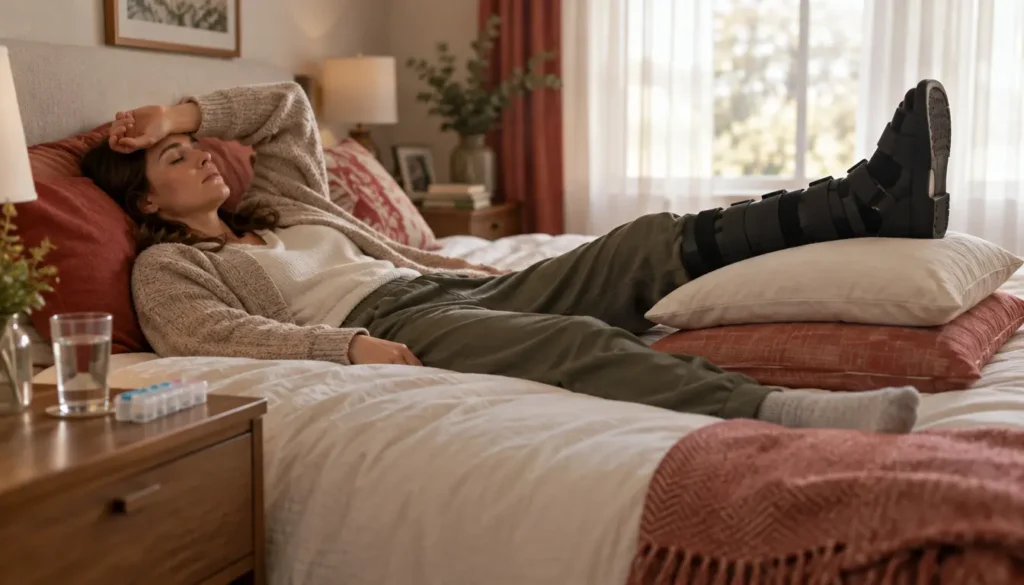
Pain will cause tiredness. If you’re in pain all day, simple tasks such as making a cup of tea or putting on your socks will be more exhausting. You may also begin to move differently without realising, which puts extra stress on areas of your body that weren’t injured. For example, walking on crutches uses significantly more energy per step than usual, which surprises most people.
Pain, side effects from medication, changing your sleeping position and worrying about your recovery can all cause you to lack sleep. Lack of sleep makes it hard to concentrate, makes you more emotionally unstable and can make your rehab feel impossible.
None of this means you lack motivation.
Rehab and Energy in Physical Trauma Recovery
Physical rehab is absolutely central to the whole process of rebuilding strength and mobility after trauma. Some days you’ll feel you’re making progress, and on others you’re in more pain and more tired than the previous week.

Your physiotherapist or doctor will give you exercises to gradually get you back to your normal activities. Depending on your injury, you may have a combination of stretches, balance, strength and coordination exercises.
Getting this right can be tricky. If you push yourself too hard, you’ll be in pain and struggle to continue. But if you don’t do anything once you’ve been given the go-ahead, you’ll begin to feel stiff and weak. I would follow the advice of the professionals and give yourself proper time to recover between sessions. Be flexible with your sessions.
Chakras and Physical Trauma
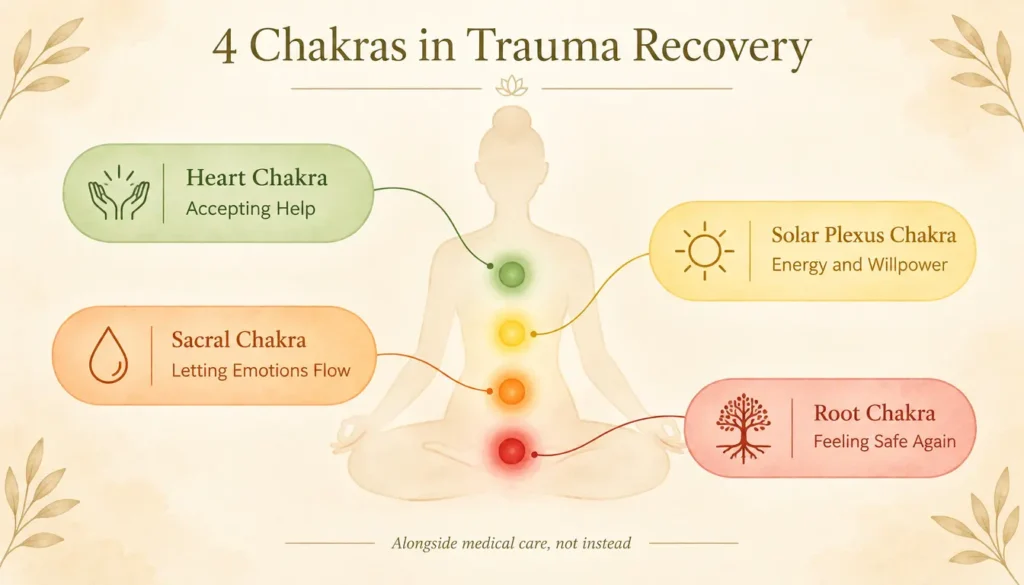
Energy work can be a useful addition to medical care. In terms of chakras, accidents can unsettle the chakras of safety, emotion, willpower and connection.
I would look at four chakras. You don’t need to work on all of them.
Root Chakra – Feeling safe in your body again
The root chakra (Muladhara) is at the bottom of your spine. Mula means root and adhara means something to stand on. Following a fall or crash it is common to feel on edge, off balance or even unsafe in situations that never bothered you before, such as crossing roads or getting back into a car. This is the root chakra asking for your attention.
Sacral Chakra – Creating space for your emotions
Crying for no reason, being grumpy or feeling sad are all common. The sacral chakra is located just below your navel and is about your emotions and flow. It is connected to the element of water. Svadhisthana is usually translated as “one’s own place”. An injury can make you feel like you no longer live in your own body. Working with this chakra means letting your emotions surface.
Solar Plexus Chakra – Energy, Motivation and Administration
The chakra that relates to the tiredness and fighting with insurance companies is the solar plexus chakra. Manipura is located in your upper stomach and is about your willpower and drive. If this chakra is drained, you may notice you’re no longer making decisions or even giving up on forms. Small achievements will help more than trying to stick to a plan. One phone call, one set of exercises and then a break.
Heart Chakra – Accepting help and patience
Many people struggle to accept help. The heart chakra (Anahata) is in the middle of your chest and is connected to compassion, including compassion for yourself. Allowing your partner to drive you to physio or letting a friend help with your shopping is heart chakra work.
Which Chakra Fits Which Recovery Struggle?
Not sure where to start? Pick the struggle that sounds most like your week and go from there – it’s a rough map, not a rulebook.
| Recovery Struggle | Chakra | What Might Help |
|---|---|---|
| Feeling jumpy or unsafe | Root chakra | Slow belly breathing with both feet on the floor |
| Sudden tears or irritability | Sacral chakra | Letting feelings out instead of holding them in |
| Exhaustion and admin overwhelm | Solar plexus chakra | One task a day, then proper rest |
| Struggling to accept help | Heart chakra | Saying yes to one offer of support |
A 5-Minute Grounding Exercise
This is a gentle exercise that can be done at most stages of your recovery. Choose a position that doesn’t cause pain.
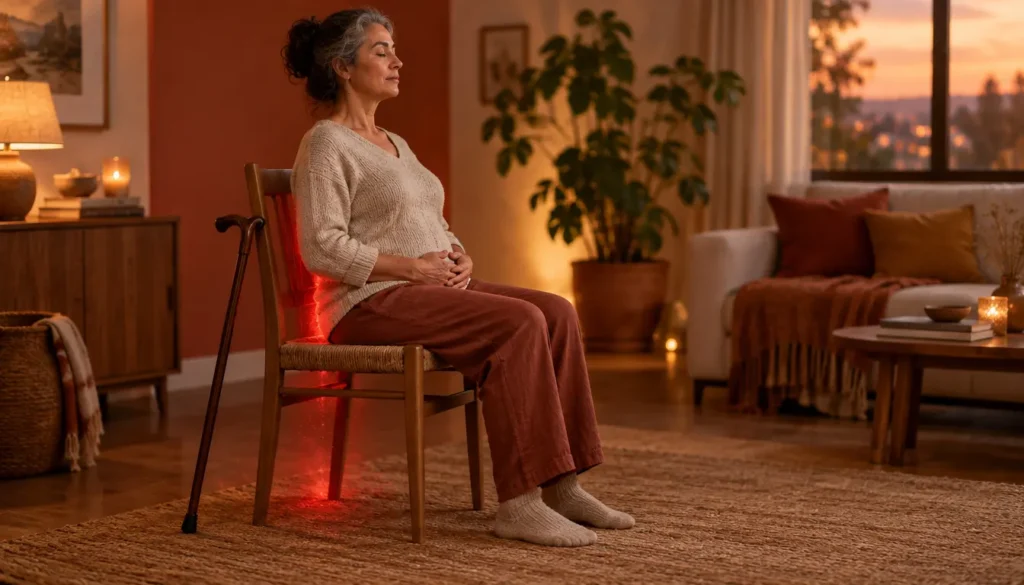
- Sit in a chair with both feet on the floor, or as close to that as your injury allows.
- Inhale gently through your nose for around 4 counts and allow your breath to go low into your stomach.
- Exhale for 6 counts. Long exhales help to calm your nervous system.
- Visualise a deep red colour at the bottom of your spine. Imagine it is heavy and warm and sinking into your chair.
- Continue for 5 minutes, or just 2 minutes if you’re very tired.
For more variations see the root chakra breathing page. For more details on the stress aspect of accidents see healing trauma through chakras.
When to See a Doctor
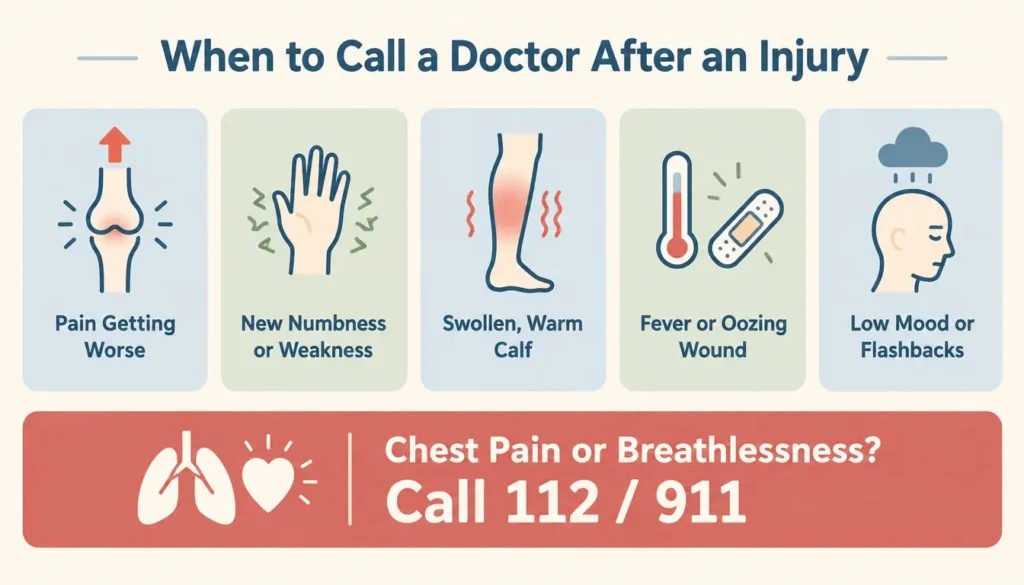
Some symptoms after an injury shouldn’t be ignored. Don’t put off seeing a doctor because you are doing breathing or visualisation exercises. See your doctor if you have:
- Pain that is increasing
- Numbness, tingling or weakness in an arm or leg
- Swelling, warmth or pain in one calf (especially if you’ve had surgery or haven’t been moving much)
- Fever, or a wound that is oozing or becoming redder
- Low mood that hasn’t lifted after a couple of weeks, or nightmares and flashbacks about the accident
Shortness of breath, chest pain or coughing up blood can indicate that a clot has travelled to your lungs. This is an emergency, so please call 112 in Europe or 911 in the US. Any thoughts of self-harm should also be treated as an emergency.
Allowing your energy to return
The energetic aspect of physical trauma can be just as important as the physical one. Fatigue, poor sleep, emotional strain and low stamina can all impact how quickly you return to something like normal.
These are not necessarily a bad thing. They mostly show how much energy your body and mind are using to recover. If you would like a broader view of how you heal as a whole, see when physical trauma affects our spiritual balance.
Be kind to yourself during those slow weeks.
Frequently Asked Questions About Physical Trauma Recovery
How long does fatigue last after a physical injury?
It varies a lot. After a minor injury the tiredness often lifts within a few weeks, but after major trauma, surgery or a long hospital stay it can hang around for several months, and it tends to come in waves rather than fading evenly. Sleep, pain, nutrition and how hard you push in rehab all play a part. If the exhaustion is getting worse instead of slowly easing, or comes with fever, breathlessness or a low mood that won’t lift, tell your doctor so they can rule out anything else.
Can a car accident affect your chakras?
In chakra tradition, yes. A sudden shock like a crash is usually linked with the root chakra, which is tied to safety and stability, and many people feel jumpy or unsettled for months afterwards, especially as passengers. The sacral and solar plexus chakras often come up too, because of the emotional upheaval and the drained willpower that follow. This is a spiritual way of understanding the experience, not a medical diagnosis. Any physical symptoms after a crash, including delayed neck pain or headaches, should be checked by a doctor first.
Is it normal to feel emotional after a serious injury?
Very normal. Tearfulness, irritability, frustration and a kind of grief for the life you had before the accident are common, and they can show up weeks later, once the immediate crisis has passed. Pain, poor sleep and losing your independence all make emotions harder to manage. Talking about it helps, whether with someone close or with a professional. If low mood lasts more than a couple of weeks, or you have flashbacks, nightmares or panic about the accident, speak to your doctor, as these can be signs of depression or post-traumatic stress.
Which chakra is linked to physical trauma?
The root chakra is the one most often linked to physical trauma. It sits at the base of the spine and is associated with safety, the physical body and feeling grounded, so an accident that shakes your trust in your own body is usually read as a root chakra disturbance. Depending on what you’re struggling with, the sacral chakra (emotions), the solar plexus chakra (energy and willpower) and the heart chakra (accepting support) can be involved as well. Slow belly breathing with your attention at the base of the spine is a gentle place to start.
Can chakra work speed up healing after an injury?
There’s no evidence that chakra work makes bones or tissue heal faster, and it shouldn’t be used that way. What it can offer is support around the edges of recovery: a few calm minutes in a stressful day, a way of noticing emotions instead of bottling them up, and a kinder relationship with your body while it heals. Slow breathing and relaxation can also help some people feel calmer and cope with pain a little better. Treat it as a companion to physiotherapy and medical care, never a substitute for them.
Is it safe to do breathing exercises or meditation while recovering from an injury?
For most people, yes. Seated or lying breathing exercises put very little strain on the body, which is why they suit early recovery. Choose a position that doesn’t press on the injured area, use cushions for support, and stop if anything hurts or you feel dizzy. Avoid long breath holds if you have a chest or rib injury, or a heart or lung condition, unless your doctor says they’re fine. If you’re unsure, ask your physiotherapist, who can suggest positions that work with your injury.
How do I cope with insurance claims and paperwork after an accident?
Break it into small pieces. Keep one folder or notebook for everything, write down the date, the name and any reference number after each phone call, and limit admin to one short slot a day so it doesn’t swallow your energy. Ask a family member or friend to make calls for you when you’re too tired. If the claim involves liability or compensation, getting professional legal advice early can take a lot of the pressure off. And rest after the hard calls – they take more out of you than most people expect.
Blog Categories:
About the Author: