

Bojan Matjasic – Founder and Author of 7 Chakra Colors
Bojan Matjasic is a Slovenian ethnologist, filmmaker and yoga practitioner of 20+ years who founded 7 Chakra Colors in 2014. His background, work and sources.
Table Of Contents
Bojan Matjasic is a Slovenian ethnologist, documentary filmmaker and yoga practitioner of more than 20 years, and the founder and author of 7 Chakra Colors, which he started in 2014. He writes about the chakra system, meditation, yoga, crystals and sound, drawing on personal practice, a degree in ethnology and cultural anthropology, and over two decades of digital publishing.
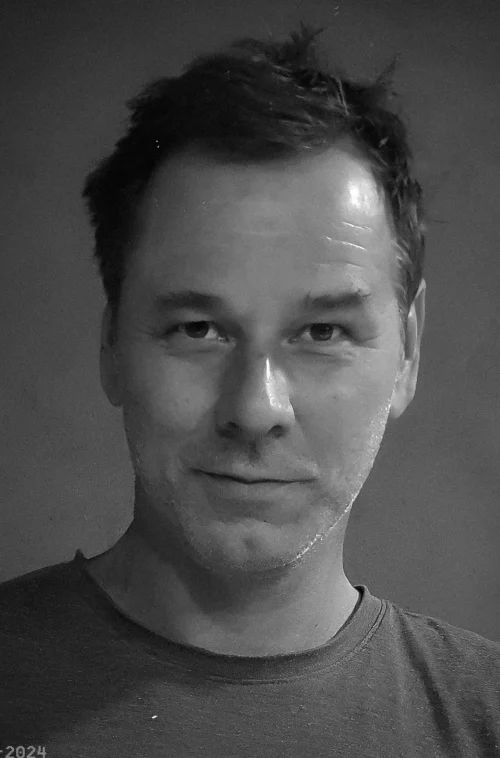
Bojan Matjasic
Founder and author of 7 Chakra Colors
- Based in: Bela Krajina, Slovenia
- Education: Ethnology and Cultural Anthropology, University of Ljubljana, Faculty of Arts
- Practice: yoga (20+ years), meditation, breathwork, Kundalini practices, sound
- Founded: 7 Chakra Colors (2014); Insilico Media d.o.o. (2015)
- Background: documentary film, multimedia, web development and SEO since 1999
Profiles: LinkedIn · Facebook · X · Slovenian Film Database
What Bojan Writes About on 7 Chakra Colors
Bojan founded 7 Chakra Colors in 2014 as an independent educational website about the chakra system and the practices connected with it. He writes and edits every page on the site. The core of it is a reference library on the seven main chakras: their chakra colors and meanings, where the chakra points sit in the body, and what each center stands for in yoga and Tantra tradition.
Each chakra has its own guide, with pages on signs of blockage, healing, yoga poses, crystals, meditation and sound:
Beyond the chakra guides, the site covers chakra frequencies with a free sound player, a chakra test, breathing techniques, affirmations, crystals and chakra jewelry. The aim is simple: make these subjects clear and well organized, and show where each idea comes from.
How the Content Is Researched and Written
The content of 7 Chakra Colors is based on personal experience, topical knowledge and research, and it is written with the assistance of AI tools. Every page is planned, edited and checked by Bojan before it goes live. AI helps with drafting and structure; the choice of topics, the facts, the practices described and the final wording are his responsibility.
A few rules shape every page:
- Claims are tied to their source. Ideas about the chakras come from yoga and Tantra traditions and from modern teachers, and the pages say so instead of presenting them as proven fact.
- Science is stated plainly. Where research doesn't support a claim, the page says that once and clearly.
- No medical promises. Pages on symptoms and healing include a note on when to see a doctor or therapist.
- Dates mean something. "Last updated" changes only when the content really changes.
Spotted a mistake or an outdated fact? Corrections are welcome through the contact page.
A Lifelong Interest in Consciousness and Spirituality
Bojan's interest in spirituality started at around the age of ten, with lucid dreaming and experiences often described as astral projection. What began as a child's curiosity grew into a lasting interest in consciousness, meditation, energy practices and the world's spiritual traditions.
Over the years his practice has included yoga, Kundalini practices, breathing techniques, chakra meditation, energy work and past-life regression. Yoga has been part of his life for more than two decades. Around the age of thirty he also trained in Ki Aikido, which deepened his interest in movement, breath, balance and the link between mind and body.
He has never followed a single spiritual school. Bojan prefers to learn through his own practice, through study and through meeting different traditions on their own terms. That approach runs through the website: rather than presenting one system as the only true one, the pages explain how people in different cultures have worked with consciousness, healing, symbols and nature.
Sound, Music and Frequencies
Sound is a thread that runs through Bojan's whole life. He started playing guitar at fourteen and later took up the Native American flute, kalimba, djembe and handpan.
His interest reaches into sound healing, cymatics, resonance and the use of sound in meditation - from traditional ceremonial singing and instruments to modern ambient music. That interest led to BrainwaveSounds, his project of meditation audio, binaural beats, isochronic tones and ambient soundscapes for relaxation and focused listening.
On 7 Chakra Colors, this background shows most in the chakra frequencies guide and its sound player. For Bojan, sound is both a creative medium and a subject of study: a way to look at how listening shapes attention, emotion and perception.
Amazonian Icaros and Traditional Plant Practices
An important part of Bojan's path has been his contact with Amazonian ceremonial traditions. Through learning experiences with the Peruvian healer Percy García Lozano, he came to know plant dietas, traditional icaros (healing songs) and the cultural setting in which this knowledge is passed on.
What interests him most is the role of song, rhythm, intention and oral knowledge in these cultures. That interest led to creative work with Percy García Lozano on traditional Amazonian music, including the album Ayahuasquita and an online platform dedicated to icaros.
These experiences are part of a personal learning journey. Bojan does not claim to represent or teach an indigenous tradition, and 7 Chakra Colors gives no guidance on ayahuasca or other plant medicines.
Living Close to Nature: The Spiritual Farmer
At thirty-three, Bojan moved to an old family farm in Bela Krajina, a rural region in southeastern Slovenia. The move brought his spiritual interests into everyday life: the land, the seasons and the work of growing food.
On the farm he works with permaculture, biodynamic gardening, soil regeneration, natural growing methods, electroculture and magnetoculture. For him, spirituality isn't limited to meditation or inner experience. It also shows in practical choices, in care for the land and in a more attentive way of living.
His life on the farm is the subject of the short documentary BITI Spiritual Farmer - Visit to the Matjašič Farm in Bela Krajina, made as part of the BITI / Being Resilient project by KUD Pozitiv.
Academic Background: Ethnology and Cultural Anthropology
Bojan studied at the High School of Design and Photography in Ljubljana and then earned a degree in Ethnology and Cultural Anthropology at the University of Ljubljana, Faculty of Arts.
His studies focused on shamanism, Sufism, visual anthropology, youth cultures, media and cultural heritage. This academic grounding still shapes how he writes about spiritual practices: with attention to where they come from, who practices them and what they mean in their own culture.
During his studies he took part in the international seminar Roaming Ethnology and Anthropology in Belgrade and a summer school in visual anthropology in Nova Gorica. In 2002 he published the article Spletne strani v etnologiji (Websites in Ethnology) in Glasnik Slovenskega etnološkega društva, volume 42, issue 1/2, catalogued in the Digital Library of Slovenia.
Film, Multimedia and Digital Publishing
Before he turned to online publishing, Bojan spent many years in documentary filmmaking, video and multimedia. Much of his film work documents people, communities and traditional practices - a natural extension of his training in visual anthropology.
His ethnographic film Trenje lanu (Flax Processing in Adlešiči, 2001) records traditional flax processing in Bela Krajina. The Slovenian Ethnographic Museum documents the film and credits him with its direction, camera and editing. Other work includes:
- Ljudi so zmeraj bili in zmeraj bodo - a documentary for the Divided God project (direction and editing)
- Alloy (2002-2003) - a dance video he wrote, directed and edited, selected for the Napolidanza international dance-video program in 2003
- Soočenje (2004) - an experimental film that received special recognition at the Toti Festival in Maribor
- Kashmir United (2010) - color grading for the Slovenian animated film, listed in the Slovenian Film Database
From the late 1990s he also led video, animation and internet workshops for young people with KUD Pozitiv and international youth exchanges, and in 2003 he took part in setting up the EURO-MED youth platform in Malta as a Slovenian representative.
Bojan built his first websites in the late 1990s. Between 1999 and 2005 he created and ran the website of the Department of Ethnology and Cultural Anthropology at the University of Ljubljana. Since then he has built more than 100 websites, edited video for television productions such as Coolinarika and Poslovni ritmi, and in 2015 founded Insilico Media d.o.o., the company behind 7 Chakra Colors.
Approach and Philosophy
Bojan doesn't treat spirituality as a fixed belief system, and he doesn't claim to have all the answers. He values open-minded investigation, direct experience, critical thinking and respect for the traditions that practices come from.
For him, spiritual practice isn't separate from daily life. It happens in creative work, music, movement, relationships, learning and time spent in nature - and in the slow work of understanding oneself and the world. That is the spirit 7 Chakra Colors is written in.
A Note on Health
The content on 7 Chakra Colors is educational and reflects spiritual and traditional perspectives. It is not medical or psychological advice. If you have physical or mental health problems, please see a doctor or a qualified therapist.
References and Profiles
- Digital Library of Slovenia - Spletne strani v etnologiji (2002) - record of Bojan's article in Glasnik Slovenskega etnološkega društva
- Slovenian Ethnographic Museum - Flax Processing in Adlešiči - credits Bojan Matjasic for direction, camera and editing of Trenje lanu
- Slovenian Film Database - Bojan Matjasic - filmography, including color grading for Kashmir United (2010)
- BITI Spiritual Farmer - documentary about Bojan's farm in Bela Krajina
- BITI odporen / Being Resilient - KUD Pozitiv project publication that includes the film
- KUD Pozitiv - BITI video production archive - selected video productions and workshops
- Divided God - archived author profile - an earlier profile of his work in cultural studies, design, video and youth culture
- Profiles: LinkedIn · Facebook · X
Questions, ideas or corrections? Write through the contact page, or browse all articles by Bojan Matjasic.