

8 Crown Chakra Yoga Poses to Open and Balance Sahasrara
Learn 8 crown chakra yoga poses (Sahasrara) that lead into stillness, with step-by-step cues, beginner options and a 15-minute routine for home.
Table Of Contents
The best crown chakra yoga poses lengthen the body upwards and lead into stillness: Upward Salute, Half Moon, Headstand (optional), Hero pose, Seated Mountain, Seated Side Stretch, Lotus or Half Lotus and a long Savasana. Warm up the scalp and neck for two minutes, then follow the 15-minute routine, which gives the time for every pose. Beginners can start with a 5-minute version and skip Headstand.
- Chakra: Sahasrara (crown), top of the head
- Poses: 8 (Headstand optional), plus a 2-minute warm-up
- Hold: 5 breaths in most poses, a minute or more in the seated poses, 3-4 minutes in Savasana
- Full routine: 15 minutes · beginner routine: 5 minutes
- When: any time of day, at least two hours after a meal
- Props: mat, a block, a folded blanket, a cushion, a wall
- Level: beginner, Headstand optional
In yoga tradition these poses prepare the body for stillness, the main practice of the crown chakra, which chakra teachings link with spiritual connection and awareness. They're one part of crown chakra healing, which also includes silent meditation, gratitude and time in nature.
The 8 Best Crown Chakra Yoga Poses
Chakra teachings describe the crown as the least physical of the chakras, so its yoga is short and simple. Poses that reach upwards, like Upward Salute and Seated Mountain, draw attention to the top of the head. A balance pose like Half Moon asks for calm focus. The seated poses and Savasana are about sitting or lying still, which teachers see as the real work of this chakra.
These Sahasrara yoga poses are mostly beginner-friendly. Every pose has an easier option, and it's fine to hold a pose for fewer breaths while you build up.
The table gives all eight at a glance. Tap a pose name to jump to its instructions.
| Yoga pose | Difficulty* | Main focus | Hold |
|---|---|---|---|
| Upward Salute | Beginner | Lengthening upwards | 3 rounds of 5 breaths |
| Half Moon | Intermediate | Balance and focus | 5 breaths per side |
| Headstand (optional) | Advanced | Classic crown inversion | 5-10 breaths |
| Hero Pose | Beginner | Upright, still seat | 8 breaths |
| Seated Mountain | Beginner | Reaching up from a seat | 5 breaths per side |
| Seated Side Stretch | Beginner | Sides of the body | 5 breaths per side |
| Lotus or Half Lotus | Intermediate | Traditional meditation seat | 1-2 minutes |
| Savasana | Beginner | Rest and stillness | 3-4 minutes |
*A rough guide only; skip Headstand unless you've learned it with a teacher.
Tree pose and Dolphin often appear on crown lists too. On this site they're on the root chakra yoga poses and third eye chakra yoga poses pages, so the pages don't repeat each other. Dolphin is still given here as the safer option to Headstand.
If you only have time for a few poses, do the 5-minute beginner routine: Upward Salute, Seated Mountain and Savasana.
Before You Start: Safety and Modifications
Most crown chakra poses are gentle. The cautions are mainly about Headstand, the knees in the seated poses, and balance. Read them before you begin.
- Headstand: skip it if you have neck problems, high blood pressure, glaucoma or eye problems, heart conditions, or during pregnancy. Stay in Dolphin or Upward Salute instead.
- Knees: never force Lotus or Hero pose. Use Half Lotus or a simple cross-legged seat with cushions under your knees, and sit on a block in Hero pose.
- Balance: do Half Moon against a wall, with a block under your hand.
- Shoulders: bend your elbows slightly in Upward Salute and Seated Mountain if the arms don't go straight up comfortably.
- Pregnancy: skip Headstand, avoid lying flat on your back for long later in pregnancy, and check with your midwife or doctor first, as you may need changes that suit you.
If long periods of stillness make you feel anxious or disconnected, keep Savasana shorter and open your eyes. See a doctor about dizziness, headaches or numbness that keep coming back.
How to Do Each Crown Chakra Yoga Pose
Do the poses in the order given. You start standing for Upward Salute and Half Moon, kneel for Headstand or Dolphin and Hero pose, sit for the next three, and finish lying down, getting quieter as you go. It's the same order as the 15-minute routine below.
Warm-Up: 2 Minutes for the Scalp and Neck
These crown chakra exercises bring attention to the top of the head before the poses. Sit tall.
- Massage your scalp with your fingertips, in small circles, from the hairline to the back of the head.
- Finish with a few slow circles at the very top of the head.
- Lengthen the back of your neck as if a thread were lifting the crown of your head, and hold for five breaths.
- Let your head sway gently from side to side, then come back to center.
1. Upward Salute (Urdhva Hastasana)

Benefits: lengthens the whole body upwards, from the feet to the fingertips, and draws attention to the top of the head.
- Stand with your feet hip-width apart and your arms by your sides.
- Breathe in and sweep your arms out and up, palms facing each other above your head.
- Lengthen through your fingertips and the top of your head without arching your lower back.
- Breathe out and lower your arms, then repeat.
- Hold: 3 rounds of 5 breaths.
- Easier option: keep your arms wider apart, or raise them only to shoulder height.
- Safety: bend your elbows slightly if your shoulders feel tight.
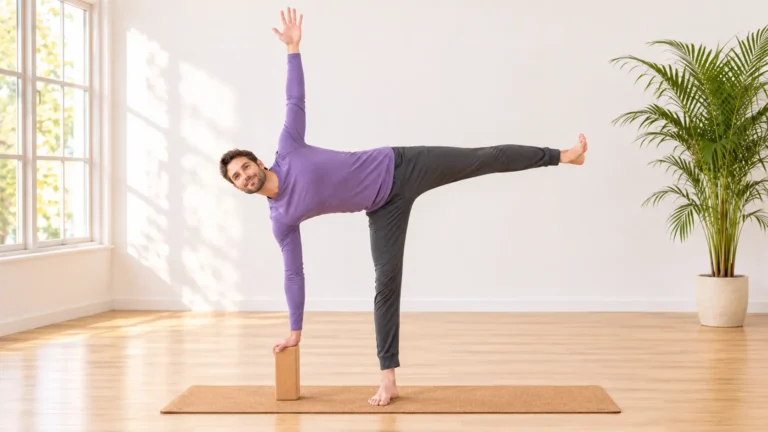
2. Half Moon (Ardha Chandrasana)

Benefits: a balance pose that takes all your attention, which quiets the mind quickly. It also strengthens the legs.
- From standing, step your feet wide apart and turn your right foot out.
- Bend your right knee, place your right hand on a block in front of your right foot, and shift your weight onto your right leg.
- Straighten your right leg as you lift your left leg until it's level with your hip.
- Open your chest to the side and raise your left arm, or keep your left hand on your hip. Come down slowly and change sides.
- Hold: 5 breaths on each side.
- Easier option: practice with your back against a wall until the balance feels steady.
- Safety: keep a soft bend in the standing knee and look down if you feel unsteady.
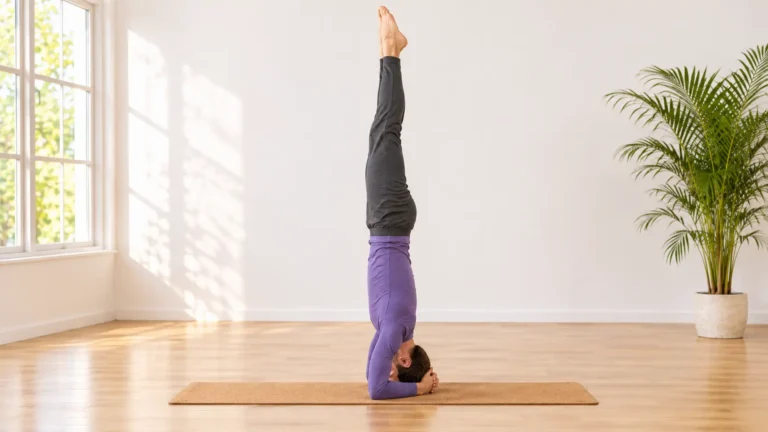
3. Supported Headstand (Salamba Sirsasana), optional
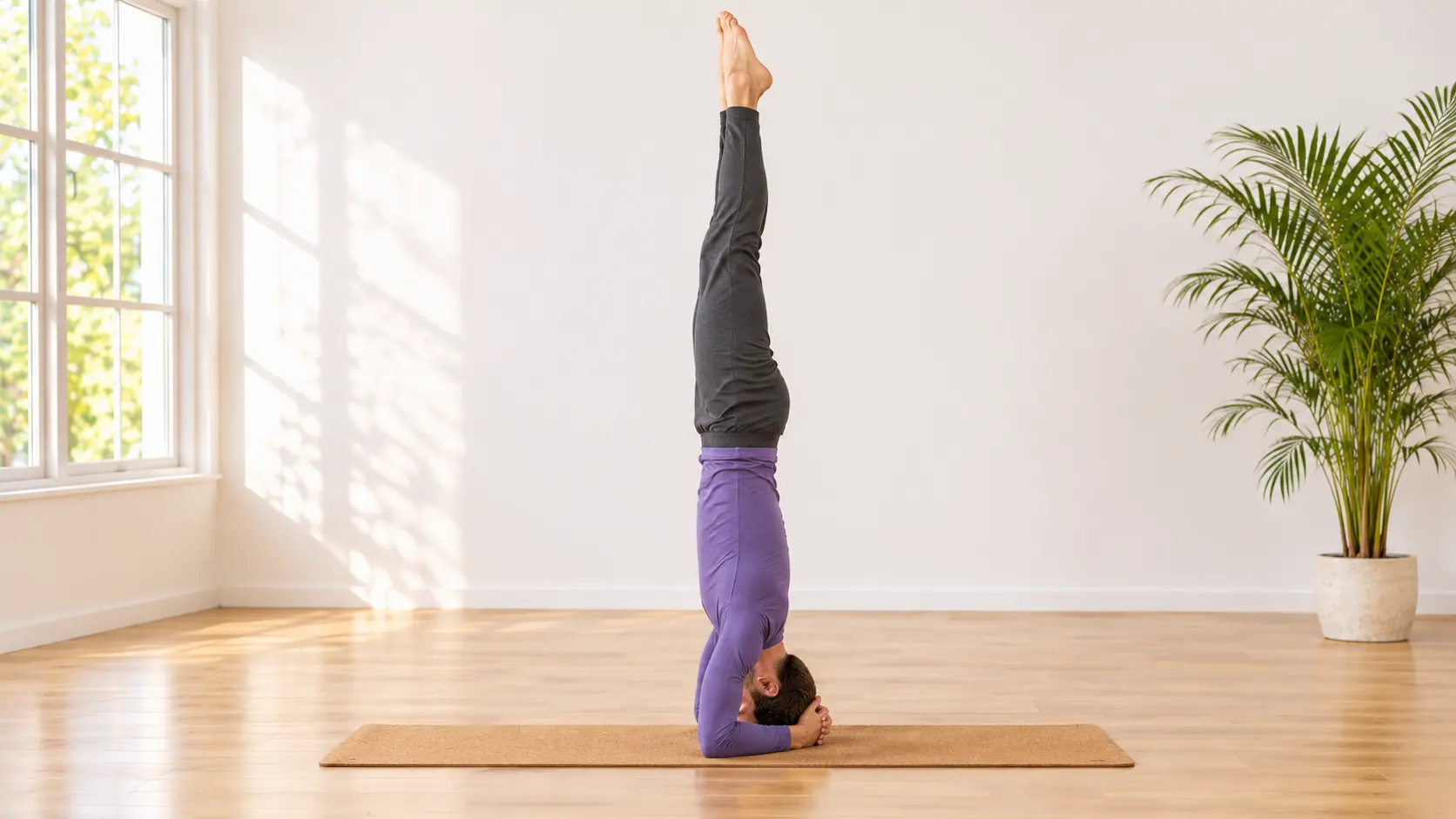
Benefits: the classic crown pose in many traditions, as it puts the crown of the head on the floor. Only do it if you've learned it with a teacher, and use a wall for safety.
- Kneel facing the wall, interlace your fingers and place your forearms on the floor, elbows shoulder-width apart, hands close to the wall.
- Rest the very top of your head on the floor with the back of the head cupped by your hands.
- Lift your knees, walk your feet in, and raise your legs one at a time, keeping most of your weight in your forearms.
- Come down slowly, one leg at a time, and rest in Child's pose.
- Hold: 5-10 breaths.
- Easier option: Dolphin, the same forearm position with your feet on the floor and your head hanging free.
- Safety: never put most of your weight on your head, and skip it for the reasons in the safety section.
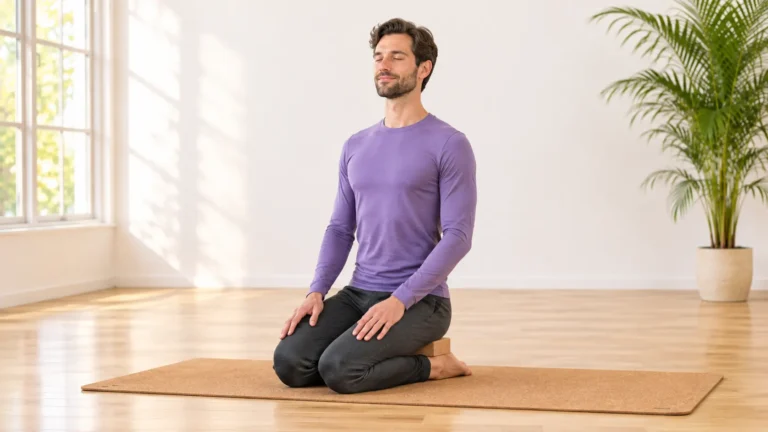
4. Hero Pose (Virasana) on a Block

Benefits: an upright, steady seat that makes it easy to keep the spine long and the head lifted. It's a good place to start becoming still.
- Kneel with your knees together and your feet a little wider than your hips.
- Place a block between your feet and sit back onto it.
- Rest your hands on your thighs and lengthen up through the top of your head.
- Lean forward onto your hands to come out.
- Hold: 8 breaths.
- Easier option: sit on a higher block or a cushion, or sit cross-legged instead.
- Safety: skip it if your knees hurt in a kneeling seat.
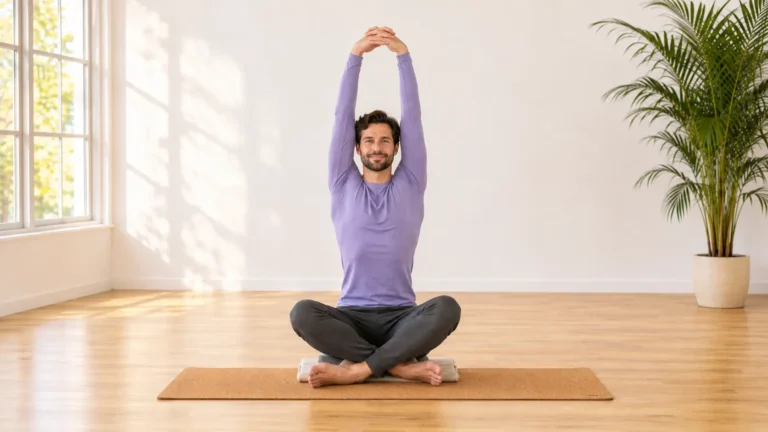
5. Seated Mountain (Parvatasana)
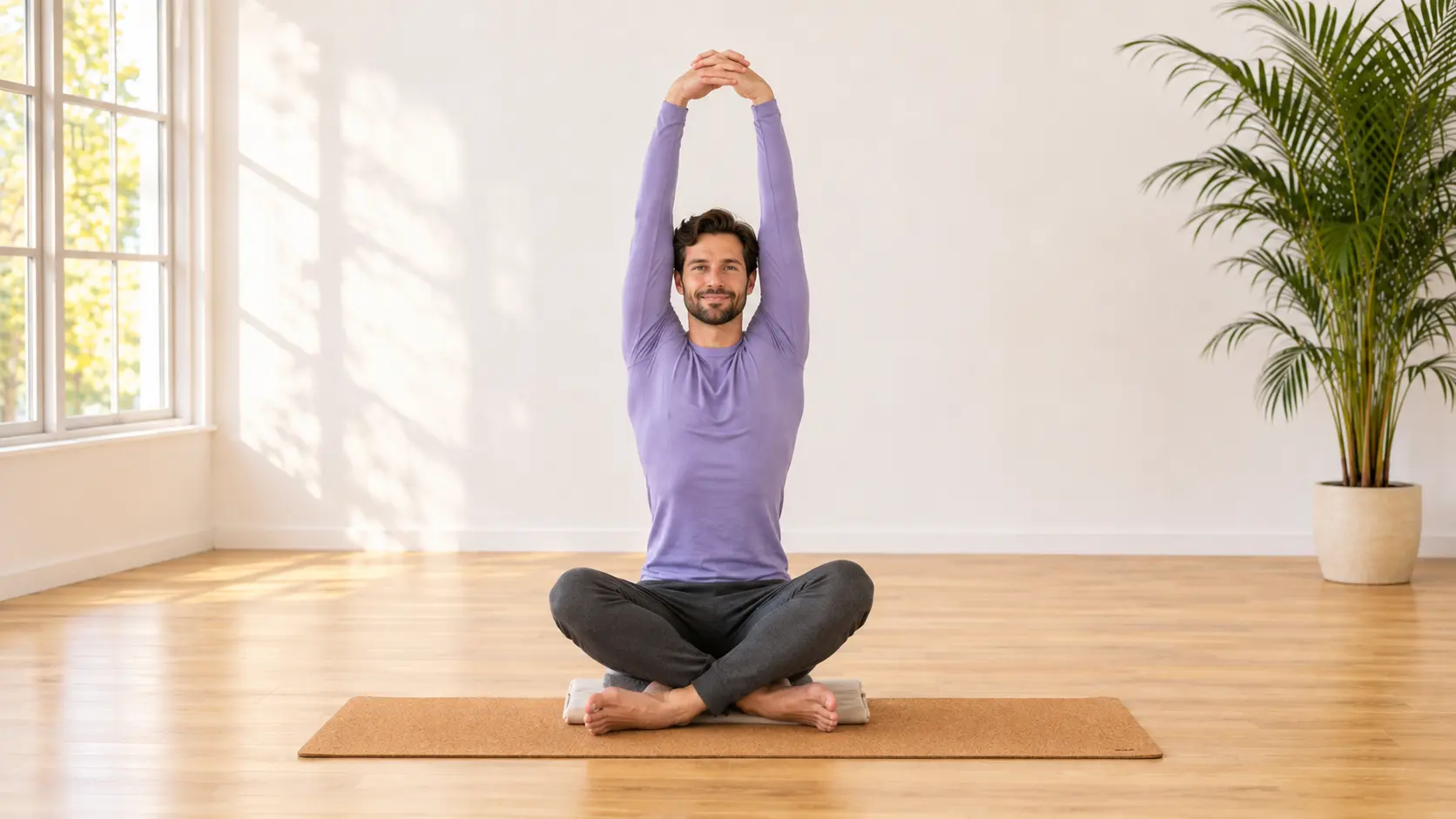
Benefits: lifts the arms and the sides of the body while the seat stays heavy, a feeling of rooting down and reaching up at once.
- Sit cross-legged on a folded blanket.
- Interlace your fingers, turn your palms up and press your arms straight up above your head.
- Keep your sitting bones heavy and the top of your head reaching up.
- Lower your arms, change the cross of your legs and the clasp of your fingers, and repeat.
- Hold: 5 breaths on each side.
- Easier option: keep your arms shoulder-width apart without clasping the fingers.
- Safety: don't let your lower back arch; keep the ribs soft.
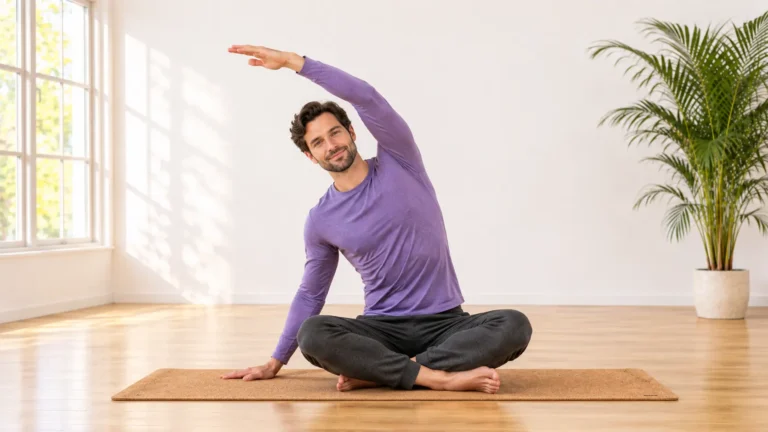
6. Seated Side Stretch (Parsva Sukhasana)
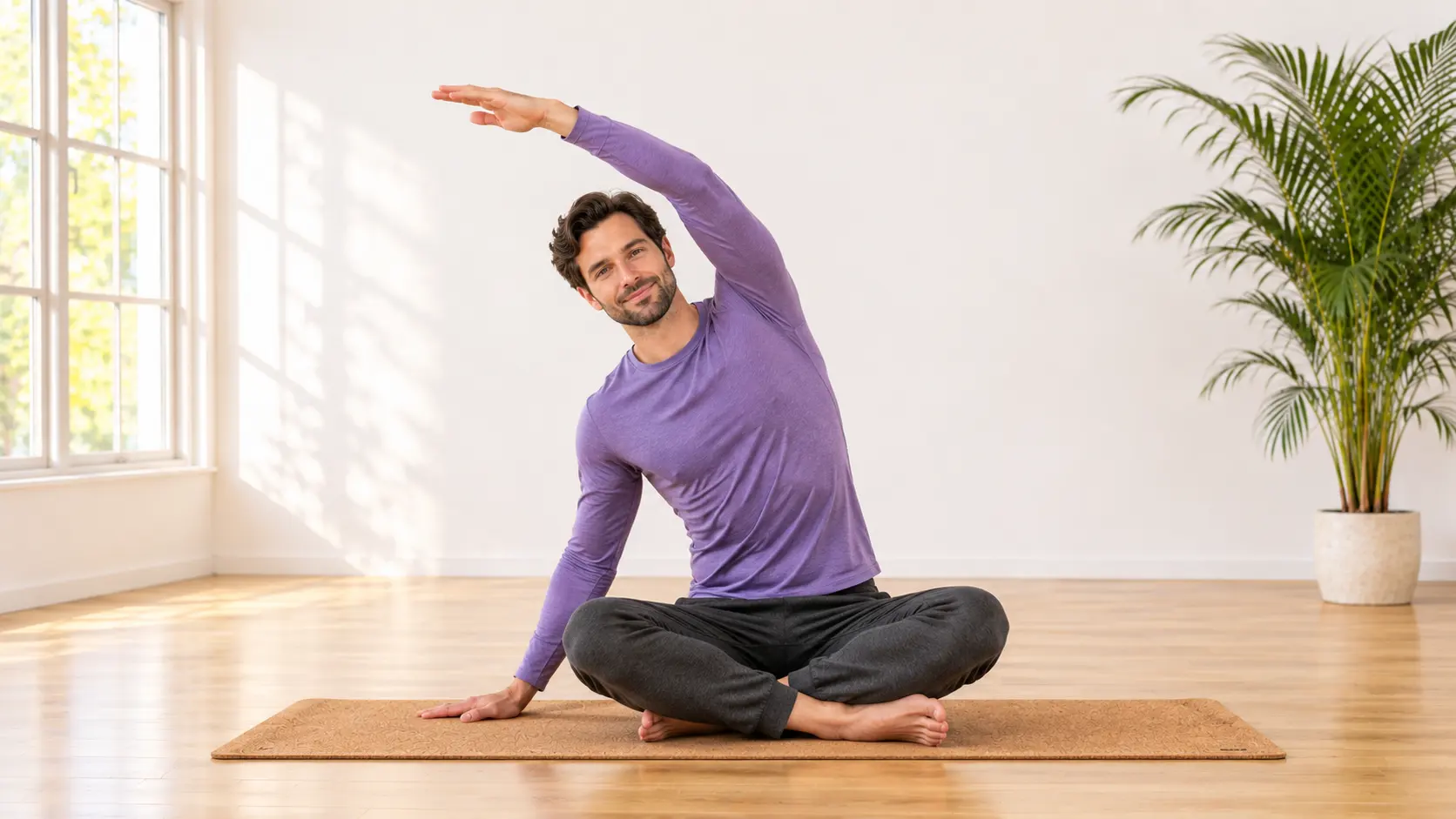
Benefits: stretches the sides of the body and makes room for a fuller breath before you sit still.
- Sit cross-legged with your left hand on the floor beside your left hip.
- Breathe in and raise your right arm.
- Breathe out and lean to the left, reaching your right arm over your head.
- Come back to center and change sides.
- Hold: 5 breaths on each side.
- Easier option: keep the raised hand on your head instead of reaching over.
- Safety: keep both sitting bones on the floor and don't collapse into the lower side.
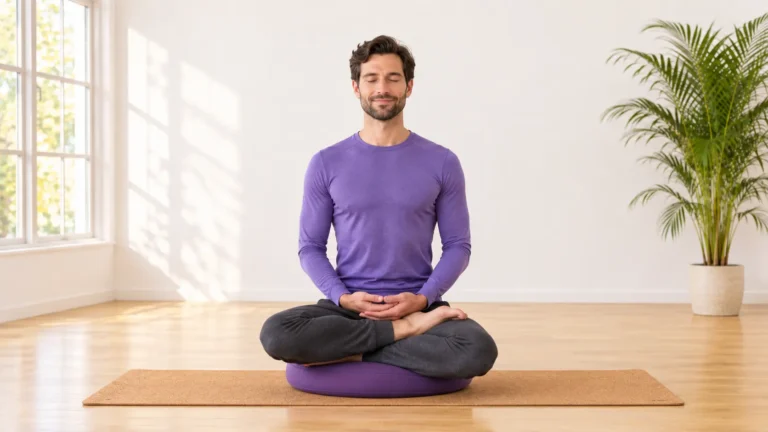
7. Lotus or Half Lotus (Padmasana)
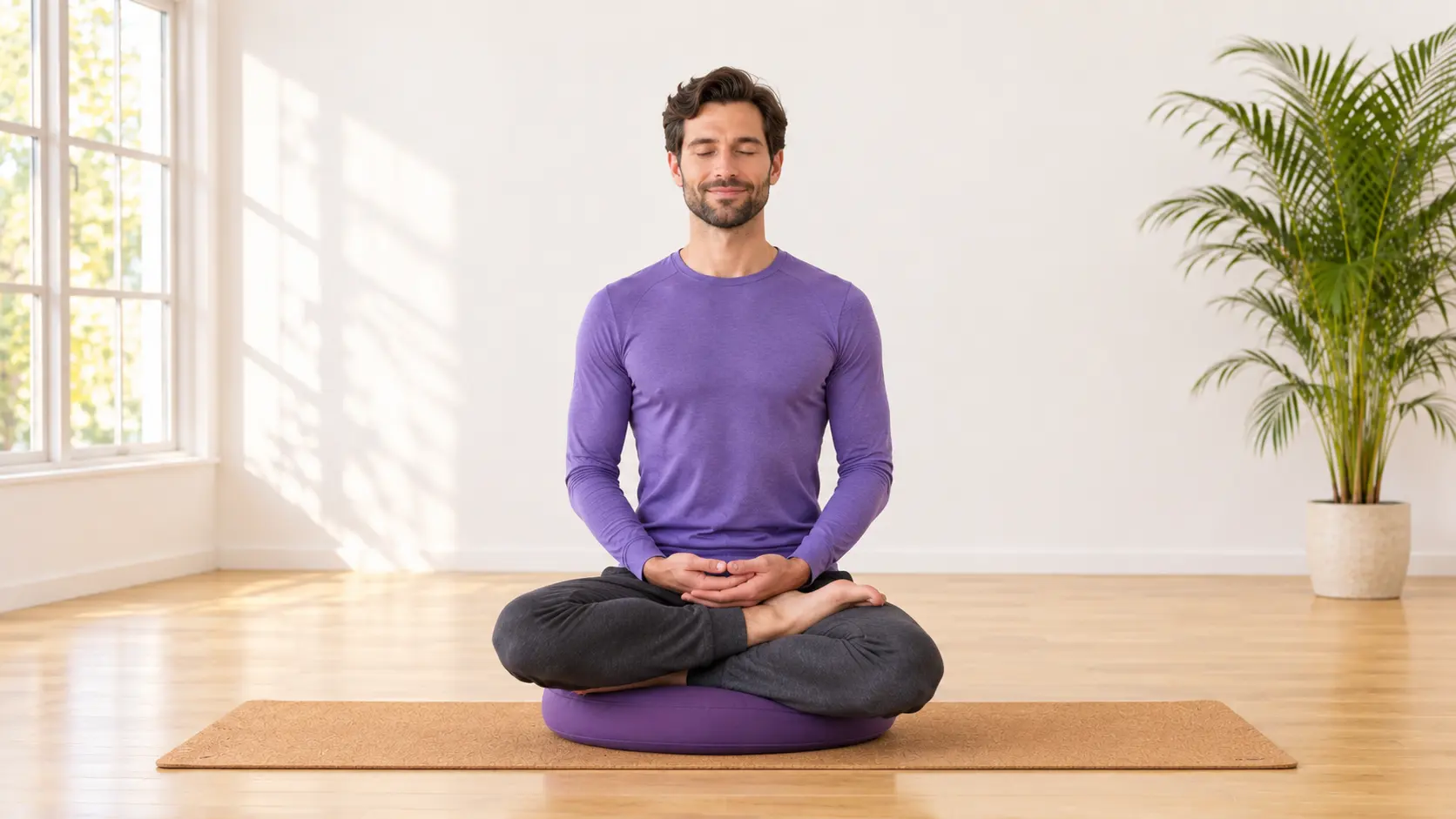
Benefits: the traditional meditation seat. The crown chakra itself is pictured as a thousand-petal lotus, which makes this pose a natural fit.
- Sit on a cushion and bend your right knee, placing your right foot on top of your left thigh, close to the hip.
- For full Lotus, bring the left foot onto the right thigh as well. For Half Lotus, leave the left foot on the floor under the right knee.
- Rest your hands in your lap and sit tall, with the top of your head lifting.
- Unfold your legs slowly and change the cross next time.
- Hold: 1-2 minutes.
- Easier option: an easy cross-legged seat on a cushion, with your knees lower than your hips.
- Safety: never force Lotus. Stop if you feel any pain in your knees.
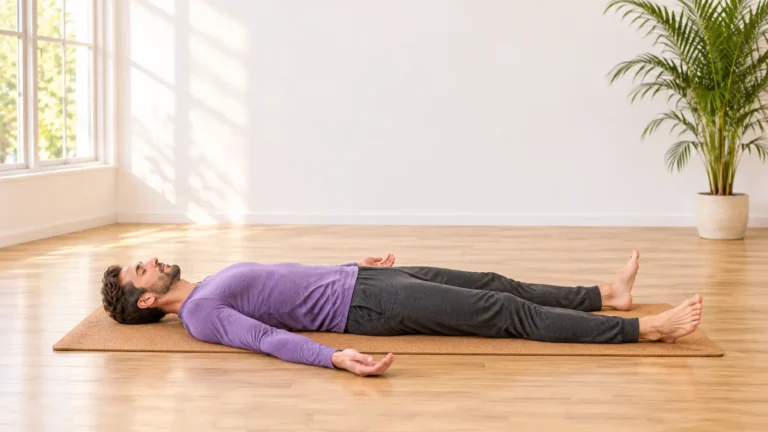
8. Savasana with Crown Awareness
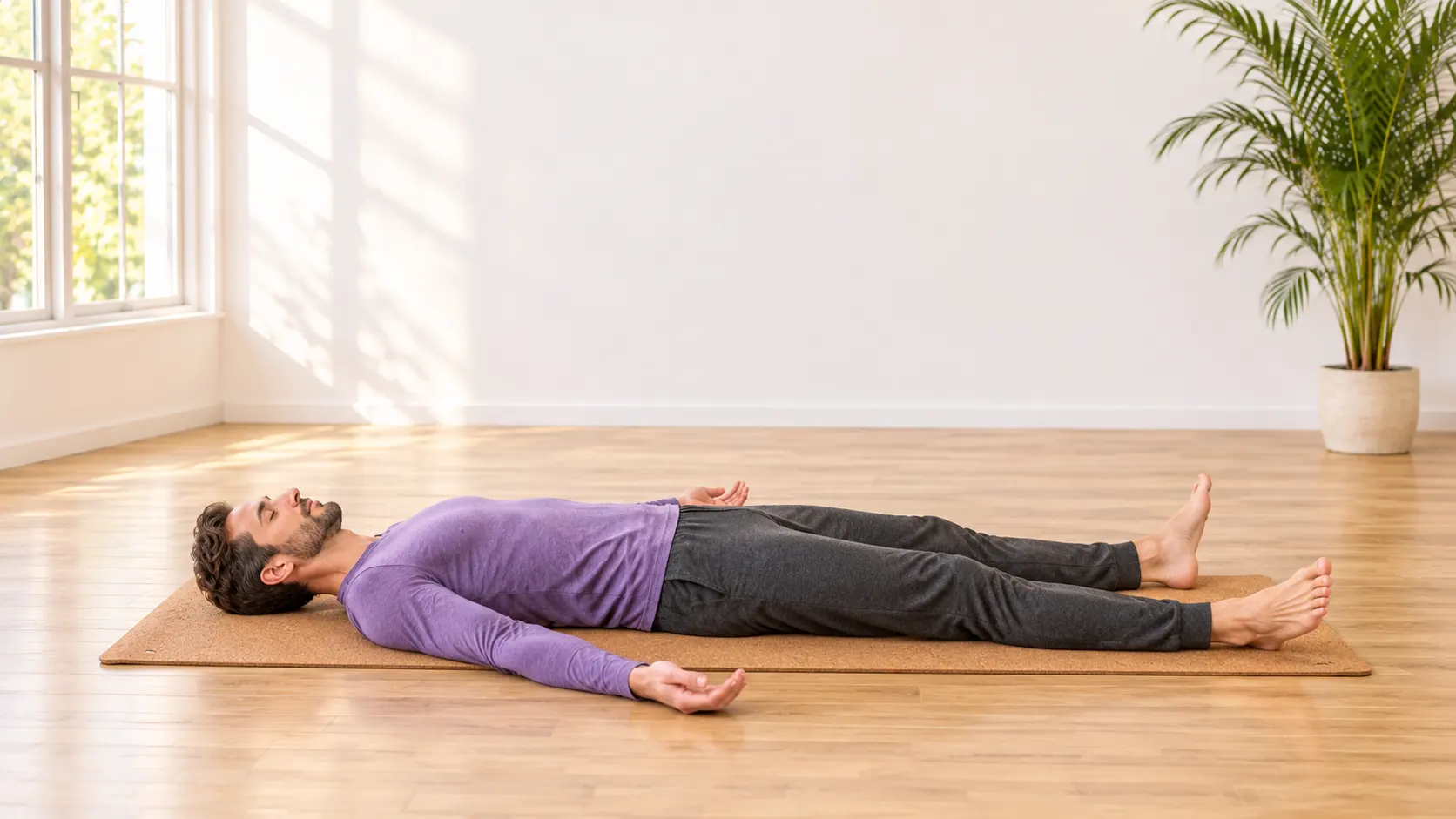
Benefits: deep rest for the whole body. Many people find this the most important part of a crown chakra practice.
- Lie on your back with your arms by your sides, palms up, and your legs relaxed.
- Let your body be completely heavy.
- Bring your attention to the top of your head and imagine soft white light there, or simply rest in the quiet.
- Roll to your side and sit up slowly.
- Hold: 3-4 minutes, longer if you have time.
- Easier option: put a cushion under your knees to rest your lower back.
- Safety: later in pregnancy, lie on your side instead.
A 15-Minute Crown Chakra Yoga Routine
This crown chakra yoga sequence takes 15 minutes, counting both sides and the transitions. It goes from standing to kneeling, seated and lying down, and almost a third of it is spent resting. One slow breath takes about 5-6 seconds, so 5 breaths is about half a minute. Breathe through your nose. You can keep the table open on your phone while you practice.
| Time | Pose | Hold | Beginner option |
|---|---|---|---|
| 0:00-2:00 | Warm-up: scalp massage and neck lengthening | 2 min | Shorter massage |
| 2:00-3:00 | Upward Salute | 3 rounds of 5 breaths | Arms wider apart |
| 3:00-4:30 | Half Moon, right then left | 5 breaths per side | Back against a wall |
| 4:30-6:00 | Headstand (optional), then Child's pose | 5-10 breaths | Dolphin |
| 6:00-7:00 | Hero pose on a block | 8 breaths | Higher block or cushion |
| 7:00-8:00 | Seated Mountain, both crosses | 5 breaths per side | Arms apart, no clasp |
| 8:00-9:00 | Seated Side Stretch, right then left | 5 breaths per side | Hand on the head |
| 9:00-10:30 | Lotus or Half Lotus | 1-2 minutes | Easy cross-legged seat |
| 10:30-14:00 | Savasana with crown awareness | 3-4 minutes | Cushion under the knees |
| 14:00-15:00 | Seated in silence, hands in the lap | 1 minute | Sit on a chair |

Three or four times a week is a good rhythm. Some people like to practice early in the morning, before the day gets busy, but any time that suits you works, as long as you haven't just eaten. If 15 minutes is too long, skip Headstand and shorten the holds, but keep the rest at the end.
5-Minute Crown Chakra Yoga for Beginners
If you're new to yoga or short on time, try this easy crown chakra yoga at home. You only need a mat and a cushion.
- Upward Salute, 1 minute: three slow rounds, reaching up through the top of your head.
- Seated Mountain, 1 minute: sit cross-legged and press your arms up, then change the cross.
- Savasana, 2 minutes: lie still with your attention at the top of your head.
- Silence, 1 minute: sit up and rest your hands in your lap.
Try this short routine for a week or two. When it feels easy, add Hero pose and Half Moon, and then move on to the full 15-minute routine.
Crown Chakra Meditation Pose
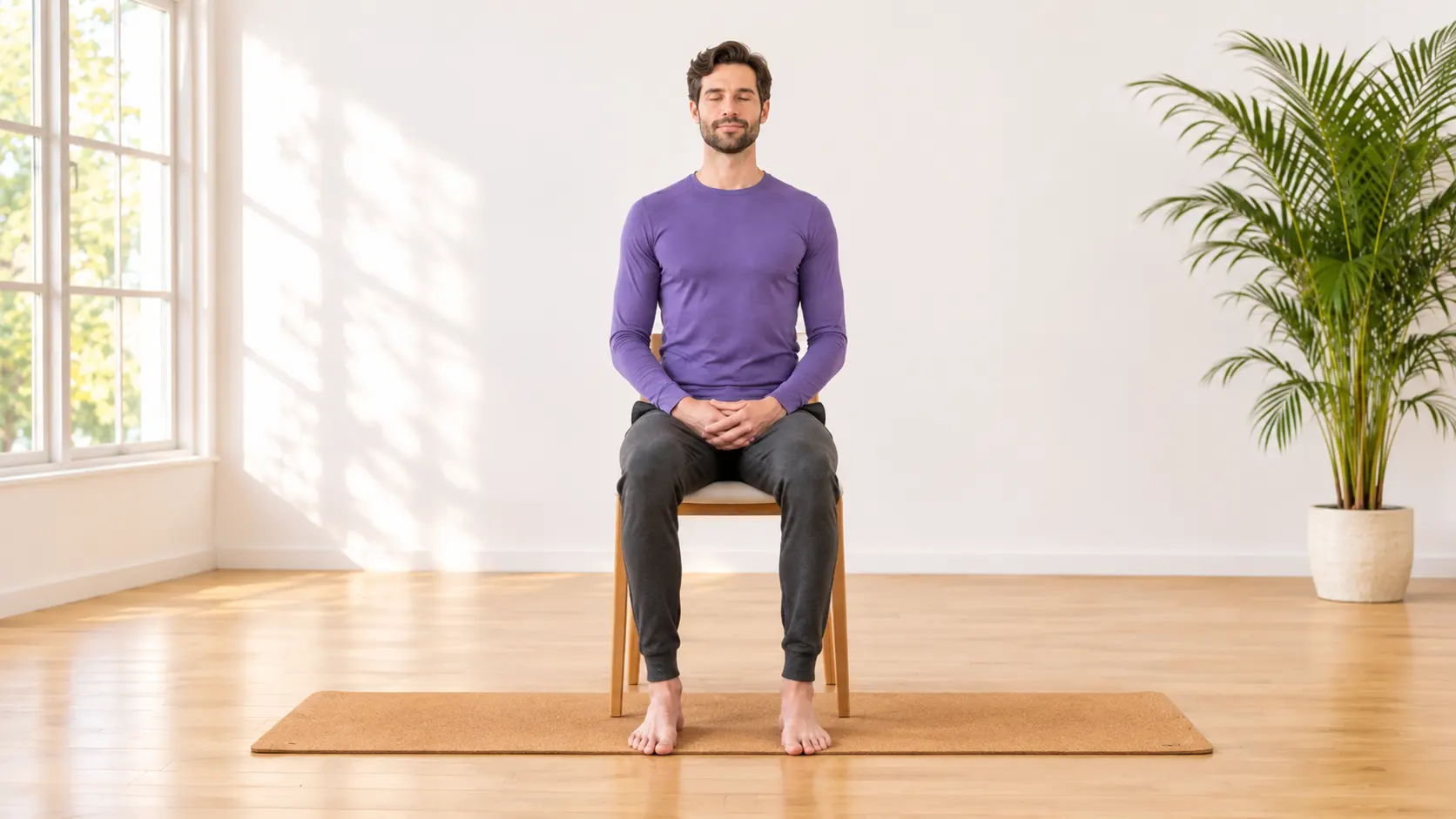
The crown chakra meditation pose is Lotus, Half Lotus, or an easy cross-legged seat on a cushion, whichever lets you sit still and upright without pain. Sitting on the front edge of a cushion so your knees are lower than your hips makes it much easier. A chair is fine too.
Rest your hands in your lap, lengthen the top of your head, and sit in silence for five to ten minutes. The crown chakra meditation has a guided script if you'd like one. Hand positions for meditation are covered on our page about chakra mudras.
How Yoga for Crown Chakra Healing Works
In the yoga tradition, the physical poses were always meant to prepare the body for sitting still in meditation, and that's the role they play for the crown. Chakra teachings say the crown opens in stillness, so the poses are there to release restlessness first. Yoga for crown chakra healing is therefore mostly gentle, with the longest time spent resting.
Chakras can't be measured by science, so there are no studies on yoga for crown chakra healing as such. Yoga and meditation can both help with stress and sleep, according to the National Center for Complementary and Integrative Health. A calmer body and mind are a good base for any spiritual practice.
Breathing in the Poses
Breathe slowly and evenly through your nose, and in Savasana let the breath find its own rhythm. Avoid forceful techniques that cause light-headedness. The page on crown chakra breathing has calm exercises to add before meditation.
Try the 5-minute beginner routine tomorrow morning, before you check your phone: Upward Salute, Seated Mountain, Savasana and a minute of silence. When that's easy, move on to the full 15-minute routine. These pages are good next steps:
- Crown chakra healing meditation - a guided script for after the poses
- Crown chakra breathing exercises - calm breath before meditation
- How to heal crown chakra energy - silence, nature and gratitude
Sources
- B.K.S. Iyengar, Light on Yoga (1966): Urdhva Hastasana, Ardha Chandrasana, Parvatasana, Salamba Sirsasana, Virasana, Padmasana, Savasana.
- National Center for Complementary and Integrative Health (NCCIH), "Yoga: Effectiveness and Safety".
Frequently Asked Questions About Crown Chakra Yoga
Which yoga pose is best for the crown chakra?
Headstand (Salamba Sirsasana) is the pose named most often, because it puts the crown of the head on the floor, but it isn't safe for everyone. For most people, Savasana and a still seated pose such as Half Lotus are the most useful, since chakra teachings link the crown with stillness. A short, gentle sequence that ends in a long rest usually works best.
How often should you practice crown chakra yoga?
Three or four times a week is plenty for most people, and the 5-minute beginner routine can be done every day. Short, regular sessions tend to help more than an occasional long one. Many people like to follow the routine with a few minutes of silent meditation.
Can beginners do crown chakra yoga?
Yes. Most of the poses on this page are beginner-friendly, and the 5-minute routine with Upward Salute, Seated Mountain and Savasana is a good place to start. Skip Headstand until you've learned it with a teacher, and use cushions and a block freely in the seated poses. If you have a knee, neck or balance problem, check with a doctor or physiotherapist first.
Why is stillness so important for the crown chakra?
Chakra teachings place the crown at the top of the head and link it with awareness and spiritual connection rather than with any part of the body. In the yoga tradition, the physical poses were meant to prepare the body for sitting still in meditation. That's why crown chakra yoga is short and gentle, with the longest time spent resting.
Is Headstand safe for beginners?
Headstand isn't a beginner pose. It puts weight on the head and neck and is best learned with a teacher, close to a wall. Skip it if you have neck problems, high blood pressure, glaucoma or other eye problems, heart conditions, or during pregnancy. Dolphin gives a similar position on the forearms with the feet on the floor and the head hanging free.
What is the best time of day for crown chakra yoga?
Any time that suits you works. Some people like the early morning, before the day gets busy; others prefer the evening, when a long Savasana helps them wind down. Practice at least two hours after a main meal so you can sit and lie still comfortably.
What if I can't sit in Lotus?
Most people can't sit in full Lotus, and you don't need to. Half Lotus, an easy cross-legged seat on a cushion or sitting upright on a chair all work for meditation. Sitting with your knees lower than your hips makes any seat easier. Never force your legs into Lotus, as it can strain the knees.