
8 Heart Chakra Yoga Poses to Open and Balance Anahata
Learn 8 heart chakra yoga poses (Anahata) that open the chest and shoulders, with step-by-step cues, beginner options and a 15-minute routine for home.
Table Of Contents
The best heart chakra yoga poses open the chest and shoulders: Cow Face arms, Eagle arms, Puppy, Sphinx, Upward-Facing Dog, Camel, Supported Fish and a reclined heart opener on a bolster. Warm up the shoulders for two minutes, then follow the 15-minute routine, which gives the time for every pose. Beginners can start with a 5-minute version and shorter holds.
- Chakra: Anahata (heart), air element
- Poses: 8, plus a 2-minute shoulder warm-up
- Hold: 5 breaths in most poses, 3-5 in Camel and Upward Dog, minutes in the resting poses
- Full routine: 15 minutes · beginner routine: 5 minutes
- When: any time of day, at least two hours after a meal
- Props: mat, two blocks, a bolster or firm cushion, a strap, a blanket
- Level: beginner to intermediate
In yoga tradition these poses work on the area around the heart chakra, which chakra teachings link with love, compassion and the air element. They're one part of learning how to open heart chakra energy, alongside breath, kindness and forgiveness.
The 8 Best Heart Chakra Yoga Poses
Heart chakra yoga is mostly shoulder openers and gentle back bends. Many people round their shoulders and let the chest cave in, after long hours at a desk or simply out of habit. In chakra teachings this closed shape is linked with protecting the heart. Poses that do the opposite, lifting the breastbone and drawing the shoulders back, open the front of the body again.
These Anahata yoga poses start gently, build up to Camel, the strongest, and finish with two supported poses where you simply rest open. Every pose has an easier option, and it's fine to hold a pose for fewer breaths while you build up.
The table gives all eight at a glance. Tap a pose name to jump to its instructions.
| Yoga pose | Difficulty* | Main focus | Hold |
|---|---|---|---|
| Cow Face Arms | Beginner | Shoulders and chest | 5 breaths per side |
| Eagle Arms | Beginner | Upper back | 5 breaths per side |
| Puppy | Beginner | Chest and armpits | 5-8 breaths |
| Sphinx | Beginner | Gentle back bend | 8-10 breaths |
| Upward-Facing Dog | Intermediate | Chest and front of the body | 3-5 breaths, twice |
| Camel | Intermediate | Deep chest opener | 3-5 breaths, twice |
| Supported Fish | Beginner | Supported chest opener | 1-2 minutes |
| Reclined Heart Opener | Beginner | Rest and relaxation | 2-3 minutes |
*A rough guide only; how a pose feels depends on your own shoulders and back.
Some lists also include Bridge or Cobra. Chakra associations vary between yoga systems, and on this site those two are on the root chakra yoga poses and solar plexus chakra yoga poses pages, so the pages don't repeat each other. Full Wheel is left out because it's too strong for most beginners at home.
If you only have time for three, do the 5-minute beginner routine: Puppy, Sphinx and the reclined heart opener.
Before You Start: Safety and Modifications
Heart openers put most of the load on the lower back, the neck and the shoulders, so most of the cautions are about those. Read them before you begin.
- Lower back: in Camel and Upward Dog, lift the chest rather than pushing the hips forward or squeezing the lower back. Use the lower versions if you have back pain.
- Neck: keep the neck long in Camel and Fish, and support your head on a block.
- Shoulders: use a strap in Cow Face arms, and hold your shoulders in Eagle arms if the full wrap hurts.
- Dizziness or blood pressure problems: come up slowly from back bends, and leave out Camel if you have very high or low blood pressure.
- Pregnancy: avoid deep back bends and lying on your belly, and don't lie flat on your back for long later on. Check with your midwife or doctor first, as you may need changes that suit you.
Some people feel emotional in heart openers, and others don't; both are fine. If it happens, rest in Child's pose and breathe. Any chest pain, pressure or shortness of breath needs a doctor, not a yoga pose.
How to Do Each Heart Chakra Yoga Pose
Do the poses in the order given. You start seated for the arm stretches, come onto all fours for Puppy, lie on your belly for Sphinx and Upward Dog, kneel for Camel, and finish lying on your back. It's the same order as the 15-minute routine below.
Warm-Up: 2 Minutes for the Shoulders and Chest
These heart chakra exercises loosen the shoulders and upper back before the deeper poses. Sit or stand tall.
- Roll your shoulders up, back and down, ten times.
- Clasp your hands behind your back, or hold a strap, and lift your chest as you draw the hands down and away.
- Hold for five breaths, then release and shake out your arms.
- Finish with five slow, small neck circles each way.
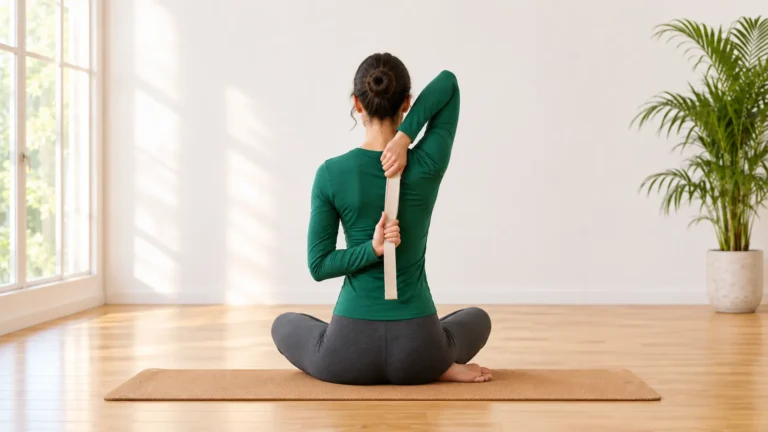
1. Cow Face Arms (Gomukhasana arms)

Benefits: stretches the shoulders, the chest and the backs of the arms. The full Cow Face pose also works the hips, but the arm position alone is enough here.
- Sit comfortably with a tall spine.
- Reach your right arm up, bend the elbow and let your hand slide down between your shoulder blades.
- Bring your left arm behind you from below and try to clasp the fingers of both hands.
- Lift your chest and keep your head upright, then change sides.
- Hold: 5 breaths on each side.
- Easier option: hold a strap between your hands if they don't meet, which is true for most people.
- Safety: don't pull hard on the strap, and stop if you feel pain in the front of the shoulder.
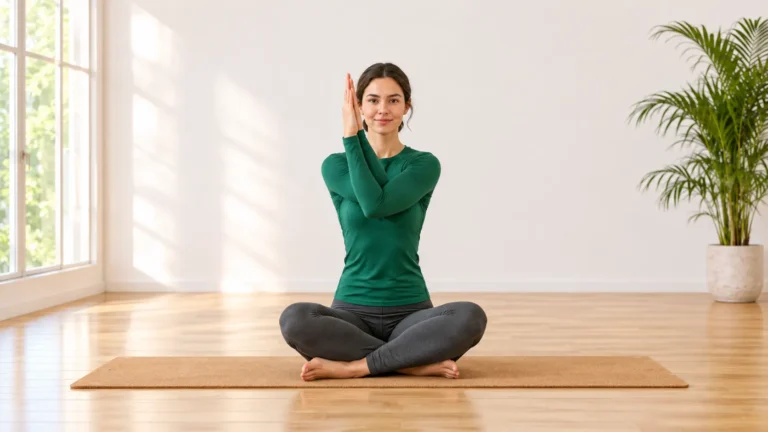
2. Eagle Arms (Garudasana arms)

Benefits: stretches the upper back between the shoulder blades, the back of the heart chakra area. It's a good one to do at your desk, too.
- Sit tall and reach both arms forward at shoulder height.
- Cross your right elbow over your left and bend both elbows.
- Wrap the forearms so the palms meet, or simply hold opposite shoulders.
- Lift your elbows to shoulder height and move them away from your face, then change the cross.
- Hold: 5 breaths on each side.
- Easier option: give yourself a hug, with each hand holding the opposite shoulder.
- Safety: keep your shoulders down, away from your ears.
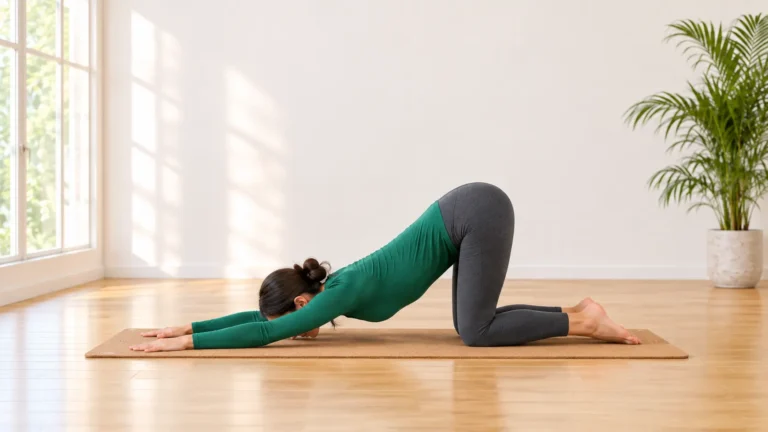
3. Puppy Pose (Uttana Shishosana)
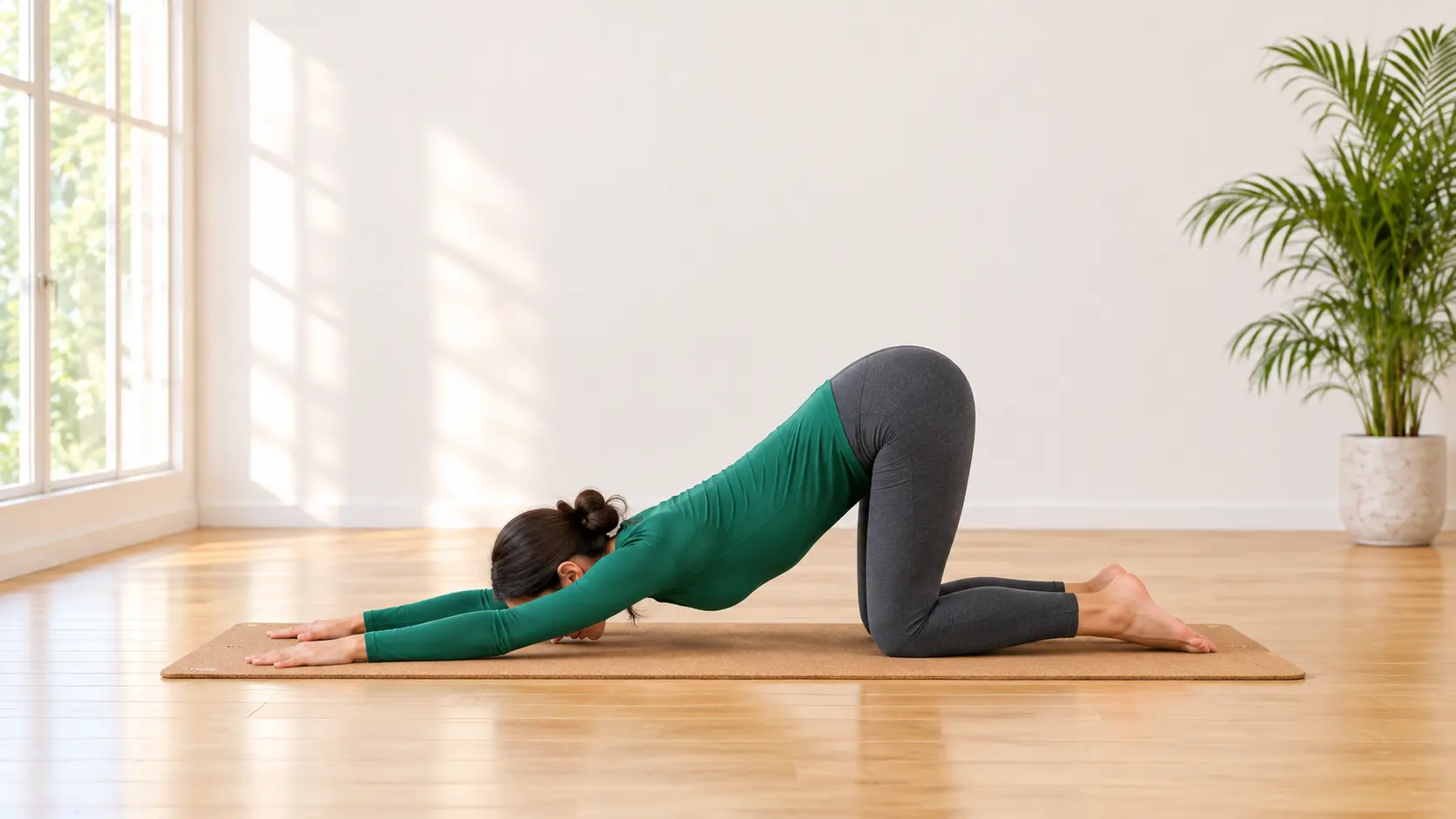
Benefits: opens the chest and the armpits and lengthens the spine. It's a cross between Child's pose and Downward Dog, and a kind first heart opener.
- Come onto your hands and knees with your hips over your knees.
- Walk your hands forward, keeping your hips where they are.
- Let your chest sink towards the floor and rest your forehead on the mat or a block.
- Walk your hands back to come out.
- Hold: 5-8 breaths.
- Easier option: place your hands wider apart, or rest your forearms on the floor.
- Safety: put a folded blanket under your knees if they're sensitive.
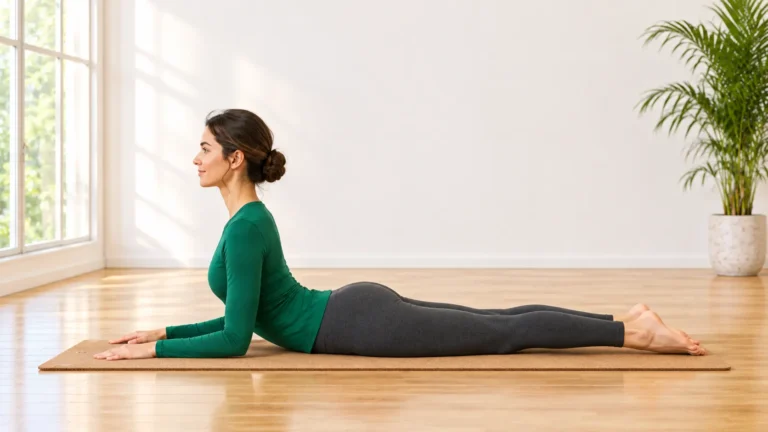
4. Sphinx Pose (Salamba Bhujangasana)
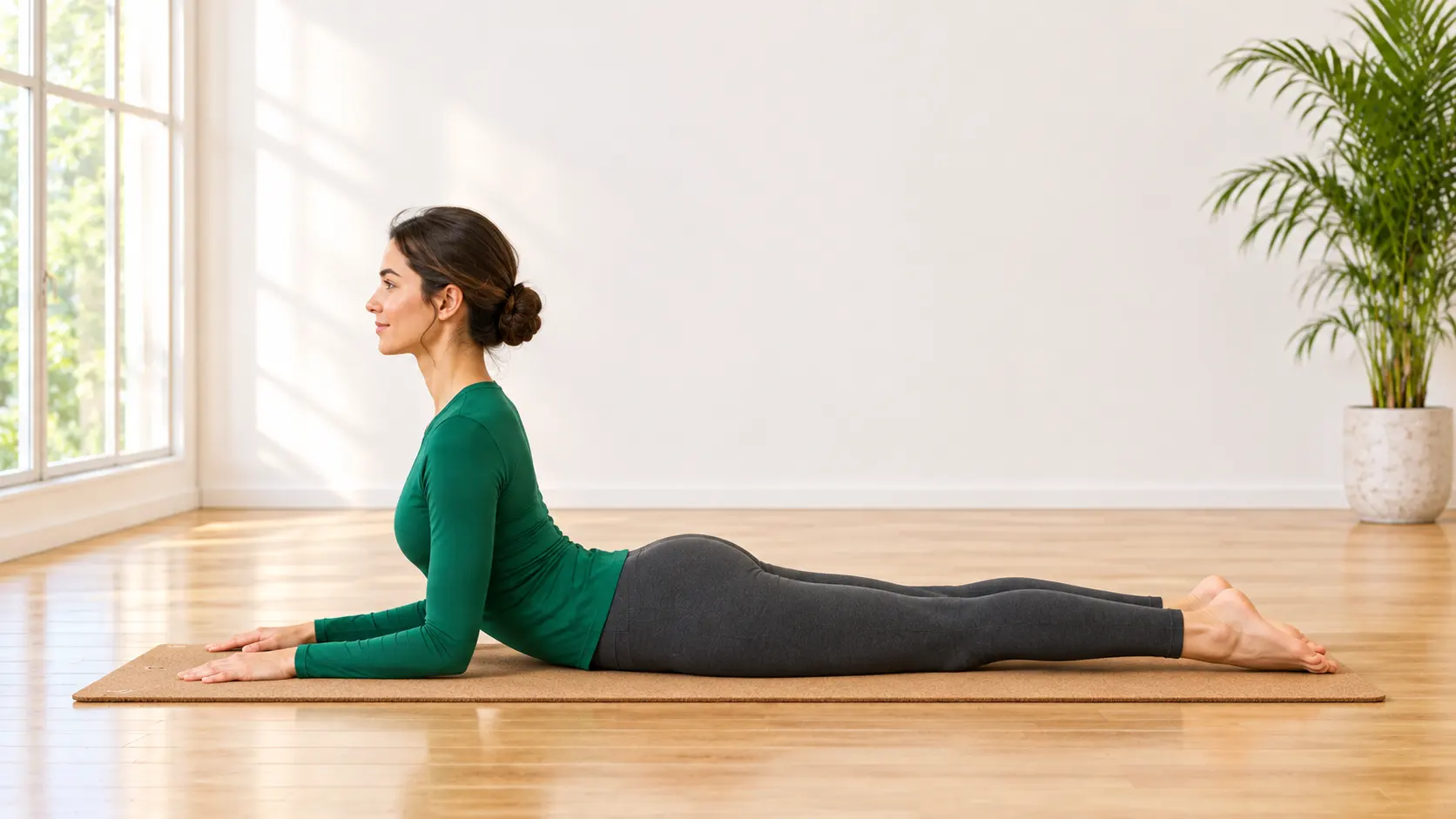
Benefits: a gentle back bend that opens the chest without effort. It's a good daily pose for anyone who sits a lot.
- Lie on your belly with your elbows under your shoulders and your forearms flat on the floor.
- Press your forearms down and lift your chest, drawing it forward between your arms.
- Relax your buttocks and let the lower back stay soft.
- Lower and rest your head on your hands.
- Hold: 8-10 breaths.
- Easier option: move your elbows a little forward so the bend is smaller.
- Safety: if your lower back pinches, come lower or rest on a folded blanket under the hips.
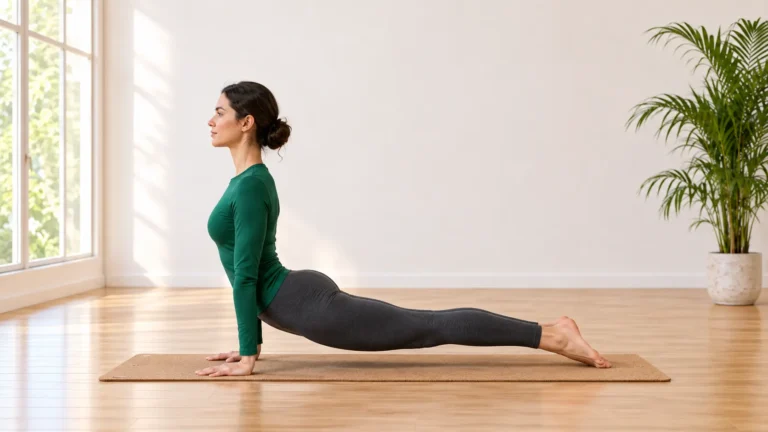
5. Upward-Facing Dog (Urdhva Mukha Svanasana)
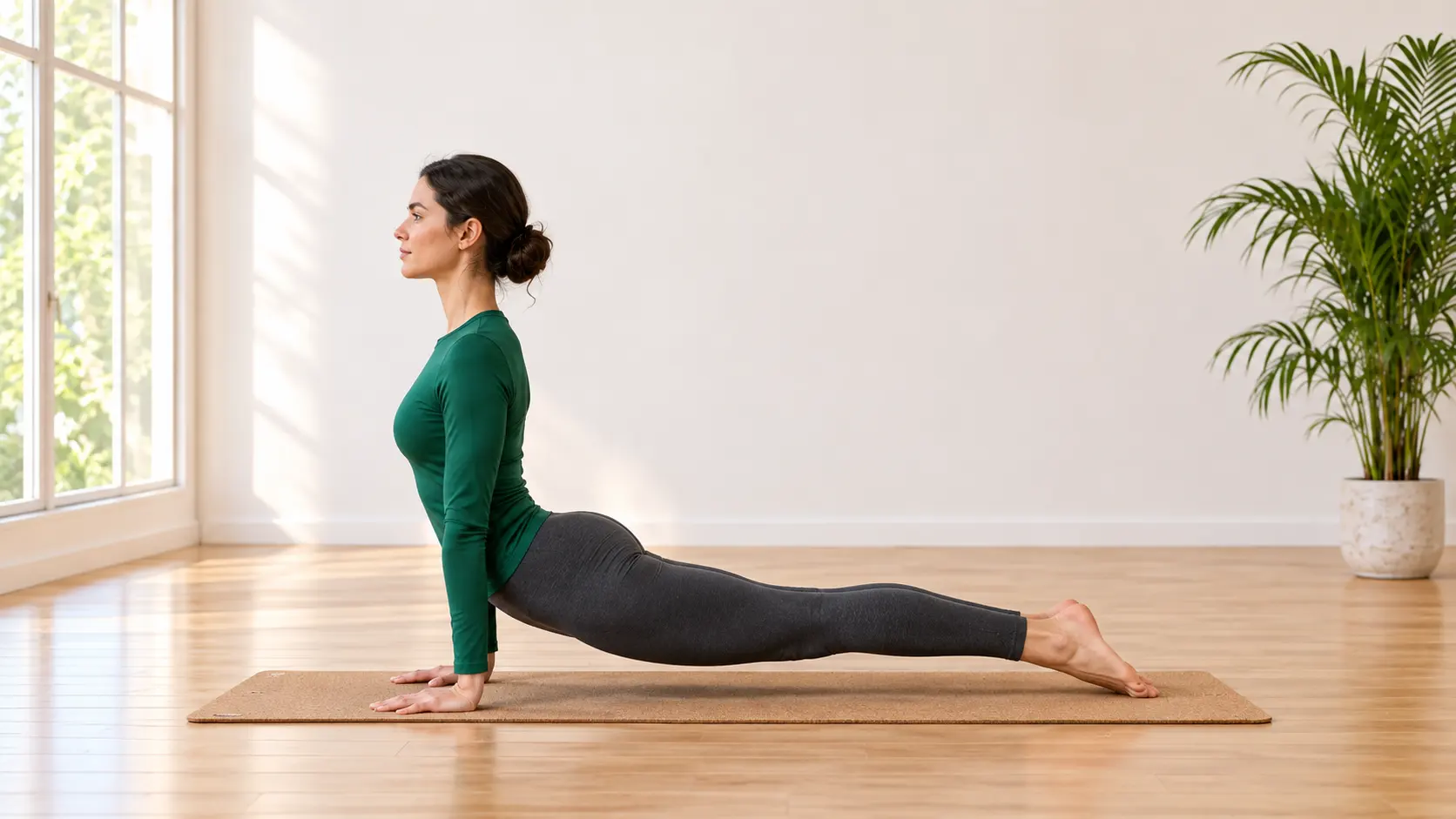
Benefits: opens the whole front of the body and strengthens the arms and back. It's the stronger cousin of Sphinx.
- Lie on your belly with your hands under your shoulders and the tops of your feet on the floor.
- Press into your hands and straighten your arms, lifting your chest and thighs off the mat.
- Only your hands and the tops of your feet touch the floor. Roll your shoulders back and away from your ears.
- Lower slowly, rest for a breath, and lift once more.
- Hold: 3-5 breaths, twice.
- Easier option: keep your thighs on the floor and bend your elbows slightly, which turns it into a low Cobra.
- Safety: leave it out if you have wrist or lower back pain, and in pregnancy.
6. Camel Pose (Ustrasana)
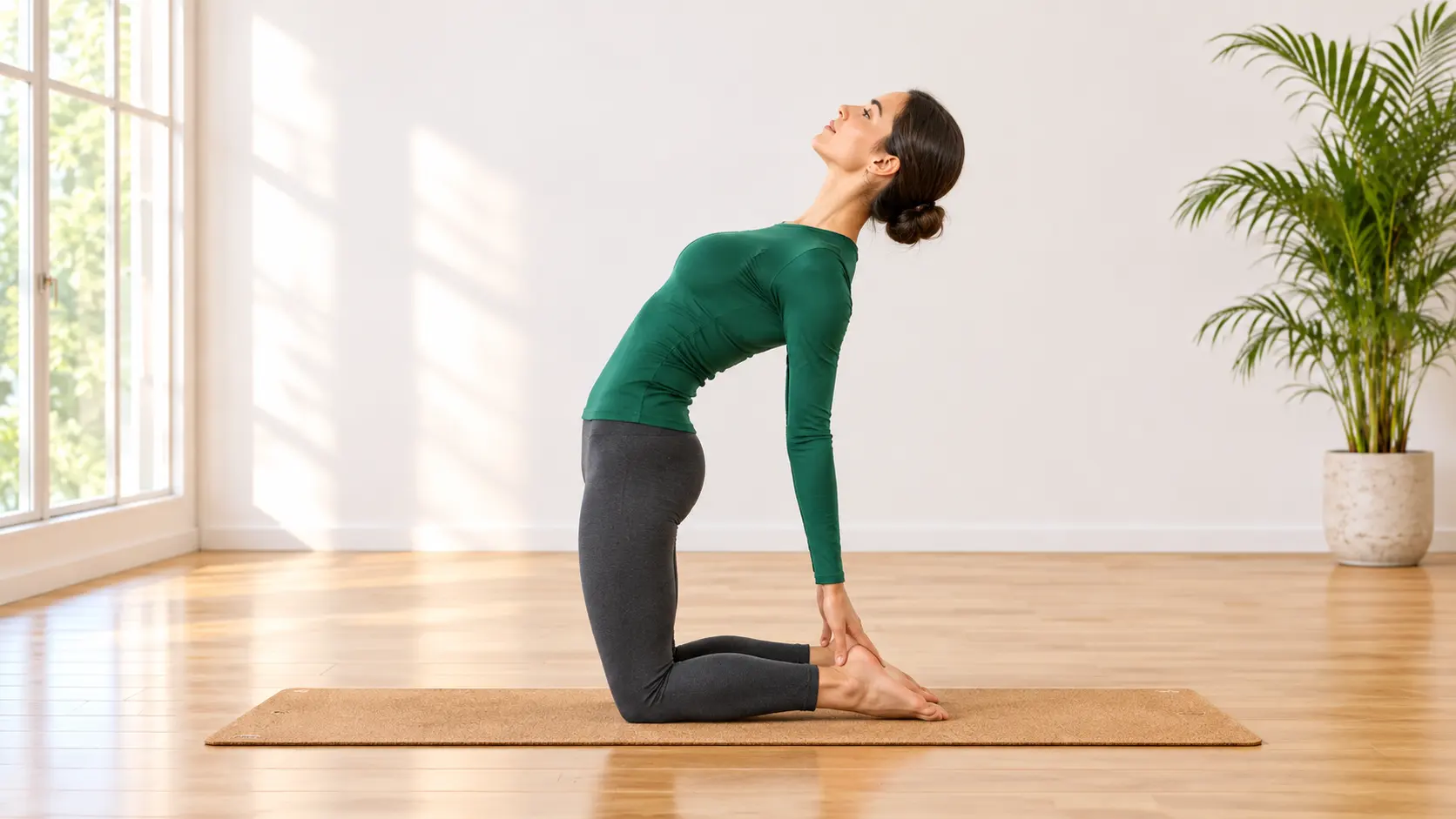
Benefits: the deepest chest opener in this set. It stretches the front of the body from the thighs to the throat.
- Kneel with your knees hip-width apart and your thighs upright. Tuck your toes under if you want more height.
- Put your hands on your lower back, fingers pointing down.
- Lift your chest, draw your elbows towards each other and lean back slowly, keeping your hips over your knees.
- If it feels fine, reach your hands to your heels or to blocks beside your feet.
- Come up slowly with your hands on your lower back, and rest in Child's pose.
- Hold: 3-5 breaths, twice.
- Easier option: keep your hands on your lower back the whole time.
- Safety: keep your neck long rather than dropping your head back. Leave Camel out if you have very high or low blood pressure, back pain or are pregnant.
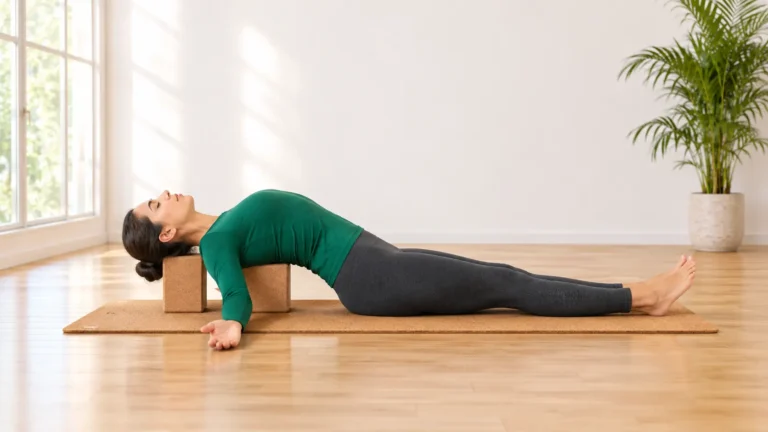
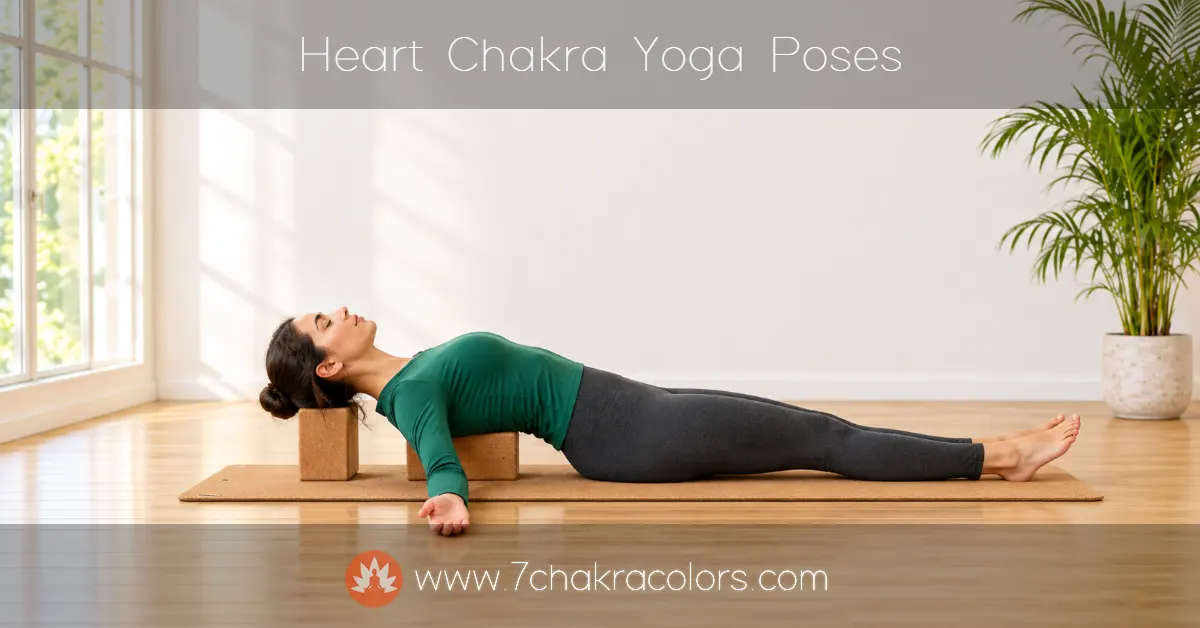
7. Supported Fish (Matsyasana)
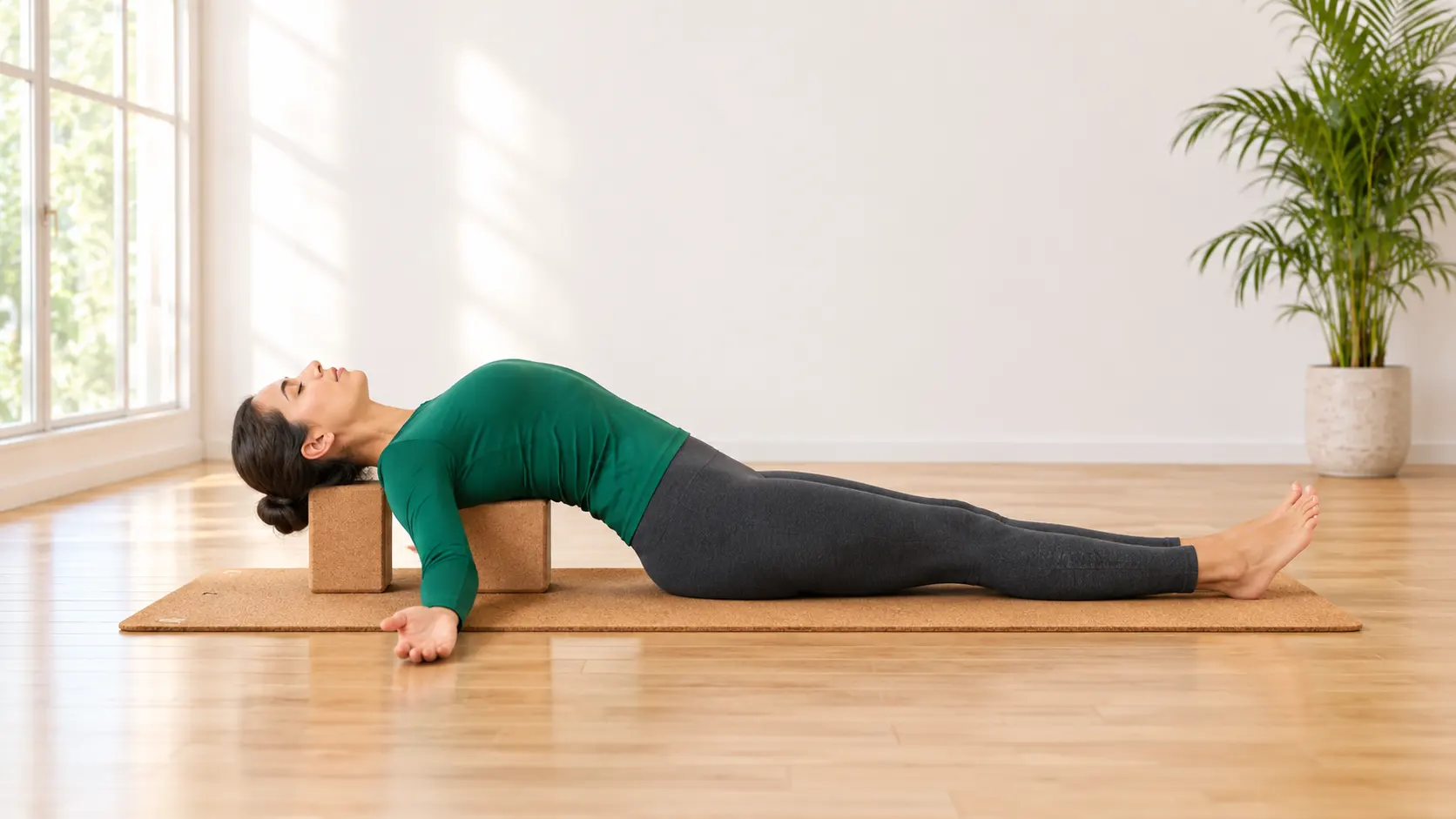
Benefits: opens the chest with no effort, because the blocks do the work. It's a good pose for practicing deep breaths into the front of the ribs.
- Place one block lengthways under your shoulder blades and another, a little higher, under your head.
- Lie back over them with your legs straight or knees bent.
- Let your arms open out to the sides, palms up.
- Roll to your side to come up.
- Hold: 1-2 minutes.
- Easier option: use the blocks at their lowest height, or a folded blanket instead.
- Safety: lower the blocks if your neck or back feels any strain.
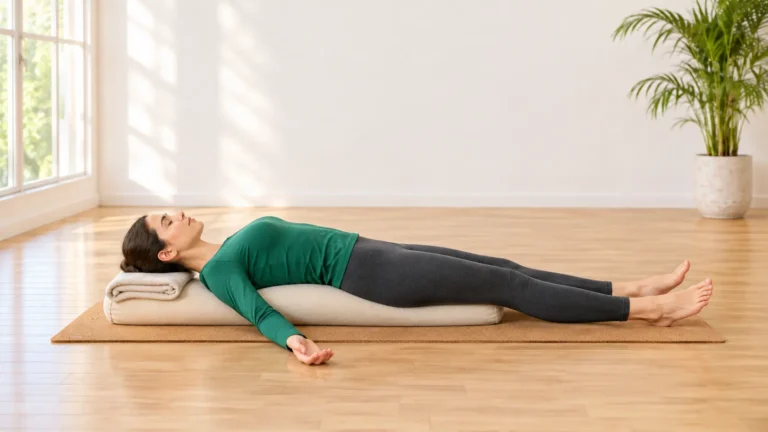
8. Reclined Heart Opener on a Bolster
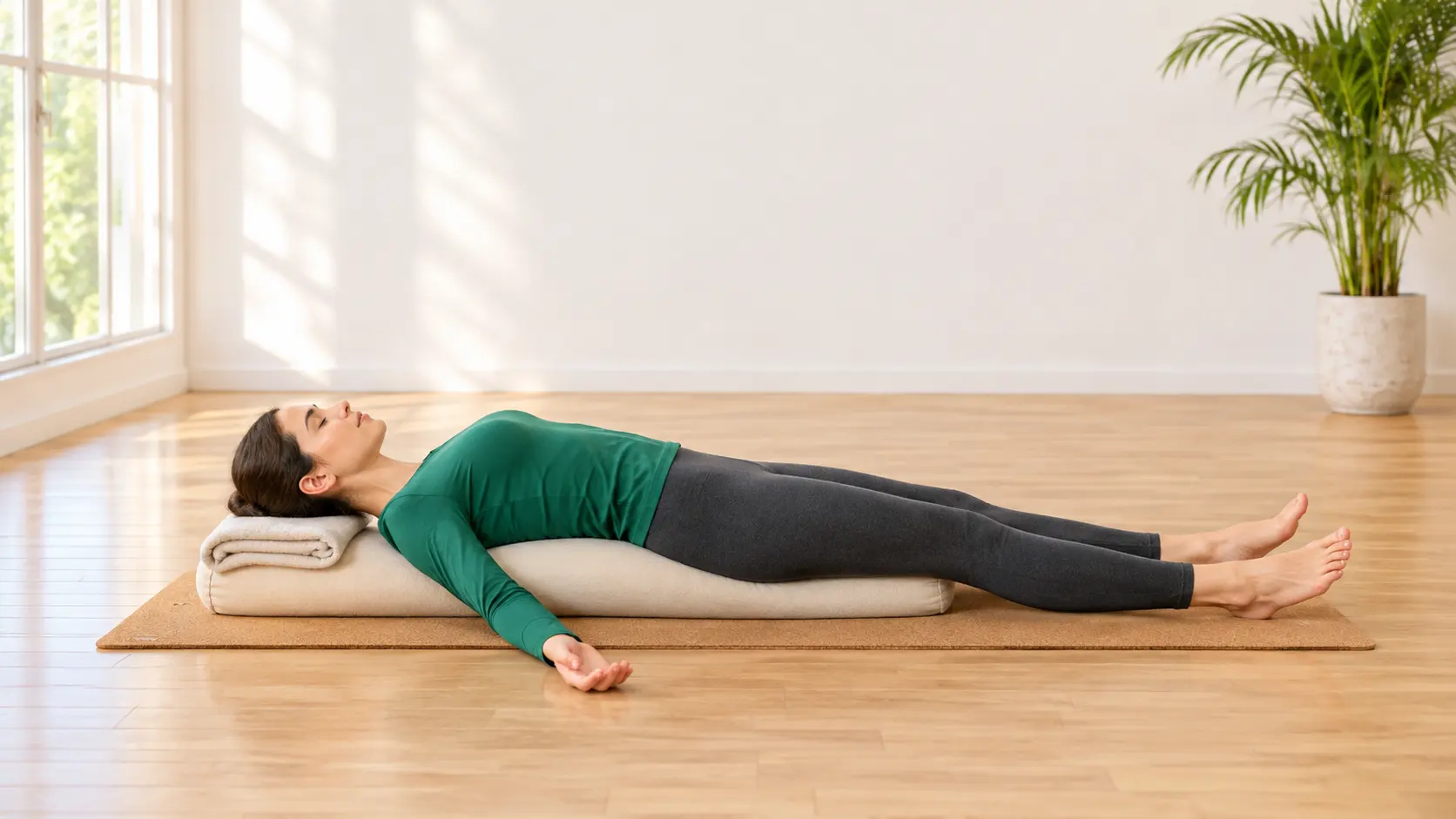
Benefits: a resting pose that keeps the chest open while the whole body relaxes. Many people find this is where the practice feels softest.
- Lay a bolster or a rolled blanket along the mat and sit just in front of it.
- Lie back so it supports your spine, with a folded blanket under your head.
- Let your arms rest out to the sides, palms up, and let your legs relax.
- Roll to your side and use your hands to come up.
- Hold: 2-3 minutes, longer if you have time.
- Easier option: bend your knees and rest your feet on the floor.
- Safety: later in pregnancy, raise the head end higher so you're not lying flat.
A 15-Minute Heart Chakra Yoga Routine
This heart chakra yoga sequence takes 15 minutes, counting both sides and the transitions. It moves from seated arm stretches to the belly, then to Camel, and ends lying on your back. One slow breath takes about 5-6 seconds, so 5 breaths is about half a minute. Breathe through your nose. You can keep the table open on your phone while you practice.
| Time | Pose | Hold | Beginner option |
|---|---|---|---|
| 0:00-2:00 | Warm-up: shoulder rolls and clasped-hands chest stretch | 2 min | Hold a strap behind you |
| 2:00-3:00 | Cow Face arms, right then left | 5 breaths per side | Strap between the hands |
| 3:00-4:00 | Eagle arms, right then left | 5 breaths per side | Hug your shoulders |
| 4:00-5:00 | Puppy | 5-8 breaths | Hands wider apart |
| 5:00-6:30 | Sphinx | 8-10 breaths | Elbows a little forward |
| 6:30-7:30 | Upward-Facing Dog, twice | 3-5 breaths each time | Low Cobra, thighs down |
| 7:30-9:30 | Camel, twice, Child's pose between | 3-5 breaths each time | Hands on the lower back |
| 9:30-11:30 | Supported Fish | 1-2 minutes | Blocks at their lowest height |
| 11:30-14:00 | Reclined heart opener on a bolster | 2-3 minutes | Knees bent, feet on the floor |
| 14:00-15:00 | Seated, both hands on the center of the chest | 1 minute | Sit on a cushion or chair |
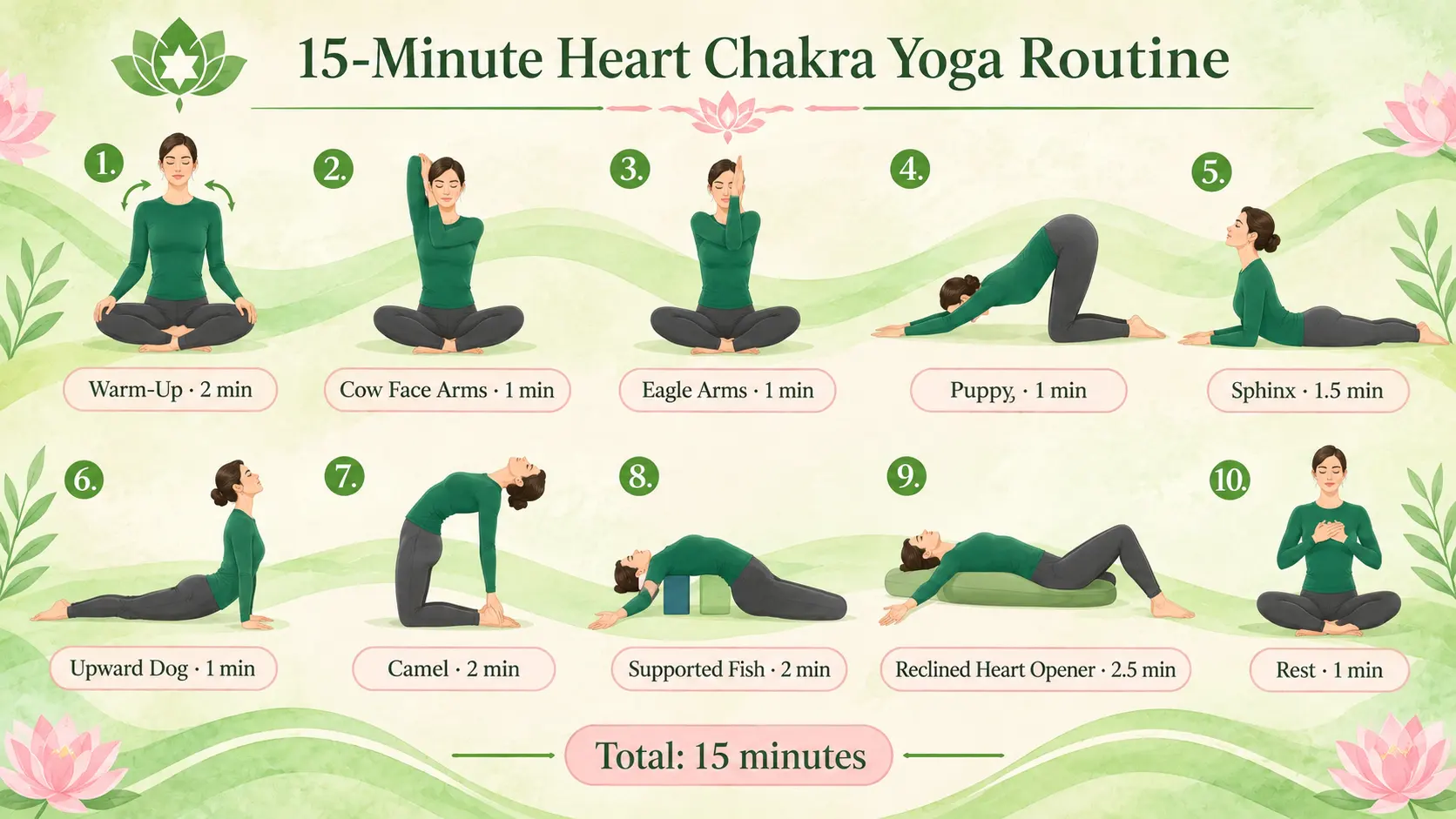
Three or four times a week is a good rhythm. Some people like to practice in the morning, others later in the day, when back bends often feel easier. Any time that suits you works, as long as you haven't just eaten. If 15 minutes is too long, shorten the holds or do Camel once.
5-Minute Heart Chakra Yoga for Beginners
If you're new to yoga or short on time, try this easy heart chakra yoga at home. You only need a mat and a cushion or rolled blanket.
- Puppy, 1 minute: walk your hands forward and let your chest sink, forehead on the mat.
- Sphinx, 1.5 minutes: rest on your forearms and let your chest lift.
- Reclined heart opener, 1.5 minutes: lie back over a rolled blanket along your spine, arms open.
- Rest, 1 minute: sit up, put both hands on the center of your chest, and breathe.
Try this short routine for a week or two. When it feels easy, add the arm stretches and Supported Fish, and then move on to the full 15-minute routine.
Heart Chakra Meditation Pose
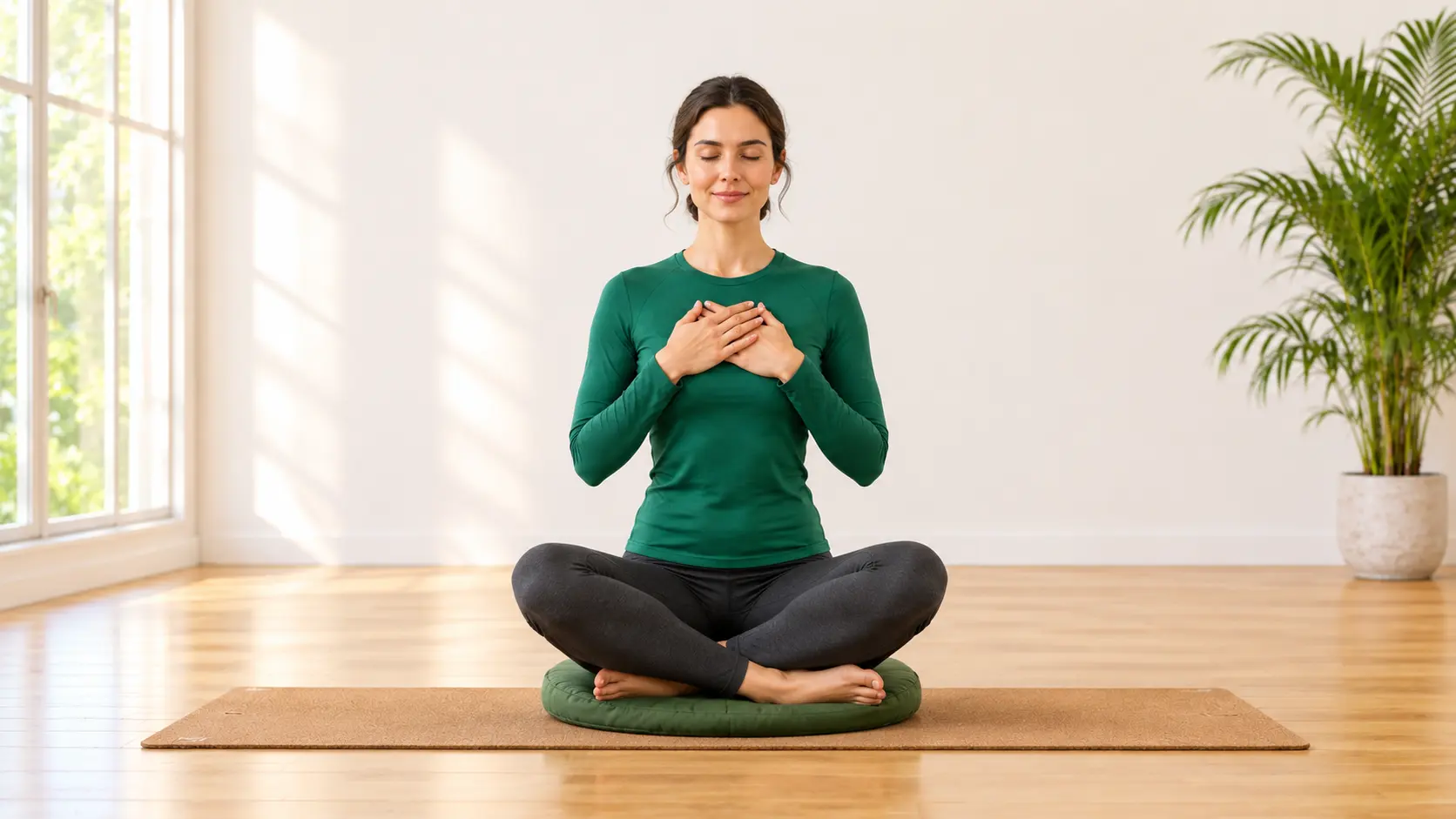
For meditation afterwards, sit cross-legged on a cushion or upright on a chair, with your shoulders relaxed and your chest gently lifted. The heart chakra meditation pose many teachers use is very simple: both hands resting on the center of the chest, one over the other. Breathe into your hands for three to five minutes. Many people picture a soft green light here, or think of someone they love.
The heart chakra meditation has a full guided script. Hand positions for meditation are covered on our page about chakra mudras.
How Yoga for Heart Chakra Healing Works
Chakra teachings link the heart with love, grief and compassion, and give it the element of air. They describe emotional hurt as showing up in a closed, guarded posture, and opening the chest and breathing more fully as a way to let those feelings move. The link with posture is easy to feel for yourself: stand hunched for a few breaths, then stand tall, and notice the difference.
Chakras can't be measured by science, so there are no studies on yoga for heart chakra healing as such. Yoga in general can help with stress and sleep, according to the National Center for Complementary and Integrative Health. Opening a tight chest also makes slow, deep breathing easier, which many people find calming.
Breathing in the Poses
Breathe into the front and sides of the ribs in every pose, letting the chest widen. If you catch yourself holding your breath in Camel or Upward Dog, come out a little. The page on heart chakra breathing has exercises to add after the routine.
Try the 5-minute beginner routine tomorrow: Puppy, Sphinx and the reclined heart opener. When that's easy, move on to the full 15-minute routine. These pages are good next steps:
- Heart chakra healing meditation - a guided script for after the poses
- Heart chakra breathwork - slow breaths into the chest
- Heart chakra healing - forgiveness, kindness and more
Sources
- B.K.S. Iyengar, Light on Yoga (1966): Ustrasana, Urdhva Mukha Svanasana, Gomukhasana, Garudasana, Matsyasana.
- National Center for Complementary and Integrative Health (NCCIH), "Yoga: Effectiveness and Safety".
Frequently Asked Questions About Heart Chakra Yoga
Which yoga pose is best for the heart chakra?
Camel (Ustrasana) is the pose named most often, because it opens the chest more than any other pose in this set. It's also one of the hardest, though. For most people a short sequence of gentler heart openers, such as Puppy, Sphinx and a reclined heart opener on a bolster, works better to start with. Pick the poses that feel comfortable for your back and shoulders.
How often should you practice heart chakra yoga?
Three or four times a week is plenty for most people, and the 5-minute beginner routine can be done every day. Short, regular sessions tend to help more than an occasional long one, because tight shoulders and a stiff upper back loosen gradually. Rest on days when your back or neck feels sore.
Can beginners do heart chakra yoga?
Yes. Most of the poses on this page are beginner-friendly, and the 5-minute routine with Puppy, Sphinx and a reclined heart opener is a good place to start. Use a strap, blocks and a bolster freely, and leave Camel and Upward Dog until the gentler poses feel easy. If you have a back, neck or shoulder problem, check with a doctor or physiotherapist first.
Why are heart-opening poses associated with the heart chakra?
The heart chakra is placed in the center of the chest, so poses that lift the breastbone and draw the shoulders back work on that area directly. Chakra teachings also link a rounded, closed posture with protecting the heart, and an open chest with openness to others. Physically, many people sit with their shoulders rounded for hours, which is another reason these poses feel good.
Is it normal to feel emotional during heart-opening yoga?
Some people feel emotional in back bends such as Camel, and others feel nothing of the kind; both are fine. There's no scientific evidence that the chest stores emotions, but deep breathing and opening a tight body can help you relax, and feelings sometimes come up when that happens. If it does, rest in Child's pose and breathe. If strong feelings keep coming back, talking to a therapist can help.
What is the best time of day for heart chakra yoga?
Any time that suits you works. Some people like the morning to open the chest before a day at a desk; others prefer later in the day, when the back is warmer and back bends often feel easier. Practice at least two hours after a main meal, since lying on your belly in Sphinx and Upward Dog isn't comfortable on a full stomach.
Is heart chakra yoga safe with high blood pressure?
Gentle poses such as the arm stretches, Puppy, Sphinx and the supported poses are usually fine, but come up slowly from every back bend. Leave out Camel if your blood pressure is very high or very low, or if back bends make you dizzy. Check with your doctor before starting a new practice, and see a doctor straight away about any chest pain or shortness of breath.