

8 Throat Chakra Yoga Poses to Open and Balance Vishuddha
Learn 8 throat chakra yoga poses (Vishuddha) for the neck, jaw and voice, with step-by-step cues, safe options and a 15-minute routine for home.
Table Of Contents
The best throat chakra yoga poses stretch and soften the neck, throat and shoulders: Lion's pose, Thread the Needle, Rabbit, Supported Bridge, Shoulder Stand, Plow, Fish and Legs Up the Wall, with the two inversions as options. Start with a two-minute neck release, then follow the 15-minute routine, which gives the time for every pose. Beginners can start with a 5-minute version and skip the inversions.
- Chakra: Vishuddha (throat), ether element
- Poses: 8 (2 optional inversions), plus a 2-minute neck warm-up
- Hold: 5 breaths in most poses, 3-5 in Rabbit, minutes in Legs Up the Wall
- Full routine: 15 minutes · beginner routine: 5 minutes
- When: any time of day, at least two hours after a meal
- Props: mat, two or three folded blankets, a block, a wall, a chair
- Level: beginner, with optional inversions
In yoga tradition these poses work on the throat chakra, which chakra teachings link with communication and self-expression. They're one part of throat chakra healing, together with humming, breath and practice in speaking up.
The 8 Best Throat Chakra Yoga Poses
Throat chakra yoga is known for Shoulder Stand and Plow, the classic poses for this area. They put weight on the neck, though, and aren't right for everyone. This page puts the gentler poses first and gives the two inversions as options, each with a safer replacement.
What these Vishuddha yoga poses share is that they stretch the front of the throat, release the back of the neck or open the shoulders. Chakra teachings link tension in these areas with holding back what you want to say. A few of the poses also use sound, which fits the chakra of the voice. Every pose has an easier option, and it's fine to hold a pose for fewer breaths while you build up.
The table gives all eight at a glance. Tap a pose name to jump to its instructions.
| Yoga pose | Difficulty* | Main focus | Hold |
|---|---|---|---|
| Lion's Pose | Beginner | Face, jaw and voice | 3-5 rounds |
| Thread the Needle | Beginner | Upper back and shoulders | 5-8 breaths per side |
| Rabbit | Intermediate | Back of the neck | 3-5 breaths |
| Supported Bridge | Beginner | Chin toward the chest | 8-10 breaths |
| Shoulder Stand (optional) | Advanced | Classic inversion | 5-10 breaths |
| Plow with a Chair (optional) | Advanced | Back of the neck and spine | 5 breaths |
| Fish | Intermediate | Front of the throat | 5 breaths |
| Legs Up the Wall | Beginner | Gentle inversion and rest | 3-4 minutes |
*A rough guide only; skip the optional inversions unless they're already part of your practice.
The heart chakra yoga poses page has a supported version of Fish on blocks; here it's the full pose, the classic counterpose to Shoulder Stand. Headstand is left out because it puts too much weight on the neck to learn safely at home.
If you only have time for a few poses, do the 5-minute beginner routine: a neck release, Lion's pose and Legs Up the Wall.
Before You Start: Safety and Modifications
Throat chakra poses put most of the load on the neck, so most of the cautions are about it. Read them before you begin.
- Neck problems: skip Shoulder Stand, Plow and Rabbit, and use a block under your head in Fish. Legs Up the Wall is the safe inversion.
- High blood pressure, glaucoma or eye problems: avoid Shoulder Stand and Plow, and ask your doctor about inversions.
- Period: many teachers suggest leaving out full inversions; Legs Up the Wall is usually fine.
- Pregnancy: avoid Shoulder Stand, Plow and lying flat on your back for long later in pregnancy. Check with your midwife or doctor first, as you may need changes that suit you.
- Thyroid conditions: yoga won't treat them. Keep taking your treatment and ask your doctor before doing inversions.
Never turn your head while your weight is on your shoulders. Stop any pose that causes neck pain, tingling in the arms or dizziness, and see a doctor if neck pain keeps coming back.
How to Do Each Throat Chakra Yoga Pose
Do the poses in the order given. You start kneeling for Lion's pose, come onto all fours for Thread the Needle and Rabbit, then lie on your back for the rest. The inversions come once the neck is warm, Fish follows them as a counterpose, and the routine ends with Legs Up the Wall. It's the same order as the 15-minute routine below.
Warm-Up: 2-Minute Neck Release
These throat chakra exercises loosen the neck and jaw before the poses. Sit tall on a cushion or a chair.
- Let your right ear drop towards your right shoulder and breathe there for three breaths, then switch sides.
- Drop your chin to your chest and roll your head slowly from one shoulder to the other, in a half circle, five times.
- Look gently up towards the ceiling, then back to center.
- Open your mouth wide, then close it, and move your jaw from side to side.
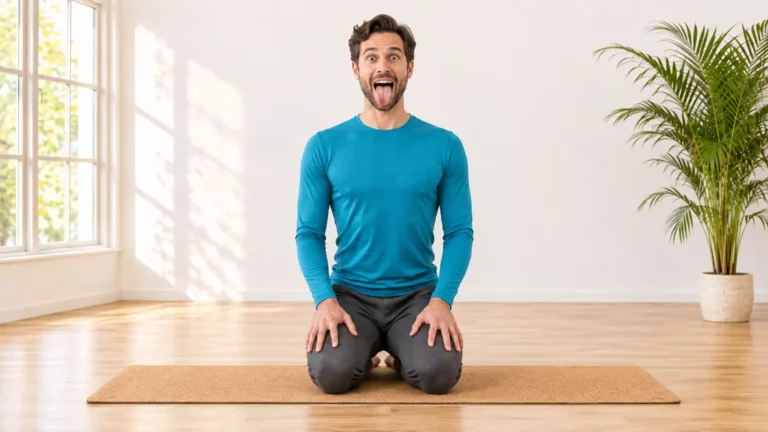
1. Lion's Pose (Simhasana)
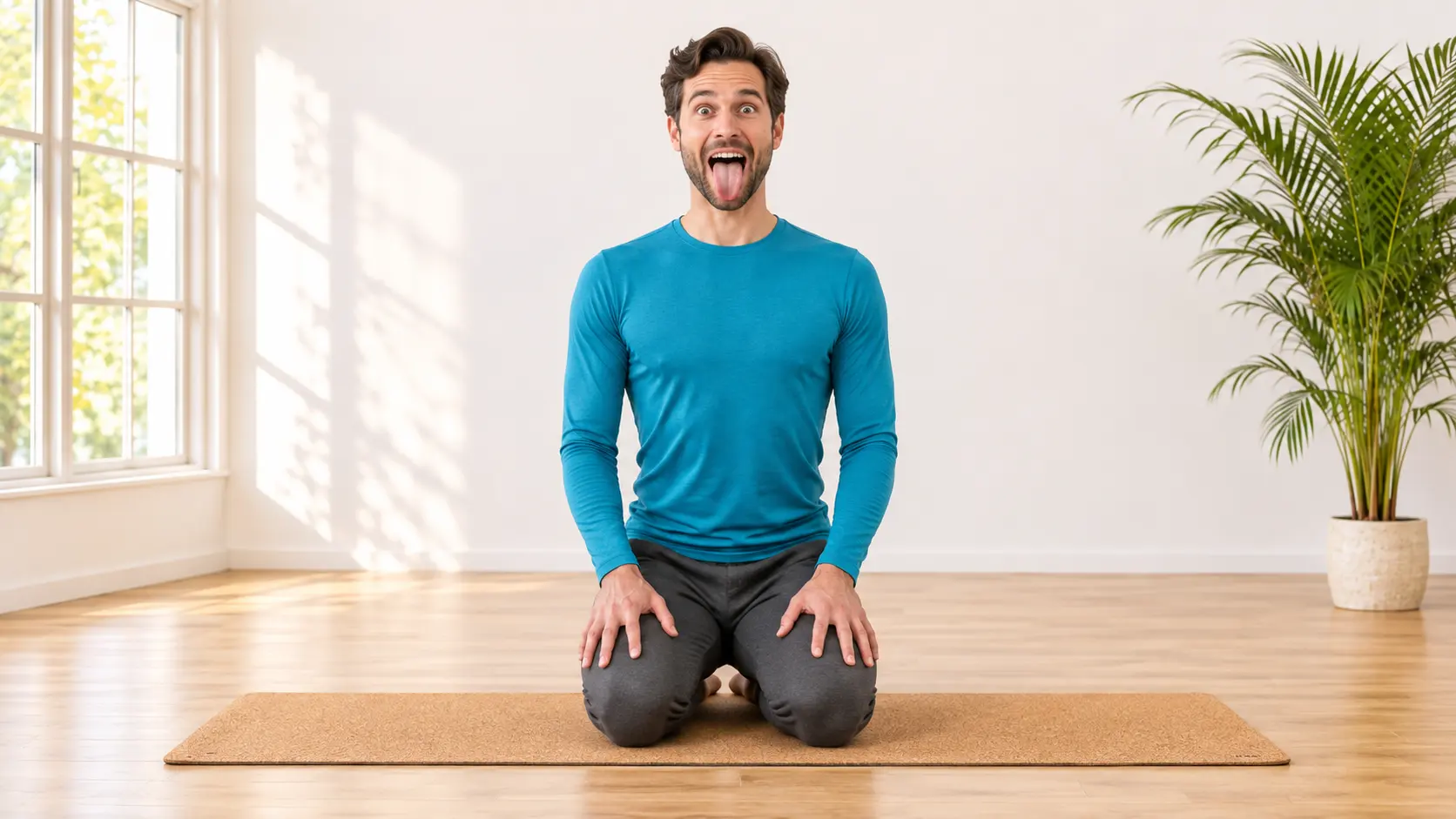
Benefits: releases the face, jaw and throat all at once and gets a sound out of you. It looks silly, and that's part of why it works.
- Kneel and sit back on your heels, with your hands on your knees and the fingers spread wide.
- Breathe in through your nose.
- Open your mouth wide, stick your tongue out and down towards your chin, and breathe out with a loud "haaa".
- Close your mouth and breathe normally for a moment, then repeat.
- Hold: 3-5 rounds.
- Easier option: sit on a chair if kneeling hurts your knees. It works just as well.
- Safety: keep the breath out strong but not forced, and stop if you feel light-headed.
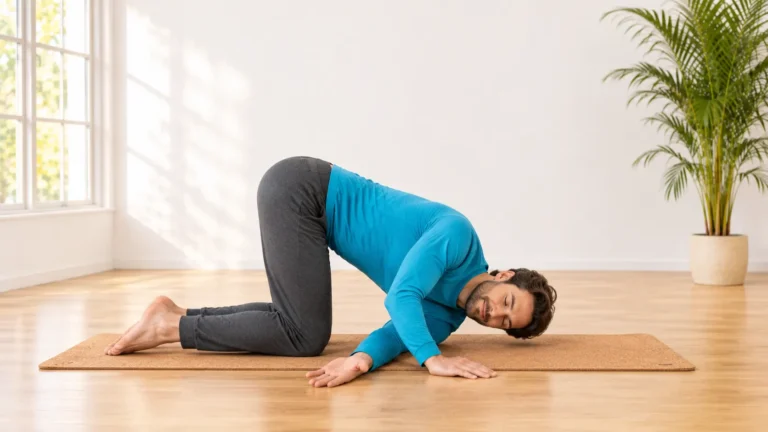
2. Thread the Needle (Parsva Balasana)

Benefits: opens the back of the shoulders and the upper back, around the back of the throat chakra area.
- Come onto your hands and knees.
- Slide your right arm under your left, palm up.
- Lower your right shoulder and the side of your head to the floor, keeping your hips over your knees.
- Come up and change sides.
- Hold: 5-8 breaths on each side.
- Easier option: put a folded blanket under your shoulder and head.
- Safety: keep most of your weight in your knees and the other hand, not on your head.
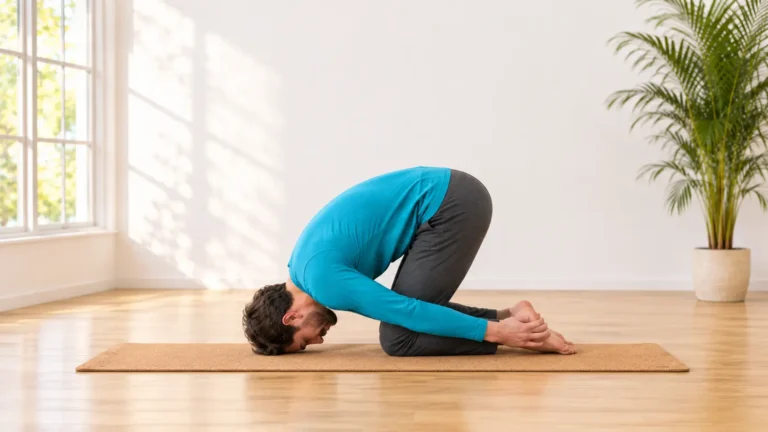
3. Rabbit Pose (Sasangasana)

Benefits: stretches the back of the neck, the opposite of Fish, so the two work well together.
- Kneel and sit on your heels, then fold forward and rest your forehead on the floor near your knees.
- Reach back and hold your heels.
- Lift your hips slowly and roll a little towards the crown of your head, with very little weight on it.
- Lower your hips and rest in Child's pose.
- Hold: 3-5 breaths.
- Easier option: stay in the first step, with your forehead down and your hips on your heels.
- Safety: keep almost all the weight in your hands and knees. Skip Rabbit if you have any neck problem.
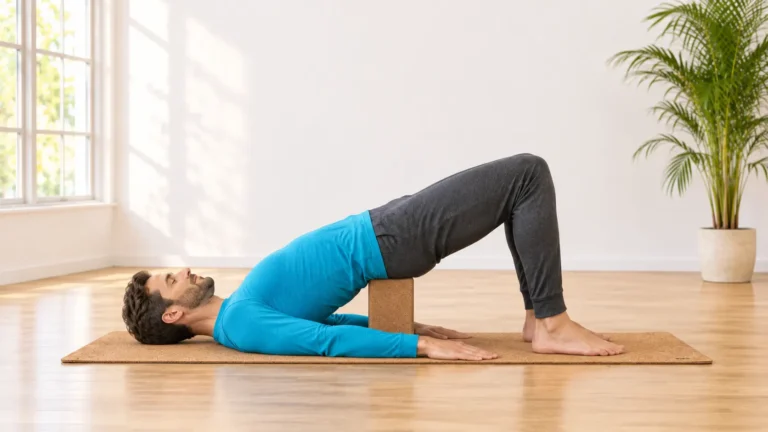
4. Supported Bridge (Setu Bandha Sarvangasana on a block)
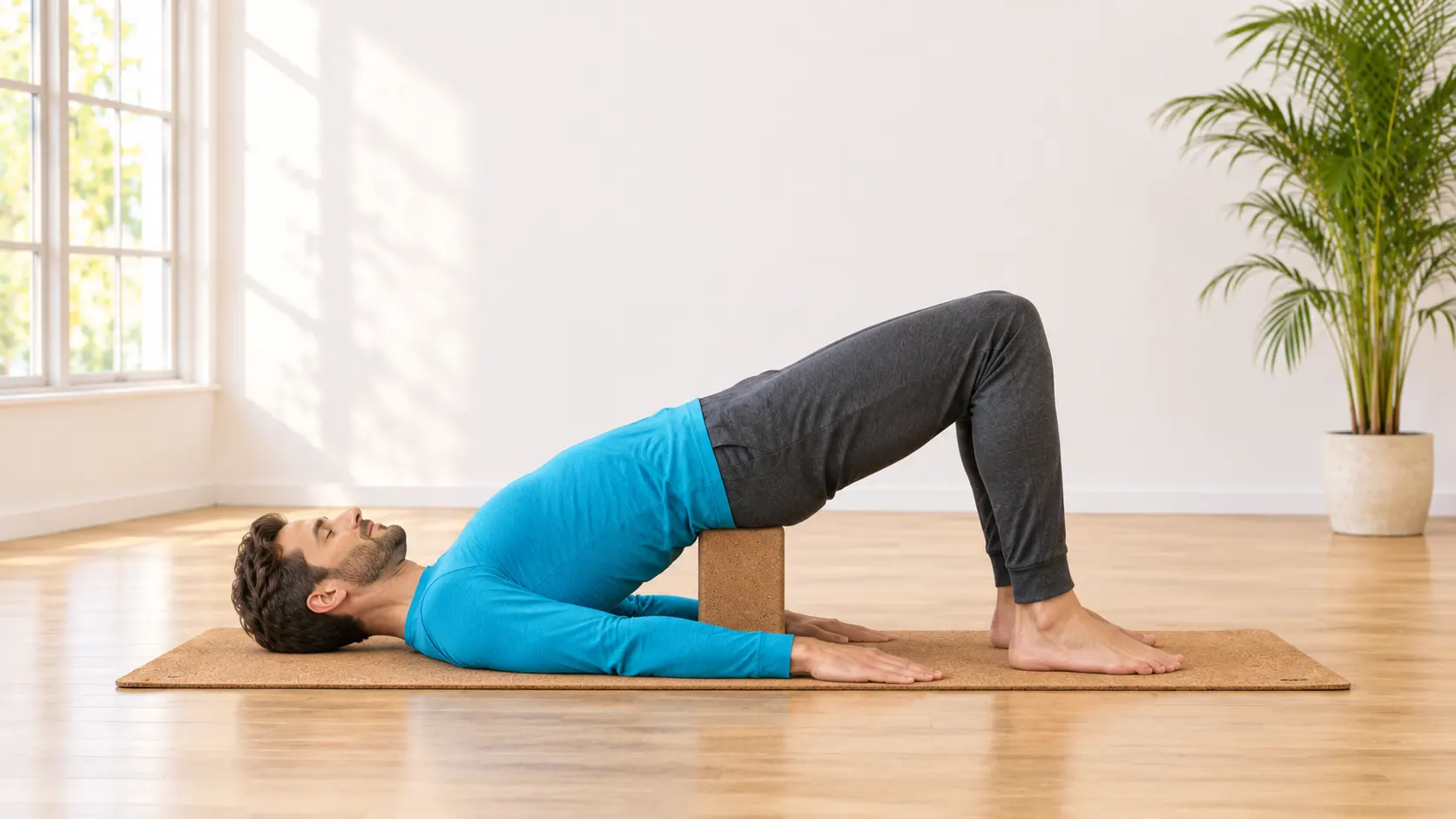
Benefits: a gentle, supported pose that brings the chin towards the chest, a soft version of the throat lock (jalandhara bandha). It also prepares the neck for the inversions.
- Lie on your back with your knees bent and your feet flat, hip-width apart.
- Press into your feet and lift your hips.
- Slide a block under your sacrum, the flat bone at the base of the spine, and rest your weight on it.
- Let your arms rest by your sides and keep your head still.
- Lift your hips, take the block away and lower slowly.
- Hold: 8-10 breaths.
- Easier option: use the block at its lowest height.
- Safety: don't turn your head while your hips are up.
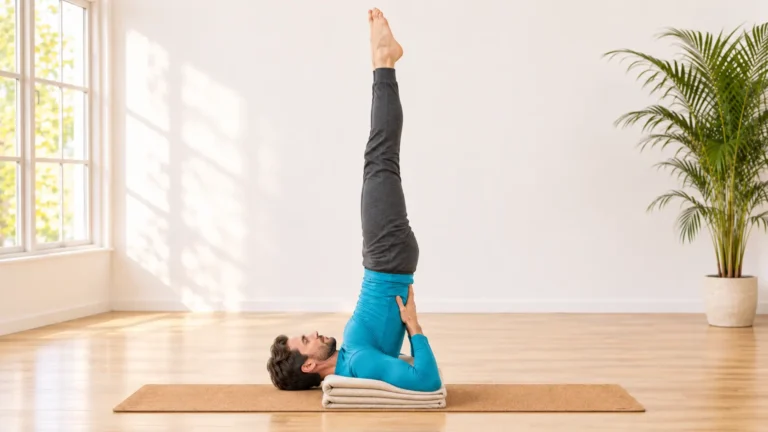
5. Supported Shoulder Stand (Salamba Sarvangasana), optional
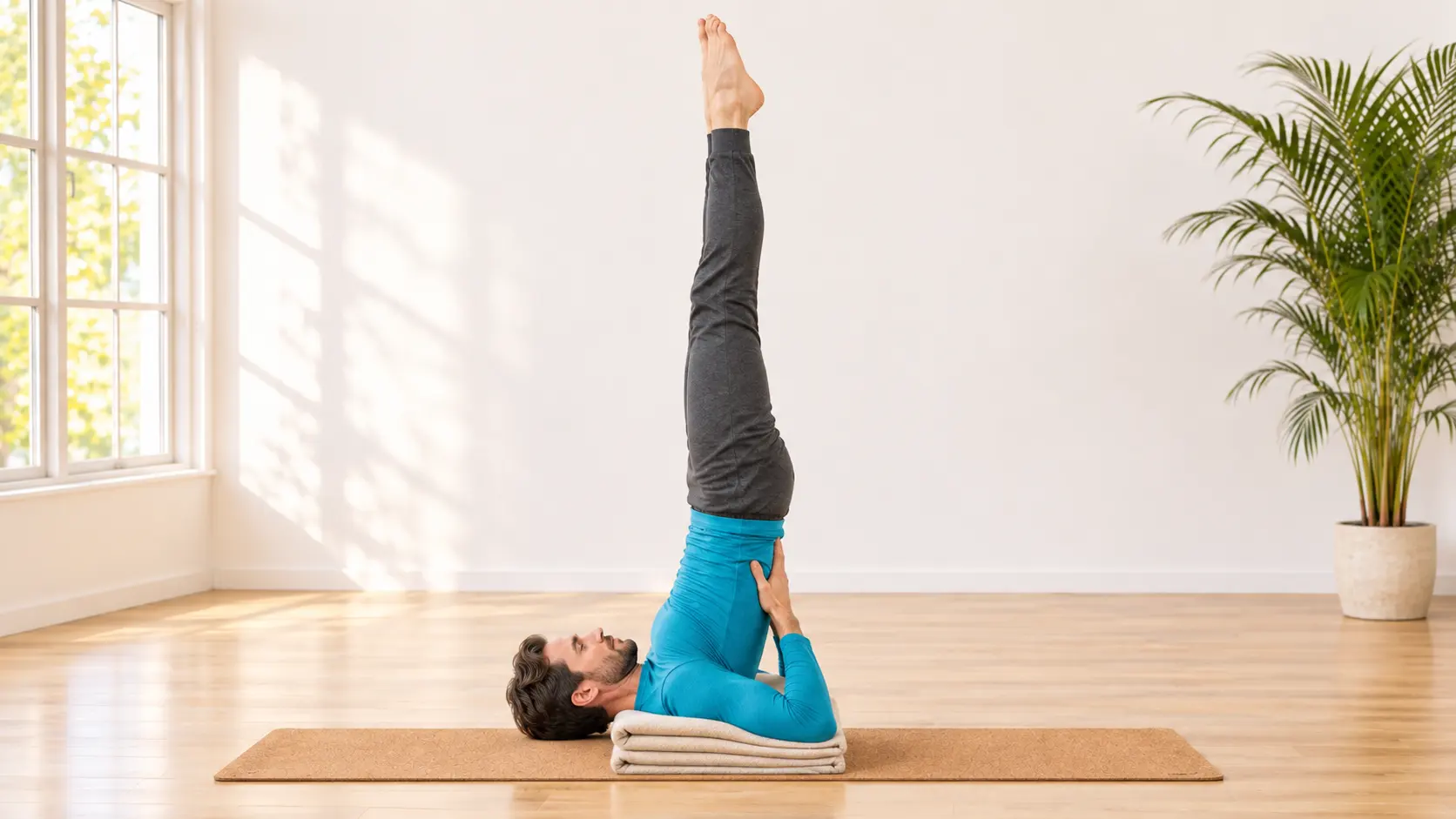
Benefits: the classic throat chakra pose. Many traditions call it the queen of yoga poses. Only do it if it's already part of your practice, or with a teacher.
- Stack two or three folded blankets, and lie with your shoulders on the blankets and your head on the floor.
- Bend your knees, then lift your hips and support your back with your hands.
- Straighten your legs up, keeping your weight on your shoulders and upper arms, never the neck.
- Lower slowly with your hands still on your back.
- Hold: 5-10 breaths.
- Easier option: Legs Up the Wall instead.
- Safety: never turn your head while you're in it. Skip it with neck problems, high blood pressure, glaucoma, during your period or in pregnancy.
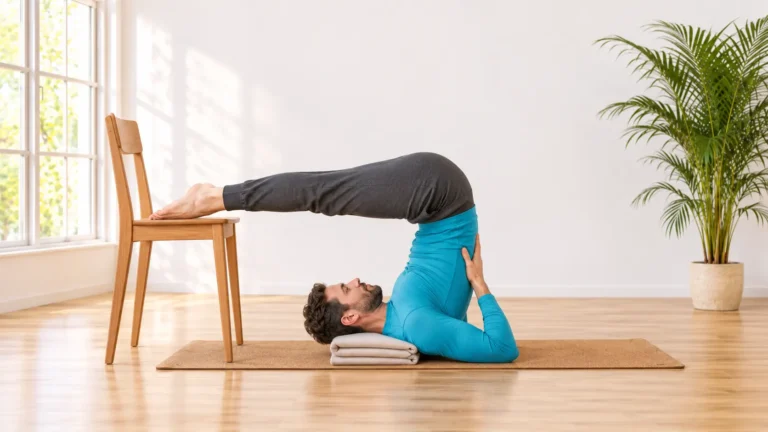
6. Plow Pose with a Chair (Halasana), optional
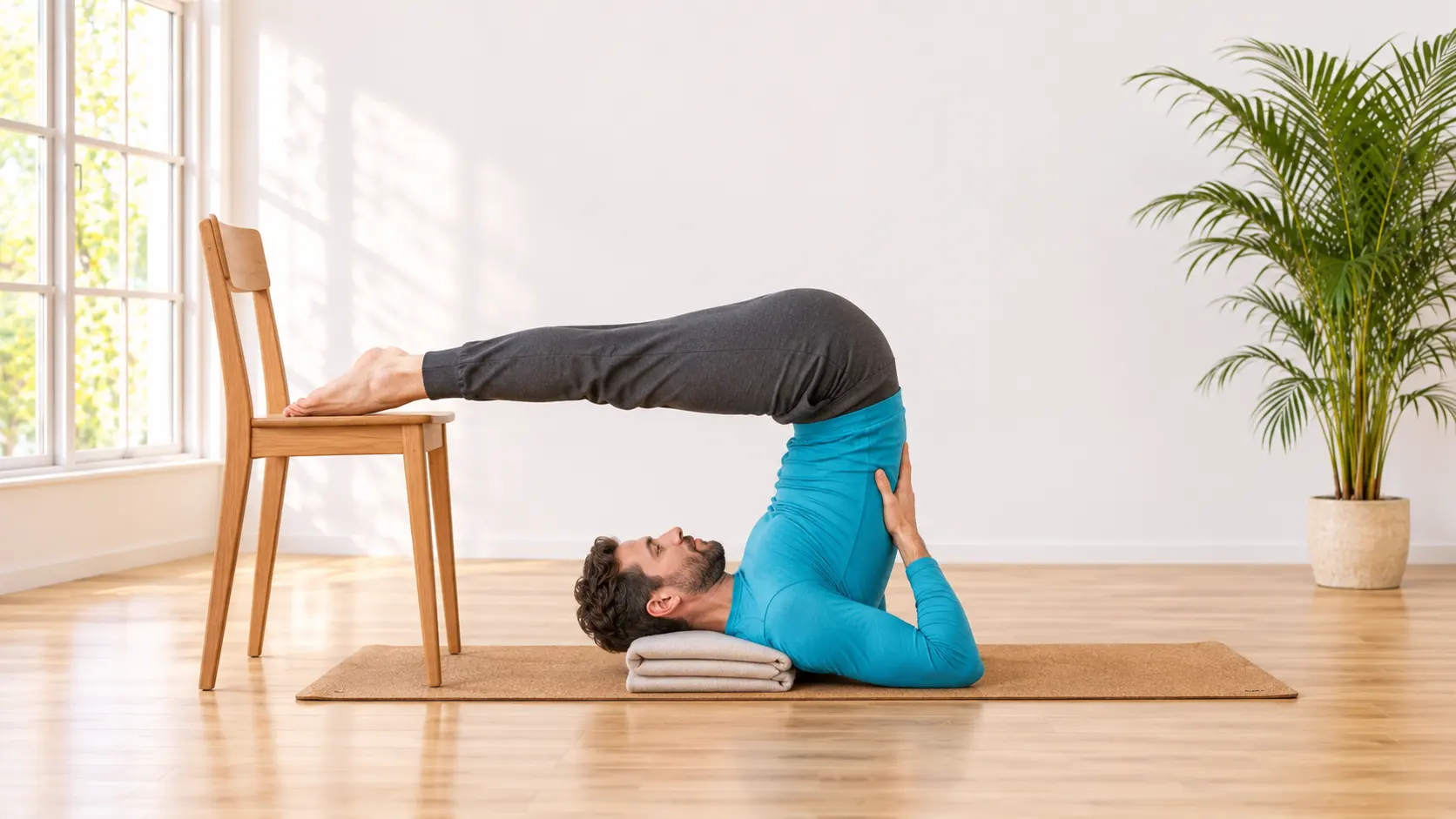
Benefits: stretches the back of the neck and the whole spine. It usually follows Shoulder Stand.
- From Shoulder Stand, lower your feet over your head to rest on the seat of a chair behind you, rather than all the way to the floor.
- Keep the blankets under your shoulders and your hands on your back.
- Bend your knees, take your hands to the floor and roll down slowly, one vertebra at a time.
- Hold: 5 breaths.
- Easier option: lie on your back and hug your knees to your chest instead.
- Safety: skip it if you have any neck or back problem, and for the same reasons as Shoulder Stand.
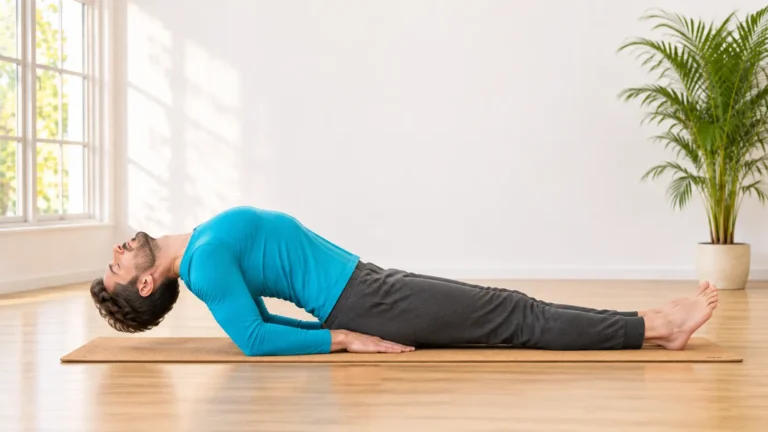
7. Fish Pose (Matsyasana)
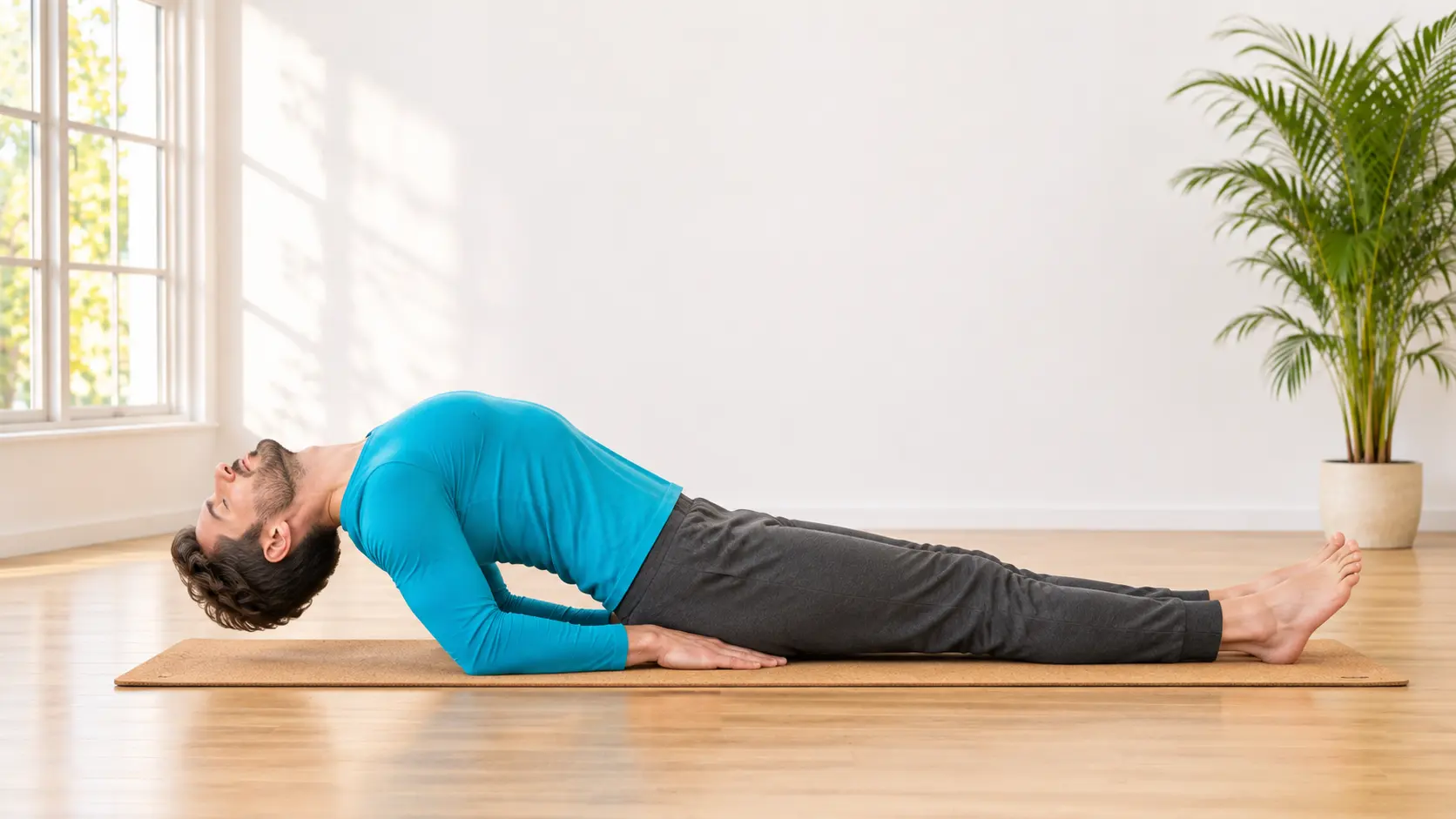
Benefits: stretches the whole front of the neck and opens the chest. It's the natural counterpose after Shoulder Stand and Plow.
- Lie on your back with your legs straight and slide your hands under your buttocks, palms down.
- Press into your forearms and lift your chest.
- Let the crown of your head rest lightly on the floor, keeping most of the weight in your arms.
- Come down slowly by lifting your head first, then lowering your back.
- Hold: 5 breaths.
- Easier option: lie back over two blocks, one under the shoulder blades and one under the head, as on the heart page.
- Safety: keep almost no weight on your head. Use the supported version if your neck is sensitive.
8. Legs Up the Wall (Viparita Karani)
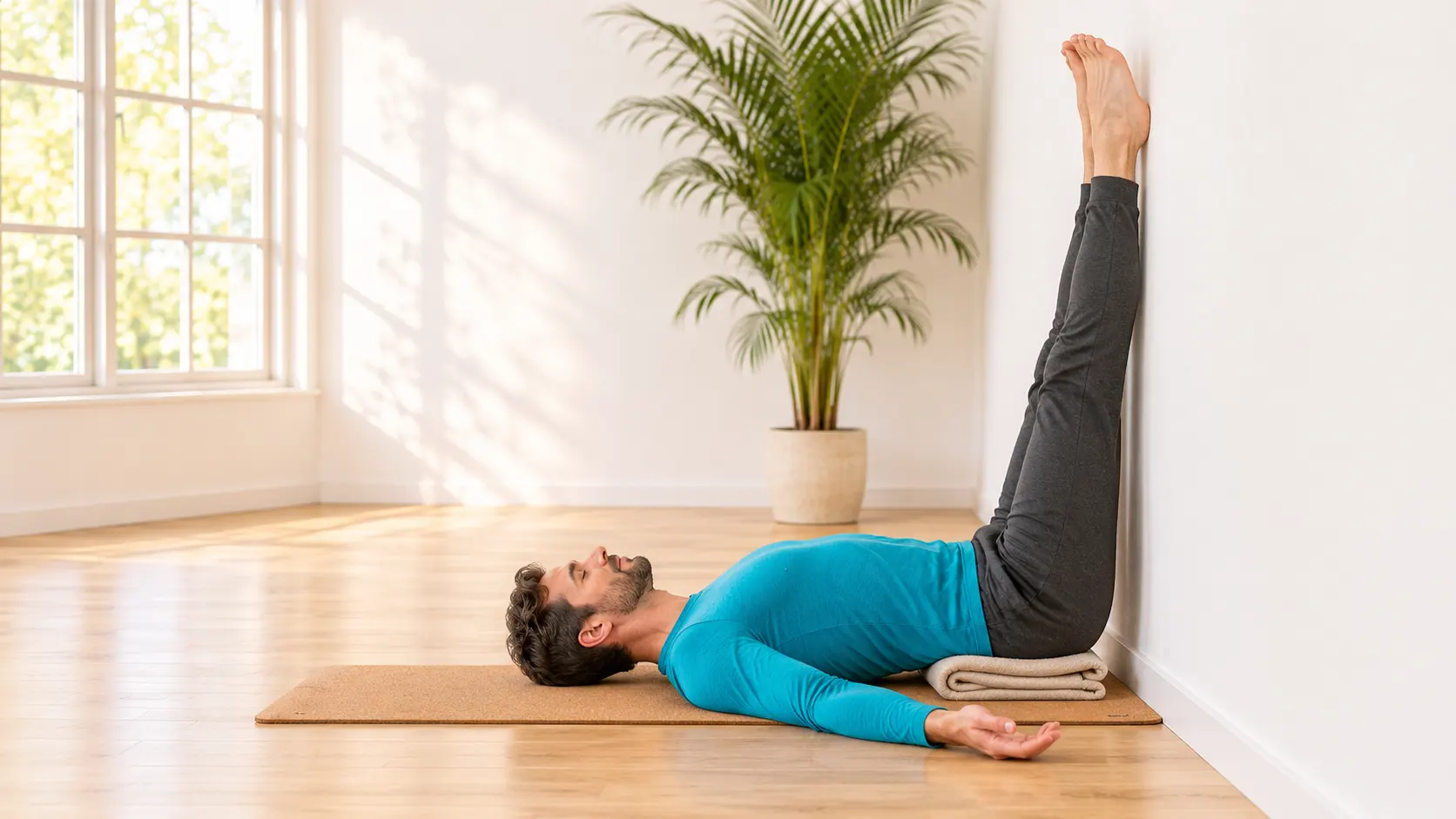
Benefits: a gentle inversion that suits nearly everyone and a good replacement for Shoulder Stand. Many people find it calming.
- Sit sideways against a wall.
- Swing your legs up as you lie back, so your buttocks are close to the wall and your legs rest on it.
- Rest your arms by your sides and let your neck relax.
- Bend your knees and roll to your side to come out.
- Hold: 3-4 minutes, longer if you have time.
- Easier option: move a little away from the wall, or put a folded blanket under your hips.
- Safety: later in pregnancy, rest on your side instead.
A 15-Minute Throat Chakra Yoga Routine
This throat chakra yoga sequence takes 15 minutes, counting both sides and the transitions. If you don't do inversions, stay in Legs Up the Wall for the Shoulder Stand and Plow minutes as well. One slow breath takes about 5-6 seconds, so 5 breaths is about half a minute. Breathe through your nose. You can keep the table open on your phone while you practice.
| Time | Pose | Hold | Beginner option |
|---|---|---|---|
| 0:00-2:00 | Warm-up: neck release and jaw circles | 2 min | Smaller movements |
| 2:00-3:00 | Lion's pose | 3-5 rounds | Sit on a chair |
| 3:00-4:30 | Thread the Needle, right then left | 5-8 breaths per side | Blanket under the shoulder |
| 4:30-5:30 | Rabbit, then Child's pose | 3-5 breaths | Forehead down, hips on the heels |
| 5:30-7:00 | Supported Bridge on a block | 8-10 breaths | Block at its lowest height |
| 7:00-8:30 | Shoulder Stand (optional) | 5-10 breaths | Legs Up the Wall |
| 8:30-9:30 | Plow with a chair (optional) | 5 breaths | Knees to the chest on your back |
| 9:30-10:30 | Fish | 5 breaths | Lie back over two blocks |
| 10:30-14:00 | Legs Up the Wall | 3-4 minutes | Blanket under the hips |
| 14:00-15:00 | Seated, chin slightly tucked, soft humming | 1 minute | Sit on a chair |

Three or four times a week is a good rhythm. Many people like these poses in the evening because most of them are calming, but any time that suits you works, as long as you haven't just eaten. If 15 minutes is too long, leave out the inversions and shorten the holds.
5-Minute Throat Chakra Yoga for Beginners
If you're new to yoga or short on time, try this easy throat chakra yoga at home. It has no inversions, and you only need a mat and a wall.
- Neck release, 1 minute: ear to shoulder on each side, then slow half circles with the head.
- Lion's pose, 1 minute: three rounds, sitting on your heels or on a chair.
- Legs Up the Wall, 2 minutes: buttocks close to the wall, arms by your sides.
- Humming, 1 minute: sit up and hum softly on each breath out.
Try this short routine for a week or two. When it feels easy, add Thread the Needle and Supported Bridge, and then move on to the full 15-minute routine.
Throat Chakra Meditation Pose
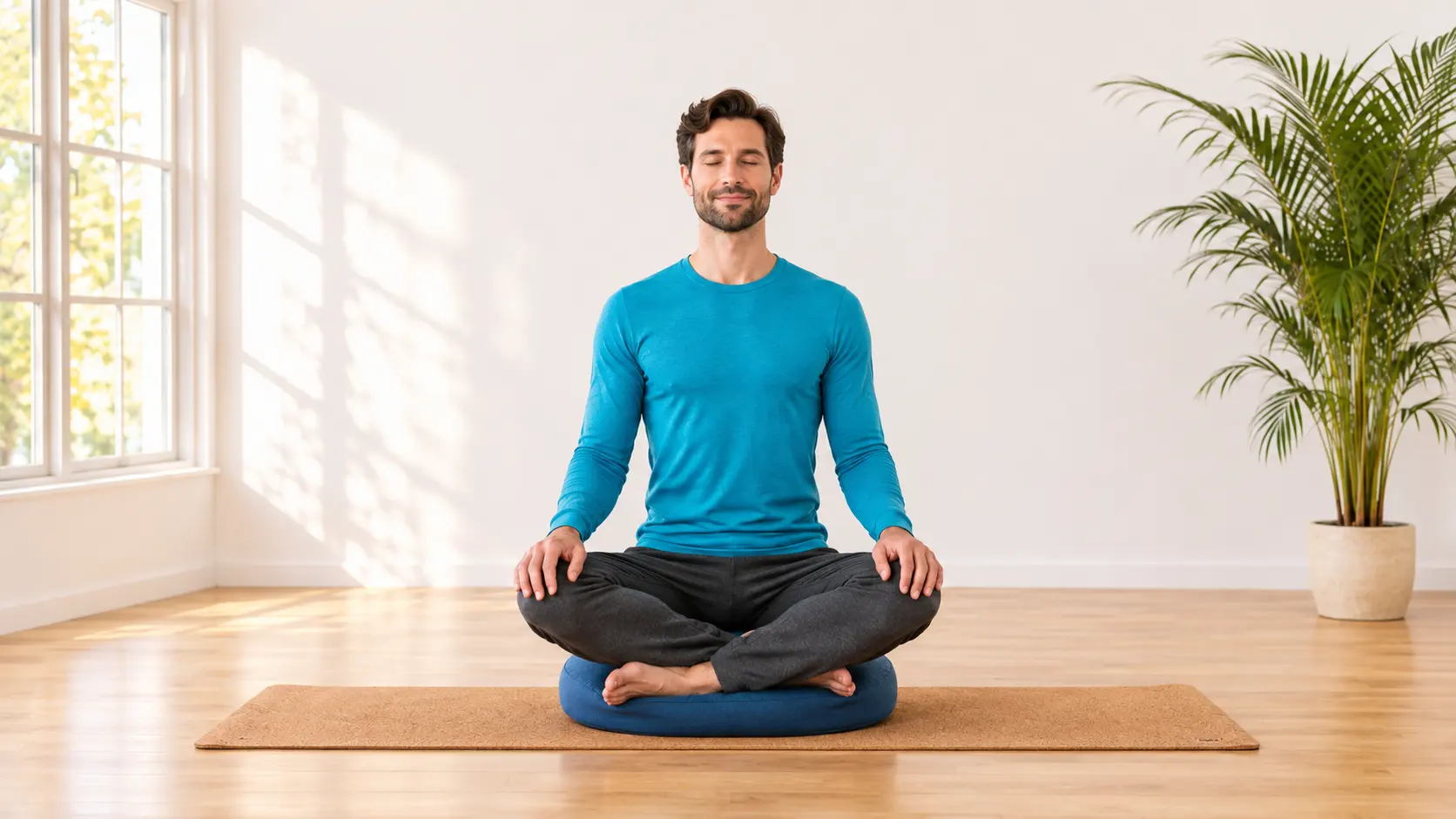
Sit cross-legged on a cushion or on a chair, with your chin very slightly tucked so the back of the neck is long. That small tuck is a gentle version of the throat lock, jalandhara bandha, which yoga texts link with the throat. Rest your hands on your knees and breathe slowly for three to five minutes. Many people picture a blue light at the throat here, or hum softly.
The throat chakra meditation has a guided script. Hand positions for meditation are on our page about chakra mudras.
How Yoga for Throat Chakra Healing Works
Chakra teachings describe the throat as the place where thought becomes sound and words. They say holding back what you want to say tightens the throat, jaw and shoulders, and that releasing those areas, especially with sound, helps the voice come back. Many people notice how much they clench their jaw only once they start doing Lion's pose.
Chakras can't be measured by science, so there are no studies on yoga for throat chakra healing as such. Yoga in general can help with stress and sleep, according to the National Center for Complementary and Integrative Health. Relaxing the neck and shoulders also tends to make breathing and speaking feel easier.
Breathing in the Poses
Breathe through your nose and keep the breath slow and steady. Some people like Ujjayi breath here: the back of the throat is slightly narrowed, so the breath makes a soft ocean sound. If you find yourself holding your breath in an inversion, come down. The page on throat chakra breathing explains Ujjayi step by step, along with Lion's breath and humming bee breath.
Try the 5-minute beginner routine this evening: a neck release, Lion's pose, Legs Up the Wall and a minute of humming. When that's easy, move on to the full 15-minute routine. These pages are good next steps:
- Throat chakra healing meditation - a guided script for after the poses
- Throat chakra breathwork - Ujjayi and humming bee breath
- How to open throat chakra energy - voice, writing and more
Sources
- B.K.S. Iyengar, Light on Yoga (1966): Simhasana, Matsyasana, Salamba Sarvangasana, Halasana, Setu Bandha Sarvangasana, Jalandhara Bandha.
- National Center for Complementary and Integrative Health (NCCIH), "Yoga: Effectiveness and Safety".
Frequently Asked Questions About Throat Chakra Yoga
Which yoga pose is best for the throat chakra?
Shoulder Stand (Salamba Sarvangasana) is the pose named most often, but it puts weight on the neck and isn't right for everyone. Fish and Legs Up the Wall are gentler choices that most people can do safely, and Lion's pose works on the jaw and voice directly. A short sequence of a few gentle poses usually works better than forcing one difficult pose.
How often should you practice throat chakra yoga?
Three or four times a week is plenty for most people, and the 5-minute beginner routine can be done every day. Short, regular sessions tend to help more than an occasional long one, because a tight neck and jaw loosen gradually. Rest on days when your neck feels sore.
Can beginners do throat chakra yoga?
Yes. Most of the poses on this page are beginner-friendly, and the 5-minute routine with a neck release, Lion's pose and Legs Up the Wall has no inversions at all. Leave Shoulder Stand, Plow and Rabbit until you have more experience, or learn them with a teacher. If you have a neck problem, check with a doctor or physiotherapist first.
Why are neck and shoulder poses associated with the throat chakra?
The throat chakra is placed at the throat, so poses that stretch the front of the neck, release the back of the neck and open the shoulders work on that area directly. Chakra teachings also link tension in the throat, jaw and shoulders with holding back what you want to say. Physically, many people carry tension in the neck and jaw from stress or long hours at a screen.
Is Shoulder Stand safe?
For experienced students with a healthy neck, Shoulder Stand on folded blankets is usually safe, as long as the weight stays on the shoulders and upper arms, never the neck. Skip it if you have neck problems, high blood pressure, glaucoma or other eye problems, during your period or in pregnancy. Legs Up the Wall gives many of the same calming effects without the weight on the neck.
What is the best time of day for throat chakra yoga?
Any time that suits you works. Many people like the evening, because most of these poses are calming; others like Lion's pose and the neck release in the morning before a day of talking. Practice at least two hours after a main meal, since inversions aren't comfortable on a full stomach.
Can throat chakra yoga help with thyroid problems?
No yoga pose can treat a thyroid condition, and claims that Shoulder Stand balances the thyroid aren't backed by good evidence. Yoga in general may help with stress, which is useful for many health conditions. Keep taking any treatment your doctor has prescribed, and ask them before doing inversions.