

How Meditation Can Help Students Develop Discipline and Consistency
Discover how meditation helps students build discipline, improve focus, and stay consistent — with practical tips on starting a simple daily routine that actually works.
Table Of Contents
Student life often feels unbalanced. One day can include lectures, deadlines, messages, group work, and personal stress. In that kind of rhythm, discipline may seem difficult to maintain. Many students do not struggle because they lack goals. They struggle because their attention keeps getting pulled away.
Meditation can help with that problem in a practical way. It teaches students to pause, notice distraction, and return to the present moment. That repeated return supports self-control, emotional balance, and stronger routines. Over time, those small moments of awareness can improve discipline and consistency.
This matters because academic success is rarely built on effort alone. It depends on habits, focus, recovery, and follow-through. A student who learns how to manage attention often becomes more reliable in other areas too.
Mindful Focus
One of the biggest challenges in education is mental noise. Students may sit down to study, but their minds move toward social media, stress, or unrelated tasks. Even when the body is at the desk, attention may be somewhere else.
Meditation trains focus in a simple but powerful way. During practice, the mind naturally wanders. The important part is noticing that drift and coming back to the breath, sound, or body. Each return acts like a mental repetition. It strengthens attention little by little.

This skill carries into academic work. Students who meditate regularly often notice distraction sooner. That makes it easier to return to reading, note-taking, or problem-solving before a study session turns into wasted time. Focus becomes less fragile and more trainable.
Mindful attention also improves learning quality. It helps students stay present during lectures, absorb information more clearly, and work with less inner chaos. Instead of fighting every distraction, they become better at redirecting the mind.
Developing Habits
Discipline is often described as strong willpower, but daily habits usually matter more. Students who create simple routines tend to be more consistent than those who rely only on motivation. Meditation supports this process because it is based on repetition, not excitement.
A short daily practice teaches an important lesson. You do not need perfect energy to begin. You only need to show up and do a small action on purpose. That mindset can shape the rest of the day.
When meditation becomes part of a routine, other habits can become easier to protect. A student may start preparing for class at the same hour, reviewing notes more regularly, or handling assignments with less delay. The brain begins to expect structure.
That is why meditation connects so well with discipline. It is not dramatic, expensive, or complicated. It simply rewards repetition. Students who repeat useful actions often become more consistent without feeling as if they are forcing every step.
When You’re Stuck – Overcoming Obstacles
Every student gets stuck at some point. A hard assignment, a low grade, or emotional exhaustion can interrupt even the best plan. When that happens, many people react with avoidance. They delay the task, feel guilty, and lose even more momentum.
Meditation can help break that cycle. It creates a small pause between stress and reaction. In that pause, students can notice what they feel instead of being controlled by it. That may sound minor, but it often changes the next choice.
For example, a student may think, “I am too overwhelmed to start.” After a few minutes of mindful breathing, that thought can shift into something more manageable. It may become, “I feel stressed, but I can begin with one paragraph.” That change makes action more likely.

Mindfulness also reduces all-or-nothing thinking. One bad afternoon does not need to ruin an entire week. Students who learn to reset their attention often recover faster from setbacks and return to their routines with less self-criticism.
In moments of academic pressure, students often experience thoughts of escape and relief. In such moments thoughts arise, “It would be great if someone could do my assignments for me so I could focus more on understanding the material and feel less overwhelmed”. These reactions usually appear when workload seems unmanageable. However, it is important to remember that seeking additional support can be a helpful part of managing stress and staying on track with learning.
What This Looks Like in Real Life
Imagine a student who always plans to study in the evening. The desk is ready, the books are open, and the schedule looks reasonable. Still, the pattern repeats itself. One notification leads to several minutes of scrolling. Stress about unfinished work makes concentration even harder.
That student decides to try a short meditation before studying. The session lasts only five minutes. Nothing dramatic happens at first. The mind still wanders, and the evening still feels busy. However, one small difference appears. The student notices distraction earlier.
After a week or two, the change becomes clearer. Starting no longer feels as heavy as before. There is less mental clutter before the first task. The study block is not perfect, but it becomes more stable. Instead of losing the whole evening, the student gets through the first steps.
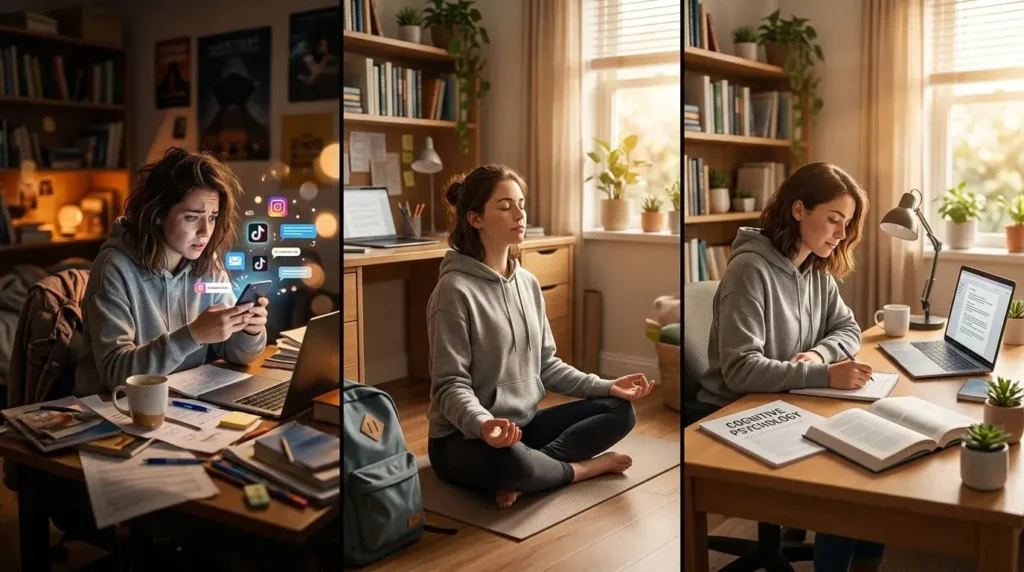
This kind of progress is realistic. Meditation does not turn someone into a different person overnight. It helps ordinary students become a little steadier, a little calmer, and a little more able to follow through. That is often enough to create lasting improvement.
Following Through
Many students know how to plan. They write goals, create lists, and promise themselves a better routine. The harder part is following through when mood, stress, or fatigue changes. Meditation helps because it builds awareness in exactly those moments.
The difference becomes easier to understand when daily patterns are compared directly. A mindful student still faces the same tasks, but reacts to them with more clarity and less internal chaos.
| Situation | Common Reaction Without Meditation | Common Reaction With Regular Meditation |
|---|---|---|
| Starting homework | Delay, avoidance, overthinking | Quicker start and less resistance |
| Making mistakes | Frustration and harsh self-talk | Calmer reflection and adjustment |
| Keeping routines | Inconsistency based on mood | Steadier repetition |
| Managing busy weeks | Panic and scattered effort | Clearer pacing and better priorities |
This table does not suggest that meditation removes every problem. It shows why the practice supports consistency. Students begin to respond instead of react. That shift helps them complete what they planned, even on imperfect days.
Meditation and Relaxation
Relaxation is one of the most visible benefits of meditation. For students, that matters more than it may first appear. A tense mind gets tired faster, loses patience quickly, and struggles to stay with difficult work. A calmer mind usually works more clearly.
Meditation helps reduce mental overload. Breathing exercises, body scans, and quiet reflection can lower stress and make the nervous system less reactive. As a result, students may feel more balanced during revision, presentations, or exam preparation.
Relaxation also supports emotional regulation. A calmer student is less likely to give up after one confusing chapter or one bad practice result. That steadiness makes it easier to continue, and continuation is the heart of consistency.
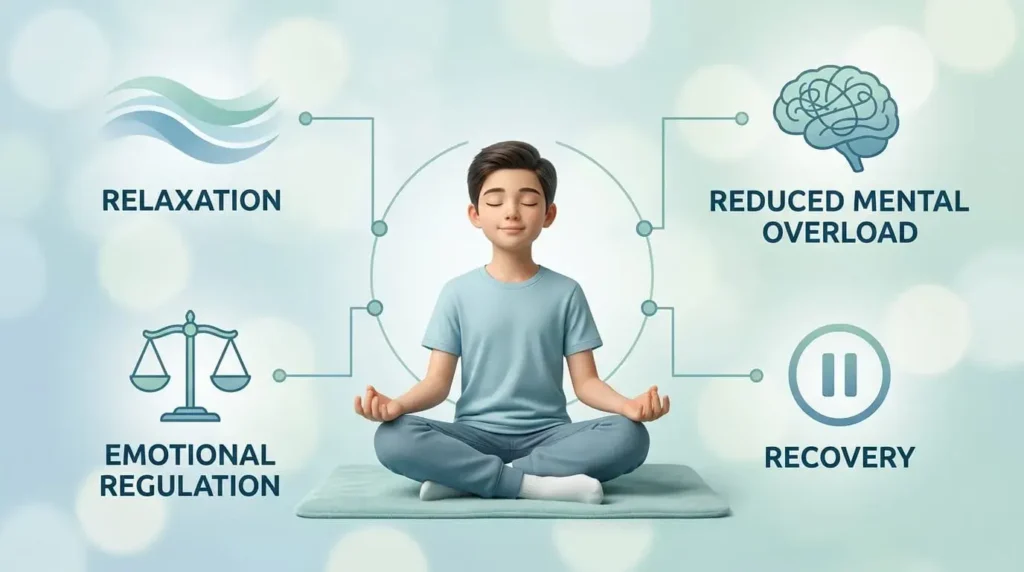
There is also a recovery benefit. Students need rest as much as effort. Meditation can create a healthy pause during a demanding day and prevent pressure from building nonstop. That balance supports long-term discipline far better than constant strain.
How to Start a Simple Meditation Routine
Students often assume they need long sessions or perfect silence to meditate well. In reality, a short and realistic routine is usually the best place to begin. The goal is not to empty the mind. The goal is to practice returning attention.
A simple starting process can make the habit feel manageable. It works best when students keep it small and repeat it daily.
- Choose one time of day for practice.
- Sit comfortably in a quiet place.
- Set a timer for three to five minutes.
- Focus on your breathing or body sensations.
- Notice distraction without judging yourself.
- Bring your attention back and continue calmly.
This method is useful because it removes pressure. Students do not need ideal conditions or perfect concentration. They only need a routine that is easy to repeat. Once repetition becomes normal, the habit starts to support focus and discipline in a natural way.
Healthy Sleep Patterns
Sleep has a direct effect on discipline. A tired student may look unmotivated, but the real issue is often exhaustion. Poor sleep weakens focus, increases irritability, and makes self-control harder. Meditation can support better rest by quieting the mind before bed.
A few simple evening habits can make this connection stronger. They do not need to be extreme to be effective.
- Keep screens away for the last few minutes before sleep.
- Use slow breathing instead of late-night scrolling.
- Lower noise and bright light in the room.
- Treat bedtime as part of your study routine, not as an afterthought.
These habits help because discipline is easier when the body is rested. Better sleep improves concentration, mood, memory, and daily structure. When students protect rest, they make consistency more realistic.
Establishing Discipline and Consistency
Meditation helps students build discipline because it trains a valuable inner skill. It teaches them how to notice distraction, manage stress, and return to the task that matters. That process seems simple, yet it can influence study habits, sleep, time management, and emotional balance.
Consistency grows through repetition. Students do not need perfect days to become more disciplined. They need reliable actions they can return to, even after stress or setbacks. Meditation supports that return and makes routines feel more stable over time.
For students who want better focus, stronger habits, and healthier academic rhythm, meditation offers a practical path. It is flexible, accessible, and easy to adapt to student life. Most importantly, it helps build the kind of mindset that keeps going, even when motivation fades.
Frequently Asked Questions About Meditation and Student Discipline
How long does it take for meditation to improve focus and discipline?
There is no single answer, but most students notice small shifts within one to two weeks of consistent daily practice. The changes tend to be subtle at first – you catch yourself getting distracted sooner, or starting a task feels a little less heavy than it used to. Bigger changes in routine and consistency usually build over a month or more. The key word is consistent. A three-minute session every day does more than a thirty-minute session once a week.
Do I need to meditate for a long time to get real benefits?
No. Three to five minutes a day is a completely legitimate starting point, and for most students it is actually the smarter choice. Short sessions are easier to repeat, and repetition is what builds the habit. The goal is not to sit for an hour – it is to train your attention to return to what matters. That skill develops through regular practice, not long practice.
What is the best time of day to meditate as a student?
The best time is the one you can actually stick to. That said, morning tends to work well because it sets a calmer tone before the day fills up. Meditating right before a study session is another practical option – it clears mental clutter and makes it easier to get started. Evening practice can also help wind down before sleep, which has its own benefits for discipline and focus the next day.
Can meditation help when I feel too overwhelmed to study?
Yes, and this is one of the more practical uses. When overwhelm hits, it usually feels like a wall. Meditation creates a small pause between that feeling and your next action. Even a few minutes of focused breathing can shift the internal state enough to make starting feel possible. The goal is not to feel calm – it is to create enough space to take one small step. That is often all it takes to break the avoidance cycle.
Does meditation actually help with sleep, and why does that matter for students?
It can, particularly when practiced in the evening. Meditation quiets mental activity that tends to keep students awake – the replaying of the day, anxiety about tomorrow, the general noise that builds up. Better sleep matters for discipline because a tired brain has much less capacity for focus, self-control, and follow-through. Protecting sleep is one of the highest-leverage things a student can do, and meditation is a practical tool for getting there.
I tried meditating but my mind kept wandering. Am I doing it wrong?
No – that is exactly what meditation is supposed to look like. The mind wandering is not the problem. Noticing that it wandered and bringing it back is the whole practice. Each time you catch the drift and return, you are doing a mental repetition. That is what builds the focus and awareness that eventually carries over into studying, habits, and consistency. A session full of wandering and returning is a session that worked.
Can meditation replace other study strategies or productivity tools?
It is not a replacement – it is a foundation. Meditation does not organize your schedule, break tasks into steps, or tell you what to prioritize. What it does is make you steadier and more present when you sit down to use those other tools. Students who meditate regularly tend to get more out of their planning and study systems because they are less reactive, less scattered, and more able to follow through. Think of it as the thing that makes everything else work better.
Blog Categories:
About the Author: