
Crystals for Calm, Clarity, and Emotional Protection: A Practical Guide
Amethyst calms emotional overload, fluorite clears mental fog. A practical guide to using both crystals together for daily calm, clarity, and steadiness.
Table Of Contents
Most people don’t reach for a crystal because it looks pretty on a shelf. They reach for one because the day got heavy. The mind got loud. Something inside needs to settle, and they want a tool that helps without asking too much of them.
That’s the honest reason crystals stay popular. Not aesthetics – utility.
Quick answer: Amethyst supports calm and emotional balance. Fluorite supports clarity and focus. Used together, they work like a pair – one softens what’s overwhelming, the other organizes what’s left. Crystals don’t replace medical or psychological care, but they can sit alongside it as part of a daily practice.
Why People Turn to Crystals in the First Place
Stress rarely arrives clean. It usually shows up as a tangled mix – too many thoughts, lingering emotion from yesterday, a body that won’t quite relax. You can feel scattered without being able to name why.
Crystals offer something simple in that moment. A physical object you can hold or wear, paired with an intention. The stone itself becomes a cue – a small reminder to pause, breathe, and check in with what’s actually happening inside you.
That’s the real mechanism. Not magic. Attention.
When you carry a stone for calm, you’re more likely to remember calm exists as an option. When you keep one on your desk for focus, you’re more likely to notice the moment you’ve drifted. The crystal becomes a quiet anchor for the practice you already want to build.
Amethyst: The Stone for Slowing Down Without Shutting Down
If you ask anyone who works with crystals which one to start with for calm, amethyst comes up first. There’s a reason for that.
Amethyst is associated with mental quiet. Not the dull kind that makes you foggy or disconnected, but the kind that softens overstimulation. The kind that lets your shoulders drop. People reach for it when their thoughts are running in too many directions at once – which, for most of us, is pretty often.
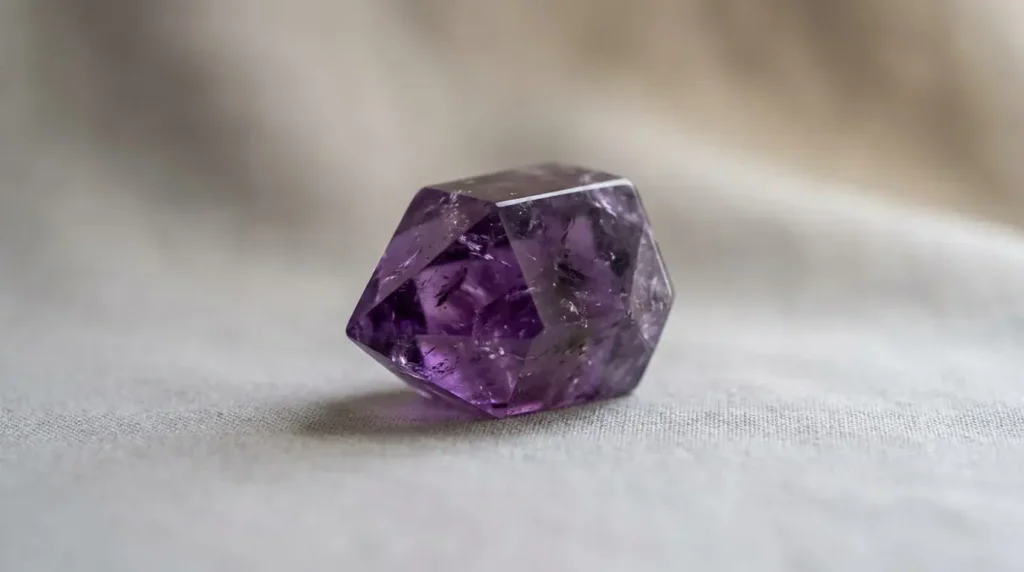
In spiritual practice, amethyst is linked to emotional balance, inner peace, and clearer self-awareness. You’ll see it used during meditation, journaling, and bedtime rituals. It’s the crystal most associated with the crown and third eye chakras, which is part of why it gets paired so often with reflective work.
How to Actually Use Amethyst
Owning the stone isn’t the practice. Using it is.
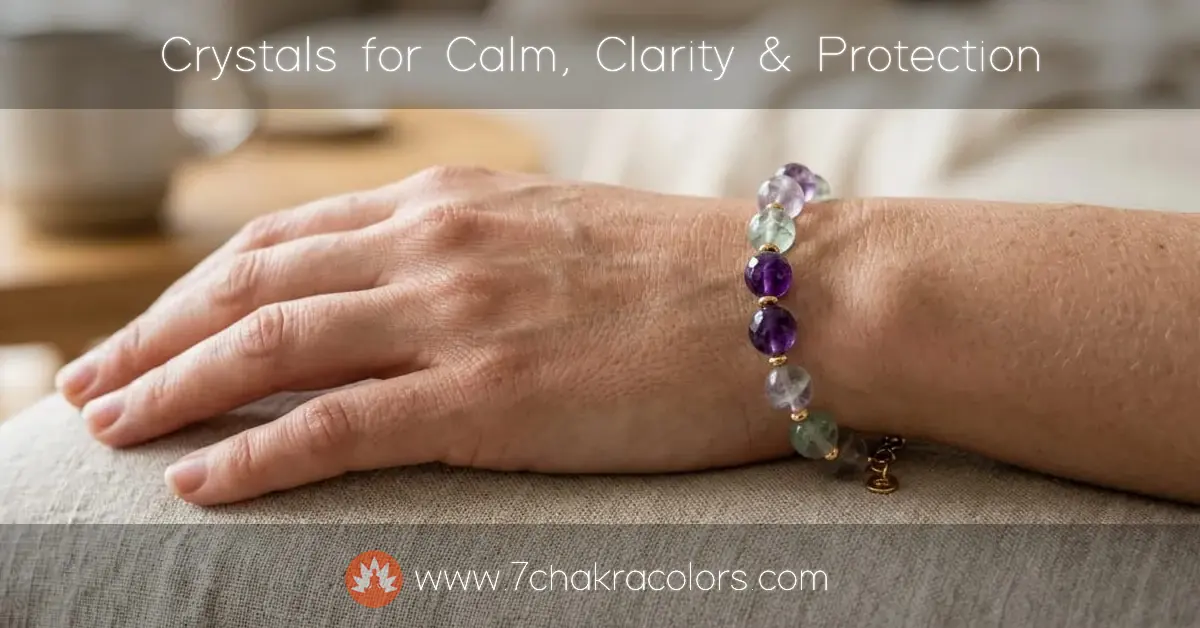
- Wear it. Keeping amethyst in physical contact with your body throughout the day works better than leaving it on a shelf. Many people choose crystal bracelets over pocket stones for this exact reason – they stay close, and they’re a constant cue to pause and reset.
- Keep one by your bed. If sleep is hard because the day won’t let go, place a piece of amethyst on your nightstand. Hold it for a minute before you close your eyes.
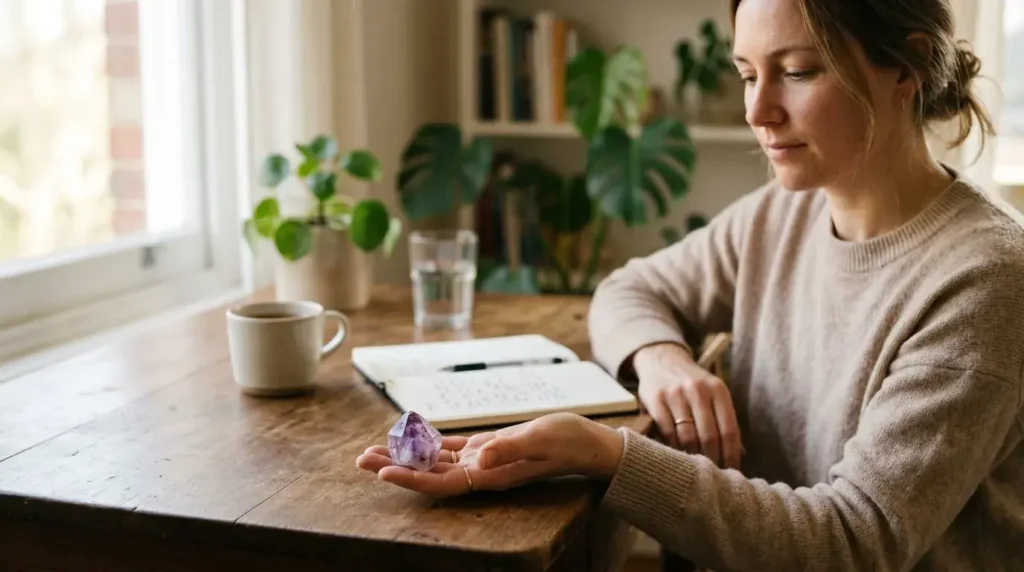
- Use it during meditation. Resting amethyst in your palm while you breathe gives the mind something concrete to come back to when it wanders.
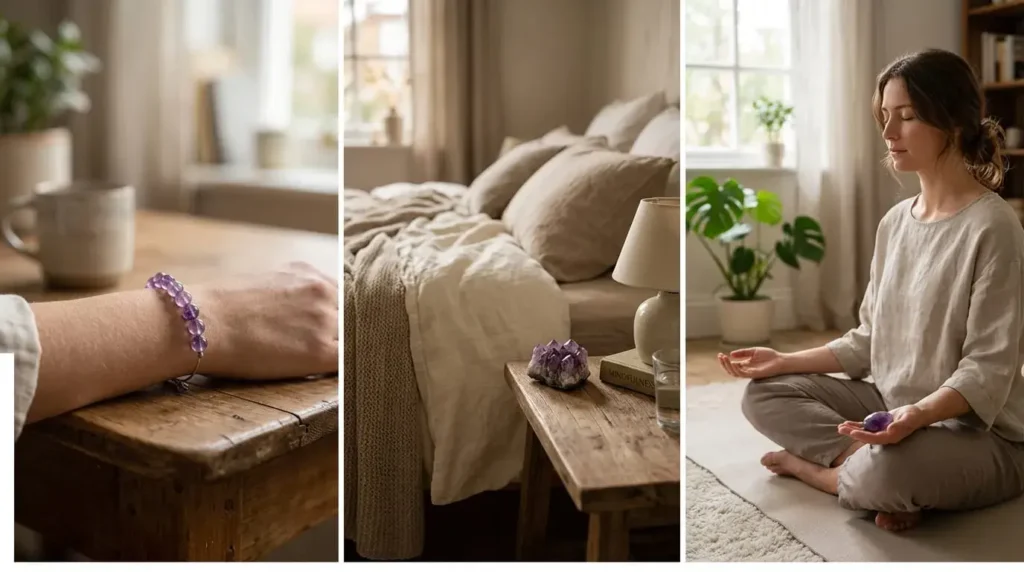
The point isn’t the stone itself. It’s what the stone reminds you to do.
Fluorite: The Stone for Clarity When Everything Feels Cluttered
Calm creates space. Clarity decides what to do with it. That’s where fluorite earns its place beside amethyst.
Fluorite is the stone people associate with focus, organization, and clear thinking. Where amethyst soothes the emotional noise, fluorite helps with the mental kind – the indecision, the second-guessing, the feeling of having too many open tabs in your head.
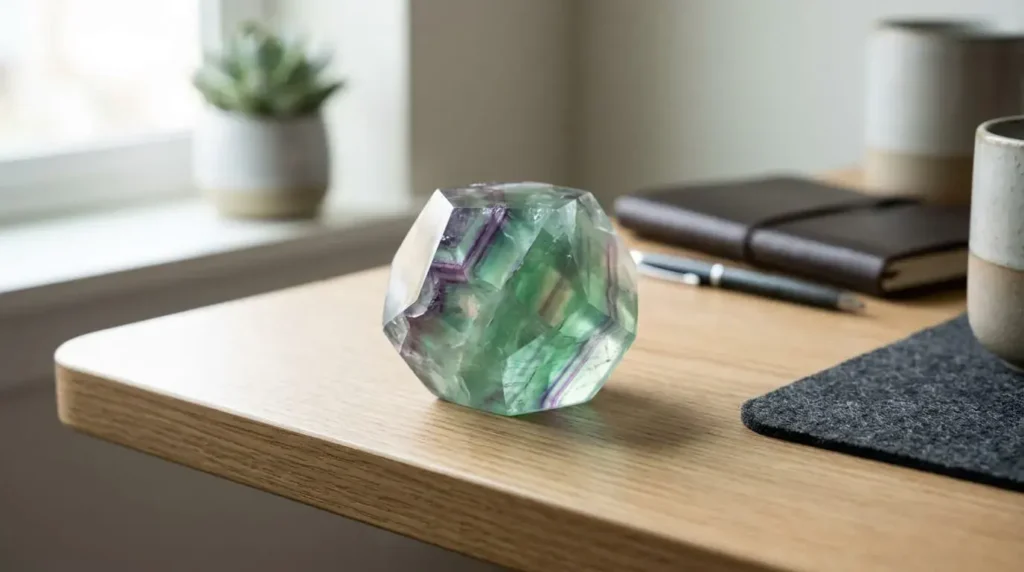
It’s a favorite among people who study, plan, or work through complex decisions. You’ll see it used at desks, in journals, and during important conversations where someone needs to stay grounded in their own thinking. It’s also commonly paired with intuition work, since clarity and intuition tend to come from the same quiet place.
When Fluorite Tends to Help Most
Fluorite isn’t passive. It works best when you’re already doing something with intention – which is why people call it a working crystal rather than a resting one.
- While studying or planning. Keeping fluorite within sight on your desk gives you a visual cue to stay with the task instead of drifting.
- Before a difficult conversation. Holding it for a minute can help you collect your thoughts and decide what you actually want to say.
- When reviewing a decision. If a commitment doesn’t feel right but you can’t say why, sitting quietly with fluorite gives you a moment to listen to what your gut already knows.

Why These Two Stones Work Better Together
Most people make the same mistake when they start with crystals. They expect one stone to do every job.
It doesn’t work that way. Different stones support different parts of the same process.
Amethyst handles the emotional weather – the anxiety, the overwhelm, the inability to wind down at night. Fluorite handles the mental landscape – the scattered thinking, the indecision, the not knowing where to start. One settles you. The other sharpens you.
Used together, they cover both halves of what most people are actually dealing with on a hard day.
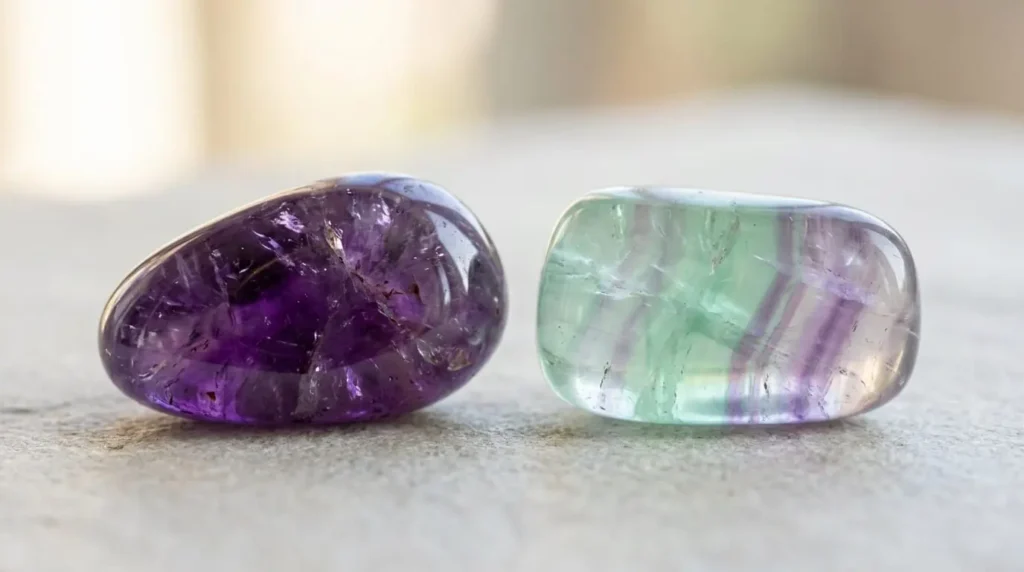
A Simple Daily Pairing
- Morning: Wear or carry amethyst to set a calmer baseline for the day.
- Work or study time: Place fluorite on your desk where you can see it. Use it as a cue to refocus when your attention drifts.
- Evening: Hold amethyst again before sleep. Let the day go.
That’s the whole routine. Three minutes of intention, twice a day.
What Crystals Can and Can’t Do
Worth being clear here. Crystals aren’t medicine. They don’t treat anxiety disorders, depression, trauma, or anything else that needs professional support. If something in your life needs clinical care, please get it.
What crystals do well is sit alongside that care. They give you a small, repeatable practice for slowing down and checking in – which is exactly what most therapists, doctors, and coaches encourage anyway. The stone is a reminder. You’re the one doing the work.
That distinction matters. People who get the most out of crystals are the ones who treat them as tools for attention rather than substitutes for action.
Building a Practice You’ll Actually Keep
Start small. One stone, one moment in your day. Maybe it’s amethyst in your hand for sixty seconds before you check your phone in the morning. Maybe it’s fluorite on your desk during your hardest task.
Whatever you pick, repeat it. Crystals don’t reward intensity. They reward consistency – the same way breath work, journaling, or any other quiet practice does.
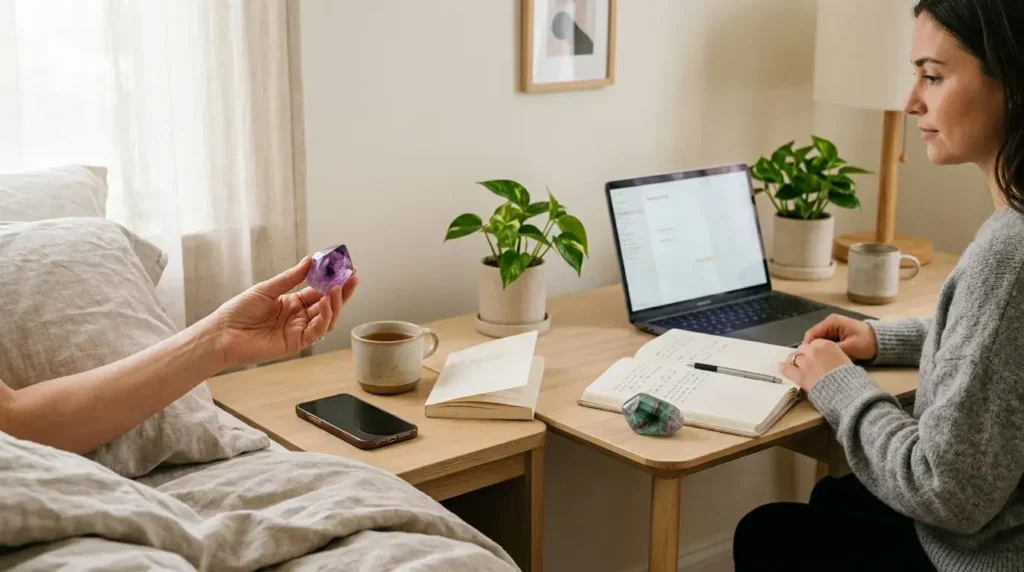
And give it time. The shifts are usually subtle at first. You’ll notice you’re slightly less reactive. Slightly more able to pause before reacting. Slightly clearer about what you actually want. Those small differences are the practice working.
Not flashy. But real.
Final Thoughts
Crystals work best when you stop expecting one stone to fix everything and start letting each one play its part. Amethyst settles you. Fluorite sharpens you. Together they cover the two things most people need on a hard day – calm and clarity.
Use them with intention, keep the practice small, and let the consistency do the heavy lifting. That’s how you move through the world with more steadiness, more focus, and more emotional ground under your feet.
Frequently Asked Questions About Crystals for Calm and Clarity
Do crystals actually do anything, or is it just placebo?
Honest answer – the value of working with crystals comes mostly from the attention and intention you bring to them. Holding a stone you associate with calm gives your nervous system a cue to slow down. Keeping one on your desk reminds you to refocus when you drift. Whether you call that energetic, psychological, or both, the practice still works because it builds a small ritual into your day. People who treat crystals as tools for attention tend to get more out of them than people who expect the stone itself to do the work.
Should I start with amethyst or fluorite if I can only choose one?
Pick the one that matches what you’re struggling with most right now. If your main issue is feeling overwhelmed, anxious, or unable to wind down at night, start with amethyst. If your main issue is scattered thinking, indecision, or not being able to focus, start with fluorite. Most people find one of those problems is louder than the other in any given season of life. Once you’ve worked with that stone for a few weeks, you can add the second.
How long does it take to feel a difference from working with crystals?
It varies, but most people start noticing small shifts within one to two weeks of consistent daily contact. The changes tend to be subtle at first – you catch yourself pausing before reacting, or you remember to breathe in a moment you’d usually skip past. Bigger shifts in mood, focus, and emotional steadiness usually build over a month or more. Consistency matters more than duration. A minute with the stone every day does more than a long session once a week.
Can I wear amethyst and fluorite at the same time?
Yes, and a lot of people do. The two stones support different things – amethyst for emotional calm, fluorite for mental clarity – so they don’t compete with each other. Some people wear amethyst as a bracelet for daytime calm and keep fluorite in a pocket or on a desk for focus. Others combine both in a single piece of jewelry. There’s no rule about it. The only thing that matters is that you can feel them throughout the day so they keep doing their job as a cue.
Do crystals need to be cleansed, and how often?
Many people who work with crystals like to cleanse them periodically – the idea being that the stone clears any energetic residue from heavy days. Common methods include placing them under moonlight overnight, holding them under running water briefly, or resting them on a windowsill for a few hours. Once a month is a reasonable rhythm for stones you wear daily. If a stone starts feeling heavy or dull to you, that’s usually the cue to cleanse it. Note that some crystals shouldn’t be put in water, so check before using that method.
Can crystals replace therapy or medication?
No. Crystals are a supportive practice, not a treatment. Anxiety disorders, depression, trauma, and other mental health conditions need professional care – therapy, medication when appropriate, and the support of qualified clinicians. What crystals can do is sit alongside that care as a small daily practice for slowing down, checking in, and building a moment of intention into your day. People who use crystals well treat them as a complement to professional support, not a substitute for it.
Where should I keep my crystals when I’m not using them?
Wherever you’ll actually see them and remember to use them. A stone hidden in a drawer doesn’t do much. Common spots include a nightstand, a desk, a windowsill, or a small dish near where you start your day – by your coffee maker, for example. Some people set up a small intentional space with a few stones together, but you don’t need anything elaborate. The goal is visibility. The crystal works as a cue, and a cue you can’t see can’t cue anything.
Blog Categories:
About the Author: