
Can Sports Help Balance Your Chakras? A Scientific & Spiritual View
Explore how sports and physical movement support chakra balance — and what science says about exercise, energy flow, the mind-body connection, and overall well-being.
Table Of Contents
Nowadays, Sifting stress and fatigue is like a way of life: physical fitness and especially mental balance is challenging to attain. So ancient traditions will talk about the unbalance in terms of energy flow or chakras, whereas modern science would rather talk about stress-relativeness, sedentary lifestyle, and neurological overloads. Which poses an interesting scenario, how do physical activities such as sports have a hand at restoring balance both to body mind and energy system?
That in itself is the subject of this article, which presents a scientifically-informed perspective on various spiritual viewpoints.
What Chakras Are and What Do They Mean
Chakras are said to be energy centers in the body, each one connected with various physical, emotional and psychological functions. Though traditionally stemming from Eastern philosophies, they can also be understood laterally as aspects of human well-being.
The seven traditional chakras correspond to:
- Root Chakra — stability and grounding
- Sacral Chakra — creativity and emotional flow
- Solar Plexus Chakra — confidence and personal power
- Heart Chakra — connectedness and empathy
- Throat Chakra — communication
- Third Eye Chakra — intuition and concentration
- Crown Chakra — consciousness and higher knowledge
Instead of thinking of chakras as entirely mystical constructs, they also represent how balanced — or imbalanced — our various aspects of life might seem.
Science on Well-Being and Movement
Physically, the effects of exercise on our bodies and brain are well-established scientifically. Movement makes your blood circulate well and oxygen better delivered, causing many neurotransmitters like endorphins or dopamine to be released, resulting in a pleasant feeling of mood and reduced stress.
Exercise is also known to:
- Regulate the nervous system
- Improve concentration and cognitive performance
- Help lessen the symptoms of depression and anxiety
- Enhance overall physical health
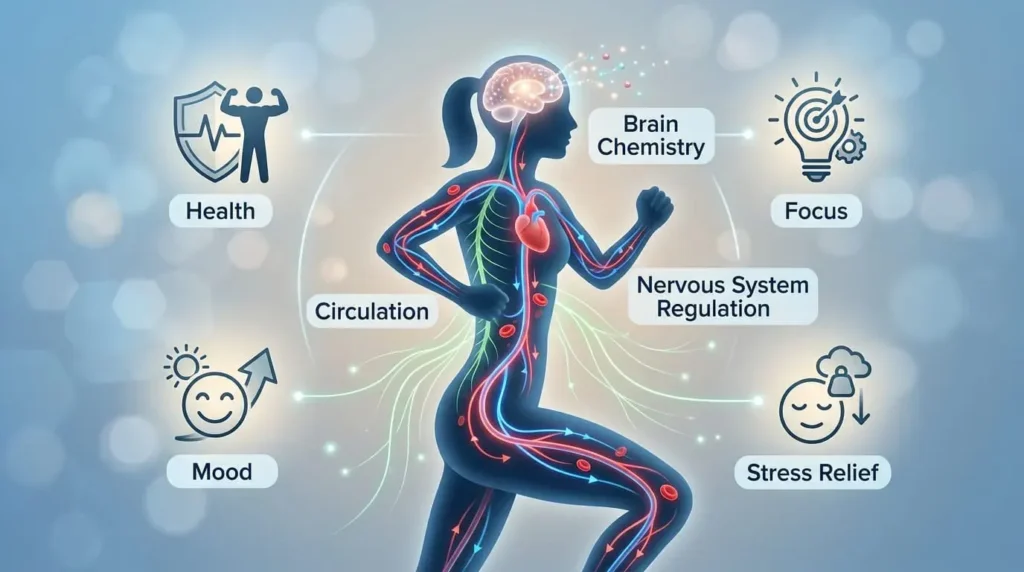
Studies consistently confirm that movement hones the mind-body connection, solidifying what it is now common sense that bodily actions correlate with psychological and emotional states.
Energy Flow in Movement: Seen Through Two Lenses
Though science doesn’t use tech language as the spiritual traditions to talk about “energy centers” and “vortexes,” the parallels are similarly striking. What spirituality calls blocked energy, science might say:
- Poor circulation
- Muscle stiffness
- Chronic stress
- Reduced neural activity
If the body is not active, it can also stop working physically and mentally. Not so with movement, particularly through sports: It gets blood flowing through the body, and muscles activating — and brains up and working. Consider it a contemporary, scientific version of putting “energy flow” back to work.
So, from this perspective of chakras being something one can only “balance” indirectly by practicing activities that connect us to our body and which support the systems related to each chakra, sports definitely help with balancing chakras as a metaphor, even if not in a very direct way.
What We Know About How Different Types of Sport Might Affect Well-Being
Different types of movement affect different aspects of physical and emotional health that are closely aligned with the functions attributed to chakras.
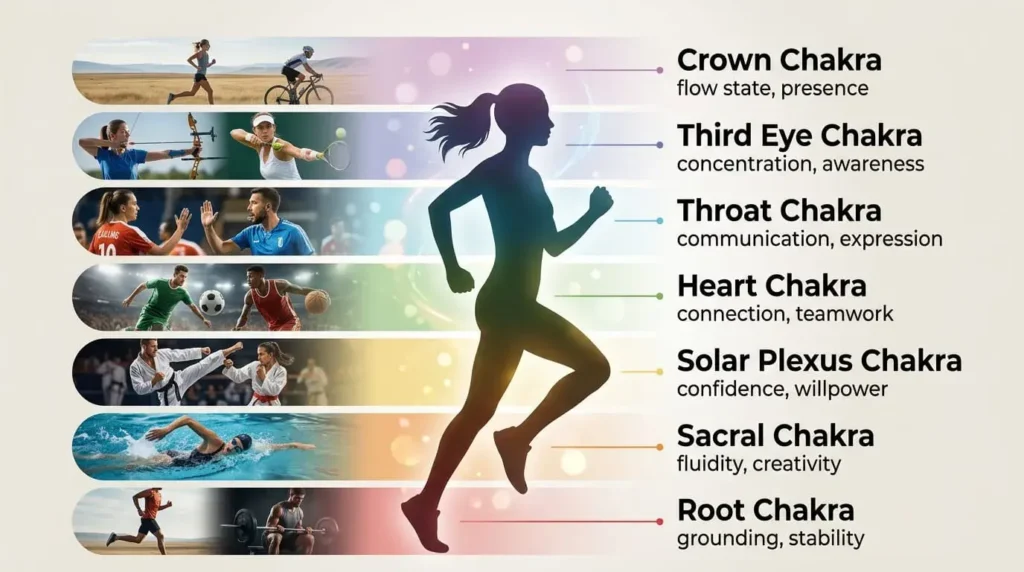
Root Chakra (Stability & Grounding)
Things like running, strength training or football foster physical endurance and a sense of grounding. These strengthen the body and enhance balance, giving you a better sense of stability.
Sacral Chakra (Creativity & Emotion)
Some of the tasks such as swimming or sports that rely on dance routinely are inclined to aid with the adaptability and emotional launch. Those movements have a feeling of being more fluid and expressive.
Solar Plexus Chakra (Willpower & Confidence)
Competitive sport and martial arts push people to cultivate discipline, perseverance, and self-esteem — some of the very qualities that speak to empowerment.
Heart Chakra (Connection & Empathy)
Team sports cultivate cooperation, trust, and social connection. Collaborating on a common goal promotes connectedness.
Throat Chakra (Communication)
Cooperative games must play an important role in developing communication skills through verbal or non-verbal communication.
Third Eye Chakra (Focus and Awareness)
Sports such as tennis, cricket and archery — precision based sports — demand focus, quick decision making ability and situational awareness.
Crown Chakra (Awareness & Presence)
Long-distance activity, such as running and cycling, can lead to a flow-state experience that places a person in the present moment while their brain empties.
Breath, Rhythm and Focus
The incorporation of breathing and rhythm is one of the most potent connections to inner balance that sports can use.
During exercise, controlled breathing maximizes oxygen uptake and also helps in stabilizing heart rate; final impact being a sharper mental faculties. Rhythmic activities — running or cycling for example — induce a meditative effect on the body mind obtaining it into an available and still mode.
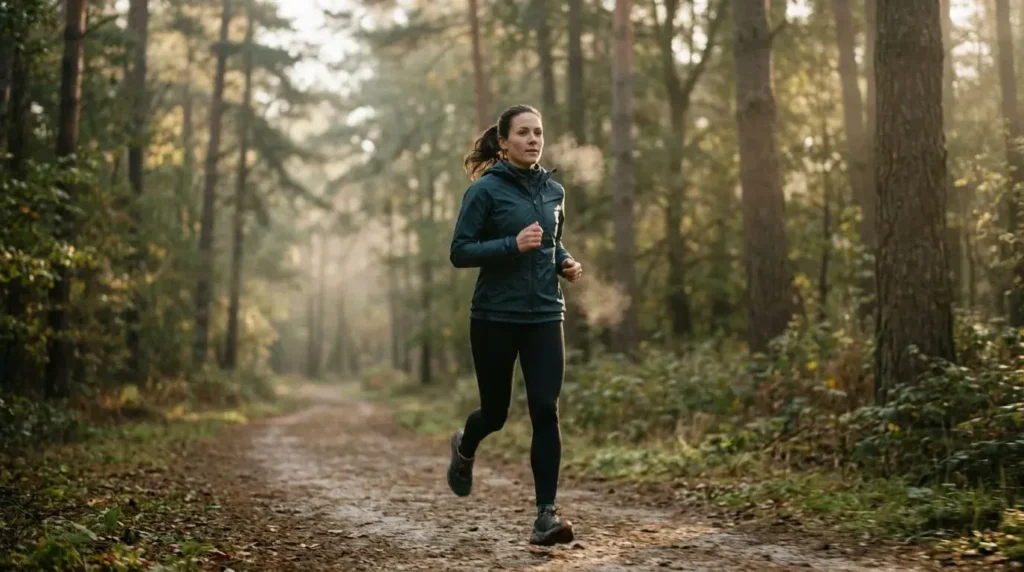
This is intimately connected with the concept of flow state in psychology, where a person becomes fully immersed in an activity, exhibits greater concentration and diminished awareness of distraction. Such a state is often accompanied by descriptions from spiritual practices.
External Factors That Influence Balance
Well, physical comfort and environmental conditions weigh significantly in how well your body as well as mind works while you are doing a workout. Clothing, for example, can influence:
- Freedom of movement
- Body temperature regulation
- Overall comfort and focus
Today many sportswear is known for its breathable and moisture-wicking fabric which encourages you to stay dry during vigorous activity. However, customized sports clothing platforms such as USportsGear focus on fabrics that encourage airflow, flexion and performance — which are indirect factors that promote a more focused and balanced physical experience.
Though rarely experienced, they can subtly influence that sense of connection and comfort during motion.
What Sports Alone Cannot Do
While sports can provide a lot of advantages, they are not the entire cure for finding total balance. Well-being has multiple dimensions when viewed holistically — what you might want to consider includes:
- Rest and recovery
- Mental relaxation
- Emotional awareness
- Mindfulness or meditation
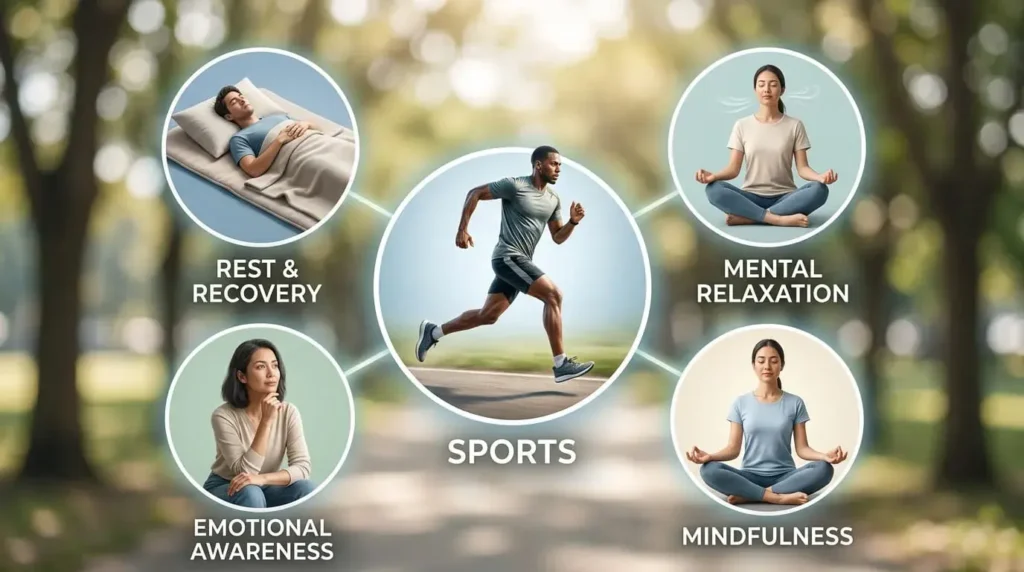
Exercise bolsters balance, however, it is most effective with other healthy behaviors.
How to Bring Movement and Mindfulness Together
Here are some basic steps to help improve physical and mental equilibrium.
- Select activities that do not feel like depriving tasks
- Observe how your body feels during movement
- Incorporate mindful breathing into workouts
- Consistency instead of intensity
- Give time for rest and recovery
Such habits promote a more holistic view on wellness.
Final Thoughts
Sports are not in the strictest scientific sense linked with “balancing chakras” but perform a strong role in harmonising body systems that interact to set the general balance. Movement creates conditions similar to what many spiritual traditions describe as harmony through better circulation, mental clarity, emotional release, and physical strength.
Frequently Asked Questions About Sports and Chakra Balance
Can sports actually balance your chakras?
Not in a direct, literal sense — but the argument for an indirect connection is stronger than it might initially seem. Each chakra is associated with specific physical and emotional functions: stability, emotional flow, confidence, connection, communication, focus, and presence. Sports and physical activity influence all of these things in measurable ways. Running builds grounding and physical stability. Team sports build trust and connection. Precision sports sharpen focus. So while science does not recognize chakras as physical structures, the well-being outcomes of sport map closely onto what chakra traditions describe as balance. Whether you frame it energetically or physiologically, movement clearly supports the same dimensions of health.
Which sport is best for grounding and root chakra energy?
Activities that involve direct physical contact with the ground and build overall body strength tend to align most closely with root chakra qualities — stability, endurance, and a sense of being physically anchored. Running, strength training, hiking, and contact sports like football or rugby all fit this profile. The common thread is that these activities demand physical presence and build the kind of embodied confidence that comes from knowing your body is strong and reliable. If you feel scattered, anxious, or ungrounded, these are the types of movement most likely to help shift that.
What is the flow state and how does it relate to chakra balance?
Flow state is a well-documented psychological concept describing a condition of complete immersion in an activity — where focus is total, self-consciousness drops away, and performance tends to peak. It is most commonly reached through rhythmic, sustained physical activity like long-distance running or cycling, or through highly demanding skill-based sports. From a chakra perspective, this state closely resembles what is described as alignment — a condition where energy moves freely and the body, mind, and awareness operate as one. Both frameworks point to the same experience, just using different language. The practical takeaway is that activities capable of inducing flow are among the most powerful tools for restoring overall mental and energetic balance.
How does breathing during exercise affect mental and energetic balance?
Controlled breathing during physical activity does several things simultaneously. It stabilizes heart rate, improves oxygen delivery to the brain, and activates the parasympathetic nervous system — which is the part responsible for calm, recovery, and reduced reactivity. In chakra and yogic traditions, breath is considered the primary vehicle through which life force energy moves through the body. Whether you accept that framing or not, the practical effects are consistent: people who breathe consciously during exercise report greater mental clarity, lower perceived stress, and a stronger sense of presence during and after the activity. Paying attention to breath during sport is one of the simplest and most effective ways to amplify its balancing effects.
Are team sports better than solo sports for overall balance?
They serve different needs, and both have value. Team sports specifically target the social and relational dimensions of well-being — trust, communication, cooperation, shared effort. These map closely to heart and throat chakra qualities. Solo sports tend to develop internal resources more directly: focus, self-discipline, endurance, and the capacity to be alone with your own mind under physical stress. A well-rounded approach to movement would ideally include elements of both. If your life is already heavily social, solo sport may offer a balance. If you are isolated or struggling with connection, a team context can provide something that individual training simply cannot replicate.
Can sport replace meditation or mindfulness for achieving inner balance?
For some people, sport functions as a form of moving meditation — particularly rhythmic endurance activities where the mind naturally settles. But sport and meditation address different layers of well-being and are not straightforward replacements for each other. Physical activity is excellent at discharging stress, improving mood chemistry, and building body awareness. Meditation and mindfulness tend to develop the capacity to observe thoughts and emotions without reacting — a skill that sport does not reliably build on its own. The most effective approach treats them as complementary: sport to move energy and strengthen the body, quieter practices to develop the inner steadiness that physical activity alone cannot fully provide.
How much exercise is needed to notice a difference in mood and mental balance?
The threshold is lower than most people expect. Research consistently shows that even a single session of moderate exercise — around 20 to 30 minutes — produces measurable improvements in mood through neurotransmitter release. For longer-term effects on stress regulation, sleep quality, and emotional resilience, consistency matters more than volume. Three to four sessions per week of activity you actually enjoy tends to produce more sustained results than high-intensity training you dread and avoid. The type of activity is less important than doing it regularly. Starting small, staying consistent, and choosing movement that feels rewarding rather than punishing is the most reliable path to the balance both science and spiritual traditions point toward.
Blog Categories:
About the Author: