
Chakra Frequencies and Binaural Beats
Discover how the four dimensions of healing—spiritual, social, environmental, and physical—interconnect to restore life force energy and transform recovery from trauma.
Table Of Contents
Sound affects your brain. Not in some mystical way – though there’s that too – but in ways you can measure, feel, actually use.
Binaural beats and chakra frequencies are getting attention because they work. People use them to sleep better, focus harder, meditate deeper. The science backs some of this up. The rest? Thousands of years of practices that persist because they do something.
Here’s what you need to know.
What Frequencies Actually Are
A frequency is just how many times something vibrates per second. Sound waves move through air in cycles – faster cycles mean higher pitches, slower ones mean lower pitches.
Your brain operates on frequencies too. When you’re sleeping, your brainwaves cycle differently than when you’re anxious or focused or zoned into deep work. Different states, different speeds.
That’s where this gets interesting.
Sound Waves and Your Body
Certain frequencies resonate with your body and brain. Play a specific tone and your nervous system responds – sometimes subtly, sometimes obviously. You might feel calmer. More alert. That scattered feeling in your head might settle.
It’s not magic. Your brain naturally syncs to rhythmic input. Always has.
Binaural Beats Explained
So here’s how this works. You play one frequency in your left ear – say 200 Hz. Different frequency in your right ear – 210 Hz. Your brain picks up both tones but does something strange with them.
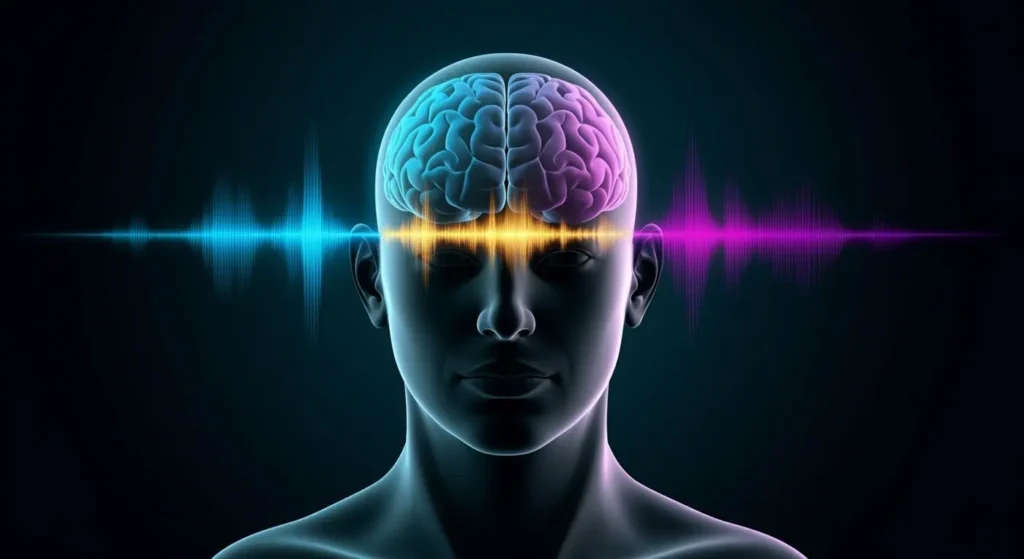
It creates a third beat. That 10 Hz difference between the two tones becomes its own frequency inside your head. Except nothing is actually playing that 10 Hz through your headphones.
Your brain just makes it up. Fills in the gap.
How Your Brain Responds
This is called frequency following response. Your brainwaves start matching the beat your brain created. Feed it a 10 Hz binaural beat and your brain shifts toward that frequency – which happens to be the alpha range, the relaxed-but-alert state.
You’re basically tuning your brain like a radio.
What People Use Them For
Anxiety drops when you use these regularly. Focus gets sharper. Sleep comes easier – not the first night usually, but after a week or two of listening.
That’s what the research found anyway.
Meditation gets easier because you’re not fighting your brain as hard. It’s already halfway to that deeper state before you even close your eyes. Studying improves because your attention stops scattering every thirty seconds. Sleep happens because that loop of thoughts finally shuts up.

Understanding Hz and BPM
Two different measurements show up constantly when you’re working with sound and frequencies. Hz and BPM. They measure related but different things.
Hz tracks how fast something vibrates. BPM tracks how fast something repeats. Converting between them isn’t straightforward – Hz measures cycles per second while BPM measures cycles per minute. Multiply Hz by 60 and you get BPM. Divide BPM by 60 and you get Hz.
So 10 Hz becomes 600 BPM. A heart rate of 60 BPM translates to 1 Hz.
Hertz – The Measurement That Matters
Hz is just Hertz. Cycles per second. So 528 Hz means that frequency vibrates 528 times every second.
Your brain runs on different Hz ranges depending what you’re doing. Deep sleep uses different frequencies than problem-solving. Meditation isn’t the same as anxiety.
- Delta waves – 0.5 to 4 Hz: You’re completely unconscious here. Deep sleep, healing, your body doing repair work while your mind checks out completely.
- Theta waves – 4 to 8 Hz: Meditation territory. Creativity lives here too, right on that edge between awake and dreaming. REM sleep cycles through theta.
- Alpha waves – 8 to 14 Hz: This is relaxed awareness – calm but not sleepy. Light meditation. That state where anxiety loosens its grip but you’re still present.
- Beta waves – 14 to 30 Hz: Active thinking. Problem-solving. Normal waking consciousness where most people spend their entire day. Push too high in beta and you tip into anxious territory.
- Gamma waves – 30 to 100 Hz: Peak focus. Intense concentration. Everything clicks and you’re firing on all cylinders. Can’t sustain this long though.
BPM in Context
Beats per minute – that’s rhythm and tempo. Your resting heart rate? Somewhere between 60 and 100 BPM usually.
Match that rhythm with sound or your breathing and your body follows along. Heart rate slows down. Stress hormones back off.
This matters more with rhythmic music than binaural beats specifically, but it’s the same principle. Your brain loves syncing to external rhythms. Always has.
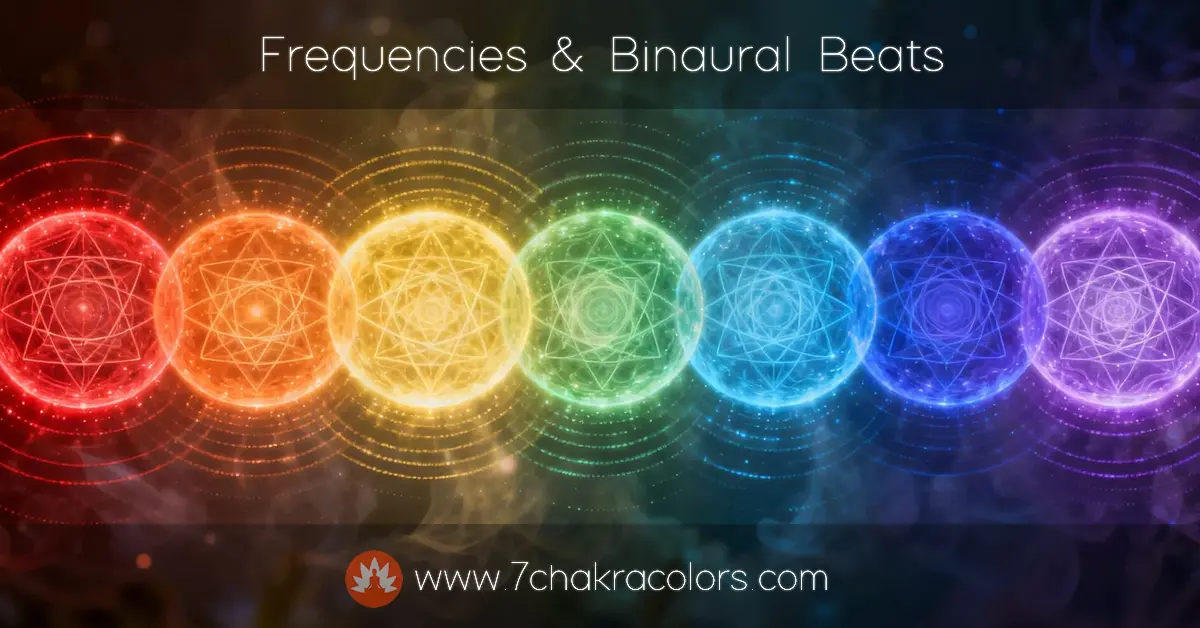
The Seven Chakras and Their Frequencies
Every chakra resonates at a particular frequency. Maybe you buy into chakras as real energy centers. Maybe you think they’re just useful maps for paying attention to your body. Either way, these frequencies do something.
Root Chakra – 396 Hz
Your foundation. Base of the spine, handles survival stuff, security, that grounded feeling when life isn’t chaotic.
396 Hz targets fear and guilt – at least according to the solfeggio scale. When you feel unmoored, can’t settle, unsafe in your own body, people turn to this frequency.
Sacral Chakra – 417 Hz
Two inches below your navel. Creativity lives here, emotional flow, sexuality, the ability to feel pleasure without guilt.
417 Hz supposedly helps release negative patterns. That stuck feeling where you keep repeating the same emotional loops? This one addresses that.
Solar Plexus Chakra – 528 Hz
Right at your diaphragm. Personal power, confidence, the sense that you can actually do the things you want to do.
528 Hz gets called the “love frequency” or “miracle tone.” Claims around it get overblown, but people report feeling more centered, more themselves. Transformation happens here – or it doesn’t.
Heart Chakra – 639 Hz
Center of your chest. Love, compassion, connection to other humans without losing yourself in the process.
639 Hz works on relationships and emotional healing. That wall you built around your heart after getting hurt? This frequency targets that specifically.
Throat Chakra – 741 Hz
Your voice. Not just speaking – authentic expression, saying what needs saying, communication that lands true.
741 Hz helps clear blockages in self-expression. Can’t speak up? Can’t ask for what you need? Boundaries feel impossible? This one addresses that.
Third Eye Chakra – 852 Hz
Between your eyebrows. Intuition, insight, the knowing that comes from somewhere other than logic.
852 Hz sharpens mental clarity and opens spiritual awareness. That foggy feeling where you can’t trust what you’re perceiving? This cuts through it.
Crown Chakra – 963 Hz
Top of your head. Connection to something larger than yourself – call it universe, consciousness, god, whatever fits your framework.
963 Hz opens transcendence and spiritual connection. Highest frequency in the solfeggio scale. Supposedly activates your pineal gland and expands awareness – though claims around the pineal gland get overblown fast.
Other Binaural Beats Worth Knowing
Beyond chakras, specific binaural beat frequencies target different brainwave states. These matter if you care more about function than energy centers.
Delta Waves for Deep Sleep (0.5-4 Hz)
Your body does serious repair work here. Deep, dreamless sleep. Complete restoration while you’re totally unconscious.
Listen to delta binaural beats before bed and your brain starts dropping into those frequencies faster. Not instantly – give it 15 minutes of listening.
Theta Waves for Meditation (4-8 Hz)
The state between awake and asleep. Deep meditation happens here. So does creative visualization and access to subconscious patterns.
Theta beats make meditation easier because they’re doing half the work for you – pulling your brain toward that frequency before you even try.
Alpha Waves for Calm Focus (8-14 Hz)
Relaxed but alert. That flow state where work happens easily. Stress drops away but you’re still functional, still productive.
Most people live too high in beta. Alpha brings you down without putting you to sleep.
Beta Waves for Concentration (14-30 Hz)
Active thinking, problem-solving, the mental state of getting things done. Too much beta slides into anxiety – that’s the high end of the range.
Low beta (14-20 Hz) enhances focus without the jittery feeling. Good for studying, detailed work, anything requiring sustained attention.
Gamma Waves for Peak Performance (30-100 Hz)
High-level information processing. Peak focus. Those rare moments when everything clicks and you’re operating at full capacity.
Gamma isn’t sustainable long-term – your brain can’t stay there. But for intense work sessions or breakthrough thinking, it matters.
How to Actually Use This
Getting started with binaural beats and chakra frequencies isn’t complicated. But doing it right makes the difference between actually feeling something and just listening to weird tones for twenty minutes.
Step 1: Get Headphones
Not optional. Binaural beats need different frequencies playing in each ear – that’s the whole point. Speakers won’t work. Earbuds are fine, over-ear headphones work too. Doesn’t need to be expensive, just needs to fit comfortably for 15-30 minutes.
Step 2: Find Your Space
Somewhere you won’t get interrupted. Your bedroom works. Sitting in your parked car before work. A quiet corner during lunch break. Not silent necessarily, but without people walking in asking questions every five minutes.
Sit or lie down – whatever feels sustainable. You’re not trying to achieve perfect meditation posture here. Just be comfortable enough that your body isn’t distracting you.
Step 3: Choose Your Frequency
Start with whatever draws you. Feel scattered and ungrounded? Try 396 Hz for root chakra. Can’t focus? Beta waves at 15-20 Hz. Sleep issues? Delta waves before bed.
Don’t overthink this part. Pick one and stick with it for at least a week. Jumping around daily means nothing gets time to actually work.
Step 4: Set a Timer
Fifteen minutes minimum. Thirty if you’ve got time. Not because longer is magically better, but because it takes your nervous system a few minutes to actually shift into the new frequency pattern.
Your brain doesn’t instantly sync. Give it time to follow along.
Step 5: Just Listen
Close your eyes or don’t. Focus on your breath or let your mind wander. There’s no perfect way to do this. Some people treat it like meditation. Others just zone out and let the frequencies do their thing.
The sound might feel weird at first – especially with binaural beats. That pulsing sensation in your head is normal. It’s your brain creating that third frequency.
Step 6: Stay Consistent
Same time daily works best. Morning before everything gets chaotic. Night before bed. Lunch break. Whenever, just make it regular.
Your nervous system learns patterns. Feed it the same frequency at roughly the same time and it starts responding faster. Miss a few days and you’re basically starting over.
What Not to Do
Don’t listen while driving. These frequencies alter your brainwave state – that’s literally the goal – but you want full beta alertness when you’re behind the wheel.
Don’t crank the volume. Louder isn’t better. Keep it at a comfortable level where you can hear the tones clearly without straining.
Don’t expect instant miracles. Some people feel shifts immediately. Most notice changes after a week or two of daily practice. It’s cumulative.
Safety Considerations
People with epilepsy or seizure disorders should avoid binaural beats. The rhythmic stimulation can trigger problems.
Feel dizzy? Anxious? Weird? Stop listening. Most people don’t react badly, but some nervous systems are sensitive to this. Pay attention to what your body tells you.
What Actually Happens
Results vary. Some people feel effects immediately – that alpha calm or delta drowsiness kicks in fast. Others need weeks of consistent practice before noticing changes.
What works: pick one frequency or brainwave state and stick with it for two weeks minimum. Jump between chakra frequencies and sleep beats and focus beats every day and nothing gets time to actually work.
People who get real results from binaural beats treat them like tools, not magic. They’re useful. They shift things. But they work better when you’re also doing other stuff – meditating for real, working with your breath, sleeping decent hours.
Try it for a week. Same frequency, same time each day, 15 minutes with headphones on. You’ll figure out pretty fast if this does something for you or if it’s just noise.
Frequently Asked Questions
What are binaural beats?
Binaural beats happen when you play two slightly different frequencies – one in each ear through headphones. Your brain doesn’t hear two separate tones. Instead, it perceives a third frequency that’s the mathematical difference between them. Play 200 Hz in your left ear and 210 Hz in your right, and your brain creates a 10 Hz beat that isn’t actually coming through your headphones.
What frequency corresponds to each chakra?
The seven chakra frequencies from the solfeggio scale are: Root chakra at 396 Hz, Sacral at 417 Hz, Solar Plexus at 528 Hz, Heart at 639 Hz, Throat at 741 Hz, Third Eye at 852 Hz, and Crown at 963 Hz. Each frequency supposedly resonates with its corresponding energy center.
How long should I listen to binaural beats?
Start with 15-30 minutes daily. Consistency matters more than duration – fifteen minutes every day works better than random hour-long sessions once a week. Your nervous system needs regular exposure to learn the pattern. Most people notice results after a week or two of daily practice.
Do I need special headphones for binaural beats?
Any headphones or earbuds work fine. You don’t need expensive equipment. The key requirement is that they can play different frequencies in each ear – which all stereo headphones do. Speakers won’t work because binaural beats require the frequencies to be separated between your left and right ear.
Can binaural beats help with anxiety?
Research shows binaural beats can reduce anxiety when used consistently. Alpha waves (8-14 Hz) work well for general anxiety. Theta waves (4-8 Hz) help with deeper relaxation. Don’t expect instant fixes – the benefits build over time with regular practice.
Are there any side effects or risks?
Most people experience no negative effects. Some might feel dizzy, anxious, or strange when first starting – if that happens, stop listening and try again later at a lower volume. People with epilepsy or seizure disorders should avoid binaural beats entirely as the rhythmic stimulation can trigger seizures. Never listen while driving or operating machinery.
What’s the difference between Hz and BPM?
Hz (Hertz) measures cycles per second – how fast something vibrates. BPM (beats per minute) measures cycles per minute – how fast something repeats. To convert: multiply Hz by 60 to get BPM, or divide BPM by 60 to get Hz. So 10 Hz equals 600 BPM.
Can I use binaural beats for sleep?
Yes. Delta waves (0.5-4 Hz) work specifically for deep sleep. Listen for 15-20 minutes before bed with your eyes closed. Your brain starts dropping into those frequencies, making it easier to fall asleep. Don’t expect it to knock you out instantly – give it a week of consistent use.
How do I know if it’s working?
Effects vary by person. Some feel changes immediately – calmer, more focused, sleepier depending on the frequency. Others need a week or two of daily practice before noticing shifts. Look for subtle changes: easier meditation, better focus, improved sleep quality, less anxiety. Don’t expect dramatic transformations overnight.
Can I listen to multiple frequencies in one session?
Better not to. Your brain needs consistent input to sync with a frequency. Jumping between root chakra and crown chakra and theta waves in the same session means your nervous system never fully locks into any of them. Pick one frequency per session and stick with it for the full duration.
Blog Categories:
About the Author: