
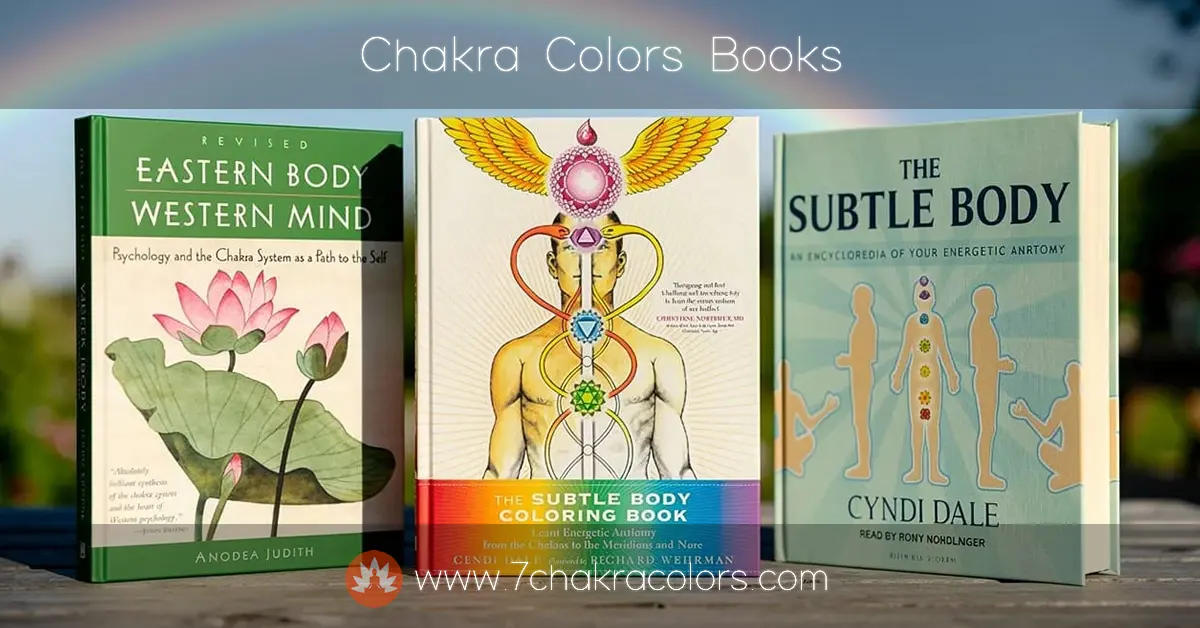
Beyond the Rainbow: 3 Books That Reimagine Chakras
Explore how 3 transformative books expand your understanding of chakra colours beyond the basic rainbow model. Discover deeper layers of energetic anatomy.
Table Of Contents
I kept picking up the same three books. Different weeks, different reasons, but every time I came back to them, something else clicked about chakra colours – what they actually mean, how they shift beyond that standard rainbow you learned first, and why the real work happens when you start questioning the model everyone taught you.
This isn’t a book review collection. It’s what happens when three different healers – each brilliant in their own way – break open the basic chakra framework and show you what’s actually underneath.
Why Chakra Colours Matter (And Why Most Teachers Get Them Partially Wrong)
When you first learn about chakras, you get the rainbow. Red root. Orange sacral. Yellow solar plexus. Green heart. Blue throat. Indigo third eye. Violet or white crown. Clean. Simple. Useful.
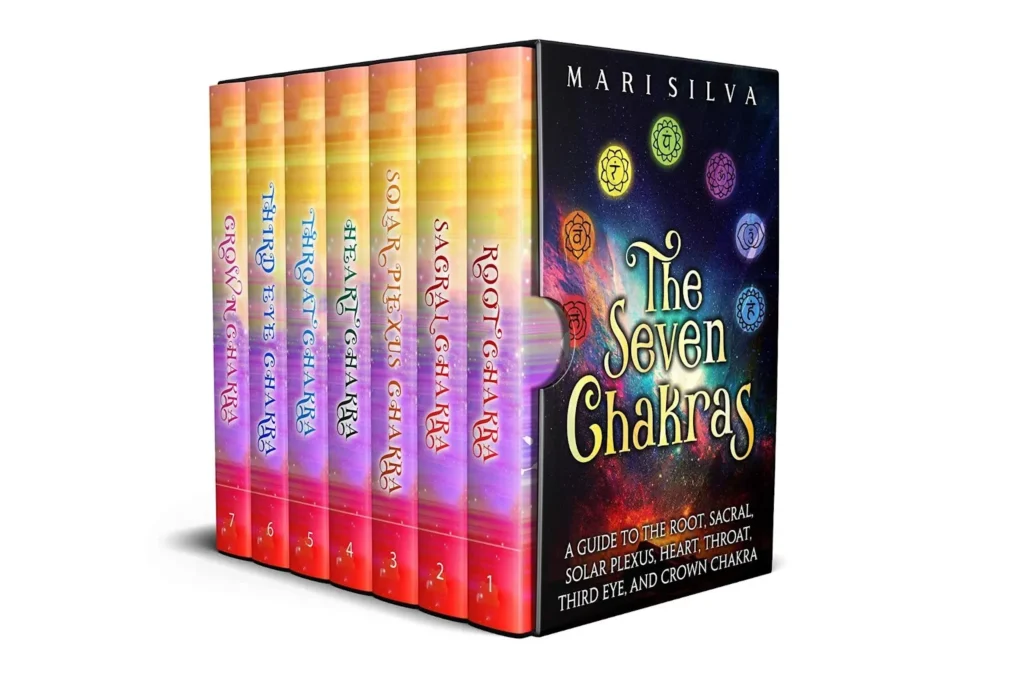
https://www.goodreads.com/book/show/126556983-the-seven-chakras
Then you actually start practicing.
And something doesn’t quite fit.
The colours feel limited. Your experience doesn’t match the neat chart. You notice your root chakra doing something that feels more gold than red sometimes. Your heart shows up as rose one day and white the next. You realize that what you were taught is real – it’s just incomplete.
This is actually the moment your practice deepens. Because chakra colours aren’t fixed symbols waiting to be memorized. They’re living expressions. They shift based on your emotional state, your healing work, your specific energetic signature.
Cyndi Dale has described seeing a red ball of energy around someone caught in survival mode – pure, intense, raw. But that same person’s root might carry gold when they’re accessing their own inner strength. The colour reflects what’s happening. Not the theory. The actual energy.
Chakra Colours Show Up in Stories Too
Here’s something most spiritual teachers don’t mention: the stories you read, the shows you watch – they’re actually teaching you about chakra energy whether you realize it or not.
For example, the intense loyalty, survival, and tribalism often found in a story mafia theme are perfect representations of raw, red root chakra energy. These narratives revolve around safety, territory, power, and belonging – core themes of the first chakra expressed through character and plot rather than meditation or theory.
When you understand this, you start seeing chakra colours everywhere. In the characters who struggle with expression (blocked throat, that blue-grey constricted energy). In the ones caught in endless transformation without grounding (sacral orange spinning chaotically). You’re not forcing meaning onto fiction – you’re recognizing a pattern that was already there.
The Three Books That Changed My Understanding
Cyndi Dale: The Subtle Body Coloring Book
First look: adult colouring book. Second look: something completely different.
Dale designed this specifically for interactive learning. You’re not reading passively. You’re colouring meridians, chakras, and auric fields directly. Your hands get involved. Your focus sharpens. Something shifts.
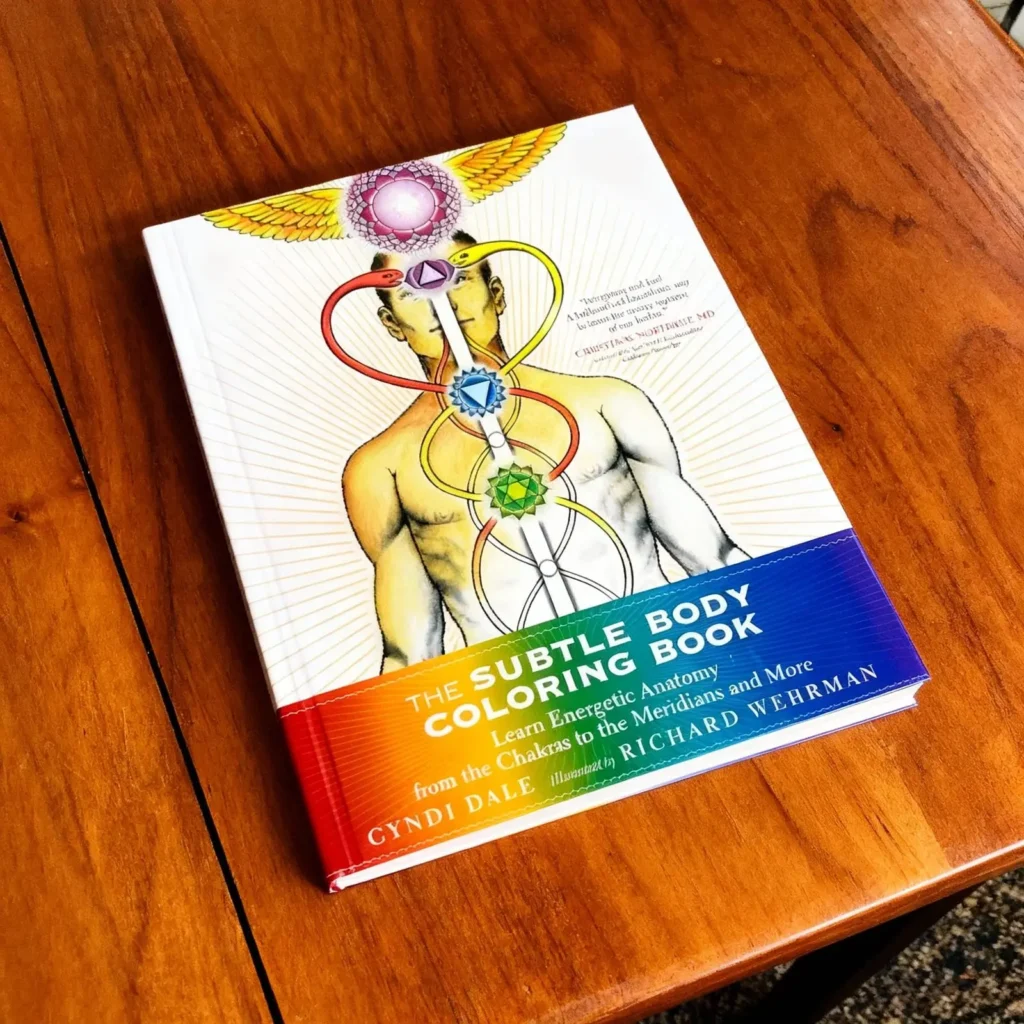
The real value? She treats colour as both information and energy. Not metaphor. Not symbol. Information. Gold for the Luminary chakra above your head. Silver for protection and openness. Rose for your hands – that exchange point where energy moves in and out. These aren’t random choices. They’re based on decades of observation and practice.
Most importantly, the book moves beyond the seven chakras everyone knows. It introduces the upper chakras – the ones that connect you beyond just personal transformation. Your crown isn’t the end of your system. It’s just where you started looking.
Anodea Judith: Eastern Body, Western Mind
If you want to understand why your chakras got stuck in the first place, this is the book.
Judith maps the chakras onto childhood development stages. Root chakra trauma from infancy shows up as fear in your body decades later. Sacral damage from around age two creates guilt and shame in your creative energy. Each chakra carries the wounds of specific life stages.

This matters because you can’t just meditate away a trauma that’s locked into your energetic system. You need to understand the origin. Judith shows you exactly how fear shapes the red root, guilt influences the orange sacral, how each chakra can become either a strength or a wound depending on what happened to you.
The case studies feel like watching real people’s journeys. Not abstract spiritual theory. People. Their stories. How their energy patterns made perfect sense once you understood what they’d survived.
Cyndi Dale: The Subtle Body: An Encyclopedia of Your Energetic Anatomy
This one is the reference you return to when you want the full picture.
Dale surveys energetic systems across cultures – systems that existed thousands of years before anyone called them “chakras.” Many use completely different colour schemes. If reading about these systems makes you want to work with them physically, there are 7 powerful yoga practices for chakra healing that bridge ancient energetic knowledge with embodied movement. Some have far more than seven centres. Some organize energy in ways that don’t even map onto the body the way Western models do.
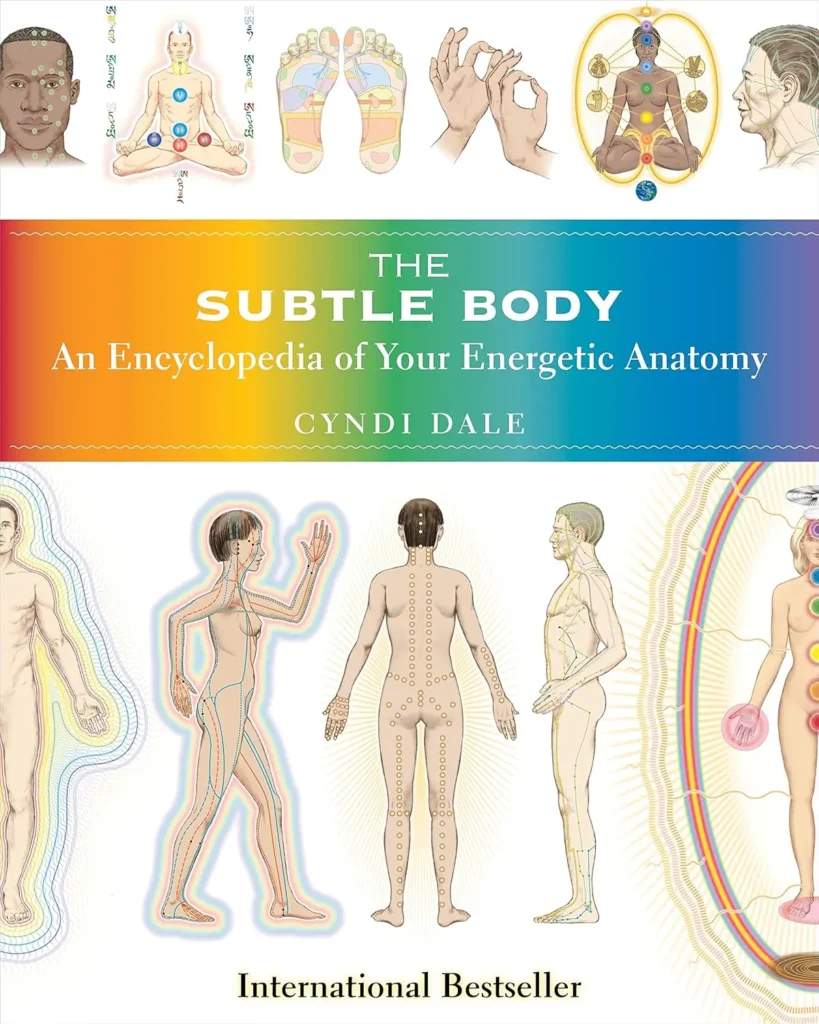
She goes deep on the higher chakras — and if you’ve ever felt certain practices don’t land for you, the answer may lie in understanding why some meditations don’t work for your specific energy type. The eleventh chakra in your hands and feet appears as a rose-coloured film – that’s the exchange point where energy flows between you and everything else. Silver shows up as the tone for openness and direction. Gold returns again, but in different contexts, carrying different frequencies.
The scope is enormous. But the practical result is simple: your chakra system is way more complex and way more personal than that beginner’s rainbow chart.
What These Books Show You About Real Chakra Work
Reading them close together revealed something important: chakra colours are not fixed. They’re responsive. They change based on your healing, your awareness, your actual lived experience.
When you visualize rose around your hands, you’re accessing a real frequency. When your root shows up as gold instead of red, that’s information – it means something shifted. Your system is telling you something about what’s happening beneath the surface.
The rigid models aren’t wrong. They’re entry points. They’re useful until they’re not. And then you need the next layer.
The Balance Question
Spiritual practice needs rhythm. Deep inner work requires presence and focus – the kind of attention that digs into your energy system and actually moves things. That’s essential.
But balance matters too. You can’t live entirely in meditation. Your nervous system needs breaks. Your mind needs rest.
And when you need to let your brain rest and recharge, you can always download FictionMe to switch gears.
The point isn’t choosing one or the other. It’s understanding when you need which. Time for deep exploration. Time for lighter engagement. Both are real. Both serve your evolution.
Where to Start
If you want interactive learning and introduction to higher chakras – start with Dale’s Coloring Book.
If you want to understand the psychological roots of your chakra imbalances – start with Judith’s Eastern Body, Western Mind.
If you want the comprehensive reference that covers everything from ancient systems to modern refinements – get Dale’s Encyclopedia.
Or do what I did. Pick whichever one calls to you first. Follow that thread. Trust that your system knows what it needs to understand next.
The real work isn’t memorizing colours. It’s learning to trust what you actually perceive. To move beyond what you were taught and into what you’re directly experiencing. To recognize that your energetic anatomy is far more nuanced than any single system can capture.
That’s when chakra work actually becomes transformative.
Blog Categories:
About the Author: