
Chakra-Based Practices for Recovery After an Unexpected Accident
Heal post-accident trauma with chakra practices. Learn grounding techniques for the Root, Solar Plexus, and Heart chakras to restore nervous system balance.
Table Of Contents
Shock hijacks a normal day. One minute everything’s fine – the next your body floods with adrenaline, your ears pound, and there’s that dizzy what-just-happened blur. Even after the scene ends, your system stays revved. Sleep gets thin. Your shoulders climb toward your ears. Random moments send your mind spiraling back through details you can’t stop replaying. The alarm keeps sounding long after the actual threat vanished.
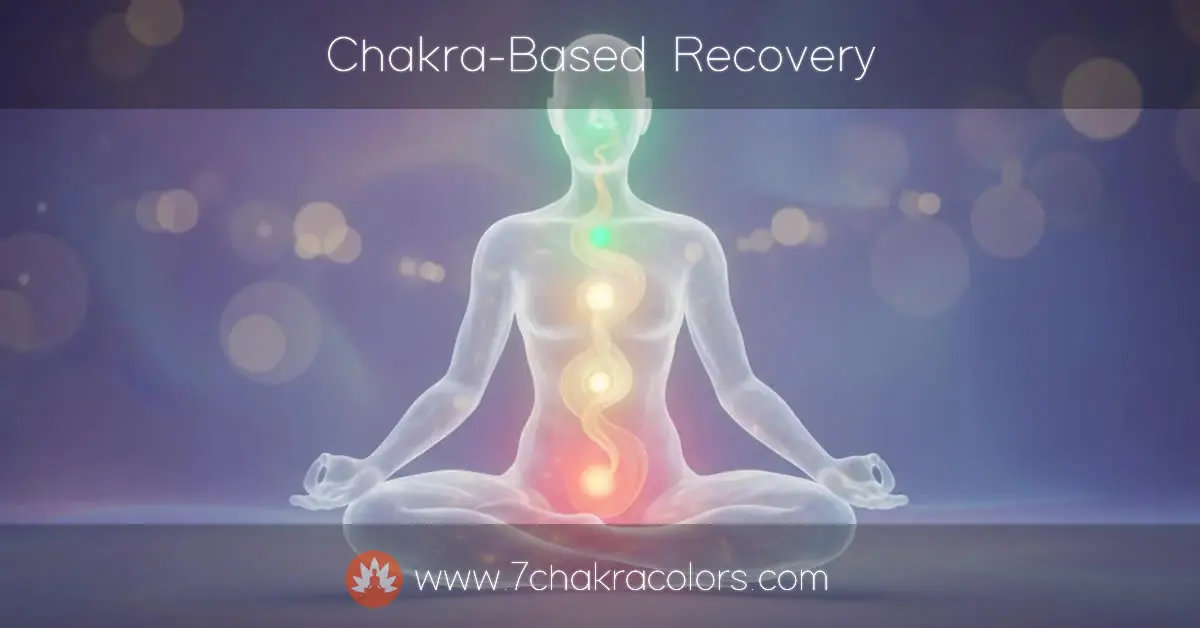
Through the chakra lens, this makes sense. Trauma tightens the flow of energy – especially through the centers connected to your sense of safety, your confidence, and how open you can be. The Root Chakra contracts when stability gets shaken. Your Solar Plexus feels unsteady when control slips out of your hands. The Heart Chakra might draw inward while you process what it all meant. This isn’t woo. It’s a sensitive system responding the way it was built to.
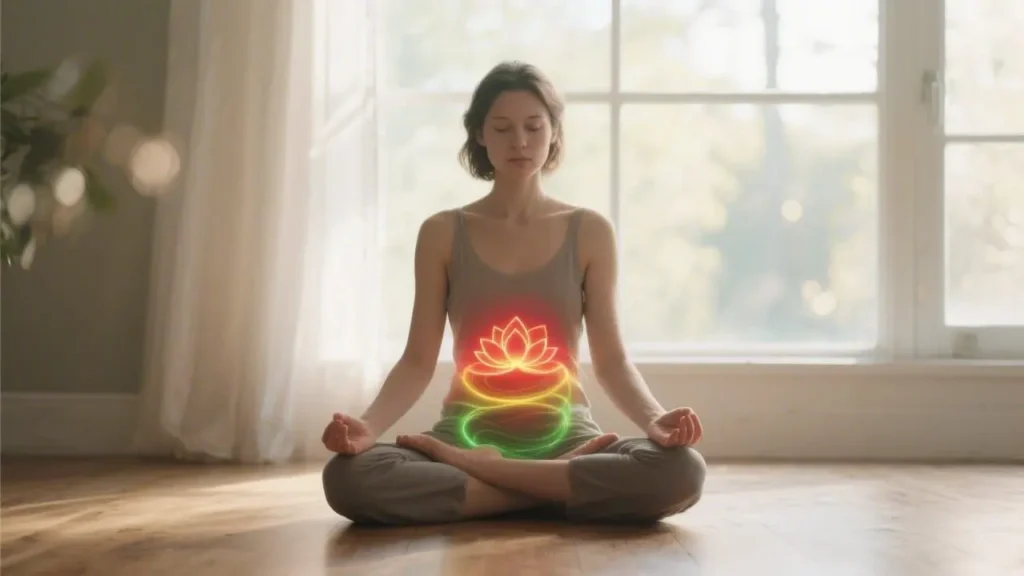
Recovery isn’t just physical. It’s about getting back into your own body – getting your inner world grounded again. Chakra-based practices help you send quieter, steadier signals down to your nervous system. You’re here. You’re safe. Your breath comes back.
How Trauma Disrupts the Chakra System
An accident doesn’t stay physical. It flips survival mode on. Your heart races. Your breath shortens. Stress hormones flood through you. In the moment, that response helps you react. Afterward, it can leave you living with a low hum of alertness, like your body never fully got the message that the crisis ended.

The Root Chakra gets hit first. This center handles your sense of safety, stability, and basic trust in the world. When something terrifying happens out of nowhere, the root clamps down hard. You feel jumpy during everyday moments. Restless. Oddly tense even when nothing’s happening. Normal tasks – running an errand, sitting at your desk – carry this faint edge. Your body braces for the next thing, the next shock.
The Solar Plexus Chakra takes its own hit. This is where your self-trust lives – your personal power. Accidents strip control away, and that loss lingers. You feel irritable. Self-doubt creeps in. There’s this raw, thin-skinned feeling you didn’t have before. Your mind moves forward, but your body remembers what happened.
The Heart Chakra shifts differently. Shock builds an emotional wall. You notice yourself stepping back, staying guarded, having trouble softening around people you normally trust. That protective move makes sense. Over time, gentle work can help your heart open again – without forcing anything.
Seeing these patterns brings relief. Nothing is wrong with you. Your system is just adjusting to the jolt.
Grounding the Root Chakra to Restore a Sense of Safety
After a scare, steadiness has to come first. The Root Chakra responds to simple, physical practices – things that make safety feel real, not theoretical.
Start with your breath. Feet flat on the floor. Breathe in slowly through your nose and let that breath sink into your lower belly. Exhale through your mouth. As you do, imagine tension draining down your legs, through your feet, into the ground. Stay relaxed – this isn’t about effort. A few minutes of slower breathing can ease your body out of that clenched, braced state.
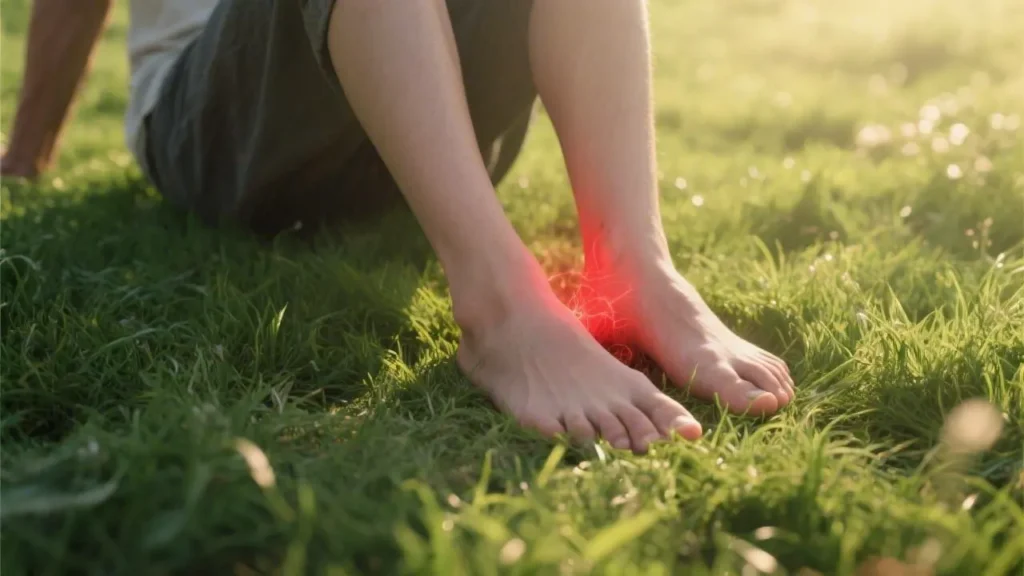
Visualization deepens what’s happening. Picture a deep red light at the base of your spine – glowing steady and warm. With each breath, let that red expand a little, spreading like a warm foundation building beneath you. When your mind snaps back to what happened, return to the red light. Don’t fight it. Just come back.
Your environment can help, too. Bare feet on grass. A firm back against a wall. A weighted blanket across your lap. The Root Chakra likes tangible reassurance. Weight, contact, repetition. Small signals that say, “You’re supported.”
Safety rarely comes back all at once. It grows through consistent cues that tell your body it doesn’t need to brace anymore.
Releasing Stored Stress from the Solar Plexus and Heart Chakras
Once you’re grounded, the next layer surfaces – right in the center of your body. The Solar Plexus and Heart Chakras hold what comes after: fear, frustration, that raw vulnerability, anger, sometimes shame.
The Solar Plexus sits in your upper abdomen. It’s tied directly to your sense of power – what you control, what you can do. After an accident, you feel that power drain away. Control vanishes.
Try this: place one hand on your upper stomach. Breathe into that space. With each inhale, imagine a warm yellow light getting brighter, clearer. With each exhale, let the tightness soften. You’re reminding your body what strength feels like – without forcing anything.

Writing can loosen what’s been stuck, especially when talking feels like too much. Leave the timeline alone and write about sensation instead. Were your shoulders up around your ears? Did your stomach clench? Did your chest feel heavy or tight? Simple words can take the edge off. The Solar Plexus settles when you tell the truth about what you feel, without turning it into a critique of yourself.
The Heart Chakra benefits from softer attention. Both hands on your chest now. Breathe normally. With each inhale, see a gentle green light expanding from the center of your chest. If affirmations help you, keep them simple: “I’m allowed to heal at my own pace.” Compassion lands differently when you remember how trauma’s impact on your mind and body can shape breathing patterns, muscle tension, and emotional reactions long after the initial shock.

You don’t pry stress out of these centers. It loosens through patience. Through attention. Through staying present with what’s actually happening.
Why Location Can Matter When Seeking Post-Accident Legal Support
Practical recovery after an accident depends on where it happened – that matters more than most people realize. Laws shift. Insurance structures change. Court systems work differently. And all of that shapes how your claim gets handled and how long it actually takes.
In Illinois – specifically in Chicago – rideshare cases follow different rules than you’d find in Indiana or Wisconsin. The insurance frameworks differ. Oversight structures aren’t the same. Bigger cities see more rideshare accidents, which means these cases show up in local courts more often. That changes things.
Cost varies regionally too. Many states use contingency-based arrangements for personal injury cases – meaning your lawyer gets paid from your settlement, not upfront. But how expenses get handled, documented, and paid back shifts depending on where you are. Big cities like Chicago mean more complex insurance coordination. Smaller jurisdictions work faster – less traffic through the courts, cleaner administrative steps. Dense metro areas like New York create procedural delays just from volume.
The rules themselves shift. Florida uses no-fault insurance – that changes how medical costs and claims work at the start. Documentation, timelines, how you access accident reports – it all varies by location. Someone seeking guidance from a Chicago Lyft accident lawyer may run into Illinois-specific procedures that don’t match what’s typical in nearby Midwestern states or in regions with distinct market conditions like California.
A provider who knows your local landscape changes everything. When your energy is already thin, predictability matters. Rules and standards shift by location – that’s why local knowledge actually helps.
Integrating Spiritual and Practical Recovery
Healing doesn’t move in a straight line. Some days feel calm. Other days, your body remembers before your mind catches up. That back-and-forth frustrates most people – it’s disorienting. But it’s normal.
Spiritual practice gives you ground to return to when everything tips sideways. Grounding brings stability back. Solar Plexus work rebuilds what you lost – that self-trust, that sense of your own power. Heart practices soften the wall that shock builds. Done consistently, these practices help your nervous system feel safe again – safe enough to finally release what it’s been holding.

Many people find healing feels steadier when they understand the principles behind healing trauma through chakras, because it frames recovery as a relationship with the body rather than a problem to “fix.” When safety becomes something you can feel, the rest of your energy has room to settle.
Recovery has practical pieces. It has emotional processing. It has energetic work. All three woven together. Give each layer what it needs, and over time, the accident becomes something that happened to you – not something your body keeps reliving.
Frequently Asked Questions About Chakra Recovery After Accidents
How long does it take to recover from post-accident trauma using chakra practices?
Recovery timelines vary. Some people notice shifts in 2-3 weeks with consistent practice. Others need months. It depends on trauma severity, your starting point, and how regularly you practice. Trauma recovery isn’t linear – some days feel calm, others your body remembers the shock. That’s normal. Consistent grounding and chakra work helps your nervous system settle gradually.
Can chakra practices replace medical treatment after an accident?
No. Chakra practices complement medical care but don’t replace it. If you have physical injuries, get medical evaluation and treatment. Chakra work addresses the energy and nervous system impact of trauma. Use both – physical healing for injuries, and energetic practices for the nervous system activation and emotional processing that trauma creates.
What if I can’t visualize the colored lights during chakra breathing?
Visualization isn’t required. Some people see colors clearly, others feel sensations, some just intend the practice mentally. All work. If visualizing feels forced, focus on the breathing itself and the physical sensations – breath dropping to your belly, tension releasing. Your nervous system responds to the breath and attention regardless of whether you see colored lights.
Is writing about the accident part of healing or does it keep reliving it?
There’s a difference. Reliving means getting stuck in the timeline and emotional charge. Healing writing focuses on sensations and feelings without judgment. Write “My shoulders were tight” not “I was so stupid for not seeing the car.” Skip the narrative. Write the body’s experience. This tells your nervous system you’re processing it, not stuck in it.
Should I work on all three chakras at once or focus on one?
Start with the Root Chakra. Safety grounds you first. Once that feels more solid, move to Solar Plexus work for self-trust. Then Heart for emotional softness. This order works with how trauma settles in your system. That said, your body knows what it needs – if one chakra calls to you, honor that. There’s no rigid timeline.
Can family members do chakra practices with me to support healing?
Yes. Having someone sit with you during breathing or visualization can feel supportive. Some people practice together, others prefer solo work. What matters most is consistency and your own willingness. If a partner or family member practices with you, they benefit too – your nervous system’s calmness influences theirs. Support helps, but your personal practice is what does the deepest work.
Blog Categories:
About the Author: