

Meditation for Students: How to Improve Your Concentration
Struggling to focus while studying? Learn why meditation beats coffee for concentration. Includes a 5-minute technique to sharpen focus and reduce exam anxiety.
Table Of Contents
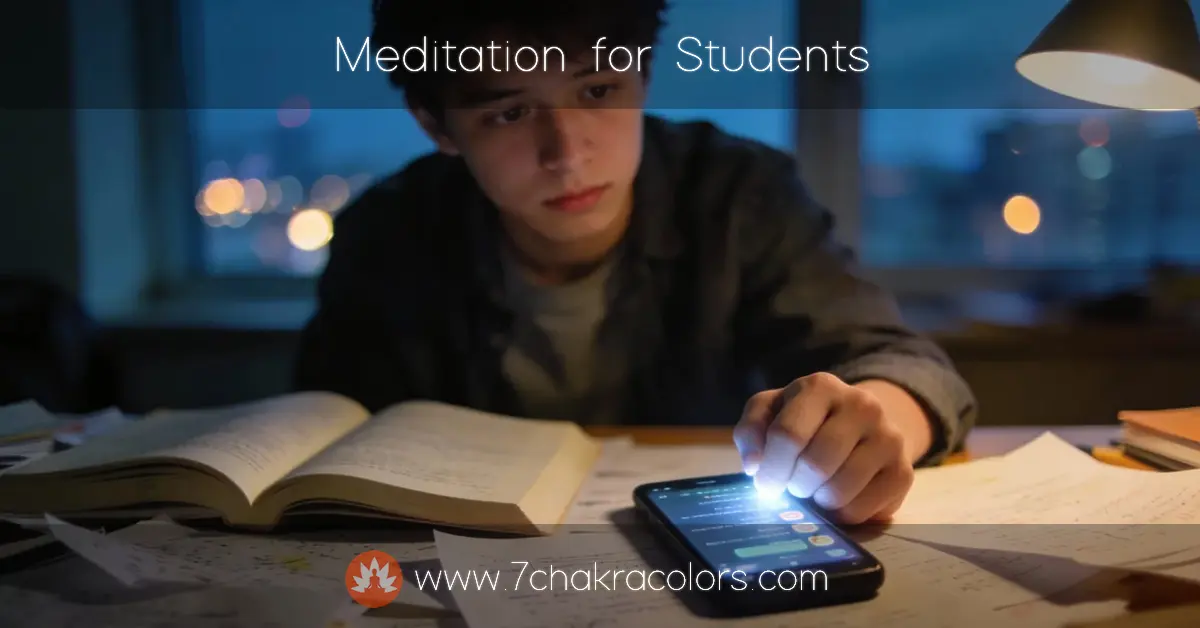
You sit down to study. Five minutes pass. Your phone’s in your hand.
Ten minutes after that, same paragraph. Third time reading it, still nothing sticking. Your brain’s everywhere at once – notifications pulling you left, that group chat blowing up, tomorrow’s exam sitting heavy in your chest, deadlines stacking up, plus whatever random thought just decided to show up uninvited.
Sounds familiar?
Concentration isn’t failing because you’re lazy or broken. Your nervous system’s maxed out. Academic pressure, digital everything, terrible sleep, trying to do seventeen things simultaneously – your attention capacity just can’t keep up with all that.
But here’s what most students don’t realize – focus is a trainable skill. Not through forcing yourself harder or downloading another productivity app. Through simple, natural practices that actually calm your mind instead of exhausting it further.
This article breaks down exactly why your concentration is shot and gives you practical, natural ways to fix it. Including one specific meditation technique you can use today.
Why Students Actually Struggle to Stay Focused
Your brain wasn’t designed for this.
The constant information intake – lectures, textbooks, social media, notifications, emails, assignments – creates mental fatigue that compounds daily. You’re processing more data before lunch than your grandparents processed in a week. And your brain has no recovery time.

Add stress and anxiety on top. Performance pressure. Grades that supposedly determine your entire future. Financial worries. Social dynamics. That low-grade panic sitting in your chest during exam season.
Then there’s the physical component everyone ignores. Poor sleep because you’re either studying late or scrolling before bed. Nervous system stuck in constant activation mode – fight or flight responses firing all day. No wonder sustained attention feels impossible.
What’s actually happening? Your mind never learned to focus in the first place.
Think about it. School taught you math, history, science. Nobody taught you how to train your attention. How to actually hold focus on something without getting yanked away every thirty seconds. How to catch yourself when your mind drifts off and guide it back without the whole frustrated internal dialogue about how you can’t concentrate.
That’s the skill gap causing the problem.
Natural Ways to Support Concentration
Before diving into meditation for students specifically, let’s talk about the foundation – calming your nervous system naturally.
Mind-Body Balance
Your body operates in two modes. Sympathetic mode – fight or flight, stress hormones firing, everything on high alert. Parasympathetic mode – where you actually rest, digest your food, repair tissue, feel calm.

Most students? Sympathetic overdrive.
All day. Every single day. Your body genuinely thinks you’re being chased by something dangerous when you’re literally just sitting at your desk trying to understand organic chemistry.
Fixing concentration starts with shifting that balance. Getting your nervous system out of panic mode and into a state where focus becomes possible.
Simple Lifestyle Supports That Actually Work
Some basics that make everything else easier:
Breath awareness. Not fancy breathing exercises yet – just noticing your breath throughout the day. Most students breathe shallow and fast, stuck in their chest. That signals stress to your body. Deeper, slower breathing tells your nervous system it’s safe to relax.
Start there. Notice your breath while walking between classes. Before opening your textbook. Waiting for your computer to boot up. Slower, deeper breathing sends your nervous system a message – hey, we’re actually safe here, you can relax now.
Gentle movement. Your body needs to discharge stress physically. Doesn’t need to be some intense workout – stretching works, walking outside works, basic yoga works. Just movement that feels good instead of punishing.
Twenty minutes outside moving your body does more for your focus than another hour forcing yourself to stare at notes.
Sound and frequency. Harsh environments create harsh mental states. Soft ambient sounds, nature sounds, singing bowls – these calm your nervous system without you doing anything. Put them on while studying. Let your brain relax into the background instead of fighting silence or chaotic noise.

Consistent rest. Sleep hygiene matters more than you think. Same bedtime when possible. Dark room. No screens for that last hour. Your brain consolidates information and resets attention capacity during sleep. Skip that, nothing else works right.
These practices create the conditions for better focus. But among all natural approaches, one stands out as the most direct training tool.
Meditation.
Why Meditation Works Specifically for Students
Meditation works like a gym for your attention.
You don’t walk into a gym expecting to deadlift 300 pounds on day one. Your muscles need training first. Same deal with focus – you can’t expect laser concentration without actually training that mental capacity.
Meditation does exactly that.
What happens when you meditate? You’re practicing holding your attention on something. Could be your breath. A sound. Some physical sensation. Whatever anchor point you choose.

Your mind wanders – because that’s just what minds do. You notice it wandered. You bring it back. That return? That’s one rep.
Do that enough times, your attention gets stronger. Not magically. Through repetition.
The benefits show up all over the place. You stay focused during lectures and while reading. Mental clarity improves when you’re problem-solving. Emotional regulation gets easier during exam stress. That constant mental noise and anxiety spiral thing – it quiets down.
And unlike studying harder or drinking more coffee, meditation doesn’t create additional stress. It reduces it while simultaneously improving your cognitive function.
The research backs this up. College students who meditate regularly show better working memory, improved test scores, lower anxiety – compared to students who don’t meditate. Brain scans show more activity in attention-related areas, less activity in the regions tied to mind-wandering.
Translation? Your brain physically rewires itself to focus better.
Types of Meditations That Improve Concentration
Different meditation techniques work differently. Some specifically target attention training.
Breath-focused meditation builds the foundation. You place your attention on your breath – the actual sensation of air moving in and out. Simple enough. Your mind wanders off, you guide it back to the breath. Every single time you bring attention back, you’re strengthening that focus muscle.

This works because breathing happens automatically. You’re not forcing anything. Just observing something natural and anchoring awareness there.
Body awareness meditation reduces that restless, fidgety feeling that destroys concentration. You scan through your body, noticing physical sensations without changing them. Grounds scattered mental energy into present-moment awareness.
Students with anxiety especially benefit here. All that nervous energy stuck in your chest and stomach – body awareness helps it discharge naturally.
Sound-based meditation uses tones or frequencies as your anchor point. Could be a bell, singing bowl, ambient music, even a repeated mantra. Your ears naturally track sound, making this easier than breath focus for some people.
The sound gives your scattered thoughts something to land on instead of bouncing everywhere.
Guided focus meditations work best for beginners. A voice walks you through exactly what to do. Removes the guesswork. You just follow instructions while your attention gets trained in the background.
Start here if sitting quietly sounds impossible. Guidance keeps you on track.
One Simple Meditation Technique for Students
Enough theory. Here’s something you can do right now.
5-Minute Focus Reset Meditation
This technique takes five minutes. That’s it. Works before studying, between classes, before exams, or whenever your brain feels completely fried.

Find a position. Chair works. Floor works. Your desk. You can lie down if you want – just try not to fall asleep. Close your eyes or let your gaze soften downward.
Bring attention to your breath. Don’t change it yet. Just notice it happening. Feel the air moving through your nose. The rise and fall of your chest or belly. Wherever the sensation feels clearest.
Start the counting pattern. Breathe in slowly through your nose – natural pace, don’t force anything. Exhale through your mouth. End of that exhale, count “one” silently in your head.
Next breath cycle. Inhale through the nose, exhale through the mouth, count “two.”
Keep going up to ten. Then start over at one.
When your mind wanders – and it absolutely will – bring it back. You’ll lose count. Forget what number you’re on. Start thinking about your assignment, or dinner, or that thing someone said in class yesterday. Totally normal.
The second you notice you’ve drifted off, just return to the breath. Start counting from one again.
That return is the actual practice. That’s where focus gets trained.
Set an intention. After five minutes, before opening your eyes, pick one clear intention for your next study session. Something like “I’m focusing on chapter three for thirty minutes.” Keep it specific. Keep it realistic.
Open your eyes. Notice how you feel. Different? Calmer? More centered? Even slightly?
That’s your baseline shifting.
The key here – consistency beats perfection. Five minutes of messy, distracted meditation where you lose count seventeen times does more for your focus than zero minutes of perfect meditation that never happens. If you want to go deeper on the science behind this, how yoga and meditation can help improve focus in research breaks down the evidence in an academic context.
How to Actually Use This in Your Daily Routine
Don’t turn meditation into another stressful thing on your already-too-long to-do list.
Best times: First thing in the morning, before your brain fills up with clutter. Right before studying to clear the mental fog. Between classes as a reset button. Before exams when your nervous system needs calming.
Even three minutes works. Stop thinking you need an hour of perfect meditation on a mountain somewhere. You need three to ten minutes in your dorm room or campus library.
Use it as a mental reset. When you’ve been studying for two hours and can’t absorb anything else – meditation break. Not a phone break. Meditation actually resets your attention capacity. Your phone depletes it further.
Same principle applies when you’re feeling overwhelmed. Five minutes of breath counting does more than twenty minutes of stress scrolling. If breath counting alone isn’t cutting it, 10 ways to calm your mind offers a wider toolkit for those moments when everything feels like too much.
Track what works for you. Some students focus better after morning meditation. Others need it right before tackling difficult subjects. Experiment. Notice patterns. Adjust accordingly.
The practice works when you actually do it. Not when you think about doing it or plan to start next week.
Training Your Mind for Academic Success
Concentration isn’t something you either have or don’t have.
It’s a skill. You can train it naturally. No medication required, no extreme lifestyle overhaul. Meditation gives you the most direct path – simple, accessible, doesn’t cost anything, and actually works.
Your scattered focus isn’t permanent. That mental fog isn’t just how your brain works. The constant distraction isn’t inevitable.

What changes things? Small daily practice that compounds over time.
Start today. Five minutes. Close your eyes, count your breaths, notice when you drift off, guide attention back. Do it again tomorrow. Day after that too.
Two weeks in? You’ll notice the shift. Your mind feels sharper. Studying gets less of a struggle. That exam anxiety eases up. Focus starts feeling natural instead of something you have to force.
The technique is simple. The results are real. The only thing missing is you actually trying it.
So try it. Right now if possible. Your concentration – and your grades – will thank you.
Frequently Asked Questions About Meditation for Students
1. Can meditation really help students improve concentration?
Yes. Meditation directly trains your attention span. Each time you notice your mind wandering and bring it back, you strengthen the same mental skill required for studying and learning. Research shows students who meditate regularly experience better working memory, improved focus, and reduced mind-wandering.
2. How long does it take to see results from meditation?
Many students notice small improvements within 1–2 weeks, such as feeling calmer before studying and getting distracted less often. More noticeable changes in concentration, memory retention, and exam anxiety typically appear after 3–6 weeks of consistent practice.
3. Do I need to meditate for a long time each day?
No. Short sessions are highly effective. Even 3–10 minutes of daily meditation can significantly improve focus. Consistency matters far more than duration, especially for students with busy schedules.
4. What type of meditation is best for improving focus?
Breath-focused meditation is the most effective starting point. Sound-based and guided meditations also work well, especially for beginners or students who struggle to sit in silence. The best technique is the one you’ll actually practice regularly.
5. Can meditation reduce exam stress and anxiety?
Yes. Meditation calms the nervous system and reduces the fight-or-flight response triggered during exams. This leads to clearer thinking, improved recall, and less emotional overwhelm during high-pressure situations.
6. Is meditation better than taking breaks on my phone?
Yes. Phone breaks often increase mental fatigue by overstimulating your brain. Meditation, even for a few minutes, actually restores attention capacity and helps reset your focus before returning to studying.
7. What if my mind keeps wandering during meditation?
This is completely normal. Mind-wandering is part of the training process. Every time you notice distraction and gently return your attention, you’re strengthening your focus. Wandering doesn’t mean failure—it means the practice is working.
8. Can meditation help with poor sleep caused by studying?
Yes. Meditation calms mental overactivity and helps your nervous system shift into rest mode. Practicing in the evening can improve sleep quality, which directly supports better memory, learning, and concentration the next day.
9. When is the best time for students to meditate?
Good times include first thing in the morning, before studying, between classes, or right before exams. Even a short session can reset your focus and reduce mental fatigue.
10. Do I need any special tools or apps to meditate?
No. Meditation requires nothing more than your attention. You can sit quietly and focus on your breath. Optional tools like guided audio or calming sounds can help, but they’re not required for effective practice.
Blog Categories:
About the Author: