
Energetic Branches of Hand Problems: What Your Hands Are Holding On To
The energetic branches of hand problems – what your wrists, fingers and palms say about giving, control and the heart chakra, and when to see a doctor.
Table Of Contents
Ride a crowded tram for twenty minutes and stop looking at faces. Look at hands instead. Somebody’s twisting a ring round and round like a radio dial that won’t find the station, and the man by the door has his knuckles white on the strap even though the tram’s barely moving. Faces can be arranged. Hands mostly can’t.
I’ve thought about that tram more than is probably normal while writing about the energetic branches of hand problems. My working idea, borrowed from a long line of energy healers, is that hands keep track of how you give and take, and how tightly you hang on. Stiff fingers, an aching wrist or hands that go numb at night can carry a bit of that story. A doctor gets the first look, always. After that, the energetic angle can help with what the scan doesn’t explain and leave you with a few small things to try.
If your legs are the roots, then your arms and hands are the branches – the part of you that reaches out toward people, work, sunlight, whatever you happen to be after. Roots hold. Branches reach, and they also cling on when the wind picks up.
What Are Your Hands Really Saying Energetically?
Listen to how people talk about hands and you’ll hear control everywhere. “Get a grip,” your boss says. Your friend can’t help because her hands are tied (translation: she’d rather not). And at some point, usually at a funeral, someone squeezes your arm and advises you to let go, like it’s a setting you forgot to switch off. I find energy work interesting partly because it takes that kind of talk at face value.
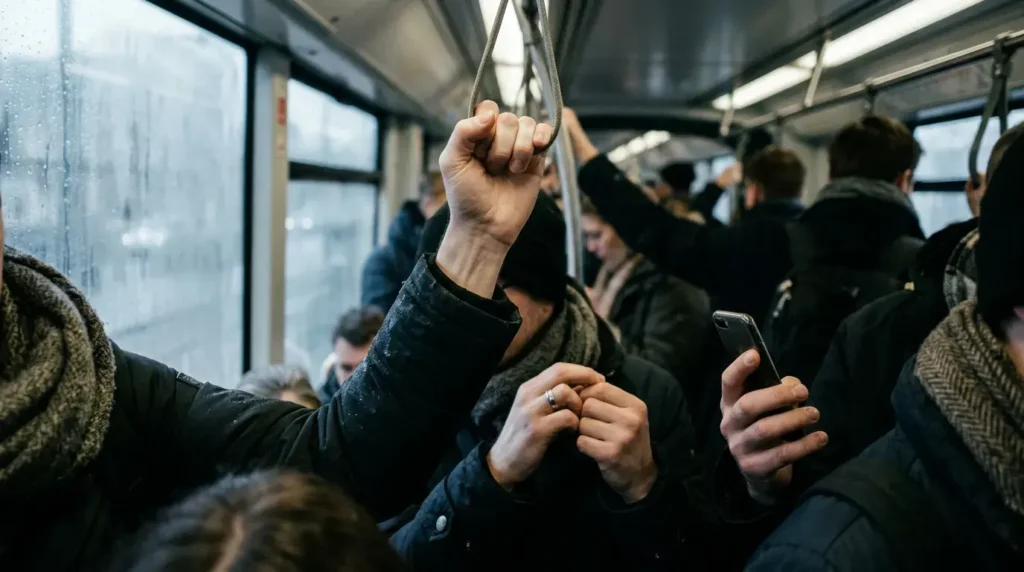
Hands do two quite different jobs. They reach out, and they hang on. The reaching side is about giving and receiving – offering help, accepting it, touching the people you love – while the hanging-on side is about control, or how much of your life you’re trying to steer with a white-knuckle grip.
When one side gets lopsided, I’d bet the hands notice early. A wrist that aches through a month of looking after a sick parent. Then the fingers stiffen up in the very week you’re holding a wobbly project together single-handed (pun only slightly intended). I’d never call that punishment. If it’s anything, it’s a diary written in tendons.
Some of it is symbolism, sure. The rest is your nervous system doing its usual thing. Clench your jaw for a week and see if your forearms don’t join in, or watch anyone who’s running late – they’ll be strangling the steering wheel, then the phone, as if squeezing harder could make the traffic move.
Hands, the Heart Chakra and Those Little Palm Chakras
Most chakra maps send the hands back to the heart chakra, Anahata, tucked behind the breastbone. Branches growing out of the trunk, if you like. I’ve always had a soft spot for the name. It means something like “unstruck”, a sound that happens without anything hitting anything, and I take that as a hint about the kind of giving the heart likes best: the sort nobody had to ask for.
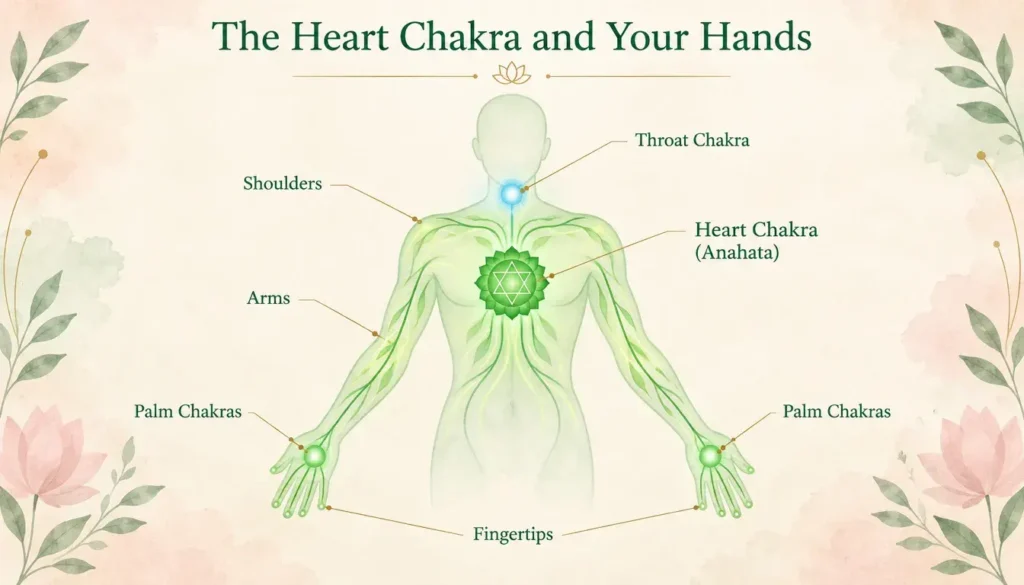
From the chest, the story goes, that energy runs out across the shoulders, down the arms and into the palms. I like to picture the arms as the heart’s two delivery routes. Reiki and several other traditions also place small palm chakras in the center of each hand, which is part of why so many healers hover their hands just above a person instead of pressing down.
The throat chakra gets a say too. Plenty of us talk with our hands long before the words arrive, typing out a reply or jabbing a finger at the one spot on the map that matters. If there’s something you haven’t managed to say yet, it wouldn’t surprise me to find it sitting in your fingers.
Wrists, Thumbs, Palms: What Each Part Might Be Saying
I tend to read the hand in pieces, because each bit seems to specialize. Take these as prompts to think with (bodies never read the rulebook anyway).
Wrists: Where Holding On Turns Into Pressure
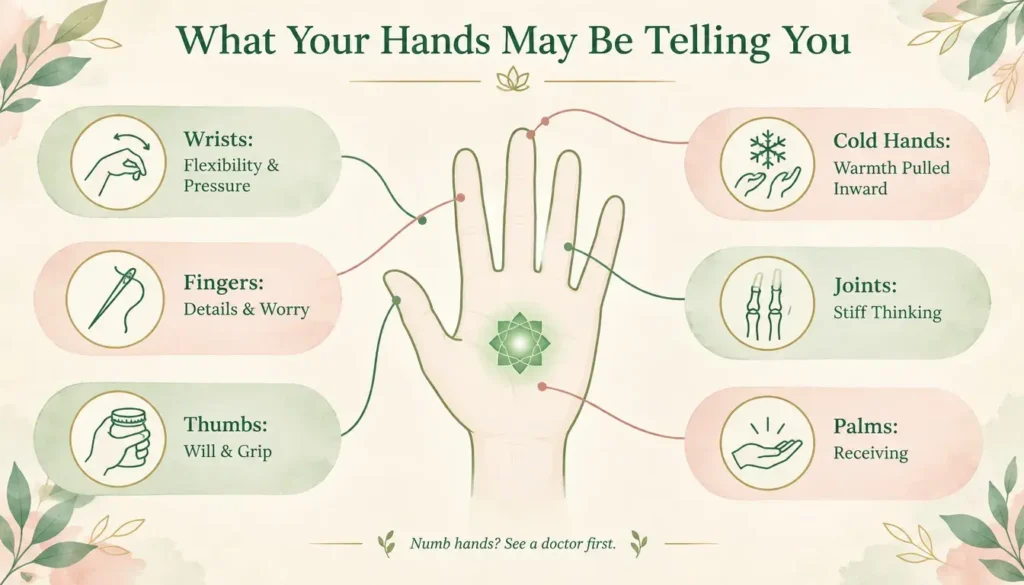
Wrists are the hinge between the arm and everything the hand does, and energetically they’re about how flexibly you handle things. Rigid wrists tend to belong to people who’ve decided there’s exactly one right way to do a task and it’s theirs. Wrists that give out tell a different story, more like being worn down by carrying too much for too long.
Some wrist trouble is mechanical, though, and the carpal tunnel is the classic case. Picture a cramped little archway of bone with a ligament for a roof, and nine tendons plus the median nerve all trying to squeeze through at rush hour. Swelling or too much repetitive bending crowds that nerve, and the thumb and the three fingers beside it start to tingle and go numb. The little finger is usually left out, which is a useful clue. Splints and injections settle it for plenty of people. When they don’t, a short operation to release the ligament is common, and anyone heading that way will find this guide to carpal tunnel release surgery preparation handy – it covers everything from stopping certain medicines a week ahead to setting your kitchen up for one-handed living. Energy work can keep you company through all that. It won’t replace it.
Fingers: Small Details and Getting Things Right
Fingers deal with detail. They thread needles, type passwords, untangle the necklace you swore you’d put away properly. Of the 27 bones in each hand, the fingers claim fourteen – not bad for the bits doing the fiddliest jobs. In energy terms I’d link aching or stiff fingers to small-stuff worry, the kind that has you rereading one email six times and still hovering over send.
Thumbs: Will and Holding Your Ground
Your thumb is what lets you grip at all, so in energy terms it’s tied to willpower and to how firmly you take hold of your own life. Pain at the base of the thumb, the kind that flares when you turn a key or open a jar, gets read as forcing your will on situations that won’t budge. Funny how often it turns up in whoever is the designated jar-opener at home.
Palms: Sweaty, Itchy or Closed
Nothing gives away nerves before a meeting quite like a damp handshake. Folklore has its own take on itchy palms – money coming in, or going out, and every grandmother seems to have a different rule about which hand means which. From an energy angle the palms are about receiving, so palms that stay clenched or clammy can point to a hard time letting good things in – compliments included.
Knuckles and Joints: Stiffness That Won’t Shift
Stiff, aching finger joints first thing in the morning are often read as thinking that’s set like old plaster. Fair enough as a metaphor. But arthritis in the hands is extremely common, both the wear-and-tear kind and rheumatoid arthritis, which is autoimmune and needs a rheumatologist rather than a crystal. A curious one here: Dupuytren’s contracture, where the fingers slowly curl in toward the palm, is sometimes nicknamed Viking disease because it turns up so often in people of Northern European descent. Hard to think of a more literal picture of a hand that won’t open.
Cold, Numb or Tingling Hands
Some hand sensations wander. Raynaud’s is a strange one to watch: in the cold, fingers go white or a bit blue, then turn bright red once the blood comes back, and a stressful afternoon can trigger it as reliably as frost. To me that looks like the heart pulling its warmth back to the center and leaving the branches to fend for themselves. Still, numbness and tingling need a doctor’s eye, because the cause might sit in your neck or your wrist, or be something like diabetes.
Hand Problems and Their Energetic Meaning at a Glance
For anyone who jumped straight here from the top (it happens), this is the whole hand in one table.
| Hand Area | Energetic Theme | Common Signs |
|---|---|---|
| Wrists | Flexibility in how you handle things | Stiffness, aching, carpal tunnel tingling |
| Fingers | Details and getting things right | Sore, stiff fingers during small-stuff worry |
| Thumbs | Willpower and your grip on life | Pain at the base when opening jars or turning keys |
| Palms | Receiving and letting good things in | Sweaty, clammy or clenched palms |
| Knuckles and Joints | Thinking that’s set in place | Morning stiffness and aching joints |
| Whole Hand | Warmth and connection from the heart | Cold, numb or tingling hands, Raynaud’s |
Gripping Too Hard or Barely Holding On?
Most chakra writing talks about a “blocked” heart and stops there. With hands I find it clearer to think in terms of grip. Some people hold on too tight, others can hardly hold on at all, and the hands behave quite differently in each case.
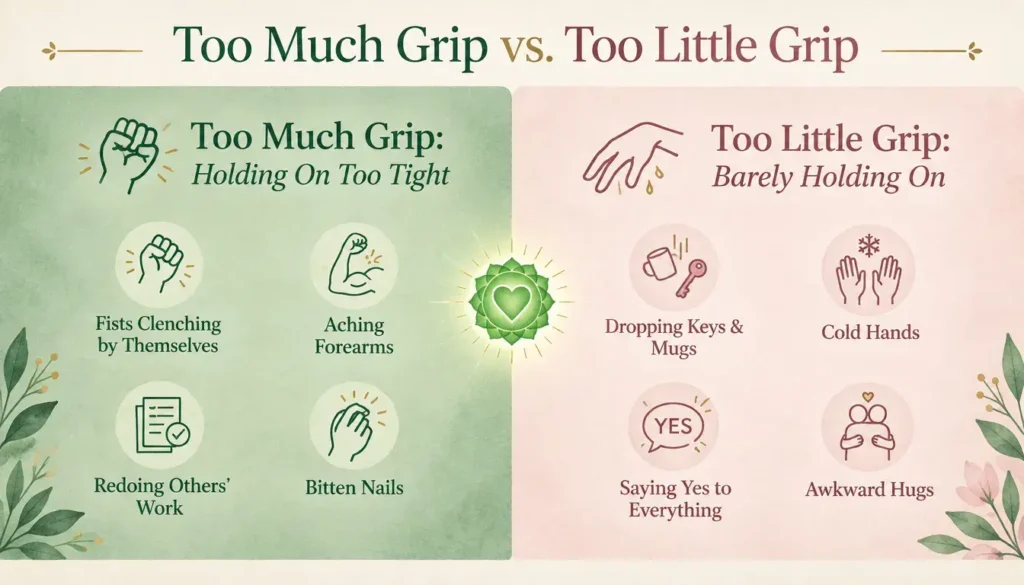
When there’s too much grip, you might notice:
- Fists that clench by themselves while you’re reading the news
- Aching forearms after a day where you didn’t lift anything heavier than a phone
- Redoing a colleague’s work because handing it over felt worse than doing it twice
- Nails bitten down during anything with a deadline
When there’s too little grip, it looks more like:
- Keys and mugs slipping out of your hands more often than they used to
- Hands that stay cold even with the heating on
- Saying yes to every favor and then quietly running out of steam
- Not quite knowing what to do with your arms when someone hugs you
Most of us slide between the two depending on the year we’re having. I’d work on both the same way, by opening and closing the hands with a bit more attention and asking what exactly you think would happen if you let go.
Hand Symptoms You Shouldn’t Try to Breathe Through
I’m all for energy work, but a palm chakra meditation isn’t going to free a trapped nerve. If a hand symptom is new or steadily getting worse, or you simply can’t explain it, see a doctor before anything else – and with a couple of them, don’t even wait for morning.

Ring 112 in Europe or 911 in the US the moment you notice:
- One hand or arm suddenly going numb or weak, above all if the face droops or speech slurs at the same time, because that’s how a stroke can look
- Pain or a heavy pressure in the chest creeping into the arm, jaw or back, maybe with a cold sweat or shortness of breath
- A deep cut or a finger bent at an angle it shouldn’t be, or fingertips turning pale and cold without warning
If tingling keeps dragging you out of sleep, or your grip has been fading, book an ordinary appointment. Same goes for joints that wake up hot and puffy. With that side handled, energy work has something solid underneath it.
A 5-Minute Practice for Tight, Tired Hands
This is the one I’d do at the desk, between emails, when the mouse hand starts complaining.
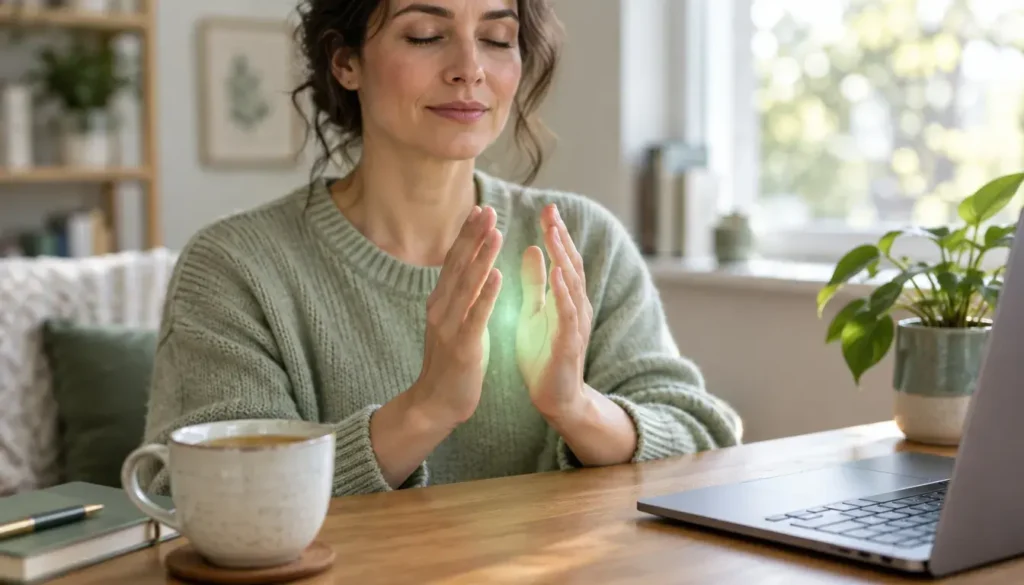
- Feet flat on the floor, hands resting palm-up on your thighs like you’re expecting someone to pass you a parcel. Give it a moment and you’ll probably find one hand is tenser than the other.
- Curl both hands into loose fists, thumbs outside, and squeeze at roughly half strength. Wait one breath. Then spring the fingers wide open, starfish-style, and do that ten times.
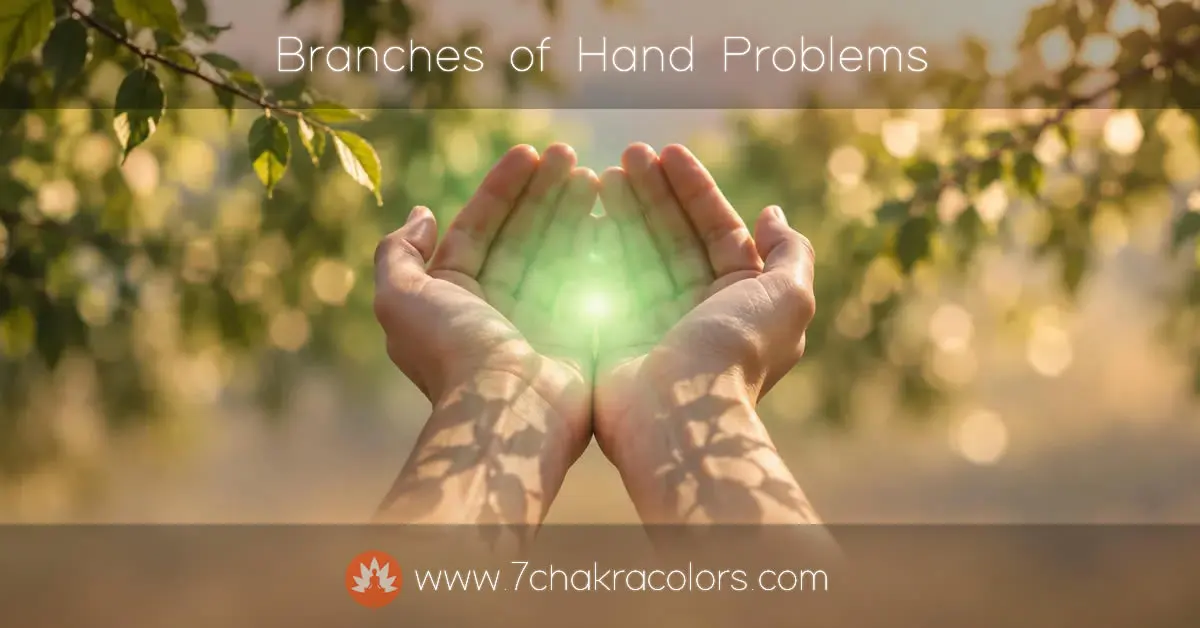
- Rub your palms together fast, the way you would at a bus stop in January, then pull them a few centimeters apart. That faint warm buzz in the gap? I’m quite happy calling it the palm chakras.
- Put one palm on the center of your chest with the other hand over it. As you breathe in, let the air rise up under your hands, and as you breathe out imagine soft green light spilling down your arms and out through the fingertips.
- Drop your arms and shake the hands out loosely, like a swimmer waiting on the blocks. Clicky or sore wrists just mean you keep everything smaller.
Once a day for a week is enough to judge it. I’d keep an eye on how hard you’re holding the steering wheel by the end.
Small Habits for Hands That Work All Day
The routine is the easy bit. What your hands do for the other sixteen waking hours counts for more.
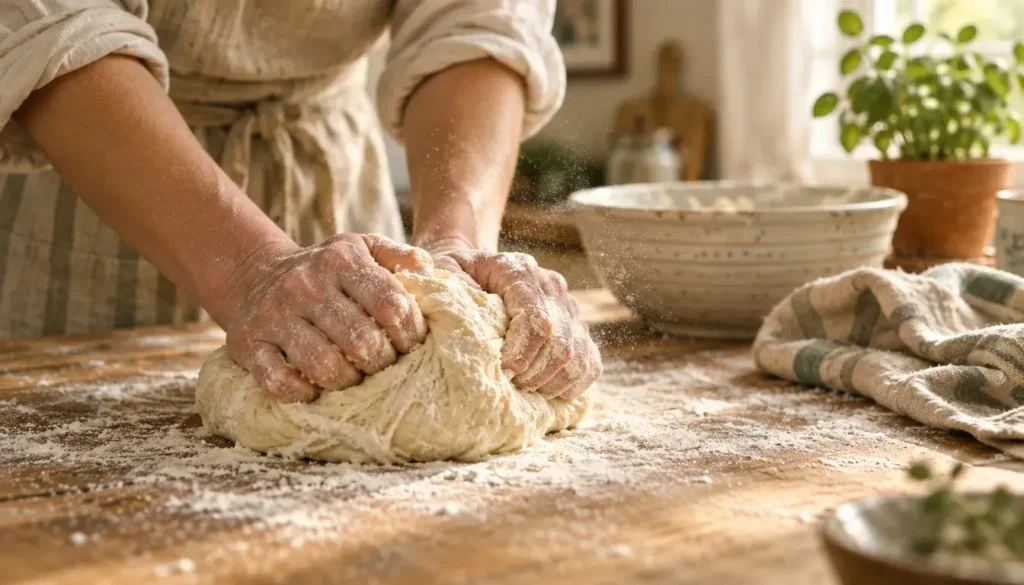
Notice how you hold your phone, for a start. Most of us clamp it like it might escape, and loosening that grip by a third is about the cheapest physiotherapy there is. Something slow and tactile helps a surprising amount too, whether that’s kneading bread dough on a Sunday or repotting a plant and getting soil under your nails. And let other people do things for you now and then (yes, even the washing up). Receiving is a hand skill like any other, and plenty of us are badly out of practice.
Learning to Open Your Hands Again
Your hands have done nearly everything for you, from your first shaky signature to every cup of tea you’ve ever made. They’re allowed to rest.
Anything numb, weak or swollen goes to a doctor first. Beyond that, choose one habit from here and live with it for a week, then see what your hands have quietly stopped clutching.
Frequently Asked Questions About the Energetic Branches of Hand Problems
What do hand problems mean spiritually?
In energy work, the hands are read as the body’s branches, the part that reaches out to give and receive, and also the part that grips. So trouble in the hands is often linked to control, or to how easily you accept help and affection. I’d hold that as a question to explore rather than a diagnosis. Hand pain, numbness or weakness that’s new or getting worse should be checked by a doctor first, and the energetic reading can then sit alongside that care.
Which chakra is connected to the hands?
Most chakra systems link the hands to the heart chakra, Anahata, which sits behind the breastbone. Its energy is said to travel across the shoulders and down the arms into the palms, which is why the hands are tied to giving, receiving and touch. Many traditions also describe small palm chakras in the center of each hand. The throat chakra plays a part as well, since so much of how we express ourselves happens through writing, typing and gesture.
What are palm chakras?
Palm chakras are small minor energy centers that Reiki and several other traditions place in the middle of each palm. They’re described as the points where energy flows out when you give, heal or touch, and flows back in when you receive. A simple way to feel them is to rub your hands together briskly for a few seconds, then hold them slightly apart. Most people notice a faint warmth or tingling in the gap, which energy healers read as palm chakra activity.
Can stress cause hand pain or numbness?
Stress has real physical effects on the hands. Tension tends to travel from the jaw and shoulders into the forearms, and people under pressure often grip their phone or steering wheel far harder than needed, which can leave hands and wrists sore. Stress can also trigger Raynaud’s, where fingers go white or blue. Numbness, though, often has a mechanical or medical cause, such as carpal tunnel syndrome, a nerve problem in the neck or diabetes, so always get it checked by a doctor.
What does wrist pain mean emotionally?
Metaphysical writers usually link the wrists to flexibility, meaning how adaptable you are in the way you handle things. Stiff, rigid wrists are read as insisting there’s only one right way to do something, while weak or aching wrists can suggest you’ve been carrying too much for too long. Wrist pain also has very physical causes, and carpal tunnel syndrome is one of the most common. If your thumb and first fingers tingle, or the pain wakes you at night, see a doctor.
How can I open my palm chakras?
The simplest way is regular, gentle attention. Rub your palms together until they’re warm, hold them a few centimeters apart and notice the sensation in between. Then place both hands over the center of your chest and imagine soft green light flowing down your arms into your fingertips as you breathe out. Stretching the fingers wide helps too. A few minutes a day for a week is usually enough to notice warmer, more relaxed hands, and sometimes a looser grip on life in general.
When is hand numbness an emergency?
Call 112 in Europe or 911 in the US if one hand or arm suddenly goes numb or weak, especially if the face droops or speech slurs at the same time, as these are warning signs of a stroke. Chest pain or pressure spreading into the arm, jaw or back is also an emergency, since it can signal a heart attack. Numbness after a hand injury, or fingers suddenly turning pale and cold, needs urgent care too. Energy work belongs after the medical check, never instead.
Blog Categories:
About the Author: