
How to Use Color as a Visual Cue in Meditation
Learn how to use color as a visual cue in meditation. Pair chakra colors with breath and affirmations, and carry simple color reminders into your daily life.
Table Of Contents
You sit down, close your eyes, take three good breaths. And then your brain hands you the grocery list. Then an email you forgot to answer. Then something embarrassing you said in 2014.
Totally normal. Wandering is what minds do – meditation was never about stopping that, only about noticing it and coming back. The hard part is the coming back. That’s where a visual cue helps, and color happens to be one of the easiest cues you can work with.
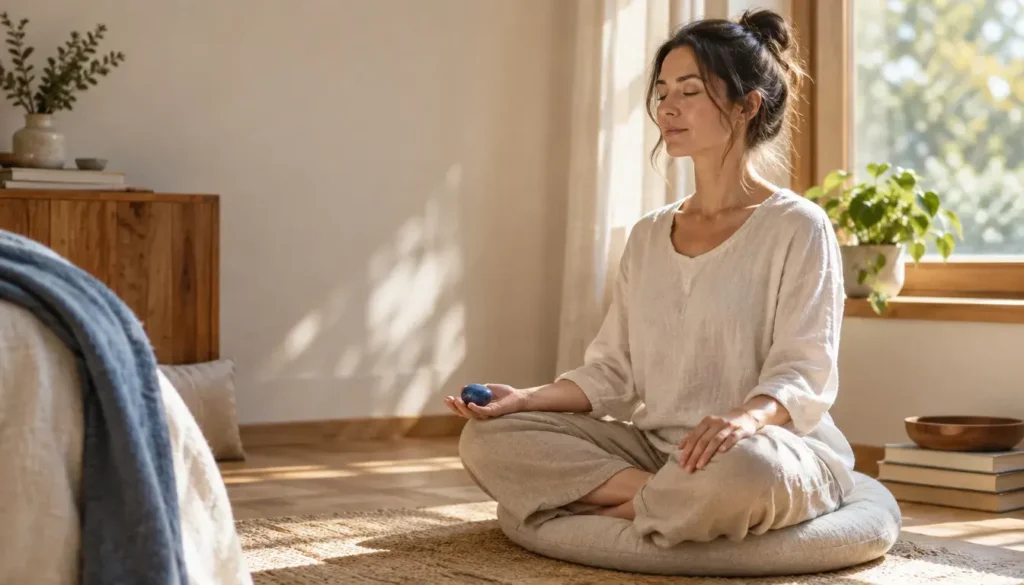
No medical claims here, and no need to buy into anything mystical. Think of color as a bookmark for your attention. Something simple you can return to when your thoughts start drifting off somewhere else.
Why Visual Cues Work in Meditation
Your attention likes having somewhere to land. The breath is the classic anchor, but for a lot of people it’s too subtle at first – especially on a stressful day, when breathing feels like background noise you can’t quite tune into.
A color is louder. You can see it, picture it, even hold it in your hand if it’s on an object. That gives your mind a concrete resting point instead of a vague instruction to “focus.”
Mindfulness guides from Mindful.org demonstrate that using physical objects as mindfulness anchors helps transition your busy brain out of automatic mental loops. Incorporating colorful physical items into your quiet meditation space reinforces your core daily intention.
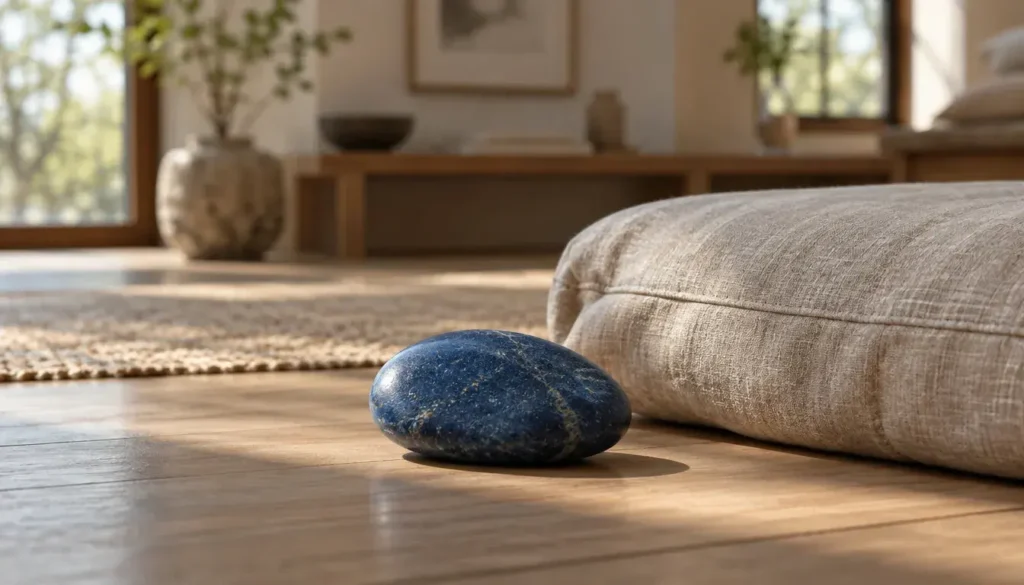
Then there’s the habit side of it, which might be the bigger deal. Use the same color with the same practice for long enough, and the color starts pulling you into that state all by itself. You see deep blue, your shoulders drop a little. Not magic – just repetition doing what repetition does.
Start With Your Eyes Open
Here’s a small trick that makes a big difference. Before shutting your eyes, pick one colored thing in the room and just look at it for half a minute or so. The cushion you’re sitting on, if it happens to be blue. A green plant. The orange spine of a book on the shelf.
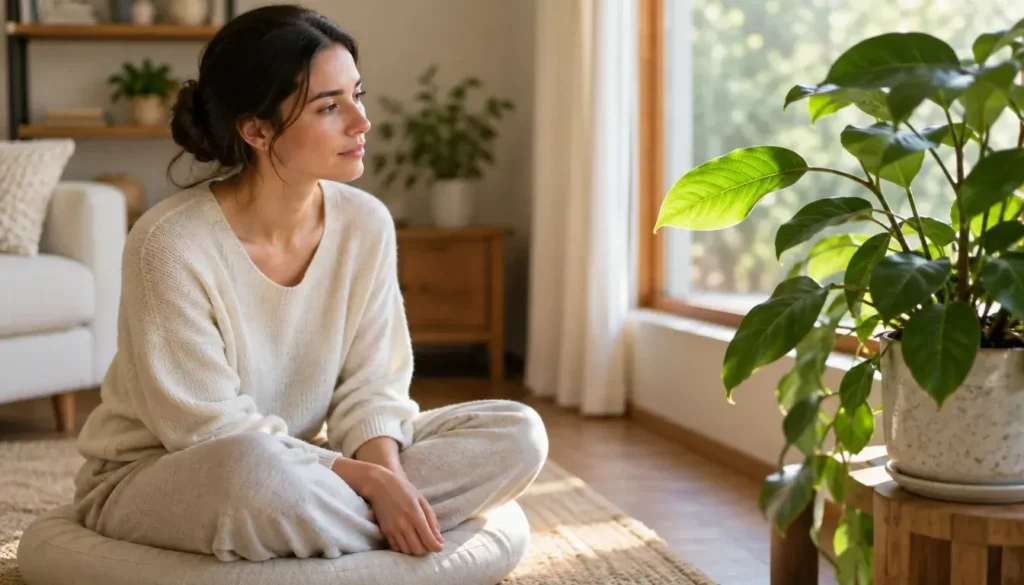
Look at it properly, the way you’d stare at a paint sample in a hardware store. Is it more navy or more teal? Where does the light catch it? Then close your eyes and hang on to that color for the first few breaths. Sounds almost too simple, I know. But it means you’re not starting the session from zero, with half your head still stuck in your inbox.
Chakra Colors as Meditation Anchors
Stuck on which color to pick? The chakra system helps here. It has seven energy centers, each with its own traditional color and theme, so choosing a color quietly gives your session a direction as well. Red for grounding, orange for creativity, yellow for confidence, green for connection – you get the idea.
I’d use it loosely, more like a map someone sketched on a napkin than a set of rules. Whether you buy the energy side of things doesn’t matter much for this. A color plus an intention. That’s all you need.
One tip – pick one. Working with all seven at once gets messy fast, and you end up with a rainbow of to-dos and no real focus. Go with whatever area feels most pressing this week and stick with it for a while, even when it starts to feel a bit boring.
| Chakra | Color | Meditation Focus | Everyday Visual Cue | Sample Affirmation |
|---|---|---|---|---|
| Root | Red | Grounding and safety | Red stone in your pocket or by the front door | “I’m safe right here, right now.” |
| Sacral | Orange | Creativity and enjoyment | Orange notebook or pen on your desk | “I let myself create and enjoy.” |
| Solar plexus | Yellow | Confidence and willpower | Yellow sticky note on your laptop | “I can handle what today brings.” |
| Heart | Green | Compassion and connection | A green houseplant you see every morning | “I give and receive kindness.” |
| Throat | Blue | Clear, honest expression | Blue ring, bracelet or phone wallpaper | “I speak my truth with calm confidence.” |
| Third eye | Indigo | Intuition and focus | Indigo mug for your morning coffee | “I trust what I already know.” |
| Crown | Violet | Stillness and perspective | Violet candle or crystal on your nightstand | “I’m part of something bigger.” |
Example: Blue for Throat Chakra Affirmations
Maybe there’s a hard conversation sitting on your calendar for Thursday. Or you’ve noticed you keep nodding along in meetings when you don’t agree at all. That’s the kind of thing people connect with the throat chakra – and the throat chakra’s color is blue.

A session could look something like this:
- Get comfortable, then look at something blue for a bit. A scarf works. So does a mug, or a photo of the sea on your phone.
- Shut your eyes and imagine that blue sitting low in your throat, roughly where your collarbones meet.
- Breathe in slowly to a count of four, and let the out-breath stretch to six.
- Every time you breathe out, say to yourself: “I speak my truth with calm confidence.”
- Your mind will wander off. When it does, go back to the blue first. Then the breath. Then the words.
Five minutes is enough. Longer is fine too, but length isn’t what you’re building here – you’re building an association, so that blue slowly starts to mean “slow down and say it clearly.”
How to Use Color as a Cue in Chakra Meditation, Step by Step
Nothing about that routine is specific to blue. Change the color, change the phrase, and you can run the exact same thing for any chakra. Roughly:
- Pick one intention. Grounding, focus, speaking up, calm. Go with what you need this week, not whatever sounds the most spiritual.
- Give it a color. The table helps, but if a different color feels right to you, trust that. Your own associations are fine.
- Find a physical version of it. An object you can look at before you start. Something real beats something imagined, especially early on.
- Write a short phrase. Under ten words, in the present tense. “I’m safe right here.” “I can handle today.”
- Link color, breath and phrase. Look, close your eyes, picture the color, breathe slowly, repeat the phrase on the out-breath.
- Use the same cue for at least two weeks. The link needs time to form. Changing colors every day resets the clock.
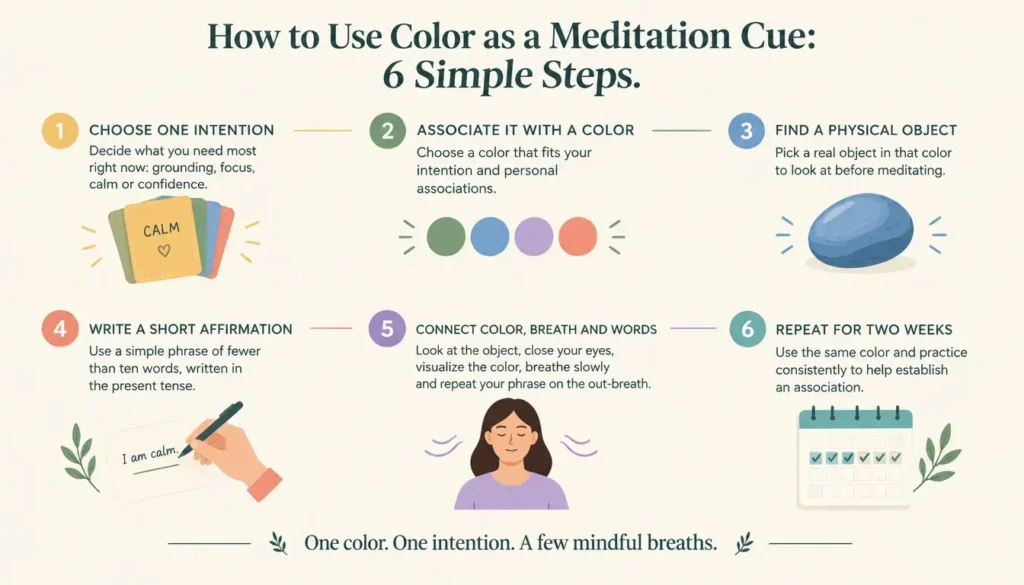
That last step is the one people skip. And it’s the one that turns an occasional nice moment into a habit.
Set Up a Small Color Corner at Home
No spare room for meditation? Doesn’t matter. Half a bookshelf will do, or the corner next to your bed. The two things that count are having your color there and using that spot for this one thing.
I’d keep it pretty bare. Something to sit on, a couple of things in your color (a folded cloth, a candle, a stone) and not much else competing for your eyes. Clear away the pile of laundry. Turn the phone face down.
Do this for a few weeks and you’ll notice something a bit odd. Just sitting down in that corner starts to settle you, before you’ve even closed your eyes.
Carrying Color Cues Into Your Day
Ten minutes on the cushion is great. But most of your day happens somewhere else – in meetings, in traffic, in the queue at the post office. And that’s where color cues get genuinely useful, since you can take them with you.
Once a color is linked to a calmer feeling, spotting it anywhere is a little nudge to check in. On your wrist, on your desk, on your phone. A few easy ways to keep your color close:
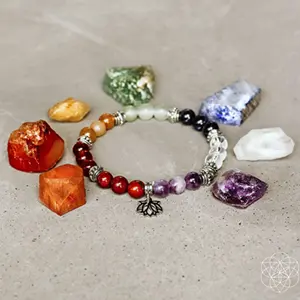
- Wear a colorful wristband or a natural gemstone bracelet
- Put a polished colored stone or paperweight on your desk
- Set a solid color background on your phone’s lock screen
- Use a mug, notebook or pen in your chosen shade
- Stick a small colored dot on your laptop, mirror or car dashboard
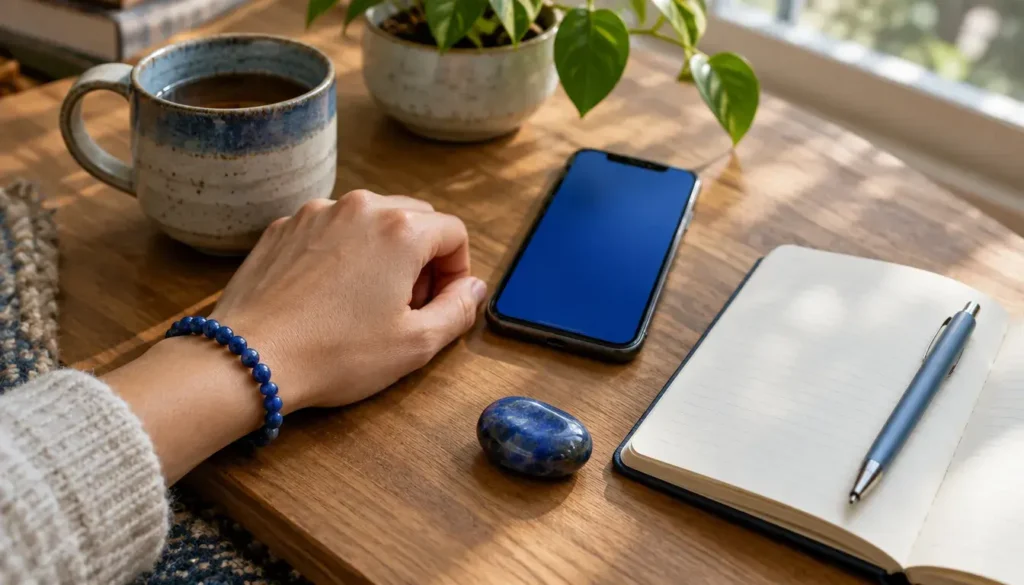
Rings and bracelets are great for this, mostly because your hands are in front of you all day anyway. If you’d like something blue to wear between sessions, Diamondere sapphire rings are one option for a reminder to come back to your throat chakra affirmation. Glancing down at a rich blue gem prompts an instant, mindful check-in with your personal vocal communication energy.
What a Check-In Looks Like
Keep it tiny. You notice the color, you take one slow breath, you silently say your phrase. Done. Three seconds, maybe five.
Picture it on a random Tuesday. You’re about to reply to a passive-aggressive email and your thumb’s already hovering. Then you catch the blue on your phone screen. One breath. “I speak my truth with calm confidence.” You still reply – but it comes out a lot more measured than it would have.
That’s the whole idea. Not a full meditation in the middle of the office. Just a small reset, a few times a day.
Common Mistakes With Color Cues
Most problems come from overcomplicating things. Watch out for these:
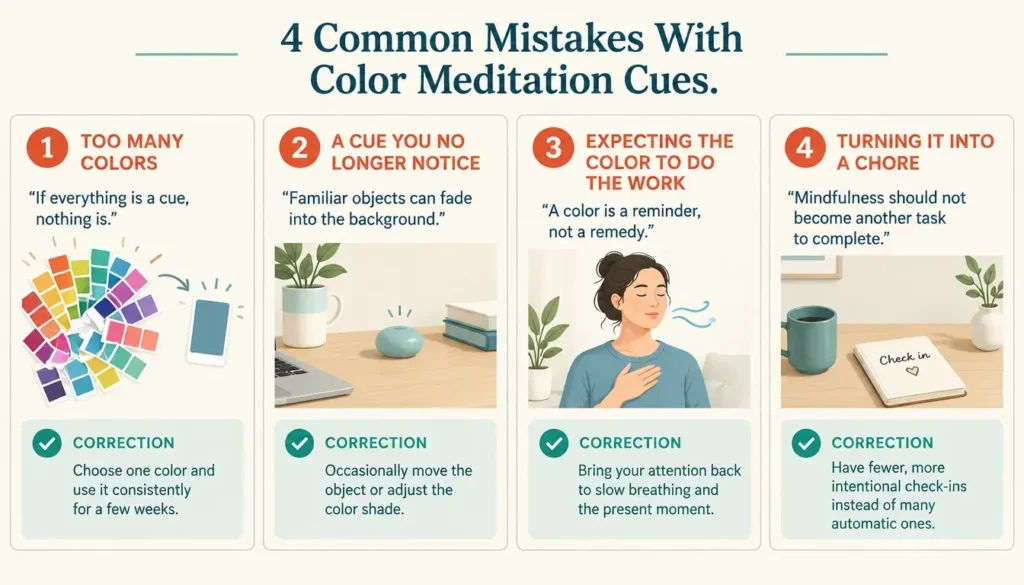
- Too many colors. If everything is a cue, nothing is. Stick to one for a few weeks.
- Cues you stop seeing. Anything that sits in the same place long enough goes invisible – like that painting in your hallway you haven’t properly looked at in years. Move the desk stone now and then, or switch the wallpaper to a slightly different shade.
- Expecting the color to do the work. It’s a reminder, not a remedy. What calms you down is the slow breathing and the attention you bring to it.
- Turning it into a chore. If the check-ins start feeling like one more item on your list, do fewer of them. A couple you mean will do more for you than a dozen on autopilot.
Tracking Whether It’s Working
Give it a few weeks before you judge. Then ask yourself honestly – is it easier to settle into a session? Do you come back from wandering thoughts a bit faster? Do you catch yourself mid-reaction more often during the day?
It helps to jot something down after each session. Doesn’t have to be much – mine usually look like “blue, 6 min, all over the place, better near the end.” Keep that up for a month and you start spotting things. Maybe you’re more settled in the morning. Maybe a physical object beats an imagined color for you. Maybe green just fits you better than blue.
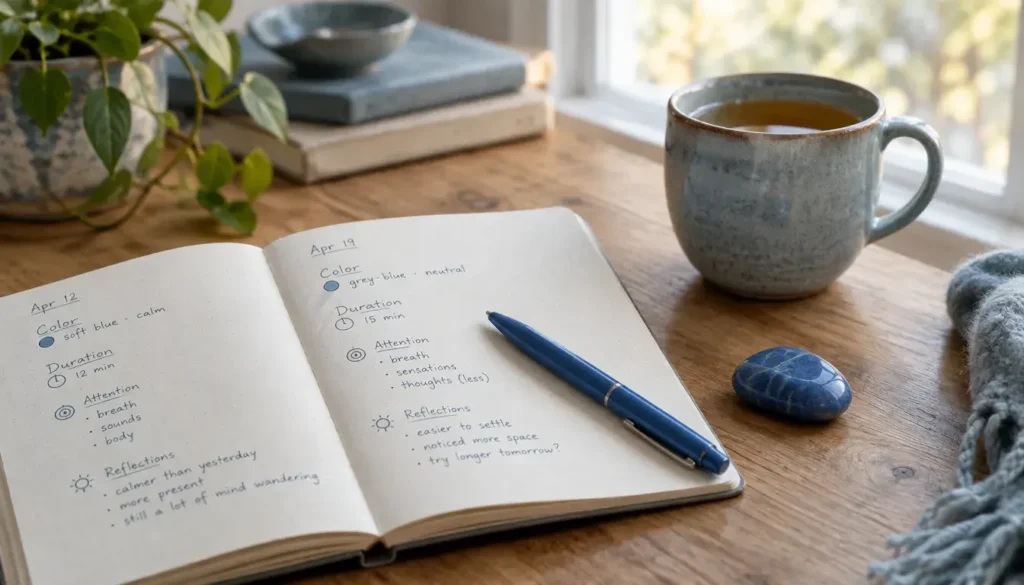
Use that to adjust. Chances are your setup will drift away from what you read here, this article included, and that’s completely fine.
When it comes down to it, how to use color as a cue in chakra meditation is about taking an idea that sounds abstract and turning it into something you can do on an ordinary weekday morning. Pick a color, breathe with it, say your phrase. Keep going for a few weeks and the habit mostly builds itself while you’re busy with everything else.
Frequently Asked Questions About Color Cues in Meditation
What is a visual cue in meditation?
It’s anything you can see that brings your attention back to the present moment. A candle flame, a stone on your desk, a particular color – all of these work. When your mind wanders during a session, the cue gives it a clear place to return to. Over time, seeing that same cue during the day can remind you to pause and take a breath, even when you’re nowhere near your meditation cushion.
Do I need to believe in chakras to use color cues?
No. The chakra system is simply a handy way to link each color with a theme, like red for grounding or blue for clear communication. If that framework speaks to you, great. If not, you can still pick a color you like and pair it with an intention that matters to you. The cue works because of attention and repetition, not because of any particular belief.
Which color is best for beginners?
The one that matches what you need right now. Feeling scattered or anxious? Red, for grounding, is a good start. Struggling to speak up? Try blue. Want more calm and perspective? Violet works well. If nothing stands out, go with a color you already have plenty of around you, so you’ll see it often. Easy to spot beats theoretically perfect.
Should I meditate with my eyes open or closed when using color?
Both work, and many people combine them. Start with your eyes open, looking at a real colored object for about 30 seconds. Then close your eyes and picture the same color for the rest of the session. If visualizing feels hard, keep your eyes softly open and rest your gaze on the object the whole time. That’s a perfectly valid practice too.
How long does it take for a color cue to become a habit?
Give it at least two to three weeks of daily practice with the same color and the same phrase. The link between the color and a calmer state builds through repetition, so switching colors every few days slows things down. Most people notice they settle into sessions a little faster after a couple of weeks, and that daytime check-ins start to happen more naturally after a month or so.
Can I use more than one chakra color at a time?
You can, but it’s usually better not to at first. Several colors at once tend to dilute the effect, because no single cue gets enough repetition to stick. Work with one color for a few weeks. Once that link feels solid, you can add a second for a different part of your day – say, red in the morning for grounding and violet at night for winding down.
What can I use as a color cue outside of meditation?
Anything you’ll see often. Popular options include a gemstone ring or bracelet, a colored stone on your desk, a solid color phone wallpaper, a mug, or a small colored sticker on your laptop. Jewelry works especially well because it’s always in view. Whenever you notice the color, take one slow breath and repeat your phrase. That small check-in is where most of the everyday benefit comes from.
Blog Categories:
About the Author: