

Using Random Generators for Mindful Travel Planning
Too many destinations and no decision? Here’s how a random generator breaks travel indecision – and why handing a choice to chance is an old practice.
Table Of Contents
Planning a trip has quietly turned into admin. You research until your eyes hurt, build an itinerary hour by hour, then price the flights against the hotels against the transfers – and somewhere in there a holiday starts behaving like a work project with a deadline attached.
Although there’s no doubt that this approach is super beneficial, it can make you feel as if you need to complete a specific project instead of simply enjoying an upcoming vacation. In these types of situations, a lot of people tend to feel quite overwhelmed by all of this.
If you also at times feel like this, then it’s time to allow a random generator to come into play. If you’re unsure how it can help you out, then stick with us to find out more!
Travel Can Oftentimes Be Too Overwhelming
The planet is absurdly generous with options. Thousands of places worth going, every one of them with its own landscape, its own language, its own way of eating dinner at ten at night. On paper that’s a dream. In practice, an endless list is the quickest route to deciding nothing at all – because when every option stays open, none of them ever gets chosen.
You end up wasting hours hunting for that one “flawless” spot, only to end up with fifty open browser tabs, a massive headache, and absolutely no plane tickets booked. This is exactly where throwing some randomization into the mix completely saves the day.
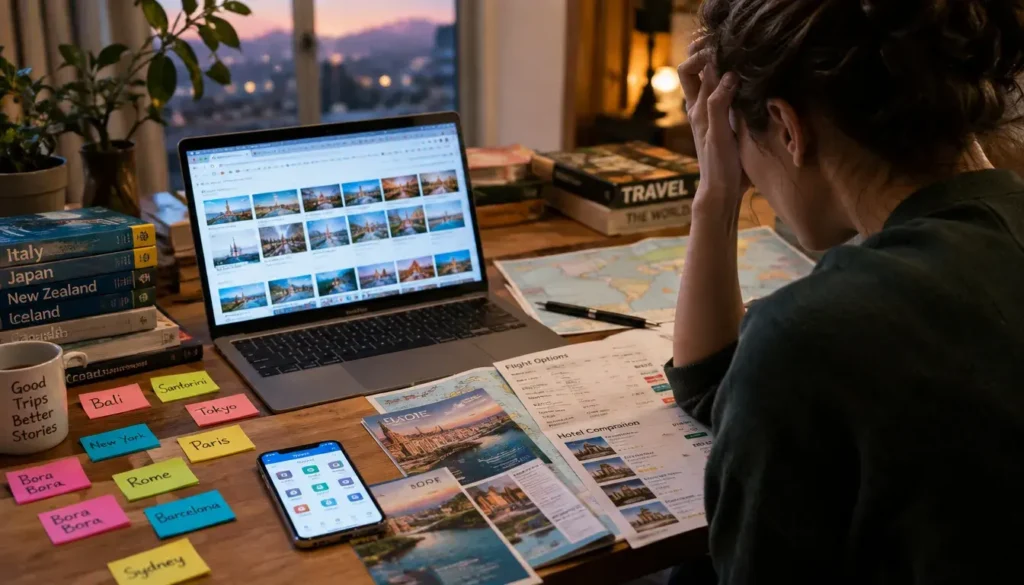
So stop asking your brain to weigh up the entire planet at once. Let a random pick hand you one place instead, and suddenly you’re looking at something specific – close enough to hold up against your budget, your dates, your tolerance for long-haul flights and unfamiliar food.
The random choice doesn’t decide anything. It just gives you something concrete to react to, which is a completely different job.
A Simple Random Prompt Will Get The Job Done
Random travel planning doesn’t typically involve overly intricate technology. In fact, many travelers start their prompt with “give me a random country” and then they utilize the result as their starting point. From there, you can simply explore every corner of the destination without making any final decisions when it comes to it.
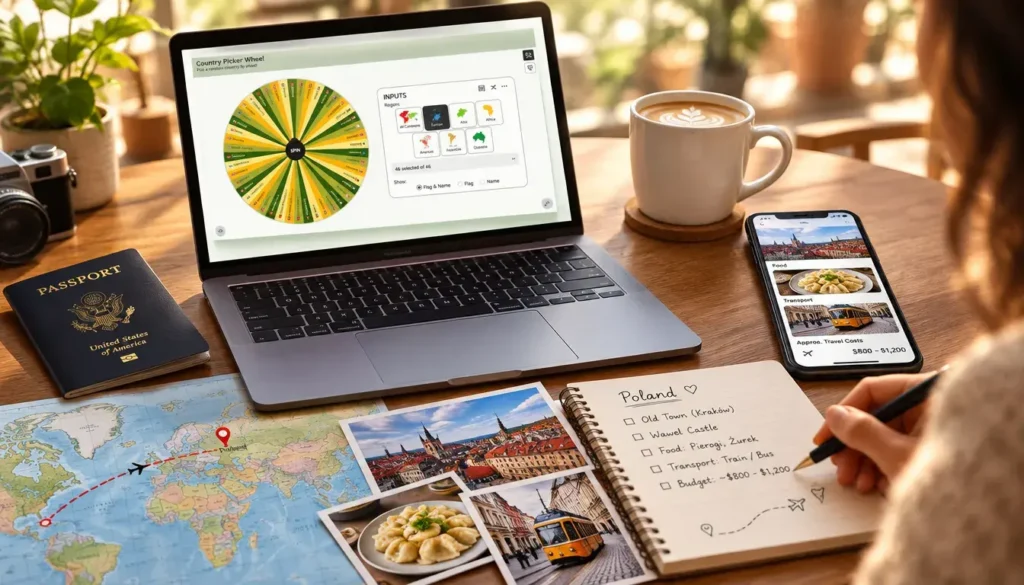
Ask yourself all those questions that are going to help you pick a country you’ll pay a visit to. What do you want to see out there? Does it come with all the “amenities” that will take your travel up a notch?
Sometimes you’ll get a super-exciting result, and then there’ll be moments during which you’ll conclude that a specific place simply isn’t appealing enough. Whatever the situation may be, you’ll still get some type of outcome, which is the whole point of everything, right?
One rule makes this far more useful, though. Give every result twenty real minutes before you reject it. Look at photographs that aren’t from the tourist board, find out what people eat there on an ordinary Wednesday, check roughly what a week costs and how you’d get around. Twenty minutes is long enough to get past the name and the first impression – which is usually where the instinctive “no” was coming from anyway.
Plenty of results still won’t survive that. Fine. But some will surprise you, and those are the ones you’d never have reached by searching for what you already knew you wanted.
Make Use Of Randomness
There’s a second use for this, and it’s arguably the better one. It’s for when you’re not short of options – you’re drowning in the last few.
Let’s say you’ve successfully narrowed down your options to five awesome destinations that all perfectly fit your budget and travel dates.
Then nothing happens. You compare them again on Tuesday. And again on Thursday. Prices creep up while you’re busy being thorough, and two weeks disappear into a spreadsheet nobody asked you to make. Number the five, hand them to a generator, and let it pick.
What makes this work isn’t the randomness. It’s that the weight comes off you – nobody has to be right, because nobody chose.
Plus, it comes with a built-in cheat code: if the generator suggests a destination and you feel an immediate wave of disappointment, that gut reaction tells you something massive.
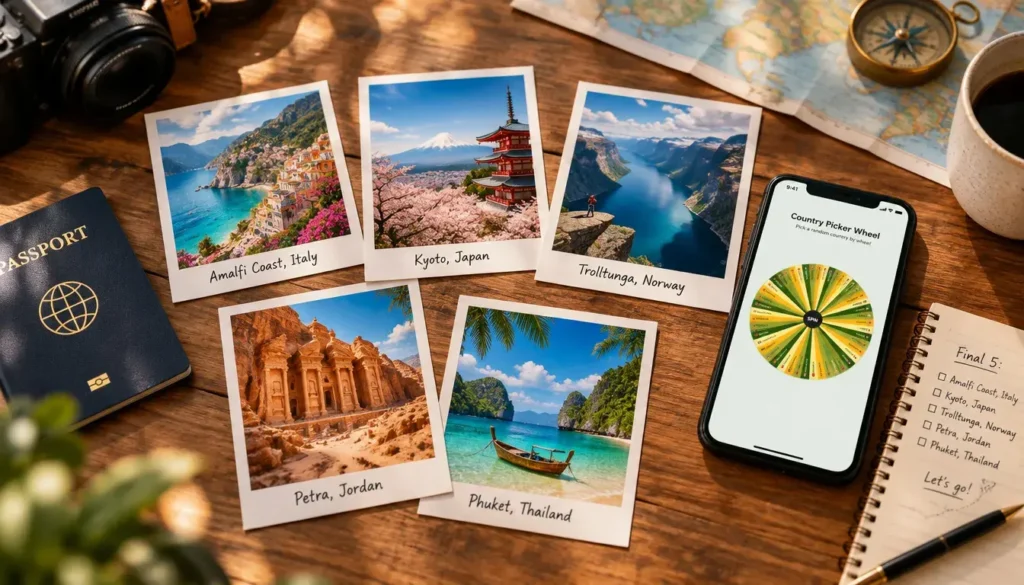
It means you secretly preferred one of the other options all along! In a weird way, letting randomness spin the wheel acts as the perfect decision tool, while still letting your true preferences guide the final choice.
Chance, Freedom, And The Things We Don’t Get To Choose
Here’s the part that makes this more interesting than a planning hack.
People have been handing decisions to chance for as long as there have been decisions. Coins thrown for the I Ching. Lots drawn to settle who goes and who stays. Books opened at a random page for whatever line happens to be waiting there. Irish monks pushing boats out without oars, going wherever the current took them, calling it peregrinatio – wandering for the sake of trusting what came next.

None of those people thought the coins were magic. That was never the point. The point was to stop the endless internal negotiating and let something outside yourself break the deadlock – and then to watch, honestly, how you felt about the answer.
A generator does exactly the same job with worse aesthetics.
And there’s a freedom in it that’s hard to describe until you’ve felt it. Every option you keep open is a small weight you carry, and modern travel hands you thousands of them. Chance takes the whole pile away at once. What’s left is one place, one question – do I want this or not – and you’ll know the answer far faster than you would have known it after another week of comparing.
Call it faith if that’s your language. Call it surrender, or trust, or just getting out of your own way. It amounts to the same thing: the admission that you were never going to calculate your way to the perfect trip, and that the trips people remember are almost never the optimised ones.
Ask anyone about their best travel memory. It’ll be the wrong train. The festival nobody mentioned online. The family who invited them in. None of that survives a well-planned itinerary – it needs a gap to walk through.
Whether you call the result destiny or arithmetic is up to you. What’s not in question is that saying yes to something you didn’t pick changes what happens next.
Time For Some Random Travel Challenge!
Want to push it further? Treat the randomness as a game rather than a shortcut. Pick a category, generate a result, and see what you’re handed. You can randomly select:
- A country
- A city
- A travel activity
- A type of accommodation
- A cuisine
- A national park
Once that’s over, then you should challenge yourself to craft a hypothetical vacation around the result. Even if this entire trip doesn’t occur, this type of mental exercise is going to help you determine what you thoroughly enjoy.
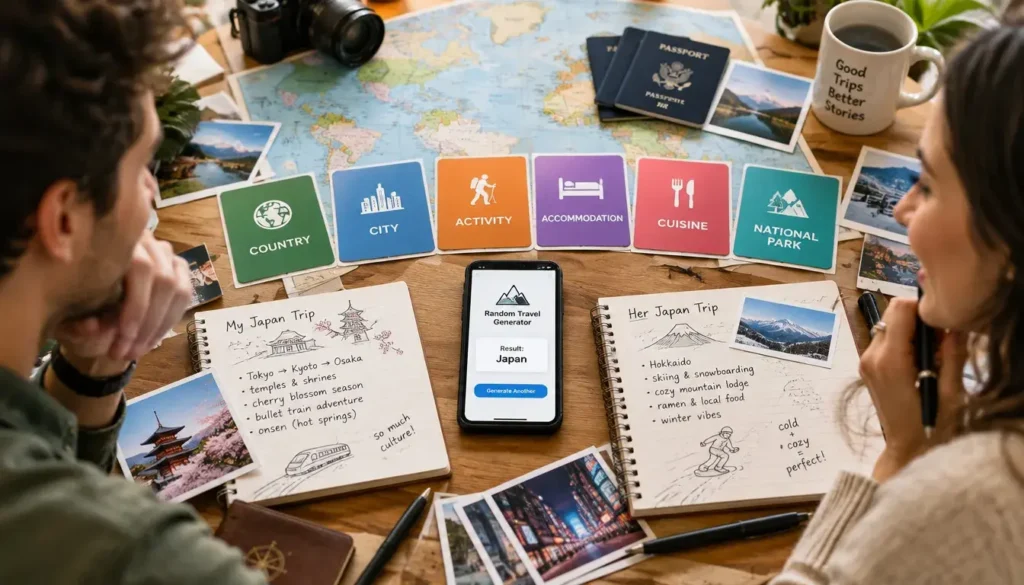
Try it with a friend and it gets better. Two people, same generated result, two completely different imaginary trips – and what each of you reaches for first says more about you than any quiz would.
Where To Draw The Line
Chance is a good starting point. It’s a terrible project manager, and there are a few things you shouldn’t hand over to it.
- Entry requirements. Check visas, passport validity, and any onward-ticket rules before you get attached to a result. Some of them take weeks.
- Safety and current advisories. Read your government’s travel guidance for the country the generator gave you. Some places are wonderful and still not right for this year.
- Season. A brilliant destination in the wrong month is a wet, shuttered version of itself. Check what’s actually open.
- Real cost. A cheap flight to an expensive country isn’t a cheap trip. Price a day on the ground, not just the way in.
- Your own limits. Health needs, accessibility, travelling alone, travelling with kids. The generator doesn’t know any of that.
Use randomness to choose where you point yourself. Do the boring diligence once you’ve pointed.
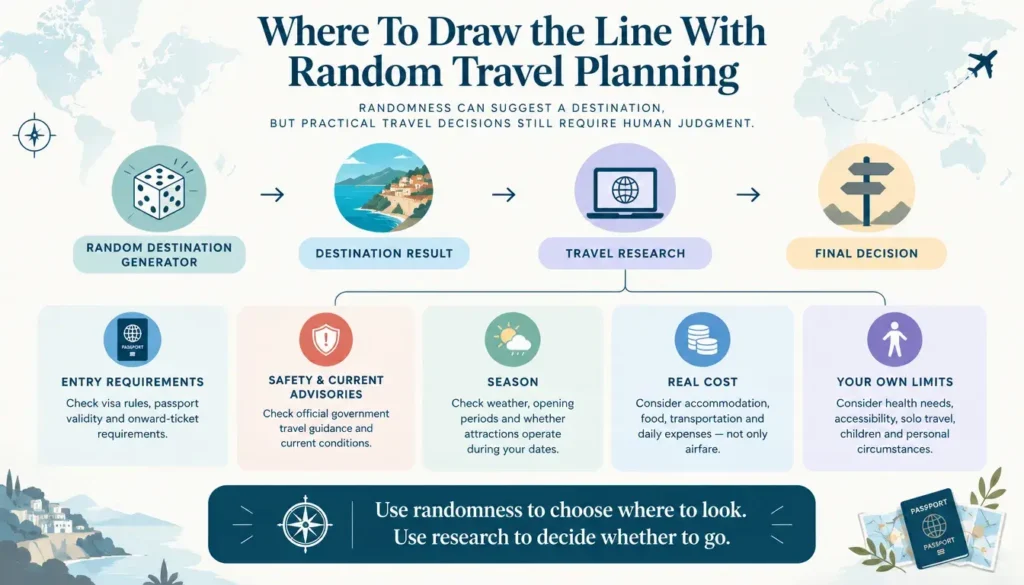
And give yourself permission to overrule it. If the answer lands badly, that’s information – not an instruction. Spin again.
The main purpose of a random generator is to add “a touch” of curiosity into the planning process. Who knows, maybe it will help you uncover some destinations you haven’t thought of before.
And maybe that’s the quiet argument for it. Not that chance knows something you don’t – but that leaving one door open, just one, tends to be where the story you’ll actually tell afterwards comes from.
Frequently Asked Questions About Random Travel Planning
How do I use a random generator to pick a travel destination?
Two ways, depending on your problem. If you have no idea where to go, use a random country or city generator and treat whatever it gives you as a starting point to research rather than a booking. If you already have a shortlist and can’t decide, number your options – say one to five – and use a number generator to pick one. The second approach is usually the more useful of the two, because indecision between good options wastes far more time than not having options at all.
Is randomly choosing a holiday destination a bad idea?
Not if you keep it in its lane. Randomness is excellent for choosing a direction and terrible at everything after that. Once you have a result, do the ordinary diligence yourself: visa and passport requirements, your government’s current travel advice, what the weather and opening seasons actually look like in your month, and what a day on the ground genuinely costs. A cheap flight to an expensive country is not a cheap trip. Use chance to break the deadlock, then plan properly.
What if I don’t like the destination the generator picks?
That reaction is the most valuable thing the generator produces. A wave of disappointment means you already had a favourite and hadn’t admitted it – so go with the one you were quietly hoping for. A flat “no” for a real reason, like the wrong season or a visa you can’t get in time, is just information. Spin again. The result was never binding, and treating it as an instruction rather than a prompt is where people get this wrong.
Why does having too many travel options make it harder to choose?
Because every option you keep open carries a cost in attention, and the effort of comparing rises much faster than the quality of your eventual answer. Past a handful of choices, most people stop deciding and start researching indefinitely – fifty tabs, no tickets. Prices drift upward while you’re being thorough. Randomness cuts the pile down to one thing in a second, and reacting to one concrete option is a far easier mental task than ranking twenty abstract ones.
Is using chance to make decisions a spiritual practice?
It has been, for a very long time. The I Ching is read by throwing coins, lots were drawn to settle serious questions across many cultures, bibliomancy meant opening a book at random for the line waiting there, and Irish monks set out in boats without oars as an act of trust. None of it assumed the coins were magic. The value was in stepping out of endless deliberation and letting something outside yourself break the deadlock – then noticing, honestly, how you felt about the answer. A generator does the same job with less atmosphere.
What is a random travel challenge?
Pick a category – a country, a city, an activity, a type of accommodation, a cuisine, a national park – generate a result, and then build a complete imaginary trip around whatever you get. You don’t have to take it. The exercise works because planning a trip you’ll never book strips out the pressure and shows you what you actually reach for first. Do it with a friend using the same result and the differences between your two versions are genuinely revealing.
Are online random generators truly random?
Most are pseudorandom – an algorithm producing output that has no pattern you could exploit, but which isn’t drawn from a physical source. A few services use atmospheric noise or similar physical phenomena for genuine randomness. For choosing between five holiday destinations the difference is irrelevant; both are far less predictable than your own preferences, which is the entire point. If it matters to you philosophically, a coin, a die, or names in a hat all work just as well.
Blog Categories:
About the Author: