
The Science of Physical Stretches for Body Balance
How stretching supports balance, posture and easier daily movement – plus which type to use before a workout, before meditation, and when to get help.
Table Of Contents
Your body talks to you constantly. The hip that complains when you stand up from your desk, the shoulder that won’t roll properly on a Monday morning, the lower back that tightens on long drives – all of it is information. Most of us have just stopped listening.
And when people hear “healthy habits,” they think of two things. Training and diet. Both matter, obviously. But there’s a whole layer sitting underneath those two, and stretching lives right in the middle of it.
Here’s the part that gets missed. Stretching isn’t only something you rush through for five minutes before a workout. Done regularly, it keeps your body balanced, keeps you moving the way you’re built to move, and sets you up for the day ahead – which is a completely different job from warming up for a session.
So let’s go through what stretching actually does, and why it earns its place in your routine.
What happens with your body during stretching?
First of all, we have to go through what actually happens with your body during stretches and why this provides great benefits for your health.
You gently lengthen your muscles
The first thing that happens is you lengthen your muscles and the tissues surrounding them. This way, your body becomes more flexible and “stretchy,” ensuring proper balance and function.
Stretching improves your motion
Stiff muscles make ordinary movement harder than it has any need to be. Bending down for a dropped charger. Reaching the top shelf. Twisting round to check a blind spot. And stiffness rarely stays a simple nuisance – it’s often what sits behind the aches and pulled muscles that show up later. If you feel this way, then you should try stretching regularly because you will immediately notice improvements.
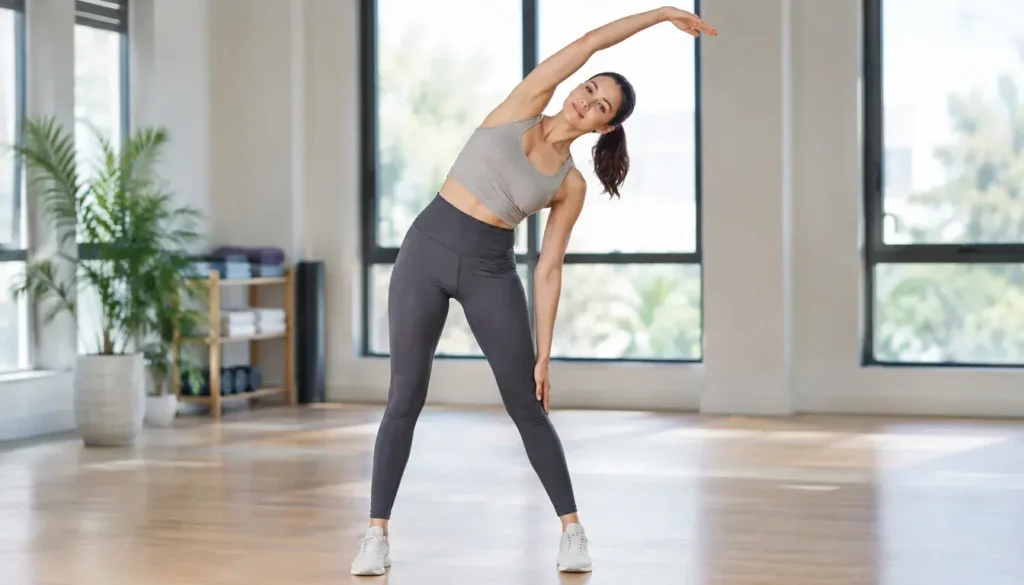
Bending, walking, reaching for something – all of it gets easier. Small improvements, yes. But they’re the ones you actually feel across a normal day.
When do you need professional assistance?
Stretching looks simple. It isn’t always, and done carelessly it can go wrong in ways that genuinely surprise people.
So when is it worth bringing in a professional? Mostly when something already hurts. Sore or damaged muscles and bones don’t respond well to guesswork, and pushing into that territory on your own is exactly how a small problem turns into a serious injury.
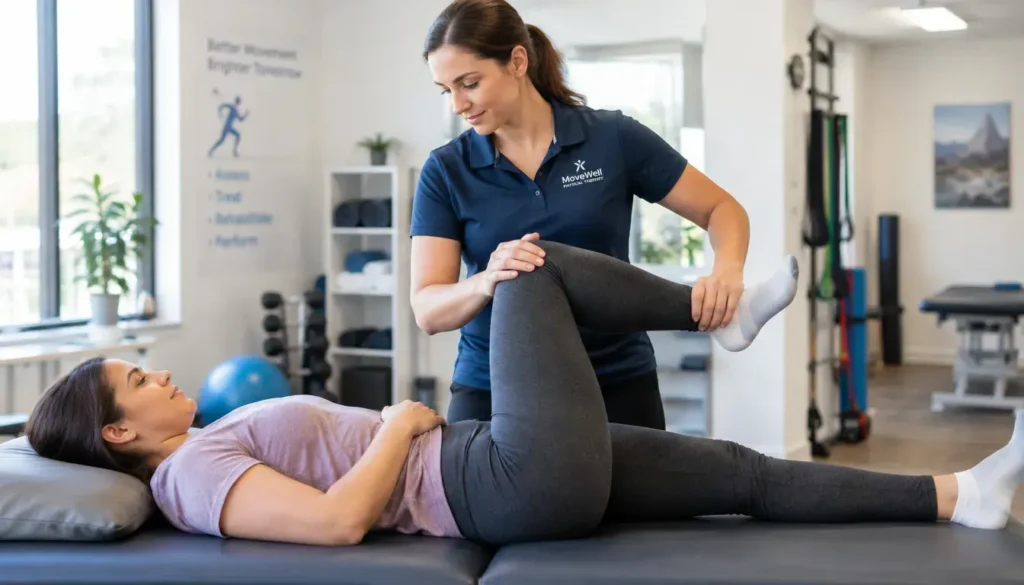
However, looking for the right professional is crucial, because the physical therapist or physiotherapist you choose has to possess certain knowledge. For example, Brookbush Institute offers continuing online courses for professional physical therapists and physiotherapists that are suitable for anyone, as they’re online and can be adapted to people’s needs. This way, professionals can offer their services while still being able to gain more competence and credits for taking these classes.
What does stretching have to do with balance?
Now, you might be wondering what stretching has to do with balance because this doesn’t seem to be closely related. Good balance actually depends on the mutual coordination of muscles, the nervous system, and sensory information from your brain. Even though proper balance doesn’t rely solely on the muscles and joints, what helps is when they’re flexible and mobile because this way you can move freely and can maintain proper alignment. That’s why stretching is closely connected to improving your balance and maintaining great posture. However, even when you’re stretching out before a workout, you have to be careful because even this simple task can be done wrong and can result in serious consequences.
Why stretching before a workout matters
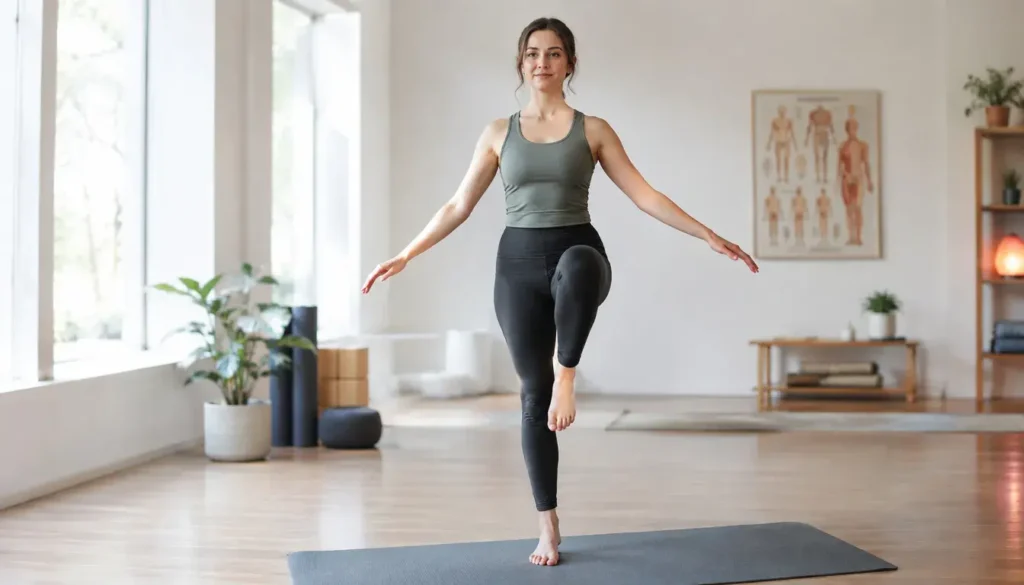
Cold muscle behaves differently from warm muscle. It’s stiffer, less elastic, slower to respond – and asking it to sprint or lift is where a lot of avoidable strains come from. A proper warm-up raises your tissue temperature, gets blood into the working muscles, and wakes up the nervous system that has to coordinate all of it.
But the type of stretching matters enormously here, and this is where most people get it backwards.
Long static holds before training aren’t the answer. Holding a hamstring stretch for a minute right before you lift can leave that muscle temporarily less able to produce force – fine for a gentle session, not ideal if you’re about to go heavy or fast. Dynamic work is what you want instead. Arm circles, leg swings, walking lunges, hip openers, gradually bigger ranges of motion.
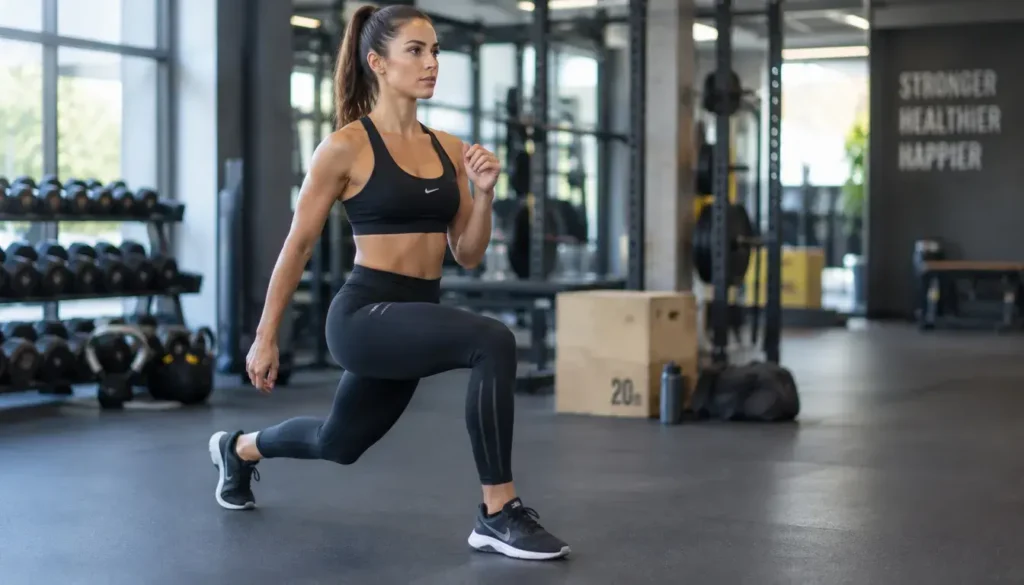
Five to ten minutes is enough. Aim it at whatever you’re about to do: shoulders and thoracic spine before pressing, hips and ankles before squats or running. Movements that rehearse the session rather than replace it.
Save the long holds for afterwards, or for a separate session entirely. That’s when they do their best work.
Why stretching before meditation matters
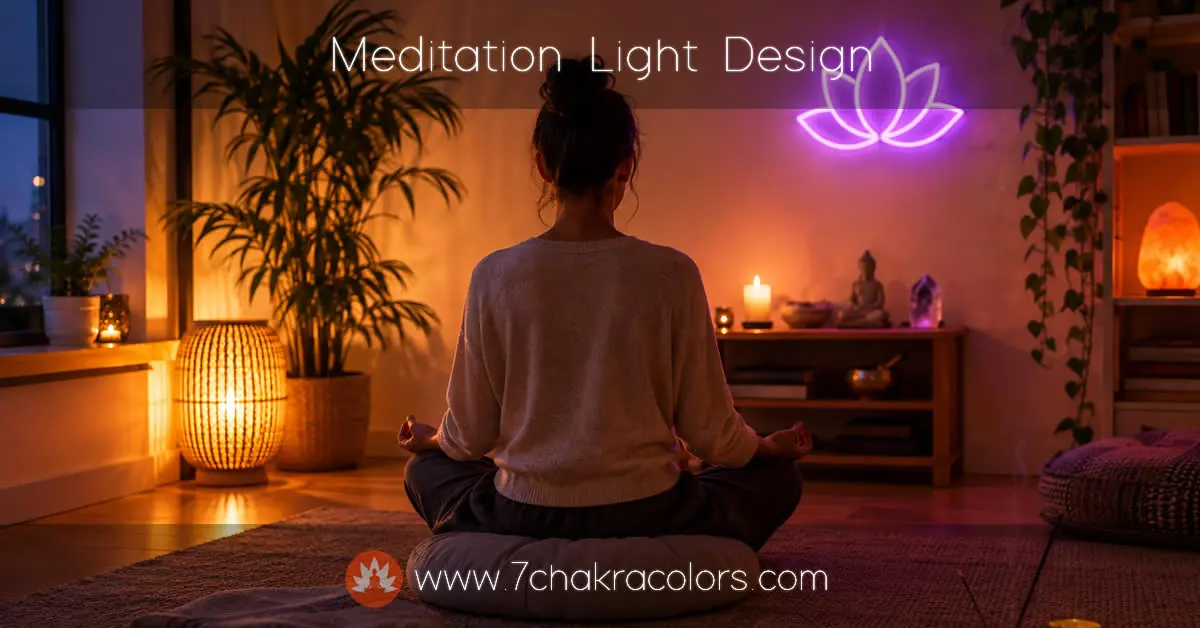
Sitting still is more physically demanding than it looks. Anyone who’s tried to settle into twenty minutes with tight hips and short hamstrings already knows how that goes – the ache builds around minute six, your attention leaves your breath and goes straight to your knees, and the rest of the session becomes an argument with your own body.
Tight hips tilt the pelvis backwards. The lower back rounds to compensate, the chest collapses forward, the neck cranes to hold the head up. Now your breathing is restricted, and you’re fidgeting every ninety seconds.
A few minutes of stretching first solves most of that. Open the hips, lengthen the hamstrings, free up the spine and shoulders, release the neck. You’re giving yourself a seat your body can actually hold – which is precisely why traditional practice put physical postures before seated work in the first place.
There’s a second effect too. Gentle, slow stretching shifts the nervous system out of go-mode. The breath drops lower, the shoulders come down from around your ears, and attention slides into the body instead of circling whatever happened at work. You arrive at the cushion already halfway settled rather than starting cold.
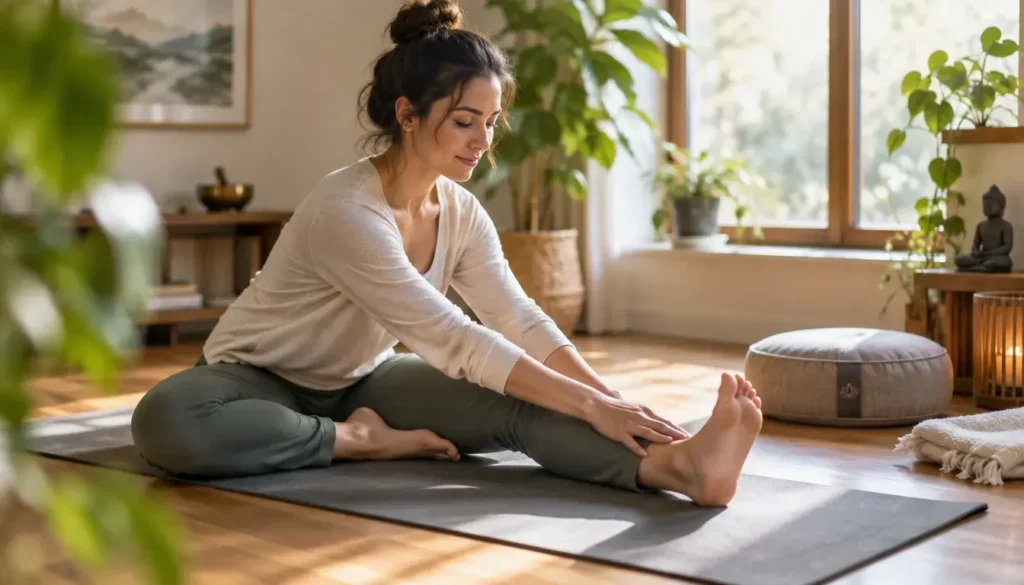
For anyone working with energy or chakra practice, this is the groundwork. A spine that’s stacked properly and a body that isn’t fighting itself lets everything move more freely – and it’s much easier to notice where things feel stuck when you’re not distracted by a numb foot.
Not everyone is the same…
A routine that transformed somebody else’s mobility might do very little for you. Or worse. Bodies differ – in history, in old injuries, in how they’re put together – and what they need differs right along with them. That’s why you need a tailored plan, and you shouldn’t overwhelm your body just because someone else does the same.
Have a professional map it out for you, or build it yourself slowly, paying attention as you go. And if a particular stretch feels wrong – not challenging, wrong – drop it.
Types of stretching and when to do certain ones
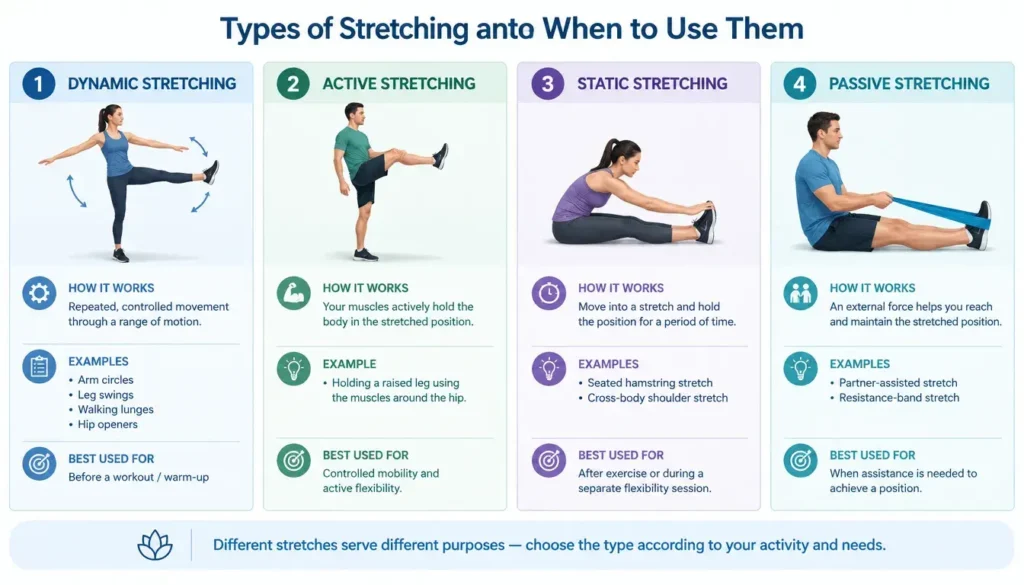
What many don’t know is that there are different types of stretching and that they are used for different occasions. It’s important to learn how to recognize them and when to do them, because they prepare your body differently.
Dynamic stretching
Dynamic stretching is usually used before a workout to warm the body and prepare the muscles and joints for some activity. This type of stretching includes repeated movements such as doing arm circles and leg swings to move certain parts of the body.
Active stretching
There is one more type of stretching that highly resembles dynamic stretching; however, there is a main difference in muscle use. During this stretching, one muscle group is used to hold another muscle in a stretched position. For example, if you hold your leg up in the air, you will feel that the muscles around your hip have to work for this to happen.
Static stretching
Static stretching works in a way that you move one muscle into a stretched position and keep it there for some time, usually more than 10 seconds, ensuring that your muscles and your joints reach a certain stretching point and are more flexible after it. For example, if you reach for your toes or if you stretch your arm across your chest, you’re doing static stretching.
Passive stretching
Unlike active stretching, passive stretching works a bit differently. A person uses another, external force to achieve a certain position or to stretch a certain muscle. This type of stretching is used mostly when a person can’t achieve something and needs some help. This help can be from another person or a stretching band.
Should stretching become your routine?
Now, the question many people ask is, “Should I focus on stretching every day?” The answer is yes; doing stretches should become one of your healthy habits you can look forward to. However, these stretches don’t have to be anything too complicated; they can be simple and short. A few exercises can be enough if they’re done continually and properly. You will notice your muscles becoming more flexible and will feel better moving freely. Be especially careful when recovering from an injury.
Stretching isn’t only a simple exercise you do before working out; stretching is much more important for your body and mobility. If you’ve experienced an injury recently, regular stretching can help your muscles recover faster and can also help you keep your body flexible and mobile. What you should never do is force yourself when stretching starts to feel uncomfortable, because then something must be wrong, or you might be doing the stretches wrong. Just go step-by-step, don’t force anything, and enjoy these exercises whenever you have a chance.
Frequently Asked Questions About Stretching and Body Balance
How long should I hold a stretch?
For static stretching, somewhere between 15 and 30 seconds per position is the usual range, and anything under about 10 seconds is too brief for the tissue to respond. Two or three rounds per muscle works better than one long hold. You’re aiming for a sensation of mild tension that eases slightly as you stay there – not pain, and not the shaking, gritted-teeth kind of stretch. If you’re holding your breath to tolerate it, you’ve gone too far and should back off until breathing feels normal again.
Should I stretch before or after a workout?
Both, but not the same kind. Before training, use dynamic stretching – arm circles, leg swings, walking lunges, gradually increasing your range of motion for five to ten minutes. Long static holds beforehand can temporarily reduce how much force a muscle produces, which isn’t what you want ahead of heavy or explosive work. Save static stretching for after your session, when the tissue is warm and you’re trying to restore range rather than prepare for effort. Aim the warm-up at whatever you’re about to do: hips and ankles before running, shoulders before pressing.
Is it bad to stretch every day?
No – daily stretching is fine and generally better than a long session once a week, provided you’re not forcing anything. Consistency is what changes how tissue behaves over time. Keep it short and unambitious: five or ten minutes covering the areas that actually bother you beats an elaborate routine you’ll abandon in a fortnight. The one caveat is recovery from injury, where the timing and intensity should come from whoever is treating you rather than from a video.
Why should I stretch before meditating?
Because sitting still is physically harder than it looks. Tight hips tilt the pelvis backwards, which rounds the lower back, collapses the chest, and forces the neck to crane – so your breathing gets restricted and you fidget every couple of minutes. A few minutes opening the hips, hamstrings, spine, and shoulders gives your body a seat it can actually hold. Slow stretching also shifts the nervous system out of go-mode, so you arrive already partly settled instead of starting cold.
Does stretching really improve balance?
Indirectly, yes. Balance itself comes from coordination between your muscles, your nervous system, and the sensory information your brain receives. Stretching doesn’t change that machinery, but it removes a restriction on it. When your hips, ankles, and spine move freely, you can correct your position quickly and hold proper alignment without effort. Stiff ankles in particular make balance noticeably worse, because so much of your moment-to-moment correction happens there.
What’s the difference between active and passive stretching?
In active stretching, one muscle group holds another in a stretched position – lift your leg in front of you and hold it there, and your hip flexors are doing the work while your hamstring lengthens. Passive stretching uses an outside force instead: a strap, a band, gravity, a wall, or another person moving the limb for you. Active work builds strength through the range you’re opening, which tends to make the gains stick. Passive work reaches positions you can’t get into alone, which is why it’s common in rehabilitation.
When should I see a physiotherapist instead of stretching on my own?
When something already hurts. Sore or damaged muscles and joints don’t respond well to guesswork, and stretching into genuine pain can turn a minor issue into a real injury. Other signals worth acting on: pain that travels down a limb, numbness or pins and needles, a joint that catches or gives way, stiffness on one side only, or discomfort that hasn’t shifted in several weeks of sensible effort. A professional can also tell you whether the tight muscle is the problem or just where you’re feeling it.
Blog Categories:
About the Author: