
The Spiritual Side of Gaming: Chakras, Consciousness and the Joy of Play
Explore the spiritual side of gaming through the seven chakras, flow states and the magic circle of play, and see what your favorite games reveal about you.
Table Of Contents
A kid crouches in the dirt, lining up pebbles, making up a game with rules only she understands. Somewhere else, a grown adult squints at a screen at 1 a.m. and mutters “okay, one more round.” Decades apart. Same tug.
We’ve been playing games for 4,500 years at the very least – likely a lot longer than that. And still, hardly anyone pauses to ask what’s really going on when we do it.
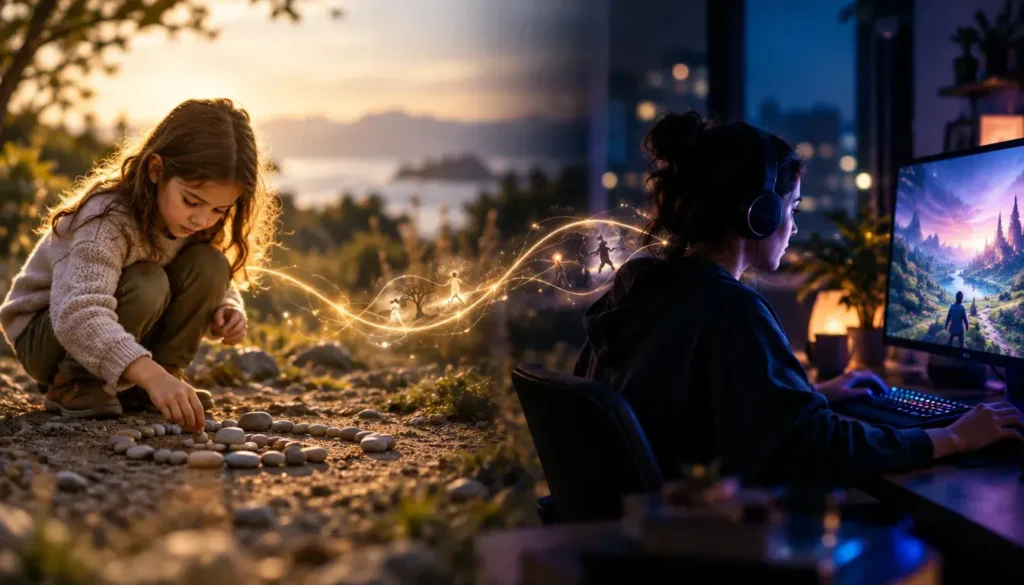
That’s what this piece is about: the spiritual side of gaming. Not that games will turn you into a monk (sadly, they won’t). Something smaller, and honestly more interesting – the idea that how you play can quietly reveal who you are.
Along the way I’ll borrow the seven chakras as a framework. Think of it as a useful map, a metaphor. Not science.
Why Do Humans Play?
Take the Royal Game of Ur. It’s around 4,500 years old. Senet – a board game archaeologists pulled out of royal tombs – could be older still. People buried these games with their dead, which tells you how much they mattered.
Later on we got chess, cards, dice, dominoes, hopscotch. A lot later, Pong and Tetris showed up, and eventually servers packed with thousands of players at the same time. The equipment keeps changing. The itch doesn’t.
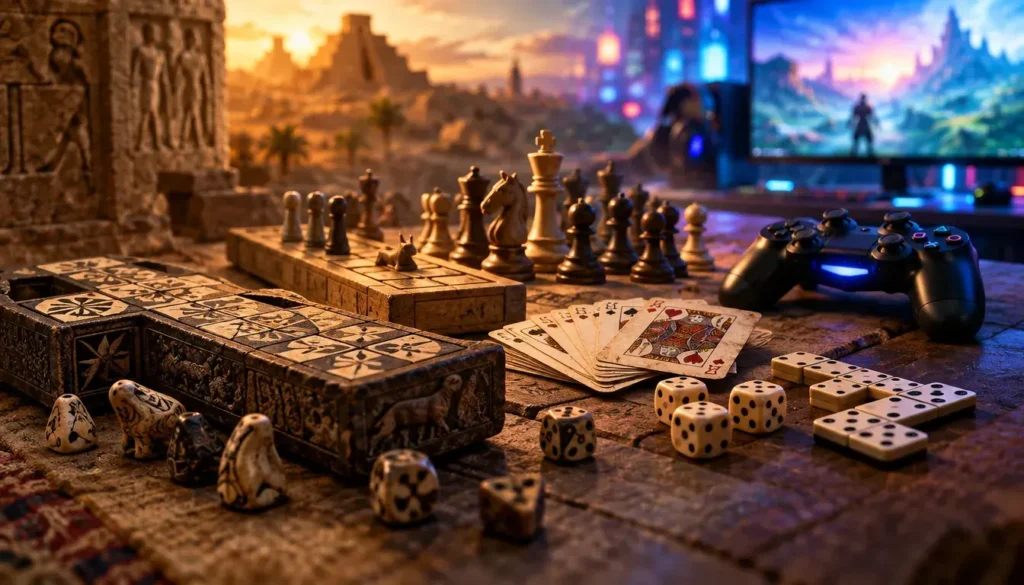
Johan Huizinga, a Dutch historian, argued that play is older than culture. He talked about a “magic circle” that appears the moment a game starts – a line you step over where different rules kick in and normal life has to wait its turn.
That image stuck with me. Inside the circle, losing doesn’t cost you anything real. You can be terrible at first. You can be reckless. You can find out, three hours in, that you’re weirdly good at something.
Children live in that circle half the time. Adults mostly forget where the door is, and games are one of the few things that still get us back through it.
Gaming as a Miniature Journey Through Life
Almost every game runs on the same loop. You start out useless. Something beats you. You try again, a bit smarter, and lose a bit less badly. Then one day you walk past the enemy that used to terrify you and barely notice it.
Read a handful of myths and you’ll spot it straight away. A young hero leaves home, gets knocked down a peg or two, figures something out and comes back changed. Joseph Campbell built an entire career out of following that pattern – the hero’s journey – from one culture to the next.
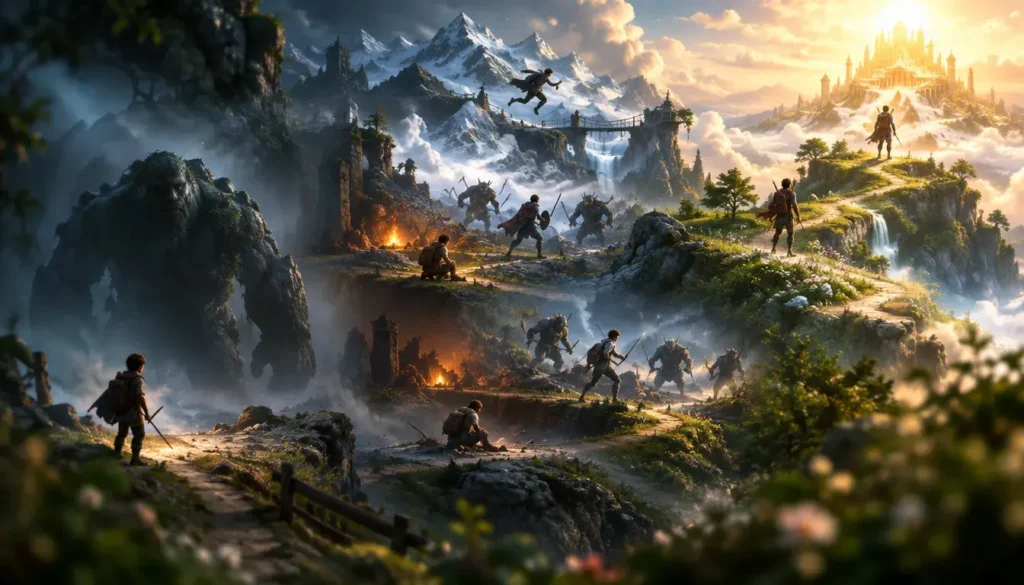
Games simply put you inside it. You’re not watching someone else grow. You’re doing the growing yourself, even if it’s only on a screen.
There’s a kindness in how games treat failure, too. Get something wrong at work and you might replay it in your head all week. Fall off a ledge in a platformer and you’re back in two seconds, trying a different jump. Many meditation teachers would call that a healthy relationship with mistakes.
Games also tell you what the next step is. Real life rarely does us that favor.
The Spiritual Side of Gaming Through the Seven Chakras
To be clear, your chakras don’t choose your games. Still, the seven-chakra model is a weirdly good tool for sorting out all the different feelings play stirs up. This is how I’d line them up:
- Root chakra: survival and security. Think of your first night in Minecraft. The sun drops, there’s no shelter anywhere, and suddenly your whole world shrinks down to four walls and a door. That frantic scramble to feel safe is root chakra energy, start to finish.
- Sacral chakra: creativity and pleasure. And then you’ve got games where nothing’s chasing you. You plant turnips in Stardew Valley, design a ridiculous outfit for your character or build a castle nobody will ever visit, just because it’s fun.
- Solar plexus chakra: power and achievement. Ranked matches. Speedruns. That one boss that’s flattened you forty times in a row. This center is all about will – and the oddly specific thrill of finally proving you can pull it off.
- Heart chakra: connection and cooperation. Ask people who’ve played for years what sticks with them, and it’s almost never a boss fight. It’s the guild that stayed online together way past midnight. The random stranger who tossed them a healing potion for no reason at all. That kind of generosity is heart chakra territory.
- Throat chakra: expression and identity. Role-playing games give you a voice that’s not quite your own. Lots of quiet people find they say more through a character than they’d ever say face to face.
- Third eye chakra: strategy and perception. Chess. Portal. A really good murder mystery. You stare at the problem, get absolutely nowhere, and then – click. That sudden “oh!” sits pretty close to the intuition people link with the third eye chakra.
- Crown chakra: wonder and transcendence. Games like Journey or No Man’s Sky have long stretches where you’re doing nothing but looking. Desert sand going gold at dusk. A planet hauling itself up over the horizon. Those moments can feel oddly sacred.
Real games mix all of this, obviously. A co-op survival game can hit the root, heart and solar plexus before dinner.
What Your Gaming Habits Might Be Telling You
What’s more telling is which of these you keep chasing. Maybe you always drift toward building. Maybe you’re always the one leading the team. Either way, that pattern could be worth a closer look away from the screen too.
Here’s the whole map in one place.
| Chakra | Core Theme | How It Shows Up in Play | Example Games |
|---|---|---|---|
| Root | Survival and security | Scrambling for shelter, food and safety before night falls | Minecraft, survival games |
| Sacral | Creativity and pleasure | Building, farming and decorating just because it feels good | Stardew Valley, sandbox builders |
| Solar plexus | Power and achievement | Climbing ranks, shaving seconds off a run, finally beating that boss | Ranked multiplayer, speedrunning |
| Heart | Connection and cooperation | Guild nights, teamwork and small kindnesses between strangers | MMOs, co-op games |
| Throat | Expression and identity | Speaking and choosing through a character that isn’t quite you | Role-playing games |
| Third eye | Strategy and perception | Staring at a puzzle until the answer suddenly clicks | Chess, Portal, mystery games |
| Crown | Wonder and transcendence | Quiet stretches of just looking, with a sense of awe | Journey, No Man’s Sky |
The Flow State: When Play Becomes Absorption
You know how this goes. You sit down to play “for twenty minutes.” Next time you glance up, the window’s gone dark, your tea’s stone cold, and you couldn’t tell anyone where the evening went.
Psychologists call that flow. Mihaly Csikszentmihalyi came up with the term after interviewing climbers, surgeons, chess players and artists, who all kept describing the same experience – being completely swallowed up by what they were doing. According to Psychology Today, flow tends to appear when a challenge sits right at the edge of your ability, hard enough to demand everything but not so hard that you give up.
Games are practically built to land you in that sweet spot. The difficulty nudges up as you get better, so you’re always stretched just a little.
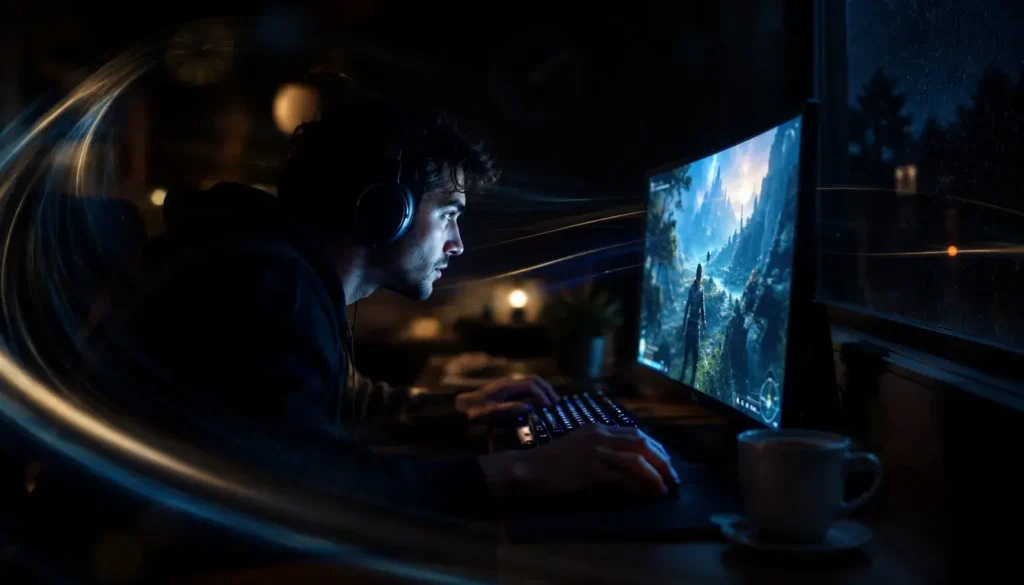
Flow isn’t meditation, though. Worth being clear on that. Meditation tends to open awareness up wide, while flow squeezes it down to a single point. Both, however, quiet the inner narrator. For a while, there’s no “me playing the game.” There’s just the game.
Is that spiritual? Depends on what you do with it afterward. Carry even a scrap of that stillness into a tough conversation or a dull chore, and those hours weren’t wasted at all.
Online Gaming and the Worlds We Share
For most of human history, play needed another person in the room. Early video games briefly changed that and turned play into something you did alone at a screen. Then came split-screen, then LAN parties, then online worlds that keep running while you sleep.
So in one sense, gaming has come full circle. It’s social again, just on a much bigger table. People meet their best friends in raid groups. Some even meet their future partners there.
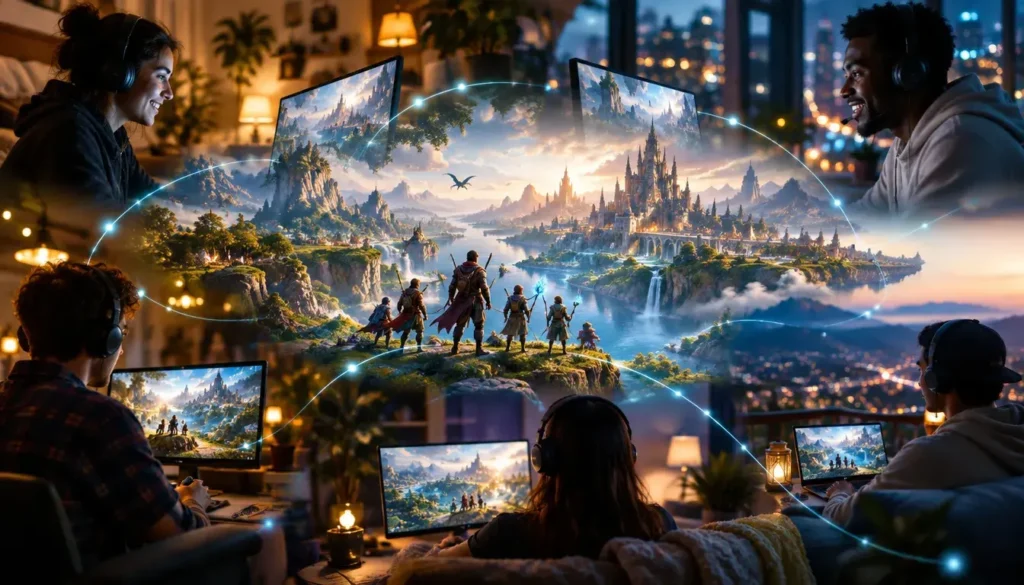
None of that happens without a lot of infrastructure that nobody really sees. Somewhere, servers are matching players, game libraries are loading, and accounts and payments are being checked around the clock.
There’s a whole business-to-business industry behind all that. Kanggiten is one example: it develops a modular iGaming platform, where operators assemble the parts they need instead of building everything themselves. Their website is a decent look at how that plumbing works, if you’re curious about what sits underneath the games people play.
Admittedly, it’s not very mystical. But it’s the modern version of carving a board into a stone bench so that others can sit down and join in.
The Shadow Side of Play
This piece would be too rose-tinted if it stopped there. Play has a shadow. That same focus that hands you flow can turn, on a rough week, into somewhere to hide.
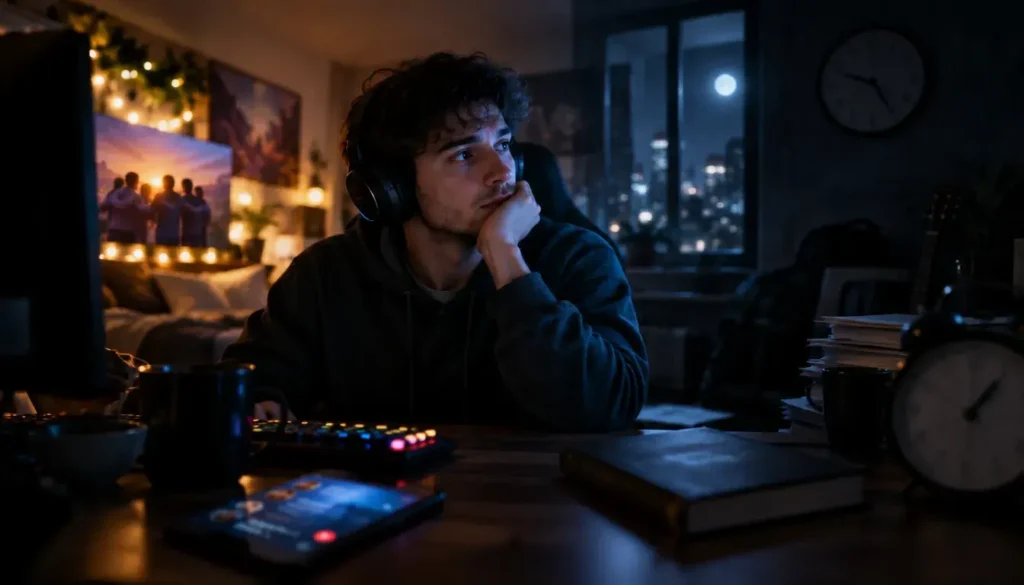
Looked at from across the room, the two are identical: a person in front of a screen for three hours. The real difference lives inside, and you’re the only one who can see it. A few questions can help:
- Am I playing because I actually want to, or just because I never decided to stop?
- After I play, do I feel closer to people – or further away?
- Could I stop right now without much of a fight?
- Is gaming adding to my week, or eating the things I used to care about?
- What would I be feeling right now if I weren’t playing?
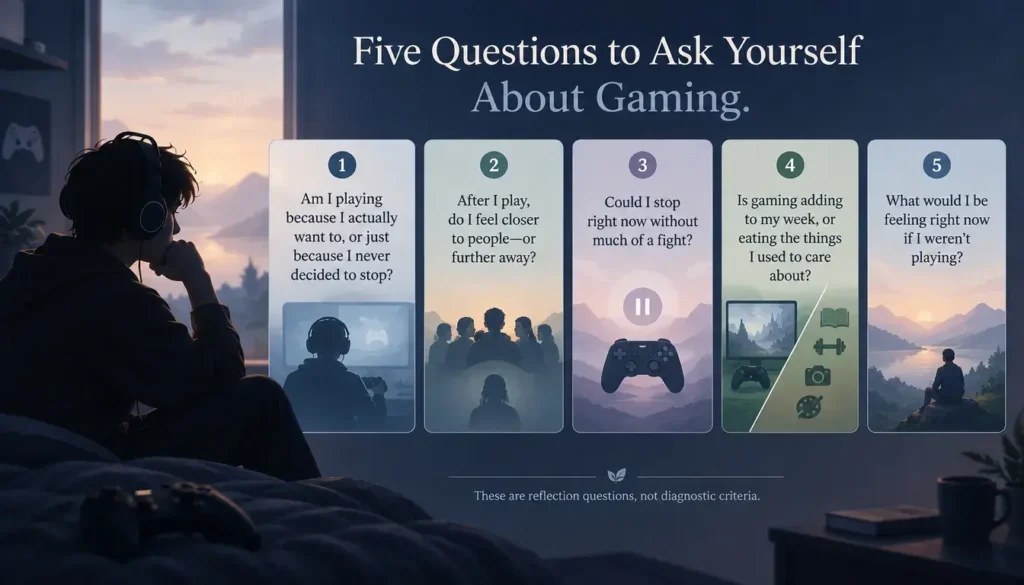
There are no right answers here, and none of this is anti-gaming. It’s just attention, the same thing every contemplative tradition asks for, pointed at a hobby.
The Game Within the Game
Games have rules, goals, obstacles and consequences. Life does too, though it’s far less clear about them. That might be the real secret of the magic circle: it gives us a safe place to practice being brave, being wrong and trying again.
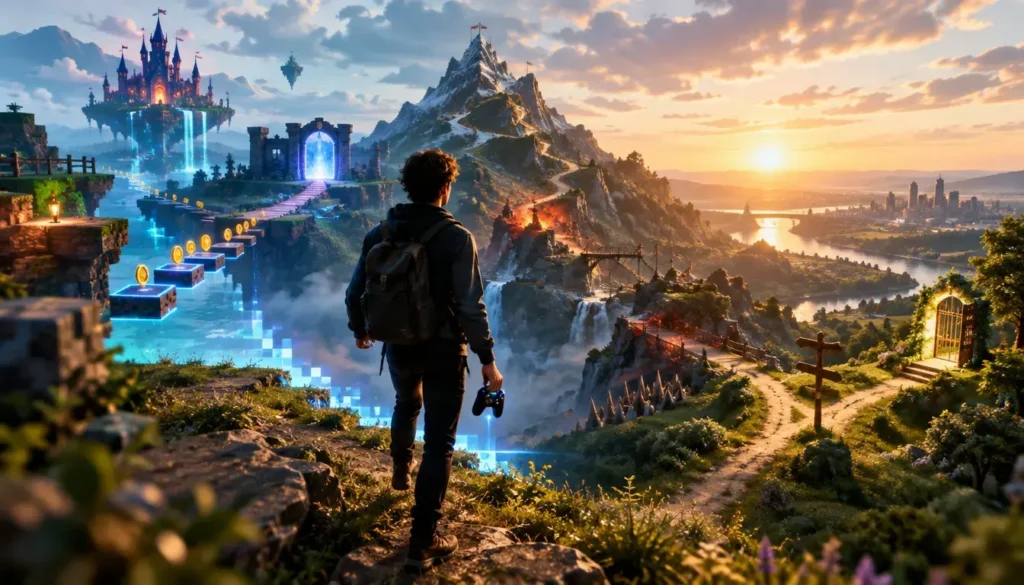
So maybe the spiritual side of gaming isn’t hidden in any particular game. Maybe it’s in the way you turn up to play. The next time you reach for a controller, a deck of cards or a chess piece, pay attention to which part of you lights up. Chances are it’s been there the whole time.
Frequently Asked Questions About the Spiritual Side of Gaming
What is the spiritual side of gaming?
It’s less about any particular game and more about what play brings out in you. Games put you in a space with its own rules, where you can fail safely, try again and notice how you react. The parts of you that switch on – the builder, the competitor, the helper, the explorer – say something real about who you are. Paying attention to that is where the spiritual part comes in.
Can playing video games count as meditation?
Not quite. Gaming can quiet the chatter in your head, which meditation does too, but the two work differently. Meditation opens your awareness up. A good game narrows it to a single point. That narrowing – flow – can still feel calming and absorbing. If you want the benefits of meditation, though, you’ll still need to sit down and actually practice it.
Which chakra is most connected to gaming?
There isn’t just one. Survival games lean on the root chakra, sandbox and farming games tap the sacral, competitive play fires up the solar plexus, and co-op games are heart chakra stuff. Puzzles pull on the third eye, while slow, beautiful exploration games touch the crown. Most games mix several. What matters more is which of these feelings you keep going back for.
Is the flow state in gaming good for you?
Usually, yes. Flow happens when a challenge sits right at the edge of your skill, and it tends to leave people feeling focused and satisfied. Games are built to keep you in that zone. The catch is what comes after. If you walk away calmer and clearer, great. If you walk away drained, or can’t seem to stop, the flow has probably tipped into avoidance.
How can I tell if gaming has become a way to escape?
Look at how you feel before and after a session, not just at the hours. Ask yourself if you chose to play or just drifted into it, whether you could stop now without a fight, and whether gaming is crowding out sleep, people or things you used to care about. If it’s seriously disrupting your life and you can’t pull back on your own, talking to a doctor or mental health professional is a smart next step.
Can games actually help with personal growth?
They can, if you play with some awareness. Games follow the same arc as the hero’s journey – you start weak, get beaten, learn and come back stronger. They also teach a gentler relationship with failure, since a mistake costs you seconds, not weeks of worry. Notice how you handle losing, teamwork and frustration in a game, and you’ll often spot the same patterns in everyday life.
Does any of this apply to board games and card games?
Absolutely. People were playing board games like the Royal Game of Ur and Senet thousands of years before screens existed. Chess, cards and dice create the same “magic circle” a video game does – a space with its own rules where everyday life can wait. Sitting around a table with real people often adds even more of that heart-centered connection.
Blog Categories:
About the Author: