
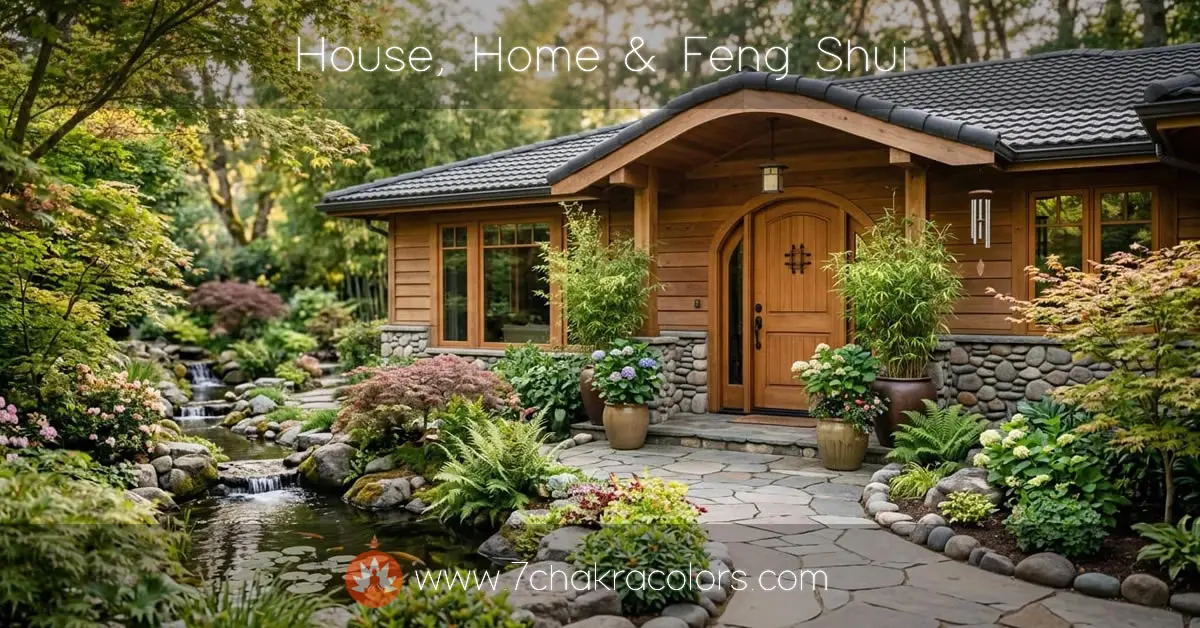
Feng Shui for Your Home: Creating Harmonious Energy Through Design
Learn how to apply feng shui principles to your home. Discover how to arrange rooms, position furniture, and optimize energy flow for better sleep, focus, and wellbeing.
Table Of Contents
Your home does something most people don’t realize. It shapes how you feel, what you think about, how easily you move through your day. It’s not just walls and floors – it’s an energetic system that’s constantly working on you, whether you notice it or not.
Feng shui, that ancient Chinese practice of arranging spaces, actually gets at something our modern design world completely misses: energy flow matters. The way furniture sits in a room matters. How light enters matters. Whether you can see the door matters. We obsess over traffic flow – how people physically move through spaces – but ignore what’s happening energetically. That’s the whole gap feng shui fills.
When chi (life force energy) actually moves freely through your space, you feel it immediately. You sleep deeper. Your mood shifts. Conversations flow easier. But when that energy gets stuck somewhere – trapped in corners, blocked by clutter, stagnant in dark rooms – your whole home starts feeling off. Heavy. Chaotic. Like something’s draining you, except you can’t quite put your finger on what.
Understanding the Fundamentals
Here’s what feng shui isn’t: mystical. It’s not about burning incense or hanging crystals or any of that. What it actually is – this might surprise you – is a system based on real, observable patterns. How do spaces affect your nervous system? Why do certain arrangements make us feel calm while others make us anxious? How do we naturally want to organize ourselves within an environment? Feng shui just has answers to these questions that Western design often ignores.
The whole thing centers on a handful of core principles.
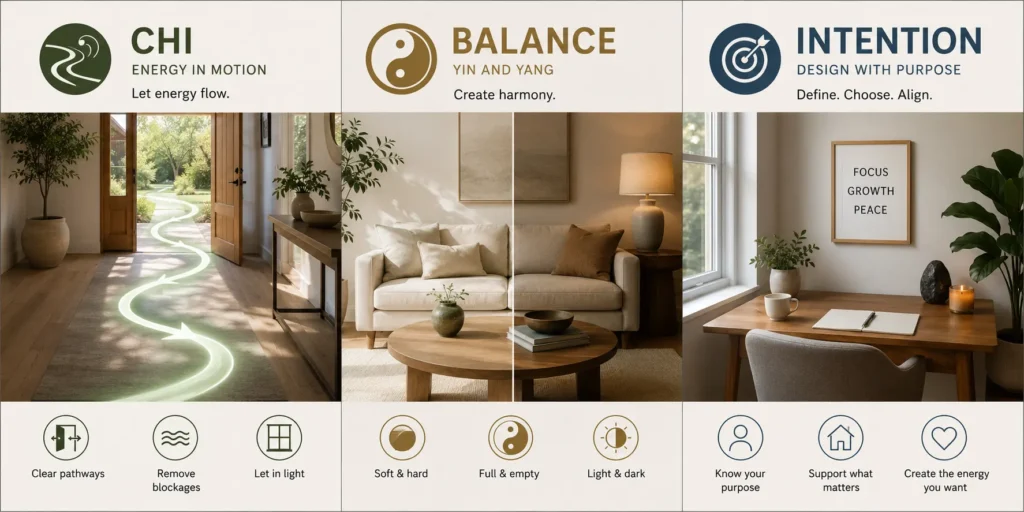
Chi – that vital energy – moves through your home like water looking for the path of least resistance. It needs to flow. It needs pathways. The moment furniture blocks your doorways, the moment clutter piles up in the corners taking up space, the moment rooms go dark because windows are covered – that’s when chi gets stuck. Your actual job, if you want your space to support you, is simple: create conditions where energy can move. From one room into the next. From your front entrance through to the back of the house. Up the stairs, down hallways, through each level. Think of yourself as a designer of pathways – not just for people, but for that vital force that fills the space.
Balance is the other piece. Feng shui looks at complementary forces – yin and yang, active and passive, full and empty, light and dark. And here’s where it gets real: a room packed with hard furniture and zero soft textures? It feels aggressive. Hostile, even. But a space that’s too empty, too sparse? That feels incomplete. Lonely. Your space needs both. It needs contrast. It needs somewhere to rest your eye and somewhere for energy to move.
Intention matters too. You’re not rearranging objects randomly. You’re making deliberate choices about what each space does in your life. What actually happens in this room? What energy do you want to cultivate here? Those questions should guide where things go.
The House as a Living System: Structure and Purpose
Different levels and areas of your home correspond to different aspects of your life. Understanding these zones helps you work with your space rather than against it.
The Roof and Its Importance
Look up. Your roof sits at the absolute top of your structure – literally the crown of your home. It’s the barrier between your interior world and everything beyond. This matters more than people realize.
When your roof is damaged, leaking, or just poorly maintained, it creates energetic chaos. You’re signaling weakness at the highest point of your entire structure. Chi fragments. It scatters upward instead of settling down through your living spaces. And on a practical nervous system level? Your body registers that vulnerability. You can feel it – that vague sense that something isn’t right, that something’s compromised at the top.

This is exactly why getting a quality roofing company and ensuring your roof stays in excellent condition goes way beyond standard home maintenance. A solid, well-maintained roof allows protective energy to settle properly over your entire home. It creates the security your nervous system actually needs to relax. You can arrange furniture perfectly and light candles in every room, but if your roof is weak, you’re working against yourself. The foundation starts at the top.
The Upper Floors and Attic Space
Areas under the roof – attics, upper floor storage – represent your aspirations and intuition. These spaces should be clear and organized, not packed with forgotten boxes and things you’re “saving for later.” Stagnant, cluttered attic space creates mental fog. You might notice scattered thinking, difficulty accessing intuition, or feeling disconnected from your larger goals.
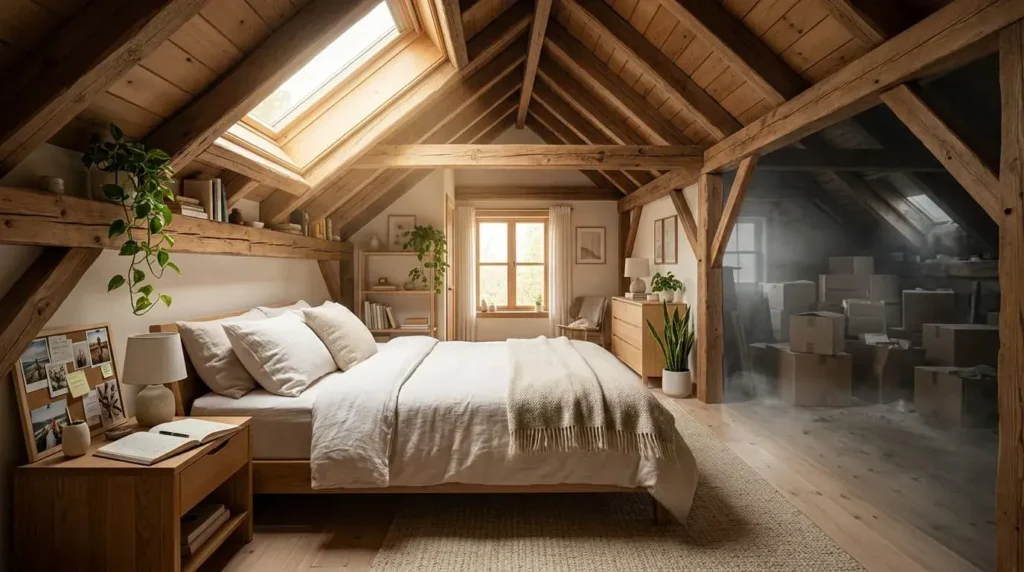
If you use an upper floor bedroom, place your bed on the wall facing the room’s entrance. This position – known as the “command position” – aligns your sleeping body with awareness of what enters your space, which supports deeper rest.
The Middle of Your House
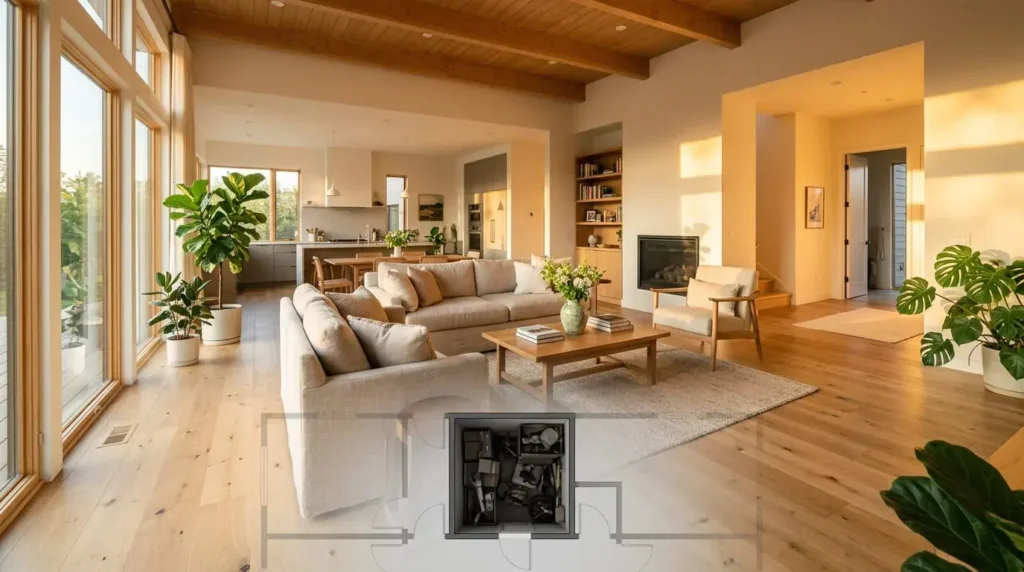
The center point of your home corresponds to health and wholeness. This is your heart center. In traditional feng shui, this area should be relatively clear and energetically neutral – not cluttered with storage, not dark, not a chaotic passageway. A living room in the center of the house works well. A storage closet in the middle? That creates stagnation that subtly affects your physical and emotional wellbeing.
Living Spaces and Social Areas
Your living room, dining area, gatherings spaces – these aren’t just functional rooms. They represent how you actually connect with people and engage with life. And they need the right setup to do that.
These areas thrive with natural light pouring in, clear sightlines so you can see the whole room, and furniture arranged in ways that actually invite conversation. Not the way most people do it – pushing everything against the walls to maximize floor space. That creates isolated, disconnected energy. Instead, try creating small conversation clusters where people naturally face each other. Where it feels easy to talk.
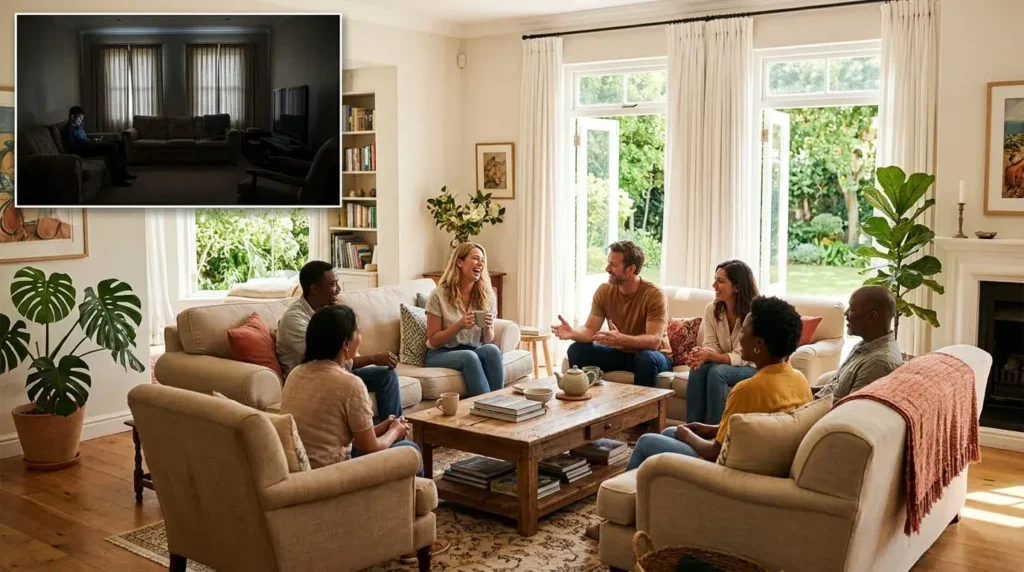
Windows in living areas need to actually be usable. Clean glass. Curtains that open fully during the day. You need light and air moving through. Heavy blocked windows? That’s like cutting your space off from opportunity. Literally and energetically.
Basement Energy
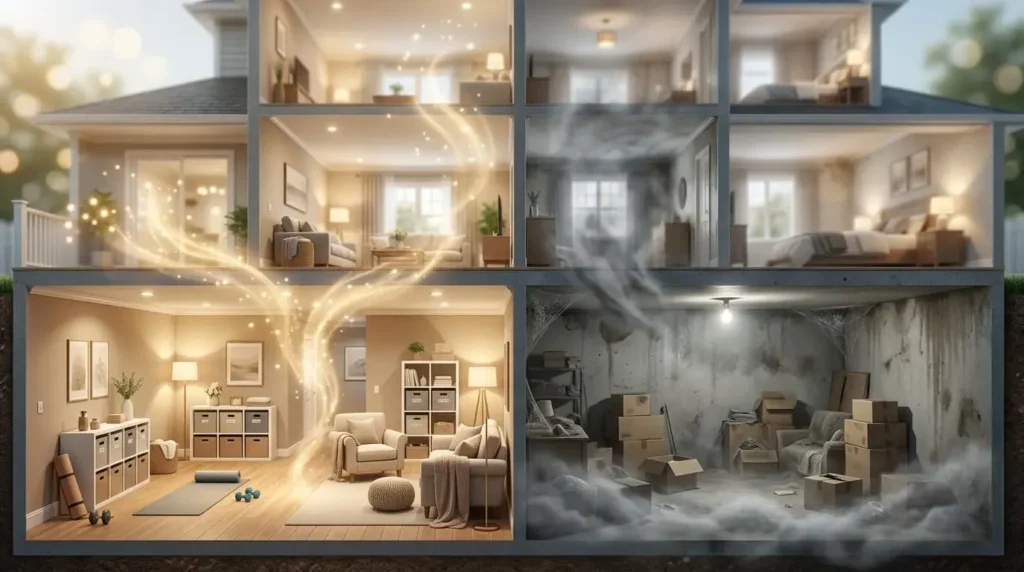
Basements represent the foundation – literally and energetically – of what’s above them. A damp, dark basement creates instability that radiates upward through your whole home. If you have basement space, keep it dry, well-lit, and organized. Finished basements used for relaxation or exercise work well. Basements used as dumping grounds for everything you don’t know what to do with? That energy gets trapped and creates a subtle heaviness in upper floors.
| Room Type | Feng Shui Purpose | Key Principles | Common Problems |
|---|---|---|---|
| Bedroom | Rest, renewal, intimate connection | Command position, solid headboard, minimal stimulation, warm lighting | Electronics creating mental stimulation, mirror opposite bed, clutter, bed under window |
| Living Room | Social connection, relaxation, gathering | Conversation seating, clear pathways, natural light, balanced furniture | Isolated seating against walls, TV as focal point, blocked windows, one-sided energy |
| Kitchen | Nourishment, health, abundance | Clean organized counters, visible stove position, good ventilation, natural light | Stove with back to door, excessive clutter, poor lighting, broken appliances |
| Office/Study | Focus, productivity, career advancement | Command position at desk, clear sightlines, organized surfaces, natural light | Back to door, cluttered workspace, poor lighting, distracting view from window |
| Basement | Foundation support, stability, storage | Dry and well-lit, active use when possible, organized, good ventilation | Dampness, darkness, storing emotional baggage, unused cluttered space |
| Entrance/Foyer | First impression, energy transition, chi activation | Welcoming, well-lit, uncluttered, reflects intention and care | Blocked by clutter, dark lighting, no personality, mirror opposite door |
Cardinal Directions: Orienting Your Home
The direction your home faces actually matters. If you’re in the Northern Hemisphere, a south-facing front entrance gets direct sunlight all day – that creates more active, stimulating energy. North-facing entrances are cooler, quieter, more introspective in feel. East-facing homes catch morning light and carry that fresh “new beginning” energy. Then there’s west-facing.
West-facing homes get hit with evening sun. Good for relaxation on the surface, but it can actually feel overstimulating if you don’t balance it out. You need cooling elements – water features, cooler colors, shade in the right places – to keep that evening energy from becoming chaotic.
The reality? You can’t change which way your house faces, but you can absolutely work with it. A north-facing home might feel darker or moodier than you’d like – bring in warm lighting and earth tones to counterbalance that. You’re not fighting the orientation. You’re harmonizing with it.
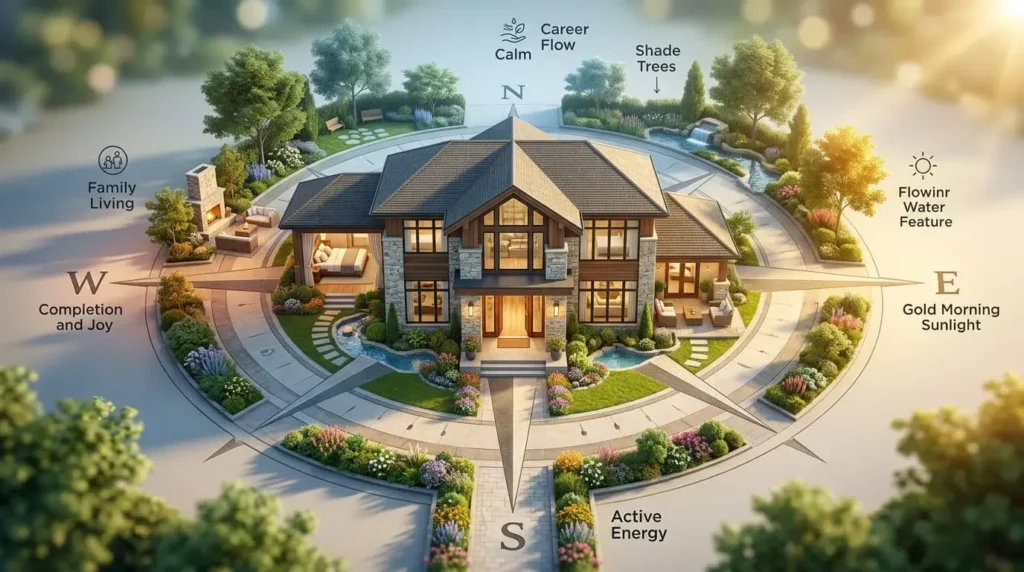
Within your home, cardinal directions assign meanings to rooms. The south area represents fame and recognition – good for a home office or creative space. The north carries career and flow energy. East represents new beginnings and is ideal for entry areas. West relates to children, joy, and completion – perfect for bedrooms.
Sleep and Bedroom Orientation
Where you place your bed determines what your body experiences while you’re unconscious for eight hours. This matters more than most people realize.
Your bed should be positioned so you can see the bedroom door without being directly in line with it. This is the command position – it tells your nervous system someone’s watching your back while you sleep, which allows true rest. If your bed is positioned where someone entering would immediately see you, that creates vulnerability. If you can’t see the door, that creates alert tension.
Avoid placing your bed directly under a window. Windows create energetic movement and light entry that disrupts sleep. Your bed needs stability and enclosure – ideally a solid headboard that extends slightly higher than the mattress, which creates a protective barrier behind your head.
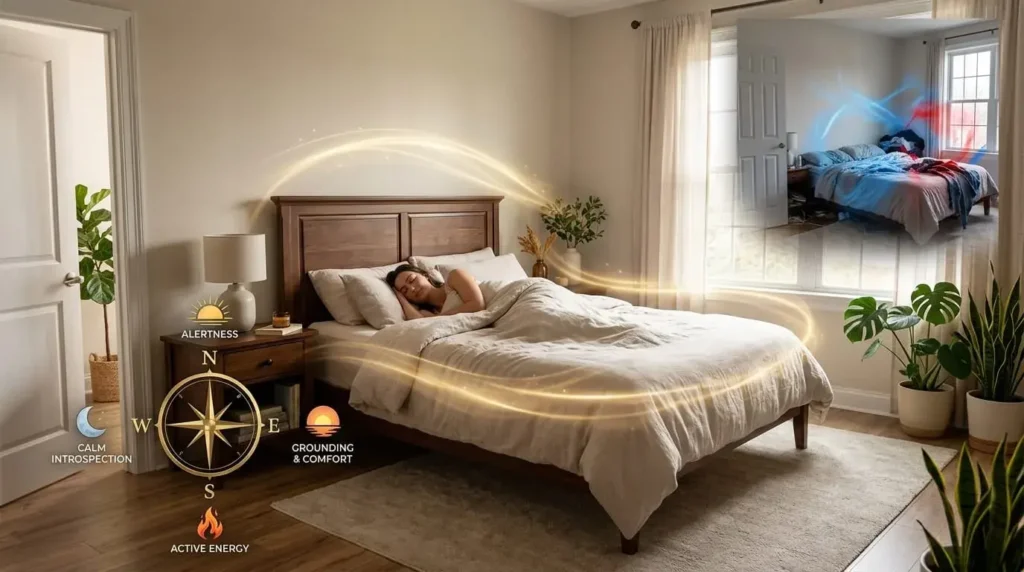
The direction your head points while sleeping also matters. East is stimulating – you wake more alert. West is grounding. North is introspective. South can feel restless. Most people sleep better with their head pointing east or north, though your own experience is your best guide.
Living Area Arrangement
Beyond just cardinal direction, how you arrange furniture in living spaces shapes how chi moves and how you feel while occupying that space.
Clear pathways from one room to the next are essential. Furniture shouldn’t block doorways or create barriers across the flow of the room. A coffee table in the middle of the seating area is fine – it creates gathering energy. But a large piece blocking your route from the living room to the kitchen disrupts natural flow.
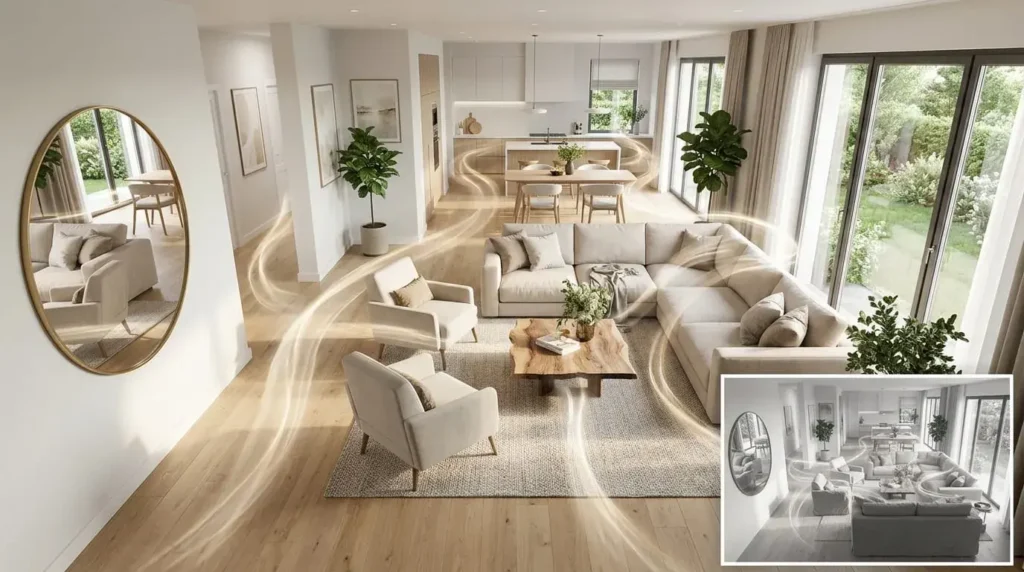
Seating should face into the room, not away from it. Chairs turned to face a corner or empty wall create isolating energy. Furniture arranged so people can see each other and the room’s entrance promotes connection and ease.
Mirrors can be powerful tools for expanding light and reflecting chi around corners, but avoid placing them directly opposite the front door – this bounces protective energy right back out. Mirrors should be placed thoughtfully, not randomly.
Activating Your Space
Now that you understand how different areas function, you can work with them intentionally. Start with one room – whichever feels most important to your daily life. Probably your bedroom or home office. Apply these principles: clear pathways, natural light, minimal clutter, intentional furniture placement, balance between active and restful energy.
Watch what changes. Better sleep? Clearer thinking? Easier conversations? These shifts aren’t coincidence. They happen because you’re actually aligning your physical space with how energy naturally wants to flow. You’re working with systems instead of against them. Feng shui works – and this is the key part – not because of magic, but because how we arrange our environment directly affects our nervous system and psychology. It’s physics meeting neurobiology.
Your home can be a constant source of low-level stress. Draining you day after day without you even understanding why. Or it can be a space that actively supports you – that makes rest easier, clarity more accessible, connection more natural. The difference isn’t square footage or expensive furniture. It’s understanding that the arrangement, the flow, the balance – these things matter. They’re not decorative choices. They’re foundational to your wellbeing.
Frequently Asked Questions About Feng Shui in Your Home
Where should I place my bed in a small bedroom?
Even in tight spaces, follow the command position rule – you should see the door without being directly in line with it. In a small room, this often means placing your bed against the wall opposite the door, slightly to one side. If that’s impossible, place it perpendicular to the door rather than directly aligned. The key is giving your subconscious the signal that you’re protected while sleeping. A small bedroom can still support deep rest if the bed position is intentional.
Does feng shui actually change how I feel, or is it psychological?
Both. The physical arrangement of space genuinely affects your nervous system – how light enters a room, whether you can see an entrance, how air flows, whether pathways feel open or blocked. These trigger real physiological responses. So when feng shui works, you’re not imagining it. But the psychological component matters too. When you arrange your space intentionally – with awareness of what each placement does – you’re also signaling to yourself that this space supports your wellbeing. That conscious choice creates a psychological shift. The two work together.
What if I rent and can’t change the layout?
You can work with feng shui principles even without structural changes. Focus on what you can control: furniture arrangement, decluttering, bringing in plants and natural light, mirrors to reflect light into dark corners, and keeping pathways clear. You won’t transform the space completely, but you can absolutely improve the energy. Many feng shui adjustments are about how you use and arrange a space, not changing the space itself.
Why does my basement feel heavy even if it’s clean?
Basements are naturally below grade, so they collect denser energy and less natural light. Even a clean basement can feel heavy. Address this by adding warm lighting (especially in corners), keeping it as bright as possible, ensuring it’s dry and well-ventilated, and avoiding storing emotional baggage down there – old photo albums, broken items you’re keeping out of guilt, things you never use. Basements work best when they’re actively used for something – a workout space, hobby area, or finished room – rather than storage purgatory.
How does a damaged roof affect my home’s feng shui?
Your roof is your home’s crown and protector. A damaged or leaking roof signals vulnerability at the highest point, which creates energy fragmentation throughout the entire structure. Chi literally scatters upward rather than settling and circulating through your living spaces. You might notice scattered thinking, difficulty concentrating, or a vague sense that something isn’t right. More importantly, a compromised roof prevents the stable, secure energy that your nervous system needs. This is why roof maintenance is a feng shui priority – it’s not just practical home maintenance, it’s energetic stability.
Can feng shui improve my relationships with people in my home?
Yes. When your living spaces encourage connection – chairs facing each other, clear sightlines, good lighting, and balanced energy – people naturally interact more easily. A living room with isolated seating against walls creates isolated interaction. One with a conversation cluster in the center invites people to gather. The physical space either supports or resists connection. Of course, feng shui can’t fix relationship issues, but it creates the right conditions for ease and communication.
What’s the difference between feng shui and just having a nice-looking home?
A nice-looking home prioritizes aesthetics – color, style, visual appeal. Feng shui prioritizes function and flow – how energy moves, how spaces make you feel, how the arrangement supports your wellbeing. You can have a beautiful home that drains you, or a modest home that feels deeply nourishing. The difference is intention. Feng shui asks not just “Does this look good?” but “How does this arrangement affect me?” Both matter, but feng shui goes deeper into the lived experience of the space.
Should I use mirrors in feng shui?
Mirrors are powerful tools that reflect light and energy. They’re excellent for expanding small spaces, bouncing light into dark corners, and reflecting natural views into rooms that lack windows. But placement matters. Avoid placing mirrors directly opposite your front door – this bounces protective energy right back out. Don’t place them behind your bed where you sleep – the reflection can create restless energy. Instead, use mirrors strategically to expand light and create a sense of openness. A mirror reflecting a window can make a room feel more connected to the outside.
Blog Categories:
About the Author: