

Where Spirituality Meets Therapy: A New Approach to Healing
Discover how combining spirituality with therapy creates a powerful healing approach. Learn practices, benefits, and the difference between spirituality and religion.
Table Of Contents
Healing is a deeply personal and divine journey that every person experiences at some point in their lives. It is a process connected to events and memories that leave a deep mark on the character of every person. For many years, people have been separating mental health and spirituality, treating them as completely different concepts. Yet spirituality is an extremely powerful source of reflection, resilience, and personal growth, which positively impacts the mental state and mindset of each individual. Based on today’s available information and research, a new approach to healing has been designed. It is a kind of approach where spirituality effectively meets therapy, resulting in absolute peace of mind.

Understanding the Process Of Healing
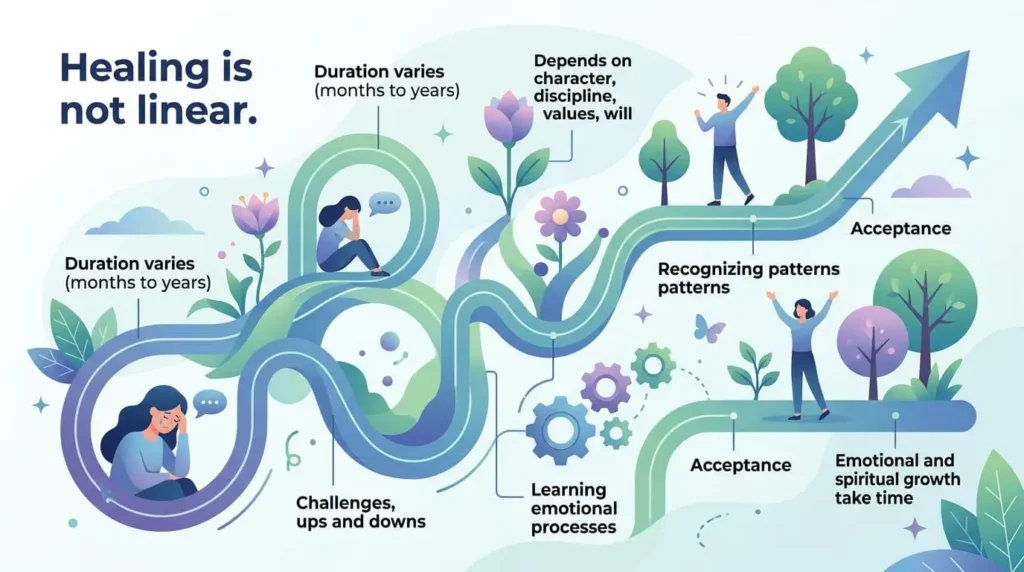
The healing journey is different for everyone. Most of the time, people think that this process is only hard at the beginning and then everything becomes easier. The truth is, healing is not a smooth and linear process at all. Depending on what you are healing from, it can last for a few months up to a few years. The duration depends on the person’s character, discipline, values, and will. The healing process is full of challenges, ups and downs, recognizing patterns, learning about emotional processes and responses, and accepting things you couldn’t find the strength to accept before. Emotional and spiritual growth take time, and not everyone is privileged to actually experience one.
Why Should You Seek Therapy?
Therapy has been one of the most effective ways for improving mental health. Most people start therapy because they want to acknowledge unconscious things, heal some kind of trauma, or simply because they want to feel seen, heard, and understood. As soon as these people start recognizing patterns, learning how to set boundaries, and starting to realize their purpose, a large number of these individuals decide to turn to spirituality.

The connection between the two is much stronger than most of us realize. This is exactly why nowadays, modern counseling services are increasingly adopting approaches that combine evidence-based psychological methods with clients’ personal beliefs, values, and spiritual frameworks. Therapy is a perfect starting point for individuals who are aware that they have a problem and who are willing to make a positive change for their better future.
How Does Spirituality Support Mental Health?
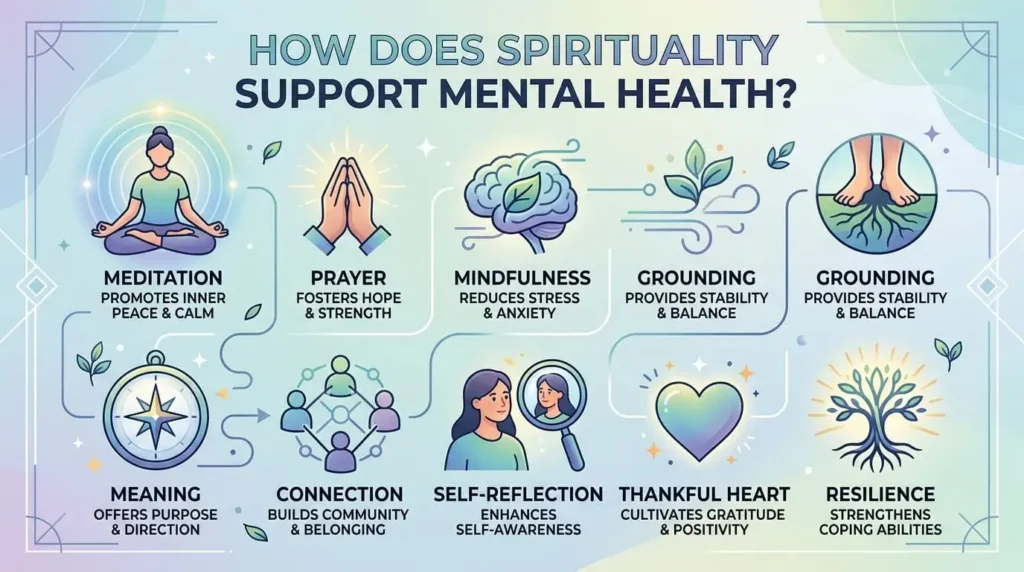
- Practices such as meditation, prayer, or mindfulness support emotional regulation and lower stress levels.
- Spiritual beliefs often provide a sense of stability and inner grounding during uncertainty or loss.
- Spirituality helps people find meaning during difficult emotional experiences, reducing feelings of confusion and emptiness.
- A sense of connection to something larger than oneself can reduce isolation and loneliness.
- Spirituality encourages self-reflection. People start to understand their thoughts, emotions, and behavior patterns.
- Gratitude-based practices improve mood and promote positive thinking patterns.
- Spirituality strengthens resilience by encouraging hope and a broader perspective on life challenges.
Common Practices That Combine Spirituality and Therapy
Therapy is often a personalized service, completely tailored to each individual’s needs. Yet there are a few common practices that most people use to successfully combine spirituality and therapy, resulting in noticeable self-transformation, improved emotional regulation, greater self-awareness, and a stronger connection to personal values. These practices include:
- Meditation, prayer, and mindfulness exercises
- Faith-based self-reflection
- Gratitude Journaling
- Connecting with nature and spending as much time as possible in it
- Self-exploration, realization, and acceptance
- Acts of service and community involvement
- Breathwork and relaxation techniques
Understanding The Difference Between Religion and Spirituality
A common misconception about spirituality is its immediate connection to religion. However, spirituality can exist independently of religion. Religion includes specific ceremonies and rituals and is usually made up of rules that need to be followed and consequences that happen if these rules are broken. Spirituality is something that helps people interpret life on their own. It is more personal and flexible. It focuses on the inner growth of a certain individual and their search for meaning or connection beyond the self. For some people, it is easier to find that meaning by connecting spirituality and religion, and for some, it is easier to create their own perception. Understanding the difference between the two is essential for mental health because it helps people recognize whether they need structured support or more flexible spiritual tools to achieve inner emotional balance.

During our lives, we face various challenges and hardships, and at some point, all of us need healing. But not everyone can reach a healing state that leads to personal growth and peace of mind. It is a state that requires a lot of battles, patience, acceptance, and honesty towards oneself. By integrating spirituality with therapy, we can foster self-understanding, resilience, and balance, which are qualities that many of us struggle to cultivate on our own.
Frequently Asked Questions About Spirituality and Therapy
What is the difference between spirituality and religion?
Spirituality and religion are often confused, but they’re distinct concepts. Religion includes specific ceremonies, rituals, rules, and often consequences for breaking those rules. Spirituality is more personal and flexible – it’s about how you interpret life and find meaning on your own terms. Spirituality can exist independently of religion. For some people, connecting spirituality with religion works best for their inner growth, while others create their own spiritual perception without formal religion. Understanding this difference is essential for mental health because it helps you recognize whether you need structured support or more flexible spiritual tools to achieve emotional balance.
Why should I seek therapy?
Therapy is one of the most effective ways to improve mental health. People often start therapy to acknowledge unconscious patterns, heal trauma, or simply to feel seen, heard, and understood. As you work through therapy and begin recognizing patterns and setting boundaries, many people find themselves naturally drawn to spirituality. Therapy is an excellent starting point if you’re aware that something needs to change and you’re willing to make positive changes for your future. Modern counseling services increasingly combine evidence-based psychological methods with your personal beliefs and spiritual frameworks.
Is healing a linear process?
No, healing is not a smooth and linear process at all. The healing journey is different for everyone. It can last from a few months to several years, depending on what you’re healing from and your personal character, discipline, values, and willingness. The healing process is full of challenges, ups and downs, recognizing patterns, learning about emotional processes and responses, and accepting things you couldn’t accept before. Emotional and spiritual growth take time, and it’s important to understand that this isn’t a straight path to recovery.
What are some practices that combine spirituality and therapy?
There are several common practices that successfully combine spirituality and therapy, resulting in self-transformation, improved emotional regulation, and greater self-awareness. These include meditation, prayer, and mindfulness exercises; faith-based self-reflection; gratitude journaling; connecting with nature; self-exploration and acceptance; acts of service and community involvement; and breathwork and relaxation techniques. Since therapy is personalized to each individual’s needs, you can work with your therapist to determine which practices work best for your healing journey.
How does spirituality support mental health?
Spirituality supports mental health in multiple ways. Practices like meditation, prayer, and mindfulness help with emotional regulation and lower stress levels. Spiritual beliefs provide stability and grounding during uncertainty or loss. Spirituality helps you find meaning during difficult emotional experiences, reducing confusion and emptiness. A sense of connection to something larger than yourself can reduce isolation and loneliness. Spirituality encourages self-reflection, helping you understand your thoughts and behavior patterns. Gratitude-based practices improve mood and promote positive thinking, while spiritual beliefs strengthen resilience by encouraging hope and a broader perspective on life challenges.
Can I integrate spirituality with therapy for better results?
Absolutely. The connection between spirituality and therapy is much stronger than most people realize. Modern counseling services are increasingly adopting approaches that combine evidence-based psychological methods with clients’ personal beliefs, values, and spiritual frameworks. By integrating spirituality with therapy, you can foster self-understanding, resilience, and balance – qualities that many people struggle to cultivate alone. This integrated approach results in noticeable self-transformation, improved emotional regulation, and a stronger connection to your personal values.
What does it mean to reach a healing state that leads to personal growth?
Reaching a healing state that leads to personal growth and peace of mind requires patience, acceptance, and honesty towards yourself. It’s not a state that comes easily – it requires battles, reflection, and willingness to change. During our lives, we all face challenges and hardships, and at some point, we all need healing. However, not everyone can reach the deeper healing state that results in true personal growth. This state is achieved through dedication to both psychological and spiritual work, combined with self-compassion and commitment to your healing journey.
Blog Categories:
About the Author: