


How Mindfulness Restores Your Emotional Energy
Reclaim your emotional energy through mindfulness practices. Learn how structured awareness helps combat burnout, rebuild boundaries, and restore your internal stamina.
Table Of Contents
Constant demands from work and home life chip away at your internal reserves. You might find yourself snapping at small disruptions or feeling completely detached from what used to make you happy.
Restoring that lost stamina demands a deliberate change in attention. Simple awareness exercises offer a practical path back to stability. Learn how to anchor your thoughts, and you can reclaim your peace and rebuild your internal strength.
Recognizing The Signs Of Internal Drain
Mental fatigue creeps up silently without an obvious warning sign. You might notice a sudden lack of motivation during routine tasks. Your patience wears thin during minor conversations with family members.
Stress drains your battery faster than you realize. If you are experiencing emotional wounds, you can visit their website to find the right professional support and guidance. Take control of your mental wellness and reclaim your energy.

Many people try to push through the fatigue by drinking more caffeine or working longer hours. That approach only compounds the issue over the coming weeks. True recovery demands that you pause and evaluate your mental state. Just take a brief moment to check your breathing patterns, which provide immediate insight into your stress levels.
The Modern Roots Of Constant Fatigue
Modern life introduces new pressures that previous generations never faced. Notifications blink continuously and create a state of perpetual alertness that never allows your brain to rest. The heavy use of new digital applications and automated systems triggers severe cognitive overload, visual tiredness, and deep emotional exhaustion. Constant exposure to digital updates leaves little room for your mind to process information naturally.

Stepping away from devices becomes a matter of self-preservation. When your attention is split among ten different tabs, your internal energy disperses rapidly. Limiting screen time protects your limited cognitive capacity. Creating device-free zones in your home provides a physical boundary against digital stress.
Small Adjustments For Immediate Relief
Making large changes to your schedule feels impossible when you are already tired. Small changes can create meaningful pockets of space during a hectic day. You do not need hours of free time to begin resetting your nervous system.
The introduction of brief micro-breaks helps interrupt the cycle of continuous pressure. Try integrating these basic adjustments into your daily routine:
- Step away from your desk for 2 minutes after completing a major task
- Look out the window at a distant object to rest your eyes
- Take 3 deep breaths before answering an incoming phone call
- Walk around the block without looking at your smartphone

These small actions prevent stress from accumulating into an unmanageable mountain by the afternoon. Practicing them consistently delivers surprising benefits for your mood.
Proven Impacts On Severe Exhaustion
Scientific literature supports the use of structured awareness practices to combat severe depletion. Researchers have spent years analyzing how specific interventions affect professionals under high stress. The data shows clear patterns of improvement across various industries.
Structured awareness training has a major positive effect on burnout metrics. The analysis revealed that over 67% of the clinical trials demonstrated substantial improvements, with emotional exhaustion being the area that saw the greatest positive change. Consider the specific metrics that show improvement through these techniques:
- Reduced rates of cognitive fatigue during complex projects
- Lower levels of daily irritability with colleagues
- Improved sleep quality at the end of the week
- Greater feelings of personal accomplishment in your career
Dedicated practice changes how your body responds to ongoing pressure and gives you a reliable buffer against systemic burnout.
Shifting Your Focus Away From Judgment
People judge themselves harshly for feeling unmotivated, or they think they should be stronger or more productive. Self-criticism adds an extra layer of weight to an already heavy mental burden.
Official health guidelines from national medical authorities highlight the value of emotional self-acceptance. Experts state that recognizing your true feelings is the first step toward managing your internal emotional state. They recommend allowing yourself to experience and accept your feelings without any harsh criticism, even when those emotions are deeply troubling.

Stopping the internal battle against your feelings saves an enormous amount of energy. When you stop fighting your exhaustion, you can begin to heal. Acceptance provides the foundation for real recovery. Acknowledging fatigue without anger diverts your mindset from resistance to healing.
Rebuilding Boundaries Throughout Your Day
Setting firm boundaries protects your newly recovered emotional stamina. Saying yes to every request drains your reserves faster than you can replenish them. You must learn to establish clear limits on your time and availability.
Clear communication prevents others from overstepping your boundaries accidentally. You can politely decline extra assignments when your plate is full. Guarding your personal time after work hours allows your mind to disconnect completely.
Creating these boundaries comes with practice and consistency. You might feel guilty initially when turning down requests from colleagues or friends, yet that discomfort passes as you realize how much better you feel. Prioritize your well-being and be more present when you do choose to engage. Learning to protect your time is an investment in your mental longevity.
Sustainable Practices For Long-Term Balance
Maintain your internal balance with some ongoing effort. Consistency matters far more than the duration of any single practice session. A 5-minute daily routine creates more lasting benefits than a 2-hour session once a month.
Find a specific time each day that belongs entirely to you. Early mornings or late evenings provide the quietest moments for reflection. Use that time to sit quietly, check in with your body, and let go of external worries.
Building these habits better protects you from future crises. You become less susceptible to sudden spikes in workplace stress. Your emotional energy remains stable and allows you to navigate life with greater ease.
Reclaiming your emotional health is a gradual journey that unfolds day by day. Small, intentional choices accumulate to create a profound shift in your daily experience.
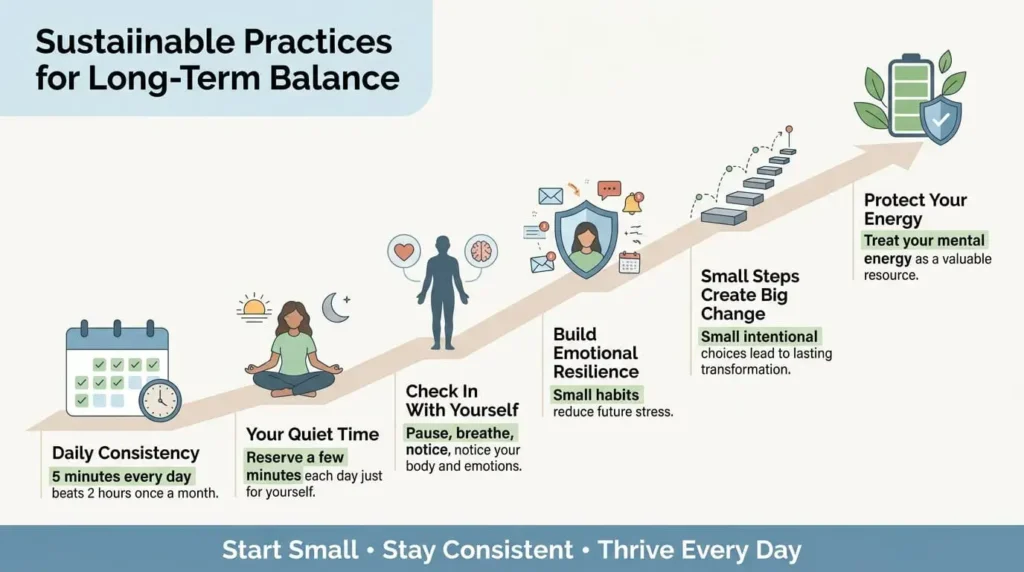
Once you prioritize your internal state, you build a resilient foundation that withstands external pressures. Your energy is a limited asset that deserves protection and careful management. Start small, stay consistent, and allow your mind the space it needs to prosper.
Frequently Asked Questions About Mindfulness and Emotional Energy
What are the signs that I’m experiencing emotional drain?
Mental fatigue creeps up silently without an obvious warning sign. You might notice a sudden lack of motivation during routine tasks, or your patience wearing thin during minor conversations with family members. Other signs include snapping at small disruptions, feeling completely detached from activities that used to make you happy, and a general sense that your internal reserves have been depleted. Pay attention to your breathing patterns—they provide immediate insight into your stress levels. If you’re experiencing these signs consistently, it’s time to pause and evaluate your mental state rather than pushing through with caffeine or longer work hours.
How does digital overload contribute to emotional exhaustion?
Modern life introduces new pressures that previous generations never faced. Notifications blink continuously and create a state of perpetual alertness that never allows your brain to rest. The heavy use of digital applications and automated systems triggers severe cognitive overload, visual tiredness, and deep emotional exhaustion. When your attention is split among ten different tabs, your internal energy disperses rapidly. Constant exposure to digital updates leaves little room for your mind to process information naturally. This is why stepping away from devices becomes a matter of self-preservation. Creating device-free zones in your home and limiting screen time protects your limited cognitive capacity from further depletion.
What are micro-breaks and how can I use them?
Micro-breaks are brief moments of pause that interrupt the cycle of continuous pressure. You do not need hours of free time to begin resetting your nervous system—small changes can create meaningful pockets of space during a hectic day. Try integrating these basic adjustments into your daily routine: step away from your desk for 2 minutes after completing a major task, look out the window at a distant object to rest your eyes, take 3 deep breaths before answering an incoming phone call, or walk around the block without looking at your smartphone. These small actions prevent stress from accumulating into an unmanageable mountain by the afternoon. Practicing them consistently delivers surprising benefits for your mood.
Does research support the use of mindfulness for burnout?
Scientific literature supports the use of structured awareness practices to combat severe depletion. Researchers have spent years analyzing how specific interventions affect professionals under high stress, and the data shows clear patterns of improvement across various industries. Structured awareness training has a major positive effect on burnout metrics. The analysis revealed that over 67% of the clinical trials demonstrated substantial improvements, with emotional exhaustion being the area that saw the greatest positive change. Dedicated practice changes how your body responds to ongoing pressure and gives you a reliable buffer against systemic burnout.
How do I set boundaries without feeling guilty?
Setting firm boundaries protects your newly recovered emotional stamina. Saying yes to every request drains your reserves faster than you can replenish them, which is why you must learn to establish clear limits on your time and availability. Clear communication prevents others from overstepping your boundaries accidentally. You can politely decline extra assignments when your plate is full and guard your personal time after work hours to allow your mind to disconnect completely. Creating these boundaries comes with practice and consistency. You might feel guilty initially when turning down requests from colleagues or friends, yet that discomfort passes as you realize how much better you feel. Prioritizing your well-being is an investment in your mental longevity.
What’s the best time of day to practice mindfulness?
Find a specific time each day that belongs entirely to you. Early mornings or late evenings provide the quietest moments for reflection. Use that time to sit quietly, check in with your body, and let go of external worries. The specific time matters less than consistency—a 5-minute daily routine creates more lasting benefits than a 2-hour session once a month. Consistency matters far more than the duration of any single practice session. Choose a time when you’re least likely to be interrupted and when your mind is relatively clear, so your practice can be effective.
How long does it take to see results from mindfulness practice?
Building mindfulness habits better protects you from future crises. You become less susceptible to sudden spikes in workplace stress. Your emotional energy remains stable and allows you to navigate life with greater ease. Reclaiming your emotional health is a gradual journey that unfolds day by day. Small, intentional choices accumulate to create a profound shift in your daily experience. Once you prioritize your internal state, you build a resilient foundation that withstands external pressures. Start small, stay consistent, and allow your mind the space it needs to prosper. Results don’t happen overnight, but consistent practice delivers measurable improvements over time.
Blog Categories:
About the Author: