

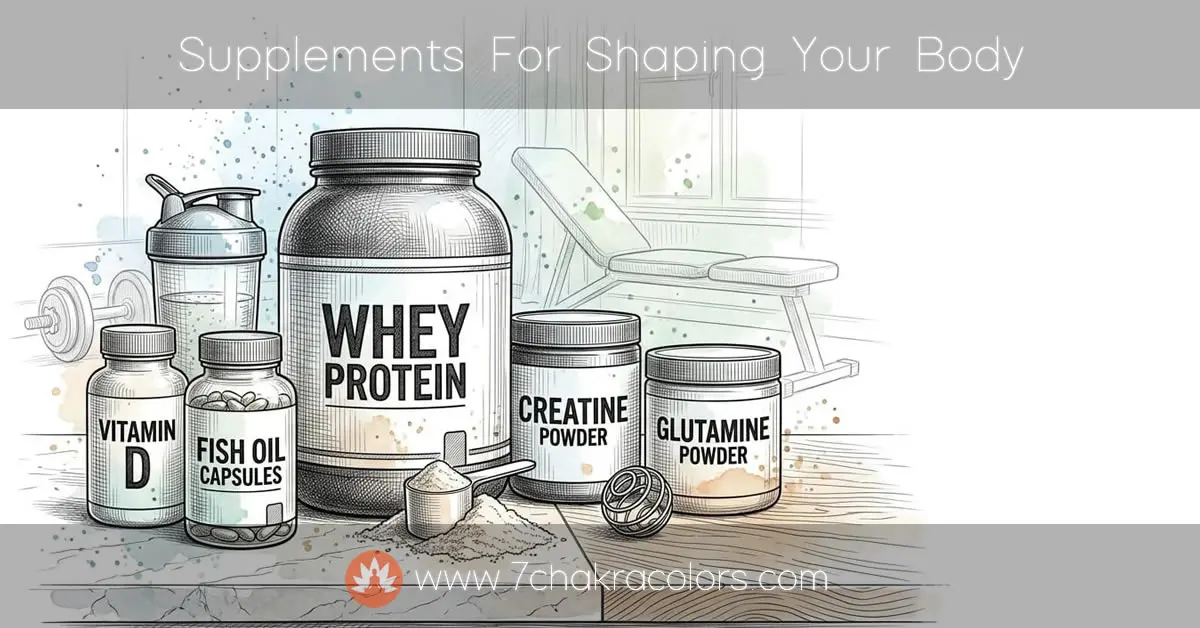
Natural Supplements To Shape Your Body
Discover the best natural supplements for body shaping. Learn about vitamin D, fish oil, whey protein, creatine, and more to transform your fitness results.
Table Of Contents
People come to body shaping for all kinds of reasons. Some of you are training for competition or your work demands it – maybe you’re a performer, model, or athlete. Others want that confidence boost that comes from seeing real changes in the mirror. Whatever your reason, the truth is simple: supplements can help. But not all supplements work the same way.
The trick isn’t finding magic pills. It’s understanding what your body actually needs and then supporting that with the right nutrients. When you combine smart supplementation with proper training and nutrition, things accelerate. Your workouts hit harder. Your recovery improves. The changes you’re working toward actually stick.
Understanding Your Body-Shaping Goals
Before jumping into supplements, clarify what you’re actually trying to achieve. That matters more than you might think.
Are you building muscle mass while taking care of your health? Then you need things that support protein synthesis and recovery. Want to lean out and lose fat while keeping muscle? You’re looking at different priorities – metabolic support, energy production, fat utilization. Maybe you’re looking for overall tone and definition. Or strength gains without bulk.
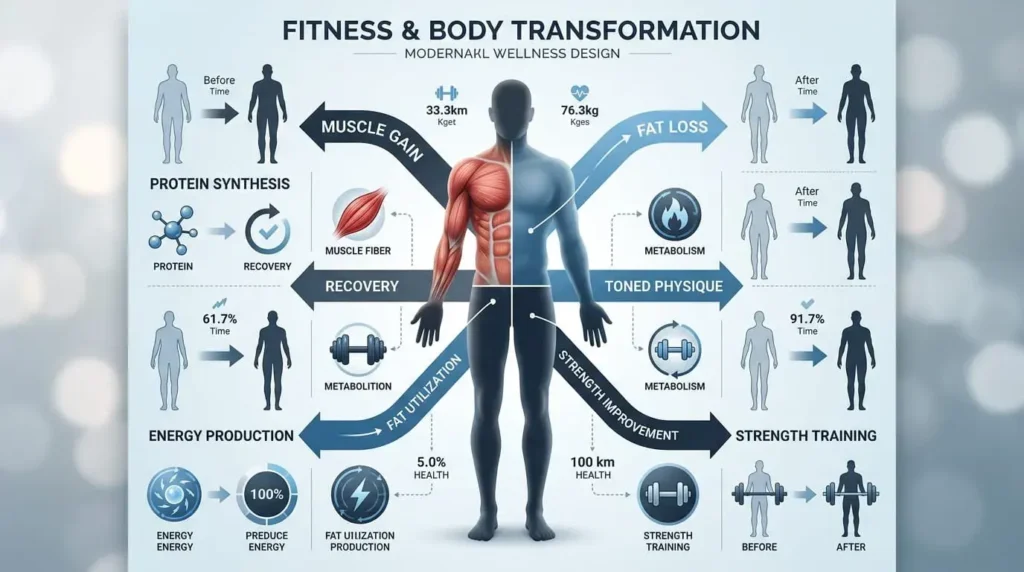
The supplements that work best depend on where you are right now and where you want to go. Using the wrong one wastes money and effort. Using the right ones at the right time multiplies your results.
Vitamin D: The Foundation You’re Probably Missing
Here’s the thing about vitamin D – most people are deficient. Like, significantly deficient. And that matters for body shaping more than you’d expect.
Vitamin D isn’t just about bones. It affects your testosterone levels, your mood, your energy production, and your overall sense of wellbeing. There are numerous online sources where you can learn more about how vitamin D affects bone density, energy production, overall mood, and testosterone levels. A man with healthy testosterone naturally builds muscle more easily. His metabolism runs better. His body responds to training more efficiently.
You can get vitamin D from sunlight exposure. Twenty to thirty minutes of direct sun, few times a week. But if you’re like most people – stuck inside an office or home most of the day – that doesn’t happen. The sun’s angle changes with seasons too. During winter months especially, you can’t make enough vitamin D even if you tried.

That’s where supplementation comes in. A solid vitamin D supplement – we’re talking 2,000 to 4,000 IU daily – fills that gap. You’ll notice your energy lifts. Your mood improves. Your body feels more responsive to training. And your testosterone stays where it needs to be for muscle building.
One more thing – vitamin D works better when you pair it with calcium and magnesium. Your bones need that trio to stay strong while you’re pushing hard in the gym.
Fish Oil: The Often Overlooked Muscle Builder
Fish oil gets dismissed sometimes. People think it’s just for heart health, for older folks worried about cholesterol. But that’s incomplete thinking.
The omega-3 fatty acids in fish oil – EPA and DHA specifically – they do something powerful for anyone trying to reshape their body. Fish oil supplements are rich in omega-3 fatty acids, which are integral to the overall health of the body, including the cognitive functions of the brain. They support fat loss. They reduce inflammation in muscles that have been worked hard. They improve your brain’s cognitive function, which means better workout focus and mind-muscle connection.
Here’s what happens: omega-3s help your body shift into a fat-burning mode while preserving muscle tissue. That’s exactly what you want during a cutting phase. They also support joint health – something that matters when you’re training consistently – and they keep your hormones balanced.
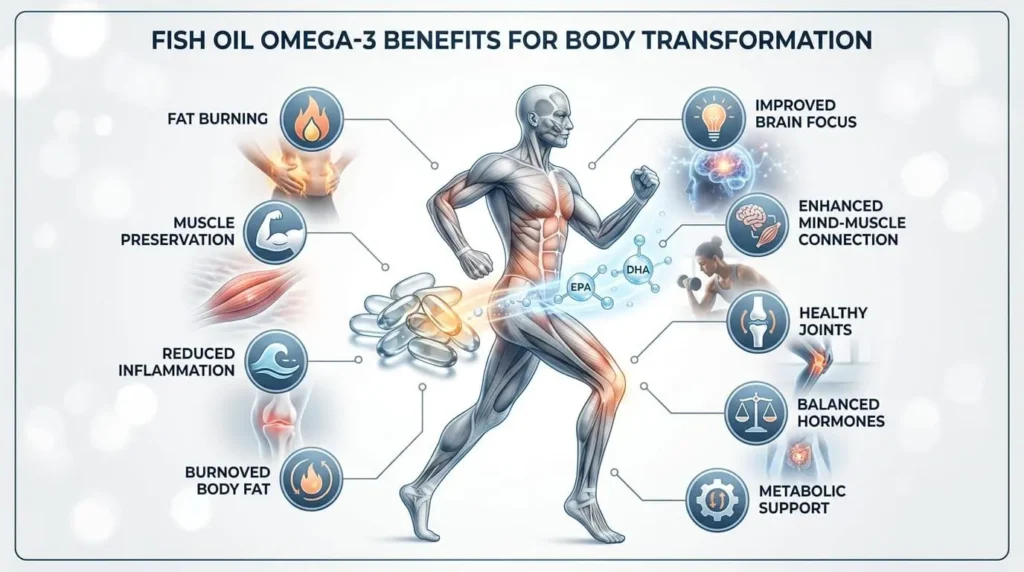
Fish oil also affects your metabolic rate. Consistent supplementation has been shown to support the body’s natural fat-burning processes. You won’t see dramatic overnight changes, but over 4-6 weeks of consistent use? You’ll notice your body composition shifting differently than it would without it.
Take 1,000-2,000mg of combined EPA and DHA daily. More if you’re eating very little fish. For a closer look at how these work, our guide on fish oil pills and why omega-3 intake matters breaks down the science in more detail. Timing doesn’t matter much – just consistency does.
For those interested in plant-based regulatory support, our guide on CBD and the endocannabinoid system explains how it works differently from traditional supplement categories like protein and omega-3s.
Whey Protein Powder: Your Customizable Tool
Whey protein is straightforward. Your muscles need amino acids to grow. Protein provides those. Simple math.
But here’s where most people get it wrong – they think all whey protein powder is the same. It’s not. Different formulations do different things.
If you’re lean and trying to maintain while getting stronger, grab a lower-calorie whey isolate. Fast digesting, minimal carbs and fats, pure protein. If you’re trying to bulk up and gain serious mass, you want a concentrate with more calories – carbs and fats included to support that surplus you need.
The amount matters too. Most people underestimate their protein needs. You want roughly 0.8 to 1 gram per pound of bodyweight when you’re actively building. For a 180-pound person trying to gain muscle, that’s 140-180 grams daily. If that sounds high, remember – that includes all protein sources: chicken, fish, eggs, dairy, and yes, the powder.
Whey absorbs fast, which means it gets to your muscles quickly after training. That window of 30-60 minutes post-workout is real. Your muscles are primed to absorb amino acids. Having whey available then makes sense.
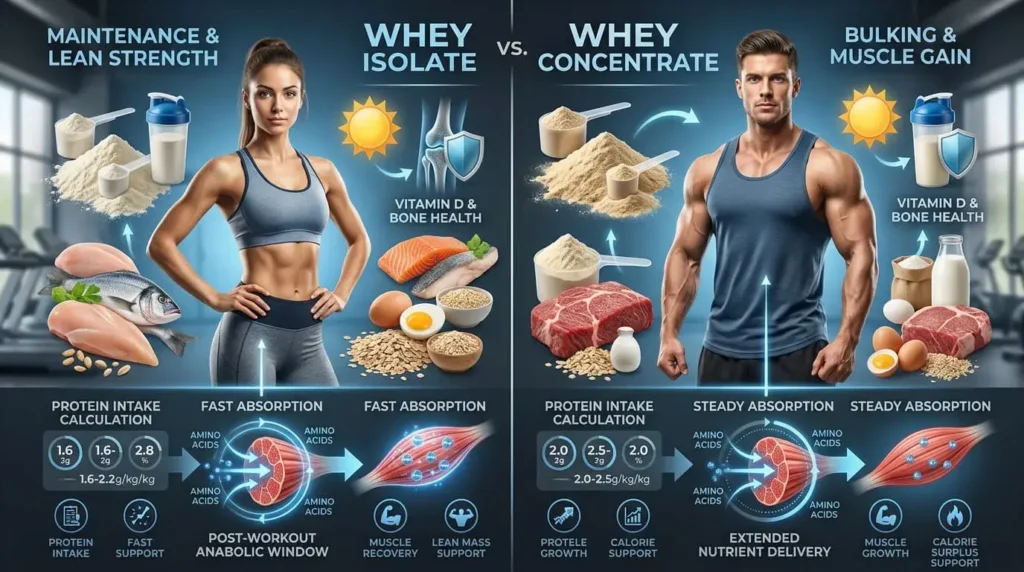
Mix it with water for pure protein and calories. Mix it with milk and oats if you need more calories for building. Don’t overlook micronutrients either; vitamin D and bone strength are closely linked, and adequate vitamin D supports muscle function and recovery alongside any body-shaping routine. Keep it simple.
Creatine: The Proven Performance Enhancer
Creatine monohydrate. Let’s talk about it.
This supplement does one thing really well – it boosts ATP production. ATP is your muscles’ fuel. More ATP means more energy for harder contractions, more reps, more intensity. That’s the foundation of muscle growth.
The research on creatine is solid. Years of studies show it works for strength and muscle gain. It’s safe. It’s cheap. It’s probably the most researched supplement out there, and the evidence keeps pointing the same direction – it helps.
You’ll want 3-5 grams daily. No loading phase needed despite what you’ve heard. Just consistent daily use for 3-4 weeks until it builds up in your system, then you see the effects. You might gain a couple pounds initially – that’s water retention, totally normal, totally fine.

Some people report bloating. If that’s you, try creatine HCL instead of monohydrate. It absorbs better and doesn’t cause the same water retention.
Glutamine: Preserving What You’ve Built
Glutamine is an amino acid your muscles use for recovery and repair. When you train hard, you deplete it. Your muscles get sore, they recover slower, the next workout feels harder.
Supplementing glutamine helps here. It’s not a muscle builder itself. Think of it as a muscle preserver. It helps you recover from the damage of training, keeps your immune system from tanking during intense periods, and supports that lean mass you’re working so hard to build.
5-10 grams daily is typical. Most people take it immediately after training or with their protein shake. Timing matters less than consistency though – just regular daily intake is what counts.
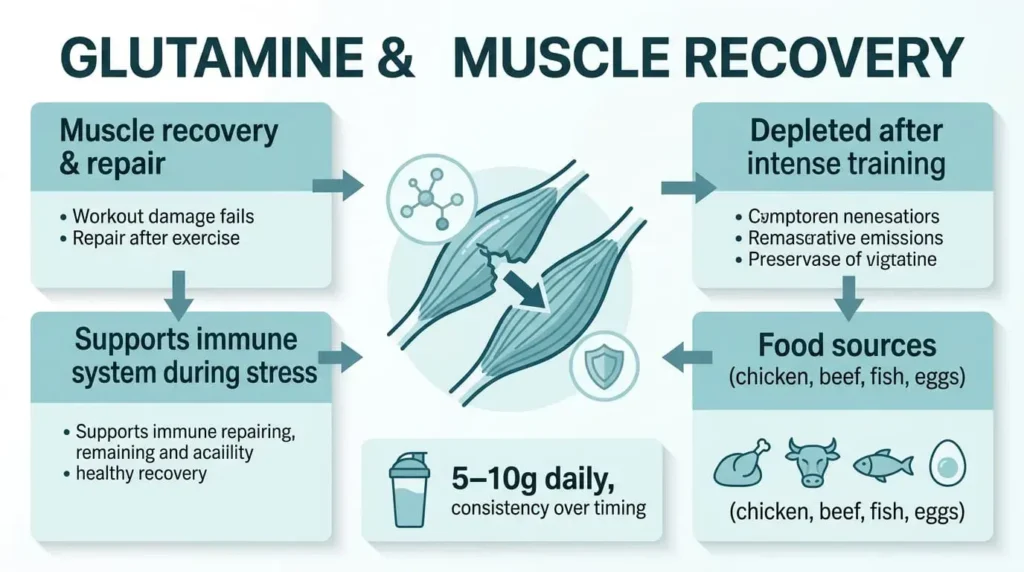
You get glutamine from protein-rich foods too. Chicken, beef, fish, eggs – they all have it. The supplement is just insurance that you’re getting enough.
| Supplement | Primary Benefits | Recommended Dosage | When to Take |
|---|---|---|---|
| Vitamin D | Testosterone support, bone health, energy production, mood regulation | 2,000-4,000 IU daily, or 5,000-7,000 IU if deficient | Morning with food, consistency matters more than timing |
| Fish Oil | Omega-3 fatty acids, inflammation reduction, fat loss support, joint health | 1,000-2,000mg combined EPA/DHA daily | With meals to improve absorption, anytime is fine |
| Whey Protein | Amino acid delivery, muscle building, recovery support, convenience | 25-50g per serving, adjust total daily intake based on whole food protein | Post-workout ideal, but anytime works – consistency over timing |
| Creatine | ATP energy production, strength gains, muscle building, intense training support | 3-5g daily consistently, no loading phase needed | No critical timing window, consistency is key |
| Glutamine | Muscle preservation, recovery enhancement, immune support during training stress | 5-10g daily, usually in one dose | Post-workout or anytime – timing flexibility is high |
Creating Your Supplement Stack: What Actually Works Together
Here’s what trips people up – trying to use too many supplements at once and hoping something sticks.
Start simple. Choose based on your specific goal. Building muscle? Vitamin D, fish oil, whey protein, creatine. That’s a solid foundation. Leaning out? Same stack, but maybe a lower-calorie whey and focus on consistency.
The supplements that work best together are the ones that serve different purposes without competing. Vitamin D helps with testosterone and mood. Fish oil handles inflammation and fat loss. Whey protein supplies the amino acids. Creatine boosts energy for training. Glutamine supports recovery.
None of these fight each other. They work in parallel.
What doesn’t work? Mixing ten different supplements hoping one of them is magic. Your body can only process so much. Money gets wasted. You never know what’s actually helping because you changed everything at once.
Add supplements one at a time. Use each consistently for 4-6 weeks before deciding if it’s working. Then if you want to add another, do it. That way you actually learn what helps you specifically.
Micronutrients Matter More Than People Think
Beyond the big supplements, there’s another layer that most people overlook – micronutrients. Your magnesium, zinc, potassium, B vitamins.
These don’t directly build muscle. But they’re the support system that makes everything else work better. Magnesium helps with recovery. Zinc is critical for testosterone production. B vitamins support energy production and brain function. Potassium affects muscle contractions and heart health.
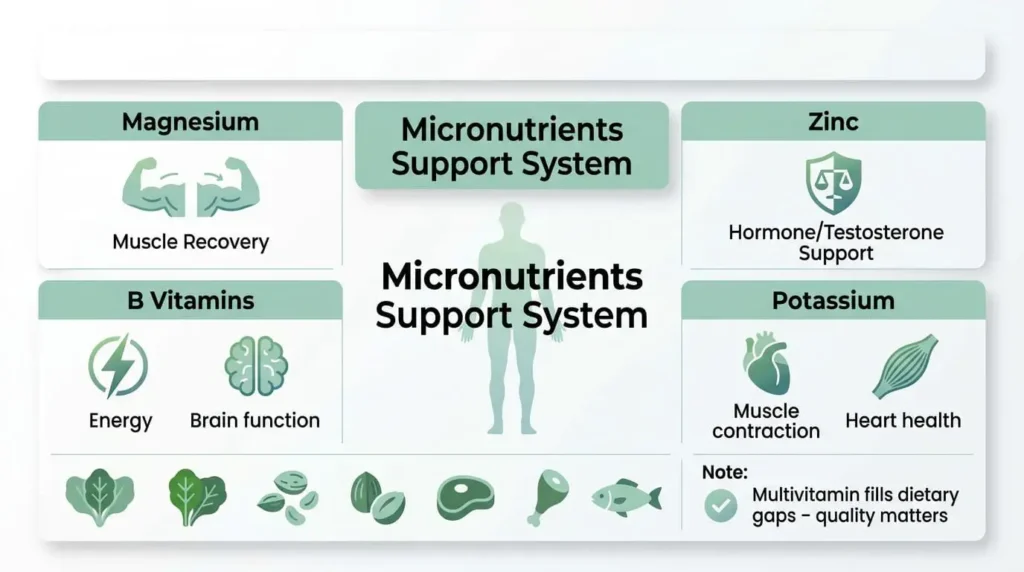
You get these from food – leafy greens, nuts, meat, fish. But if your diet isn’t dialed in, you might be missing them. A solid multivitamin covers these gaps. Just make sure it’s actually good – something from a reputable company, not the cheap stuff that’s half filler.
The Reality Check: Supplements Aren’t Magic
This matters. Really matters.
Supplements enhance what you’re already doing. They don’t create something from nothing. You still need to lift weights consistently. You still need to eat enough food with enough protein. You still need sleep – probably more than you’re getting.
The supplement does maybe 10-20% of the work. The other 80-90%? That’s on you. Your training, your nutrition, your consistency, your rest.
If you’re not training, supplements won’t build muscle. If you’re not eating enough, protein powder won’t create gains from thin air. If you’re sleeping four hours a night, your recovery supplements can’t overcome that.
What supplements do: they optimize what’s already working. They fill nutritional gaps. They help your body perform better during training. They support faster recovery. They amplify the results you’re already moving toward.
Putting It All Together: Your Action Plan
Start here. This is the actual path forward.
First – get your training and nutrition right. You need resistance training 3-4 times weekly and enough food with adequate protein. That’s the foundation. Nothing else matters without it.
Second – address obvious deficiencies. Most people are vitamin D deficient. Start there. Add fish oil. These two alone make a difference.
Third – add whey protein if you can’t get enough from whole food. This matters more if you’re busy or broke.
Fourth – add creatine. It’s proven, cheap, safe, and effective. No reason not to.
Fifth – consider glutamine if recovery is your weak spot. If you’re sleeping well and not sore, skip it.
Sixth – fine-tune based on how you feel and how your body responds. What works for your friend might not work for you. That’s normal.
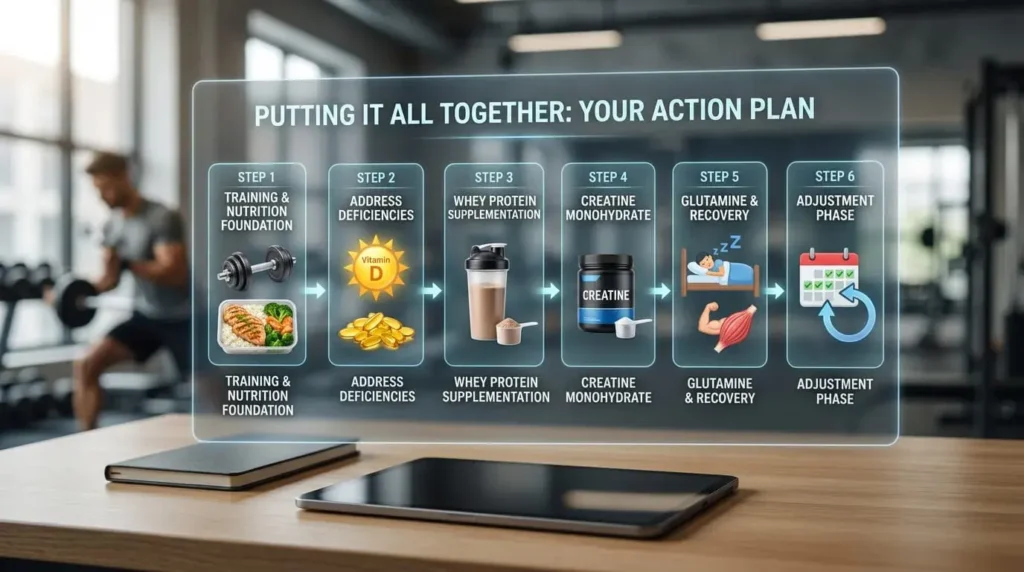
Give each change 4-6 weeks. Don’t jump around. Stick with something long enough to actually feel the effect. Then decide if it’s worth keeping.
Quality Matters: Choosing the Right Supplements
Not all supplements are created equal. Some companies test their products. Others… don’t.
Look for third-party testing. Companies like NSF, Informed Choice, or USP test supplements to make sure they contain what the label says. That matters more than you’d think.
Check the ingredient list, not just the marketing. If it’s full of artificial flavors and additives, there are better options. If the label is clean and straightforward, that’s usually a good sign.
Buy from established companies with a reputation to protect. They’re usually slightly more expensive, but they’ve actually tested their products. It’s worth it.
Frequently Asked Questions About Natural Supplements for Body Shaping
How long does it take to see results from supplements?
This depends on several factors – your training intensity, nutrition, sleep, and which supplements you’re using. Most people notice improved energy and recovery within 2-3 weeks. Visible body composition changes typically take 6-8 weeks of consistent use combined with proper training and diet. Creatine works faster – you might feel stronger workouts within 3-4 weeks. Vitamin D effects build gradually over weeks and months. The key isn’t speed though. It’s consistency. Small improvements compound into serious results over time.
Can I take all these supplements together safely?
Yes. Vitamin D, fish oil, whey protein, creatine, and glutamine don’t conflict with each other. They actually support different functions – Vitamin D for hormones, fish oil for inflammation, whey for amino acids, creatine for energy, glutamine for recovery. They work in parallel rather than competing. The key is buying quality supplements from reputable companies and following recommended dosages. If you have existing health conditions or take medications, check with your doctor first. But for most healthy people, this stack is safe and effective.
Do I need a supplement if I eat a good diet?
Even with a solid diet, most people have gaps. Vitamin D is huge – unless you’re getting 30+ minutes of direct sun several times weekly, you’re likely deficient. Fish oil – you’d need to eat fatty fish multiple times weekly. Whey protein is just convenience – you could hit your protein goals with whole foods if you have time and money. Creatine is in meat, but in small amounts. The point isn’t that supplements are essential if your diet is perfect. It’s that truly perfect diets are rare. Supplements fill real gaps in what most people actually eat.
What’s the difference between whey concentrate and whey isolate?
Whey concentrate has roughly 70-80% protein with more carbs and fats. It’s cheaper and tastes better. Whey isolate is 90%+ protein with minimal carbs and fats – it’s been filtered more. If you’re building muscle and need extra calories, concentrate is fine and saves money. If you’re leaning out and watching calories, isolate is better. For most people just starting out, concentrate works great and costs less. Don’t overthink it – either one gets the job done.
Is creatine safe or does it damage your kidneys?
This myth won’t die. Creatine is safe. Decades of research shows it doesn’t damage kidneys in healthy people. Your body actually produces creatine naturally – supplementing just adds to what’s already there. The only people who should be cautious are those with existing kidney disease. For everyone else, 3-5 grams daily is perfectly safe. You might gain a couple pounds of water initially, which is normal. You might need to drink slightly more water, which is good anyway. But no, creatine doesn’t hurt your kidneys.
When should I take supplements – before or after training?
Timing matters for some, not at all for others. Whey protein is best post-workout – your muscles are primed to absorb amino acids in that window. Vitamin D, fish oil, and glutamine? Timing doesn’t really matter – just take them daily. Creatine doesn’t have a critical window – consistency matters more than timing. If pre-workout feels more convenient for you, do it. If post-workout works better, that’s fine too. The biggest mistake people make is overthinking timing when consistency is actually what drives results.
Can supplements replace a good diet and training?
No. Supplements are maybe 10-20% of the equation. The other 80% is training hard 3-4 times weekly, eating enough food with enough protein, and getting solid sleep. You can’t out-supplement a bad diet or a lazy training routine. What you can do is optimize an already solid foundation. Start with the basics – consistent resistance training, adequate calories and protein, 7+ hours of sleep. Then supplements amplify those results. But they’re enhancement, not replacement. Skip that order and you’re wasting money.
Final Thoughts: Patience Wins
Body shaping isn’t fast. Even with perfect training, nutrition, and supplements, you’re looking at months to see real change. And that’s okay.
The people who get results aren’t smarter or more genetically gifted. They’re consistent. They stick with a plan for months instead of weeks. They trust the process even when progress feels slow.
Supplements support that consistency. They make recovery better. They provide the nutrients your body actually needs. They fill the gaps in most people’s diets.
But they’re support, not salvation. The real work is always the training, the food, and the patience.
Start simple. Start today. Track your progress honestly. Adjust as needed. That’s the path that actually works.
Blog Categories:
About the Author: