

How A Microdermabrasion Treatment Can Boost Your Confidence
What dull skin says about your root and sacral chakras – and how a microdermabrasion treatment refreshes your complexion, your makeup and your confidence.
Table Of Contents
You know the moment. Somebody tags you in a photo from the weekend and your eye goes straight past your smile to your skin – the patch of shine, the greyish cast, the texture the flash decided to announce to everyone. Or it’s the visor mirror in the car at noon, which is honestly the cruellest lighting ever invented. And something in your shoulders drops a little.
It’s a small thing. That’s exactly why nobody talks about it.
Because most of what bothers people about their skin isn’t a medical problem at all. No doctor’s appointment, no diagnosis, nothing a dermatologist would raise an eyebrow at. Just dullness that showed up somewhere in your thirties and never left. Rough patches along the jaw and forehead. Blackheads settled into the sides of your nose like they pay rent. Sun spots from summers you enjoyed at the time. Flaky bits in February that no moisturiser seems to touch. Pores that look bigger than they used to. Foundation that clings to dry spots and sits on top of everything instead of sinking in.
None of it is serious. All of it is loud – when it’s your face, in your mirror, on a morning you’re already not feeling great.
And here’s what the energy side of this says. Your skin is the outermost edge of you, the boundary layer, the part that meets the world before any of the rest of you does. In chakra work that puts it firmly in root chakra territory, because Muladhara governs the physical body, safety, and the sense of being properly at home in yourself. When life gets loud and sleep gets short, the root wobbles first. Skin follows close behind.
The sacral chakra has a hand in it too – it rules fluids and flow, which is hydration, elasticity, that lit-from-inside quality people chase with expensive serums. And a little higher up, the solar plexus sits over your digestion, tied straight into the gut-skin conversation anyone with stress breakouts already knows far too well.
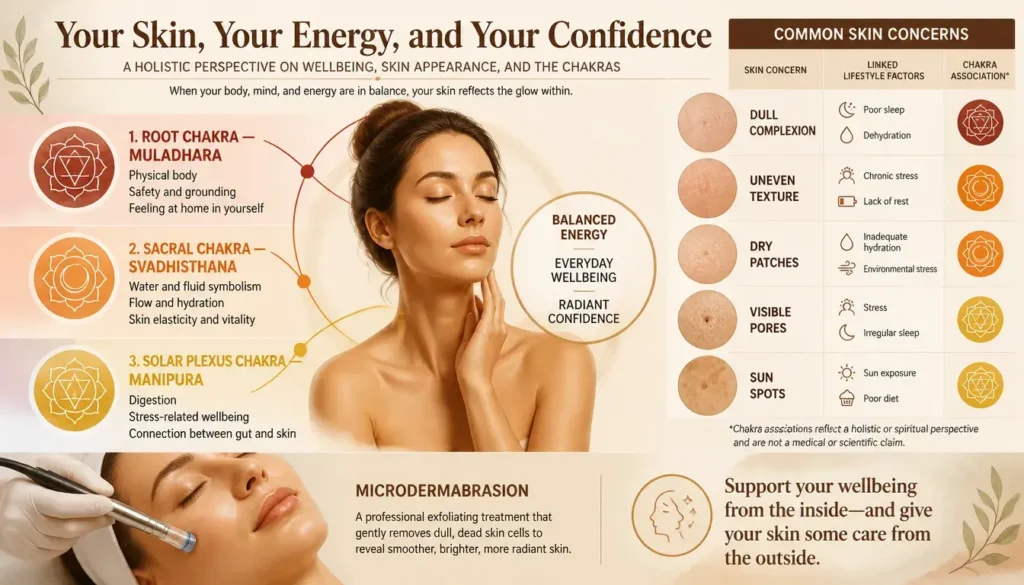
So a dull complexion isn’t only a dull complexion. It’s a readout. A signal that something upstream – water, rest, stillness, the space you keep not giving yourself – has been getting shortchanged for a while now. Your face is just where the bill arrives.
Which is why working from both directions makes sense. Tend the energy side, absolutely. But give the surface some help too, because feeling better in your own skin is allowed to be literal. That’s where a treatment like microdermabrasion comes in. It’s not about chasing perfect skin. It’s about giving your complexion a refresh and helping you feel a little more like yourself again.
What Does Microdermabrasion Actually Do?
Microdermabrasion is a professional exfoliating treatment that gets rid of dead and dry skin cells from the surface of the skin. A handheld device does the work – either fine crystals sprayed across the skin and vacuumed straight back up, or a diamond-tipped wand that buffs and suctions in a single pass.
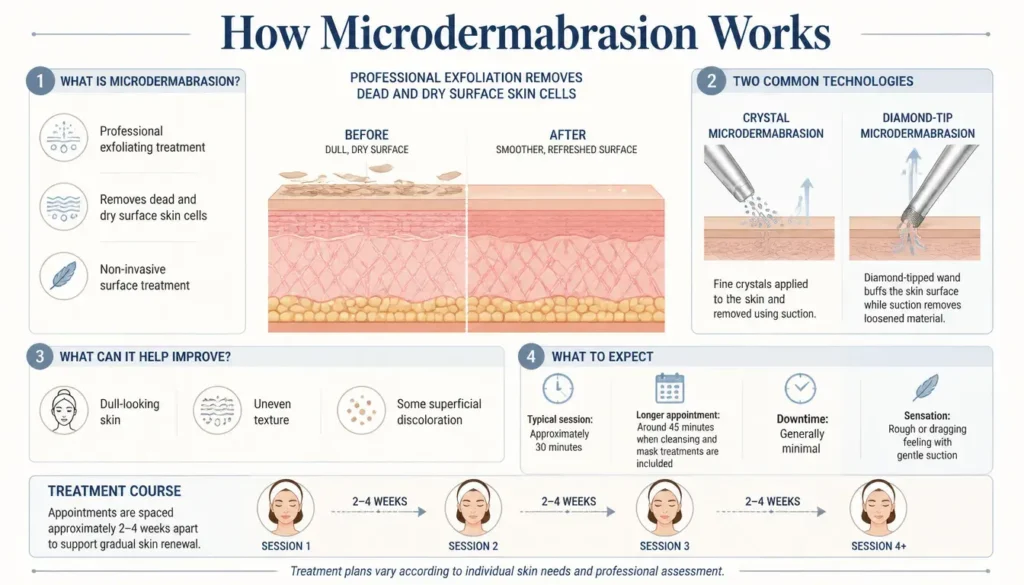
What sits underneath is fresher and smoother-looking. The treatment can improve the look of dullness, uneven texture, and some types of discoloration.
A session runs about thirty minutes. Closer to forty-five if there’s a cleanse and a mask on either end of it. The treatment is non-invasive, and there is generally very little downtime, making it a practical option if you want to give your skin some extra attention without putting your normal routine on hold. Most people head straight back to work afterwards.
It doesn’t hurt, in case that’s the worry. Most people describe a rough, dragging sensation with a steady tug behind it – odd for the first minute, weirdly relaxing after that.
One session helps. A course of them helps considerably more. Clinics usually space treatments two to four weeks apart, which roughly matches how long your skin needs to turn over its own cells anyway.
It Can Wake Up Tired-Looking Skin
Skin can start to look dull for all sorts of reasons. A hectic schedule, changing weather, dehydration, or simply a buildup of dead skin cells can all leave your complexion looking a little flat.
The shedding thing is worth understanding, because it’s quietly doing most of the damage. Past your mid-twenties, dead cells stop letting go as neatly as they used to. They linger. And light hitting that rough, uneven layer scatters instead of bouncing back cleanly – which your eye reads as tired, grey, flat, whatever word you reach for at the mirror.

Microdermabrasion helps remove some of that surface buildup, which can leave skin looking brighter and more refreshed. Sometimes that relatively small change is enough to make you look in the mirror and think, “Okay, that is much better.”
Smoother Skin Can Make You Feel More Put Together
Texture is completely normal. Everyone has it – every single person whose skin you’ve ever envied in a photograph. But that does not mean you have to love how it looks every day. Rough patches, uneven areas, and visible pores can sometimes make you feel like your skin is working against you.
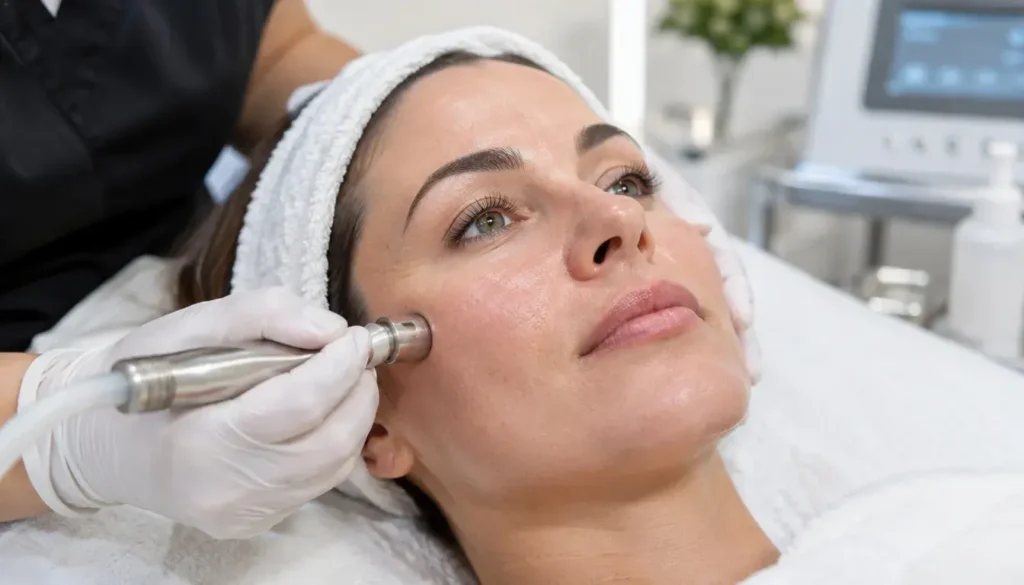
Treatments like this are widely available, so it pays to look into a clinic’s credentials and equipment before booking. As an example, for those considering professional treatment, dermani MEDSPA® in Chester Springs offers microdermabrasion as part of its wider range of skin rejuvenation services. Its microdermabrasion treatment uses professional equipment and exfoliating crystals to remove dead, dry surface skin and can be used to target concerns such as dullness, brown spots, age spots, and uneven-looking skin.
The real difference between that and a scrub from the pharmacy shelf is control. Someone trained adjusts the intensity to your skin specifically, spends longer on the areas that need it, and stops well before irritation starts. At-home exfoliation tends to go one of two ways – too timid to change anything, or aggressive enough to leave your barrier raw for a week.
Your Makeup Will Look Better
If you wear makeup, it can be annoying when foundation clings on to dry patches or highlights skin texture that you want to hide.
Smooth skin sorts out most of that. Product goes on evenly, blends without a fight, and reads as skin rather than something applied on top of skin. You might even start to feel comfortable using less product, which can be a confidence boost in itself.

A lot of people notice this shift before they notice anything else about the treatment. Not the glow. The twenty seconds it saves them at seven in the morning.
Who It Suits – And When To Wait
Microdermabrasion suits most skin types and most ages. It’s a surface treatment, so it’s aimed at surface problems: dullness, congestion, mild texture, superficial discoloration, the fine lines that have only just started introducing themselves. Oily and combination skin tend to respond quickly. Drier skin usually needs a richer moisturiser afterwards and does fine.
Some situations call for waiting, though. Active or cystic breakouts, a rosacea flare, eczema patches, an open cold sore, fresh sunburn – none of those want a mechanical exfoliant dragged across them. Same goes if you’ve recently had a chemical peel, or if you’re on isotretinoin or a strong prescription retinoid. Say so at the consultation. A good clinic will reschedule you rather than push on.
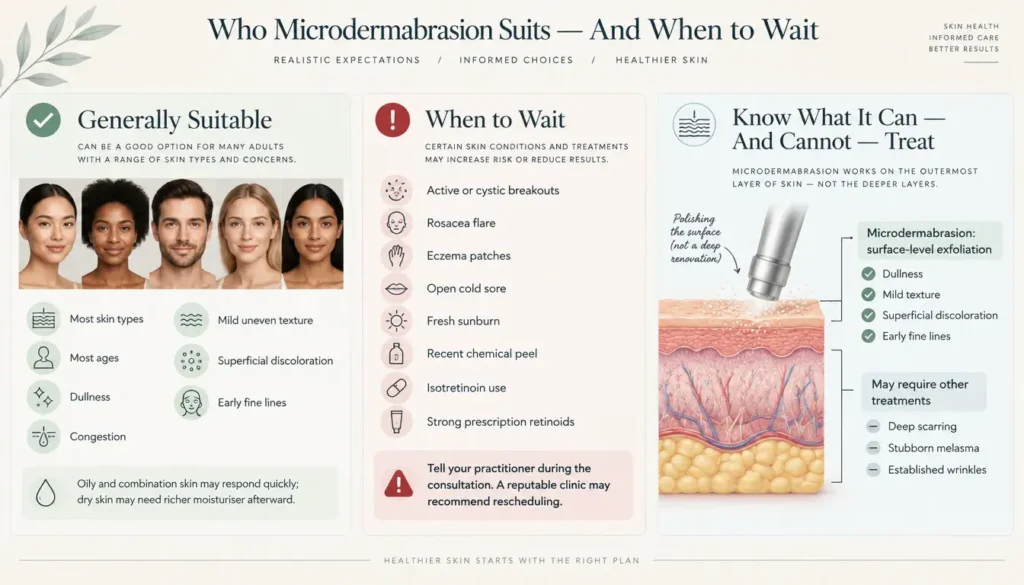
And be straight with yourself about the ceiling. Deep scarring, stubborn melasma, and set-in wrinkles need something that works further down. Microdermabrasion polishes the top floor. It was never sold as a renovation.
What Happens After Your Session
Expect some pink. It usually looks like mild windburn and settles within an hour or two, occasionally a bit longer if your skin runs sensitive. Some tightness is normal too.
Your skin will be unusually absorbent for the next day or so, which cuts both ways. Moisturiser and hydrating serums sink in beautifully. Anything with acids or retinol will hit far harder than you’re used to, so leave those alone for two or three days. Skip the hot yoga class and the long steam the same evening.
Sunscreen is the part people skip and regret. Freshly exfoliated skin burns faster and pigments more easily, so a proper SPF every morning for at least a week isn’t optional – it’s most of what protects the result you just paid for.
Day three is usually when skin looks its best. Bit of patience required.
It Is a Chance to Do Something for Yourself
It’s always nice to take time out for yourself. Booking a professional skincare treatment gives you a reason to slow down, switch off for a while, and do something that is purely about helping you feel good.
Don’t underestimate that half hour. You’re horizontal, your phone is in a bag across the room, and for once nobody needs anything from you. That’s about as close to grounding as most weeks get – and grounding is exactly what the root chakra asks for when it’s been neglected.
Some people use the time deliberately – slow breathing, attention dropped into the body rather than tomorrow’s list. Others doze off. Both count.
Confidence Is Often About the Small Things
Microdermabrasion is not about completely changing how you look, and it does not need to be. Sometimes confidence comes from much smaller changes.
If your skin feels smoother, looks brighter, and leaves you feeling happier going makeup-free or seeing yourself in photos, that can be enough to lift your mood. Ultimately, feeling comfortable and confident in your own skin is what matters most.

And the effect tends to feed backwards. You catch your reflection and don’t flinch. You stand a fraction taller in the group photo. Small things – but the root chakra is built out of small things like that, out of feeling safe and settled in the body you’re actually living in. A treatment can’t hand you that on its own. It can absolutely give you somewhere to start.
Frequently Asked Questions About Microdermabrasion
How long do the results of microdermabrasion last?
Usually three to four weeks from a single session, which lines up with how long your skin takes to cycle through a fresh layer of cells. The brightness peaks around day three and then fades gradually rather than dropping off. If you’re treating something specific – dullness that keeps returning, uneven texture – a course of four to six sessions spaced two to four weeks apart holds the result far better than one treatment on its own. After that, most people come back every four to six weeks to maintain it.
Does microdermabrasion hurt?
Not in any real sense. It feels like a rough, dragging sensation with a steady tug behind it – somewhere between a cat’s tongue and fine sandpaper moving slowly across the skin. The bonier areas around the nose and jawline register most. No numbing cream is needed and nothing stings. Afterwards your skin may look pink and feel tight for an hour or two, similar to mild windburn. If a session ever feels genuinely painful, say so, because the intensity is adjustable and it shouldn’t.
How is microdermabrasion different from a chemical peel?
Microdermabrasion is mechanical – crystals or a diamond tip physically buff away dead surface cells. A chemical peel uses acids to loosen the bonds between those cells so they shed. Microdermabrasion works only on the very top layer, has almost no downtime, and gives you an immediate polish. Peels can be taken deeper, which makes them stronger on pigmentation and fine lines but also means visible flaking for several days. For a treatment before an event, microdermabrasion is the safer choice. For stubborn discoloration, a peel usually does more.
Can I have microdermabrasion if I have acne or sensitive skin?
It depends what your skin is doing right now. Congestion, blackheads, and the odd breakout are usually fine and often improve. Active or cystic acne is not – dragging a mechanical exfoliant over inflamed spots can spread bacteria and worsen things. Rosacea flares, eczema patches, open cold sores, and fresh sunburn all mean waiting too. Sensitive skin can often tolerate a gentler setting, so mention it at consultation rather than assuming you’re excluded. A good clinic will happily reschedule you instead of treating skin that isn’t ready.
What should I avoid after a microdermabrasion treatment?
Leave retinol, glycolic acid, salicylic acid, and any scrub alone for two or three days – freshly exfoliated skin takes those much harder than usual. Skip hot yoga, saunas, and long steamy showers the same evening, and don’t book waxing or threading on the treated area for about a week. Sunscreen is the one that genuinely matters: your skin burns faster and pigments more easily right now, so a proper SPF every morning for at least a week protects the result you just paid for.
Which chakra is connected to the skin?
Most traditions place skin with the root chakra, Muladhara, because it governs the physical body and acts as your outermost boundary – the layer that holds your shape and meets the world first. The sacral chakra is the other one people point to, since it rules fluids and therefore hydration, elasticity, and that lit-from-within quality. Stress breakouts are often read through the solar plexus, given how tightly digestion and skin are linked. Treat these as a lens for noticing what’s been neglected, not as a diagnosis.
How should I prepare for my first session?
Stop retinoids and strong acids about five days beforehand, and don’t book if you’ve had a peel or laser treatment in the last two weeks. Arrive with clean skin if you can, though the clinic will cleanse you anyway. Avoid sunbathing and self-tan in the week before – tanned skin exfoliates unevenly and the colour will lift in patches. Bring a list of everything you’re using on your face, prescriptions included, because that conversation shapes the intensity they’ll choose for you.
Blog Categories:
About the Author: